Cognitive Development Easy Worksheets for Ages 3-4 - Page 2
25 filtered results
-
From - To
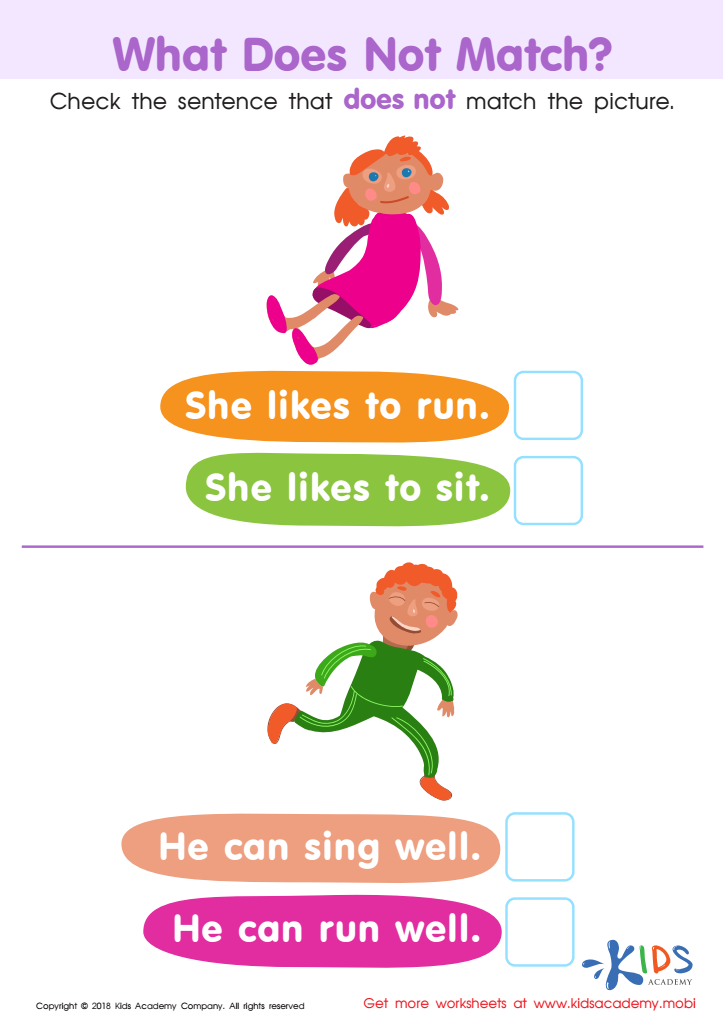
What Does Not Match? Worksheet
 Assign to My Students








Cognitive development in young children, especially ages 3-4, is crucial as it lays the foundation for future learning and growth. During these early years, children are like sponges, absorbing information about the world around them. They learn to think, understand, reason, and problem-solve, all of which are fundamental skills for later academic success.
Parents and teachers should care about this aspect of development because it directly impacts a child's ability to communicate and interact with others. Encouraging cognitive development can foster independence and creativity, helping children express their thoughts and feelings. Engaging in activities such as storytelling, puzzles, and imaginative play nurtures curiosity and enhances memory.
Moreover, cognitive development is closely linked to emotional and social growth. A strong cognitive foundation helps children develop empathy, build friendships, and navigate social situations effectively. By focusing on cognitive skills, adults can help children develop resilience and adaptive strategies for challenges they encounter.
Overall, prioritizing cognitive development at this age supports well-rounded growth, ensuring children are equipped with the skills needed for success in school and life. Creating a stimulating environment and providing diverse learning experiences can significantly enhance cognitive abilities during these formative years.








