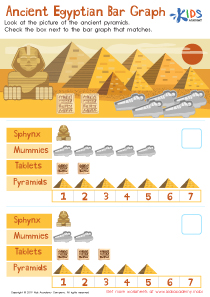
Cognitive Development Easy Addition & Subtraction Worksheets for Ages 3-4
4 filtered results
-
From - To
Boost your child's cognitive development with our Easy Addition & Subtraction Worksheets designed for ages 3-4! These engaging, interactive worksheets facilitate early math skills through fun, colorful activities that make learning exciting. Tailored for preschoolers, our resource encourages number recognition, basic addition and subtraction, and problem-solving abilities. Each worksheet is crafted to cater to young learners, helping to enhance their critical thinking and arithmetic foundations in a playful manner. Perfect for parents and educators, these printable resources foster independent learning and cognitive growth. Start your child’s mathematical journey with our simple, effective worksheets that make learning enjoyable!
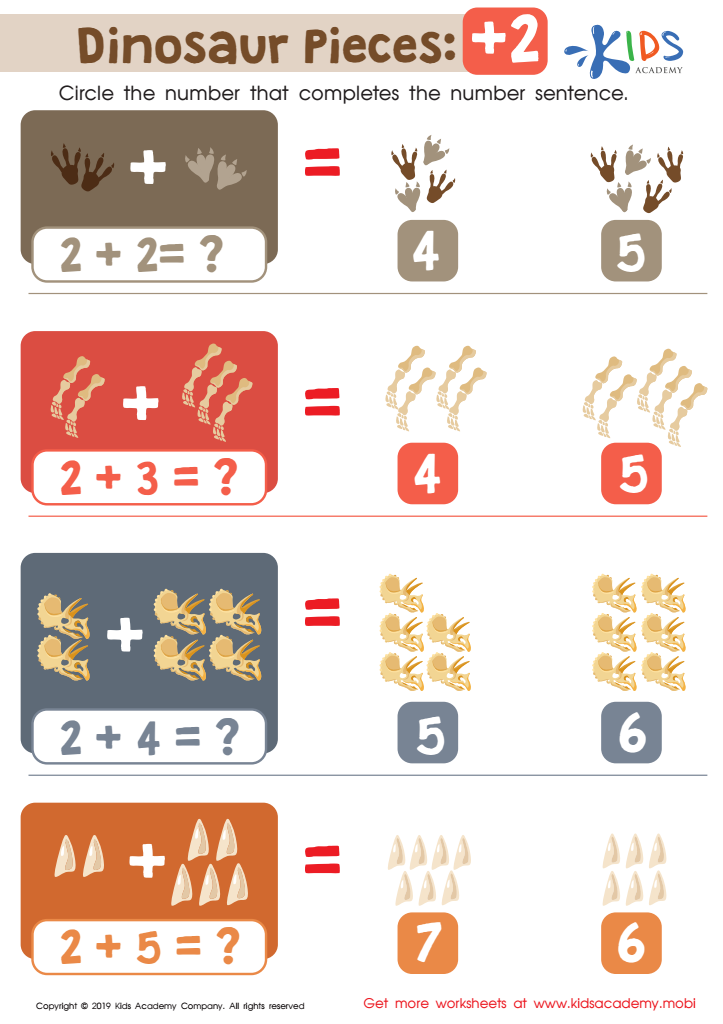
Dinosaur Pieces: +2 Worksheet
 Assign to My Students
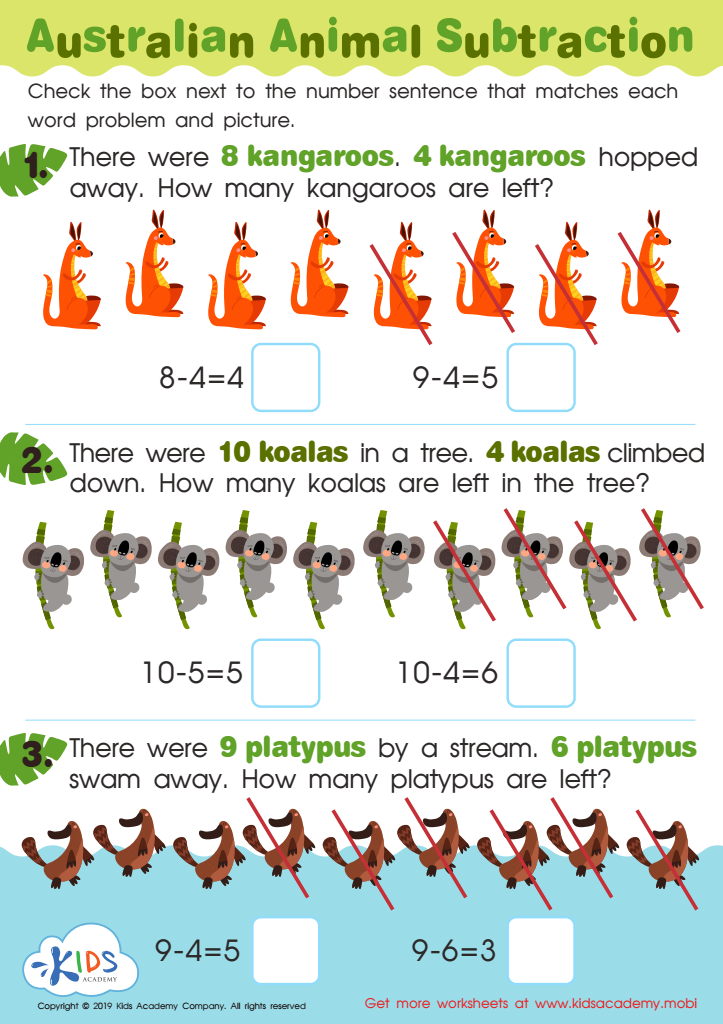
Australian Animal Subtraction Worksheet
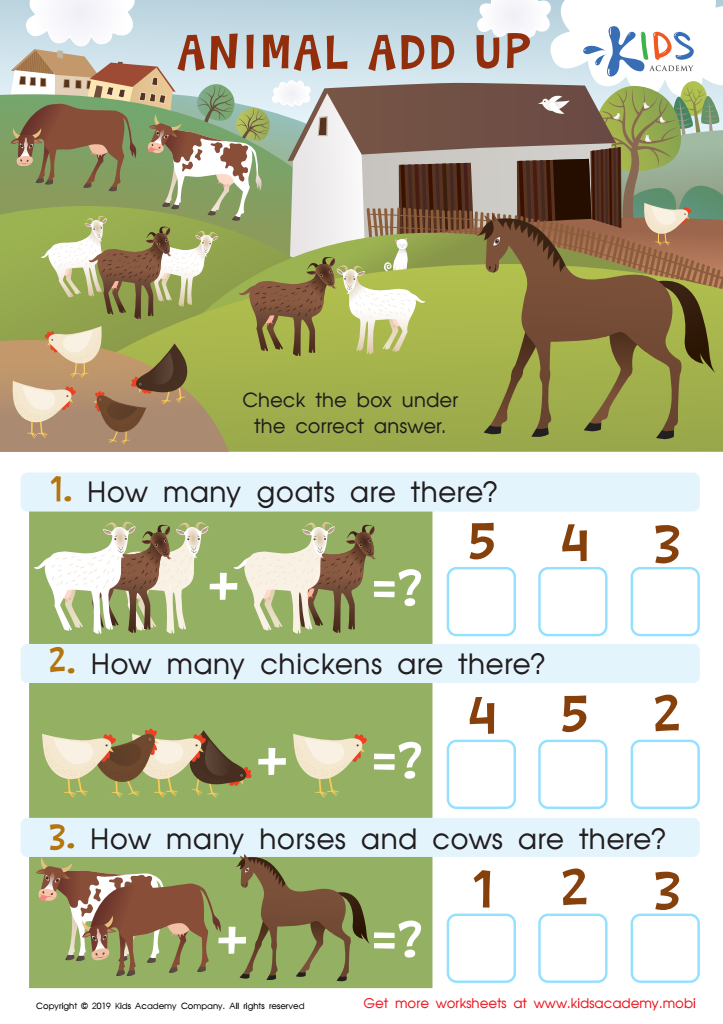
Animal Add Up Worksheet
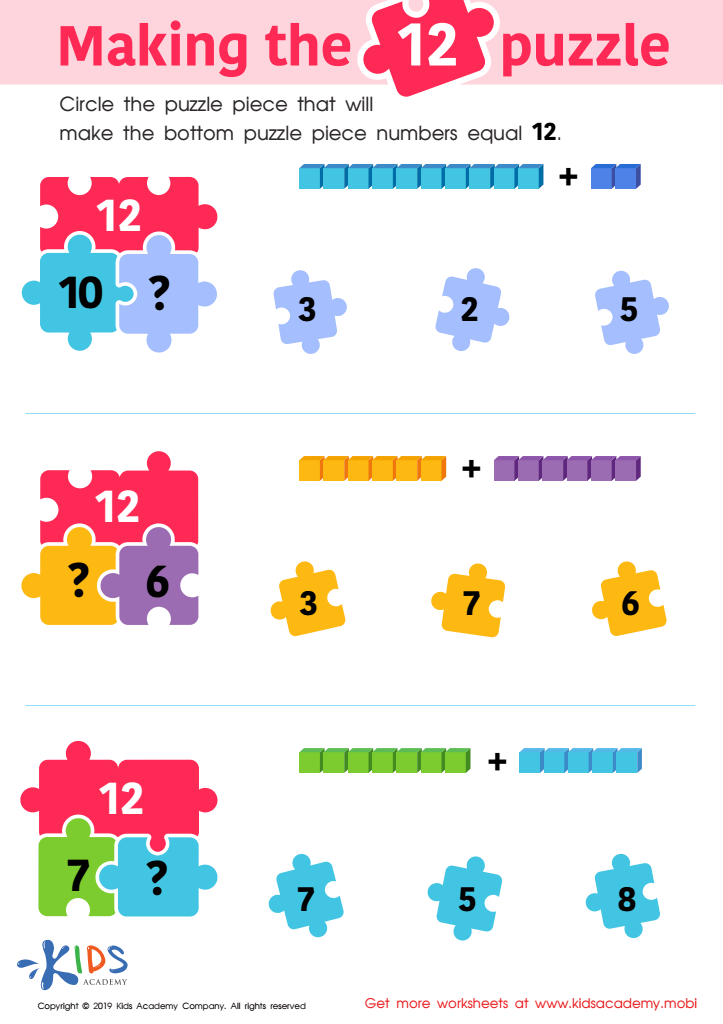
Making the 12 Puzzle Worksheet








Cognitive development during early childhood is crucial, as it forms the foundation for later learning. For children aged 3 to 4, engaging with concepts like easy addition and subtraction fosters essential skills that go beyond mere math. At this age, children are naturally curious and eager to explore numbers, making it an ideal time to introduce basic math concepts through playful activities.
Teaching simple addition and subtraction enhances cognitive skills such as problem-solving, logical reasoning, and critical thinking. These math concepts help children understand the world around them, enabling them to make connections and recognize patterns. Additionally, early exposure to mathematical language builds vocabulary and enhances communication skills.
For parents and teachers, promoting cognitive development through easy addition and subtraction can boost a child's confidence and self-esteem as they experience success in grasping new concepts. It can also foster a positive attitude towards learning, setting the stage for future academic achievements. Lastly, involving parents in this process creates a supportive learning environment at home, promoting a collaborative approach to education. By caring about these cognitive milestones, parents and teachers can significantly enhance a child’s overall development, laying a robust groundwork for lifelong learning.