Understanding sequencing Easy Numbers Worksheets for Ages 3-4
3 filtered results
-
From - To
Introducing our "Understanding Sequencing Easy Numbers Worksheets for Ages 3-4," designed to build early math skills and cognitive abilities! These fun, interactive worksheets help young learners grasp the concept of numerical order with engaging activities. From identifying patterns to arranging numbers, each exercise allows kids to practice sequencing in a playful, stress-free environment. Perfect for preschoolers, these worksheets support early learning development, enhance counting abilities, and build a strong foundation for future math success. Give your child the head start they deserve with our easy-to-follow, colorful worksheets! Start creating little math enthusiasts today!
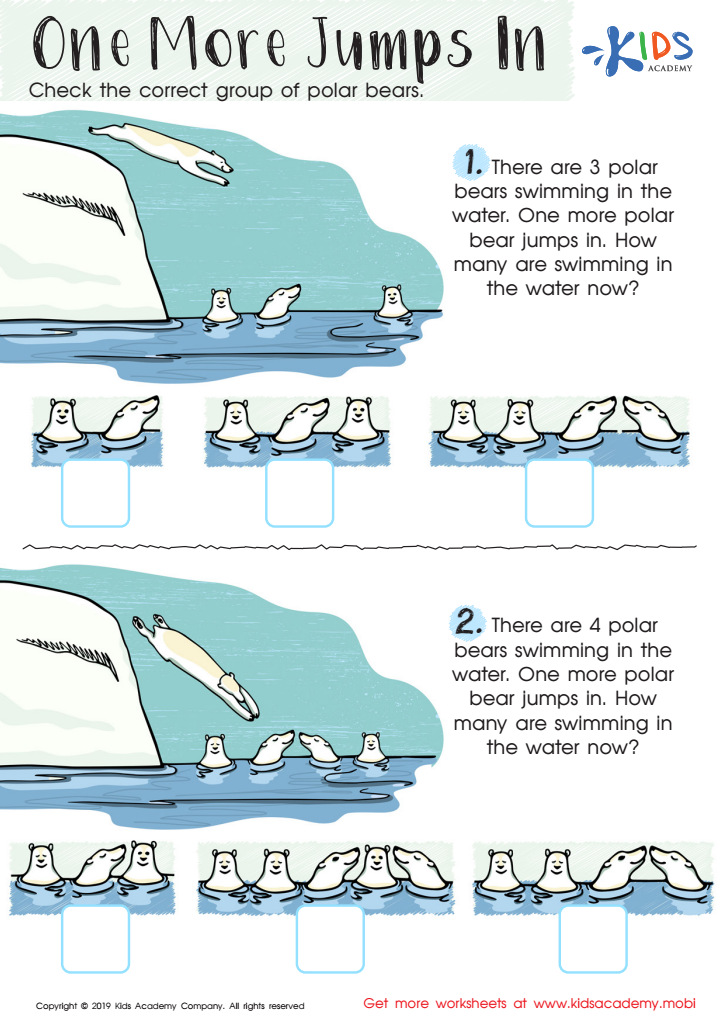
One More Jumps In Worksheet
 Assign to My Students
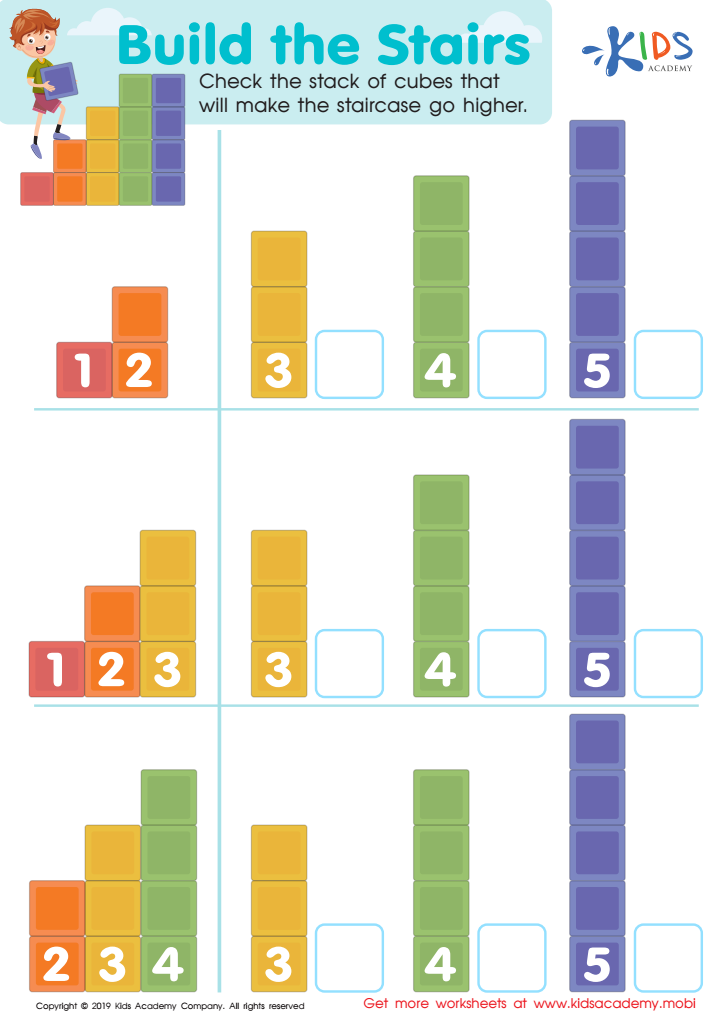
Build the Stairs Worksheet
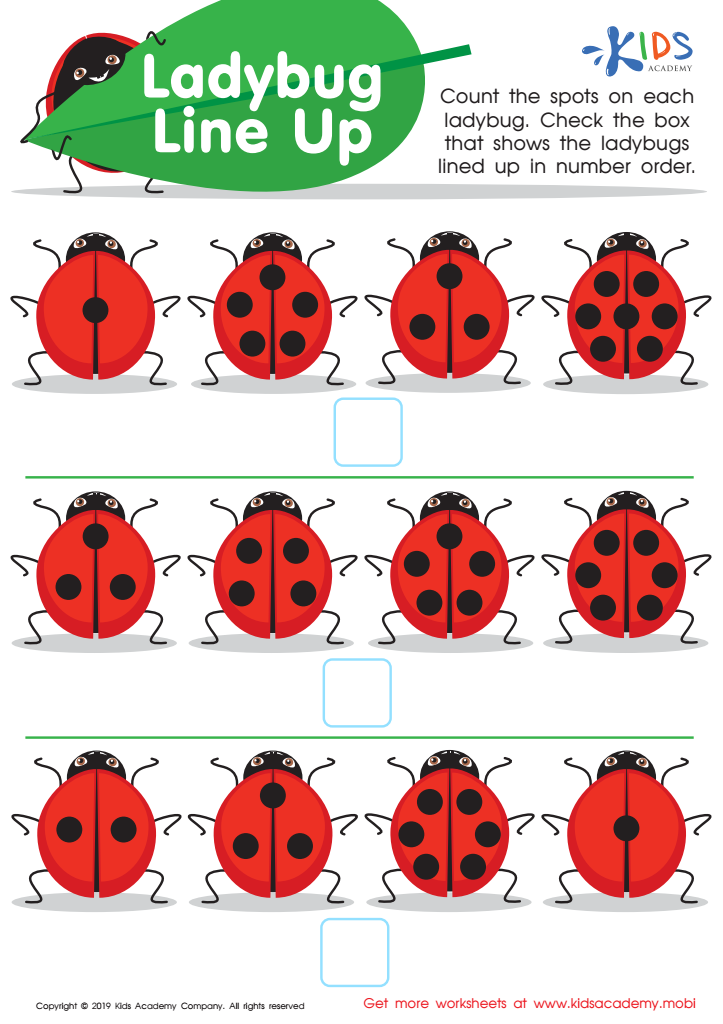
Ladybug Line Up Worksheet







Understanding sequencing and easy numbers for ages 3-4 is crucial for several developmental reasons. Firstly, it lays the groundwork for basic numeracy skills which are fundamental for future mathematical learning. Sequential skills help children grasp the order of events, which is essential not only in math but also in understanding daily routines, stories, and patterns.
By engaging in activities that reinforce counting and number sequencing, children enhance their cognitive abilities. It improves memory, attention to detail, and logical thinking. For instance, knowing that three comes after two and before four helps kids make sense of daily life and social activities.
Furthermore, early exposure to numbers and sequences promotes language development. Discussing numbers in context—the “first” toy, the “second” cookie—enriches vocabulary and comprehension. Emotional development is also fostered as children gain confidence from mastering these fundamental skills. Success with numbers can build a child’s self-esteem and foster a love for learning.
Lastly, parents and teachers play a key role in a child’s early education. By actively participating in teaching number sequencing, adults show that learning is a joint endeavor, encouraging curiosity and positive attitudes toward future academic pursuits. Early intervention and support can greatly enhance a child’s academic trajectory, making this focus invaluable.








