Sorting skills Easy Numbers 0–10 Worksheets for Ages 3-4
3 filtered results
-
From - To
Enhance your child’s sorting skills with our "Sorting Skills Easy Numbers 0-10 Worksheets," designed for ages 3-4. These engaging worksheets introduce young learners to the world of numbers through fun and interactive activities. Children will sort and categorize numbers, helping to develop critical thinking and organizational skills essential for early math concepts. Each worksheet features colorful images and easy-to-understand instructions, making learning enjoyable and effective. Perfect for parents and educators alike, these resources will foster a solid foundation in numeracy for preschoolers while promoting cognitive growth. Download now to start your child's journey into the exciting world of sorting and numbers!
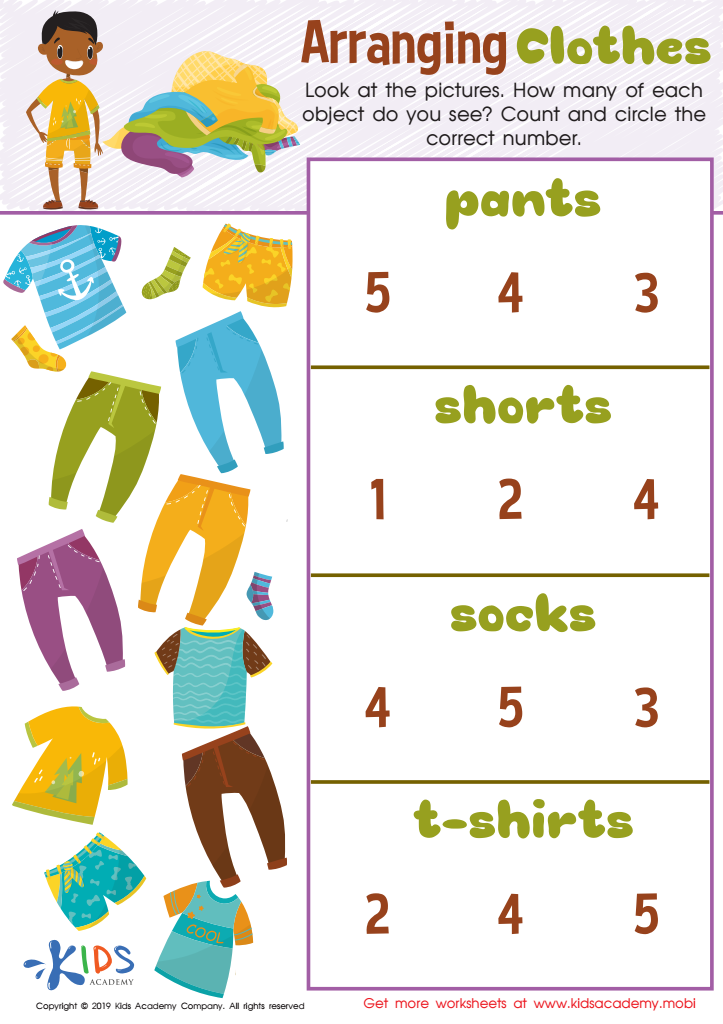
Arranging Clothes Worksheet
 Assign to My Students
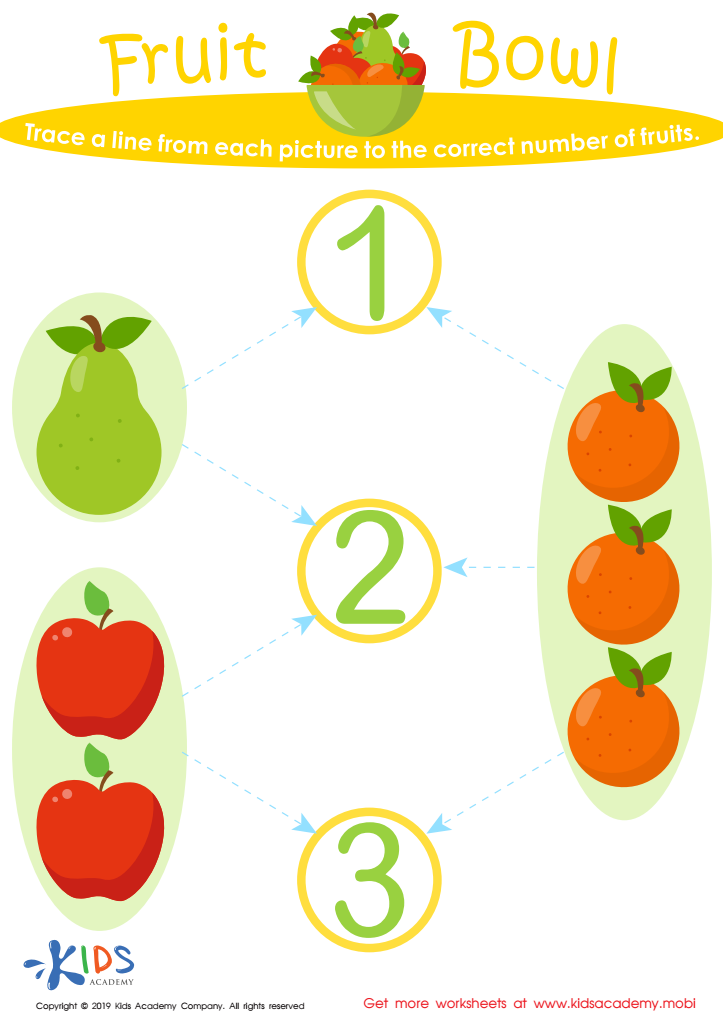
Fruit Bowl Worksheet
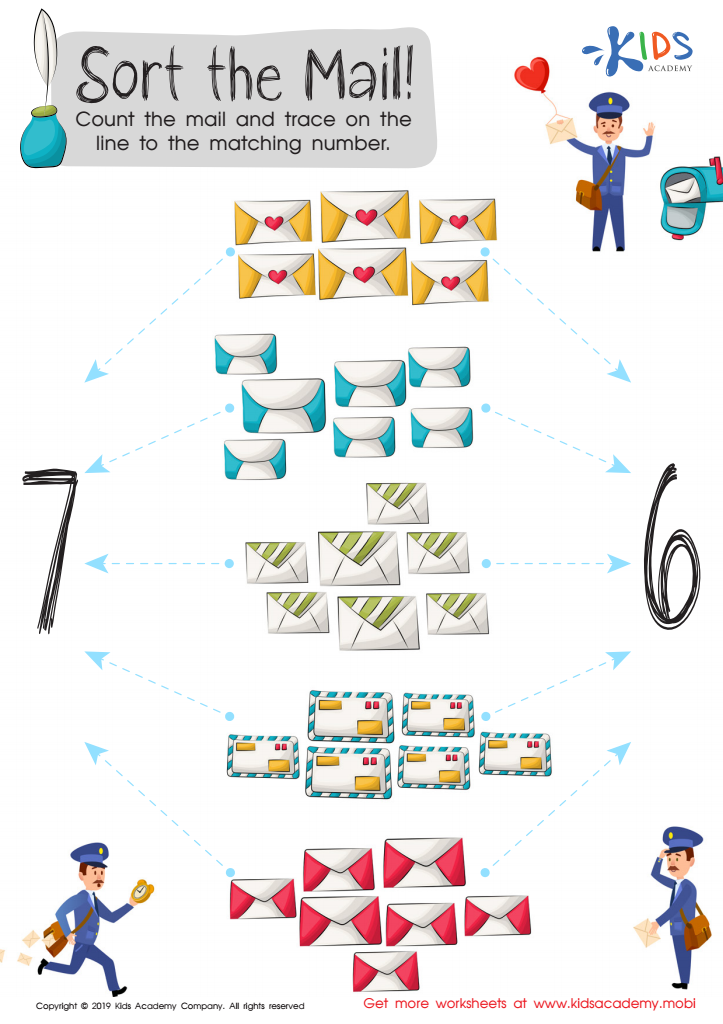
Sort the Mail Worksheet








Sorting skills, particularly for numbers 0-10, are foundational for young children ages 3-4. Parents and teachers should prioritize these skills because they lay the groundwork for essential mathematical concepts. Children begin to develop critical thinking and cognitive abilities as they classify objects based on specific characteristics, such as size, shape, or color. Sorting activities enhance their understanding of numerical relationships by promoting pattern recognition and categorization.
Engaging in sorting activities also fosters fine motor skills as children manipulate physical objects, such as counting blocks or counters. This hands-on experience encourages sensory exploration, which is crucial for their overall development. By introducing sorting within numbers 0-10, caregivers instill confidence in young learners as they begin their journey in mathematics, boosting their enthusiasm for learning.
Moreover, sorting prepares children for more complex skills, like addition and subtraction, by helping them understand quantity and value. Creating playful and interactive sorting experiences allows for parental involvement and enhances the teacher's ability to track a child's progress. Overall, promoting sorting skills in early education establishes a strong foundation for academic success and nurtures essential life skills like organization and critical thinking, setting children up for lifelong learning.