Counting skills Easy Word Problems Worksheets for Ages 3-4
6 filtered results
-
From - To
Welcome to our Counting Skills Easy Word Problems Worksheets for Ages 3-4! Designed to foster early math understanding, these engaging worksheets introduce young learners to basic counting through fun, relatable scenarios. Children will enhance their counting abilities while solving simple word problems that encourage critical thinking and problem-solving skills. Each activity features colorful illustrations and easy-to-follow instructions tailored for preschoolers. As kids count objects, they’ll develop number recognition and foundational math skills in a playful environment. Perfect for home or classroom use, our worksheets support early numeracy and help build a strong mathematical foundation. Explore and watch your little ones thrive!
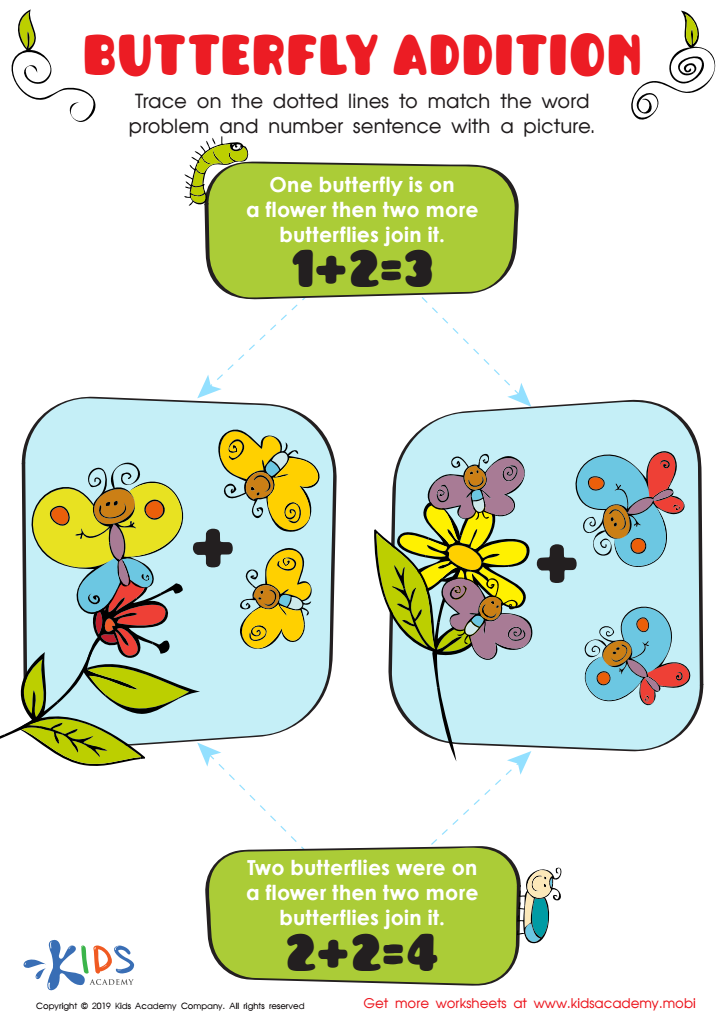
Butterfly Addition Worksheet
 Assign to My Students
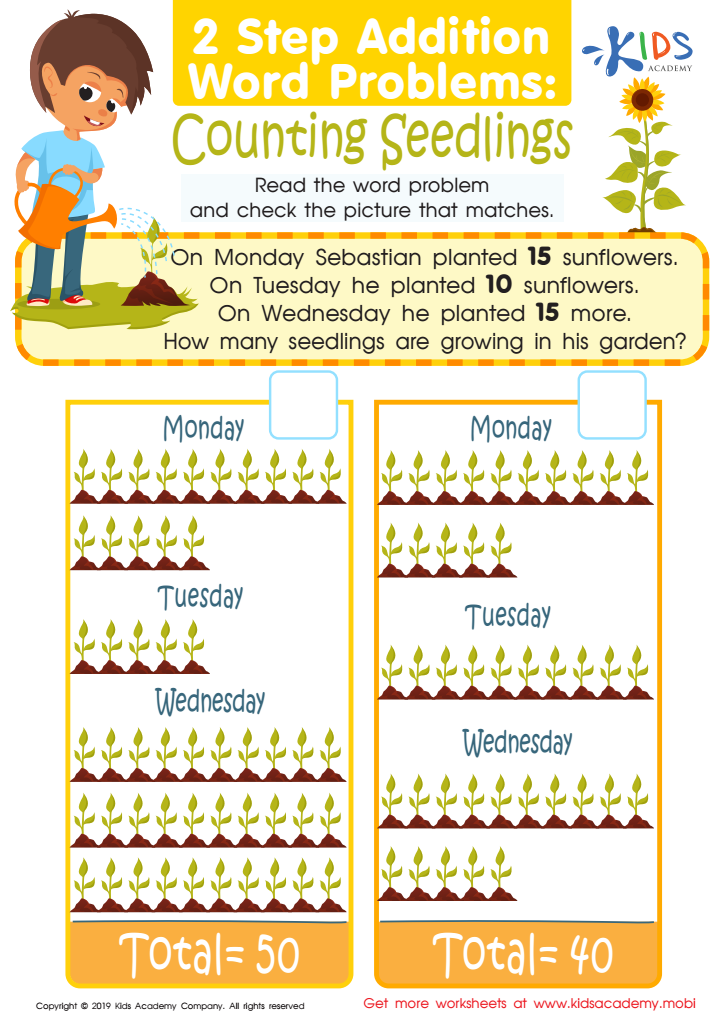
Counting Seedlings Worksheet
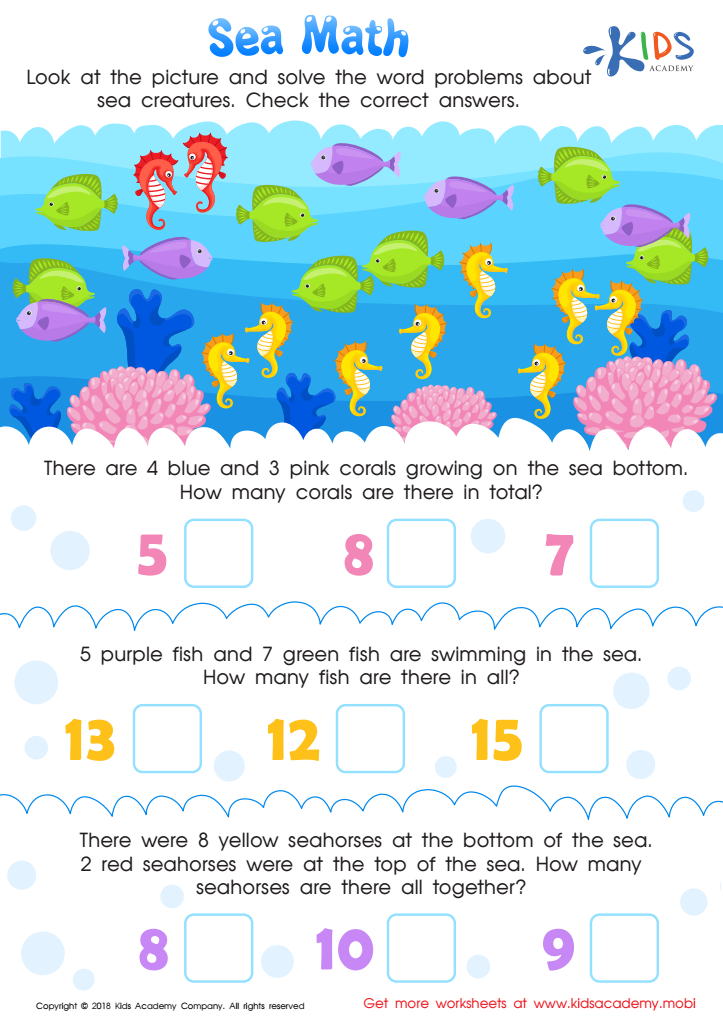
Sea Math Worksheet
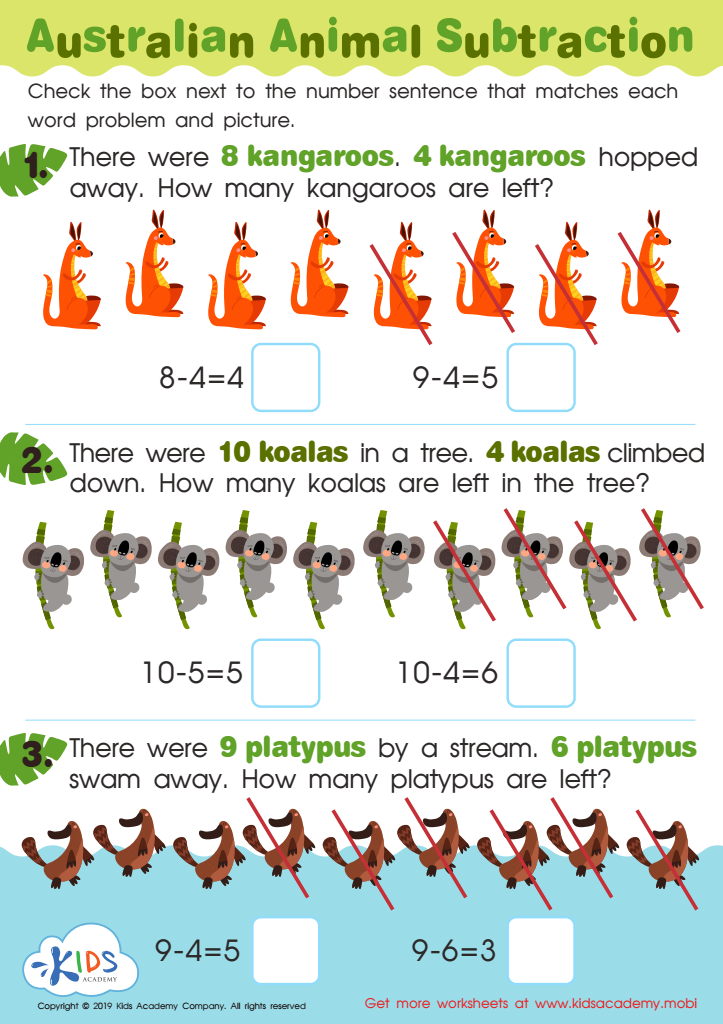
Australian Animal Subtraction Worksheet
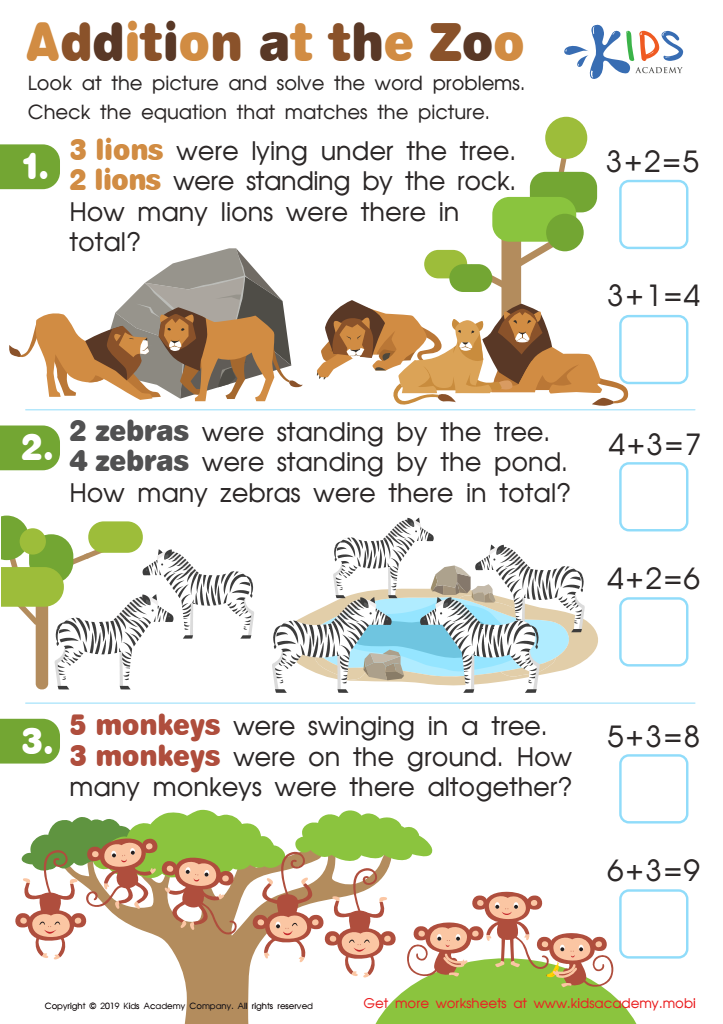
Addition at the Zoo Worksheet
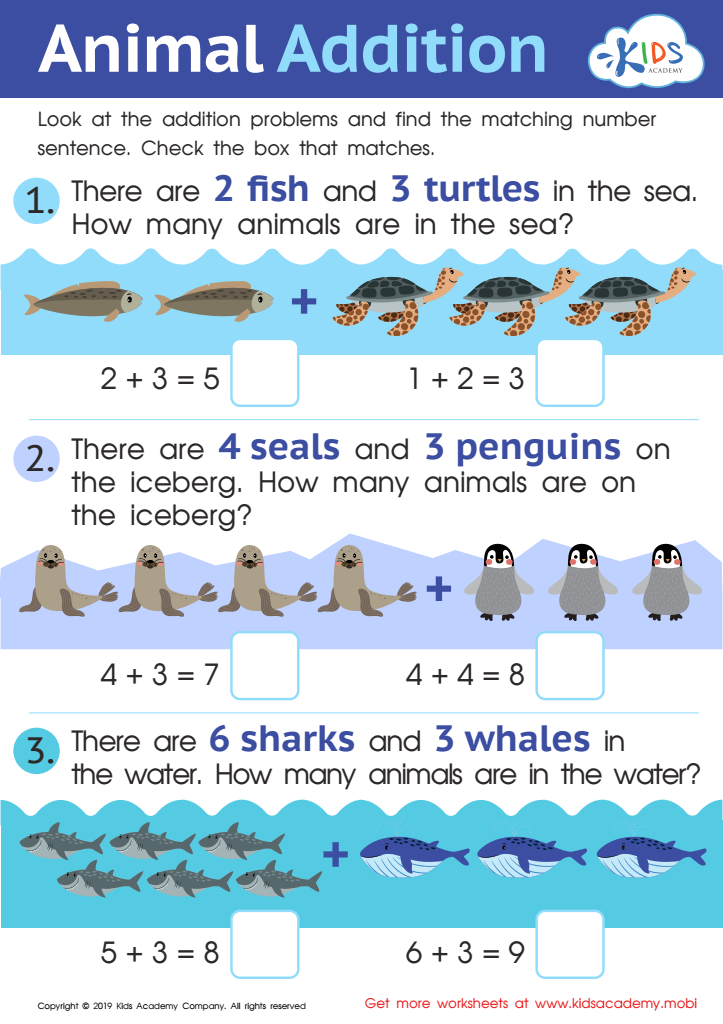
Animal Addition Worksheet








Counting skills are foundational for young learners, particularly for children ages 3-4. This critical stage of cognitive development lays the groundwork for future mathematical understanding. Engaging with easy word problems helps children not only learn to count but also develop important skills such as problem-solving, critical thinking, and language comprehension.
For parents and teachers, focusing on these skills fosters a positive attitude towards math. Simple word problems encourage children to apply counting in real-life situations, making math relatable and enjoyable. For example, by asking how many apples are in a bowl or how many toys they have, children begin to visualize numbers in meaningful contexts.
Moreover, these activities promote early literacy skills, as children learn to interpret the language of the word problems. This integration of counting and language helps build a strong, holistic foundation for learning. Children also develop perseverance, learning how to tackle challenges and boosting their confidence in their abilities.
In essence, nurturing counting skills through word problems encourages a love for learning, equips children with essential life skills, and ensures they are better prepared for more complex mathematical concepts in the future. Therefore, investing time in these activities is vital for fostering well-rounded development in young learners.








