Vocabulary development Easy Reading Worksheets for Ages 3-4
3 filtered results
Difficulty Level
Grade
Age
-
From - To
Subject
Activity
Standards
Enhance your child’s vocabulary skills with our engaging Easy Reading Worksheets designed specifically for ages 3-4. Our worksheets feature colorful illustrations and simple words, making learning fun and accessible for young learners. Each activity supports language development, helping children recognize and use new words in context. With a variety of exercises – from matching pictures to words to filling in blanks – these worksheets cater to different learning styles and keep children excited about reading. Ideal for parents and teachers alike, our vocabulary development worksheets are perfect for enhancing early literacy skills and fostering a lifelong love for learning. Start the journey today!
Favorites
With answer key
Interactive
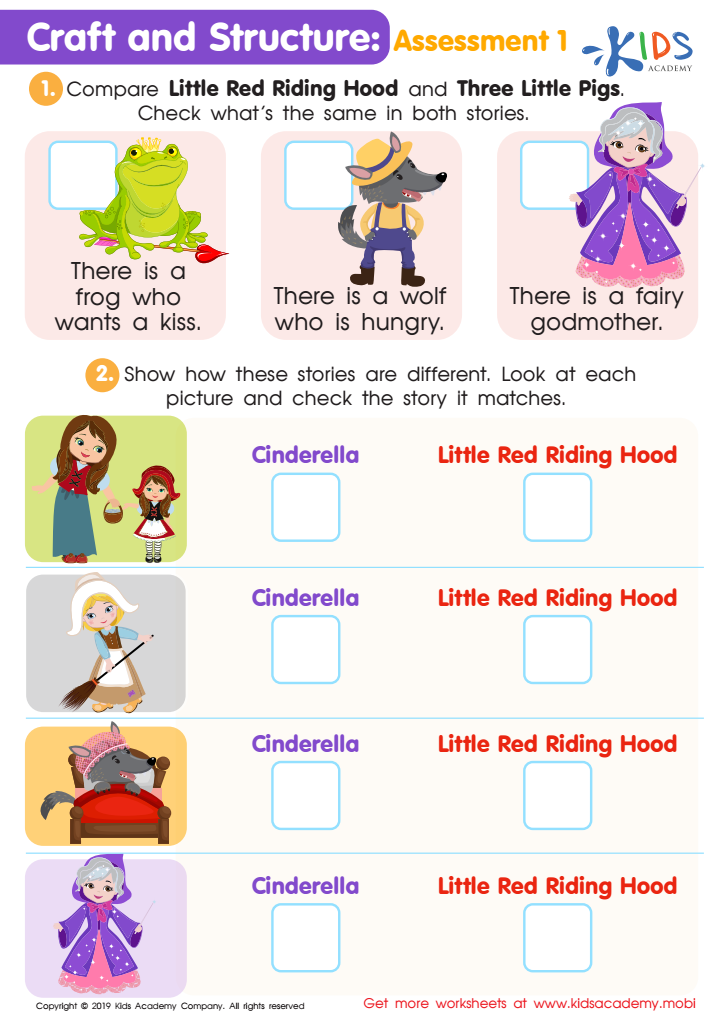
Craft and Structure: Assessment 1 Worksheet
Fairytales are a great way to bond with your kids while teaching them. Popular stories include Little Red Riding Hood and Three Little Pigs. Test how well they understood these two with this assessment worksheet. Ask them to compare the two stories and check what is the same. Doing this will help kids learn new words and sentence construction, as well as teaching them life lessons.
 Assign to My Students
Craft and Structure: Assessment 1 Worksheet
Worksheet
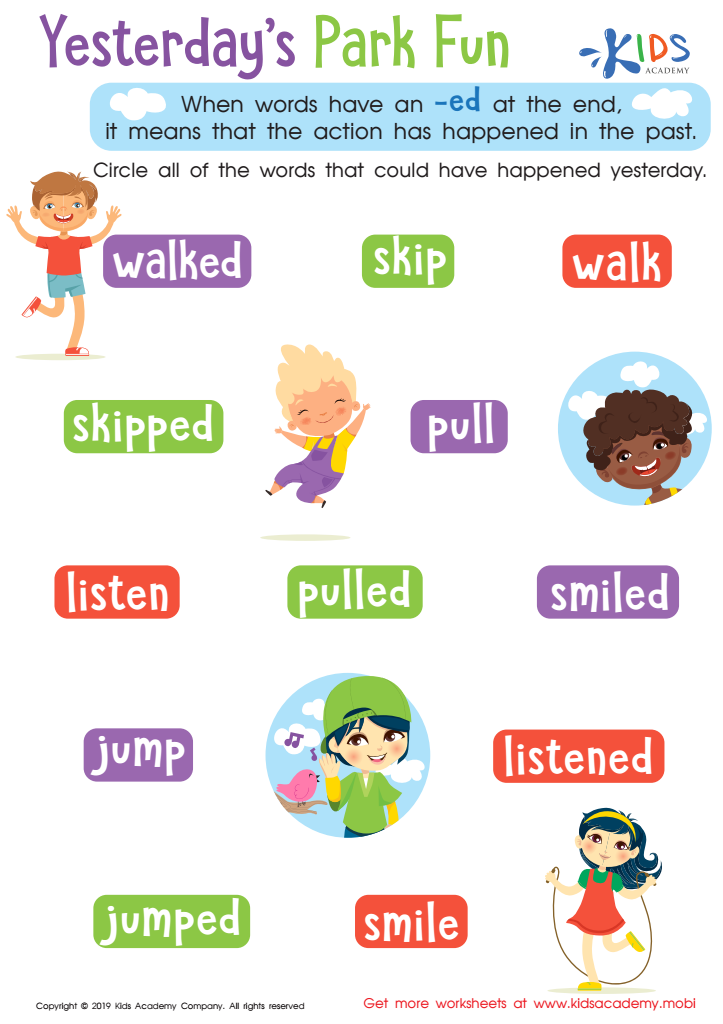
Yesterday's Park Fun Worksheet
Add -ed to the end of words and you get a word that happened in the past. This PDF helps your child understand this concept by giving practice examples: walk, pull, jump and smile can all be transformed into the past tense with a -ed suffix. They'll circle all the words that happened yesterday and learn about the past tense.
Yesterday's Park Fun Worksheet
Worksheet
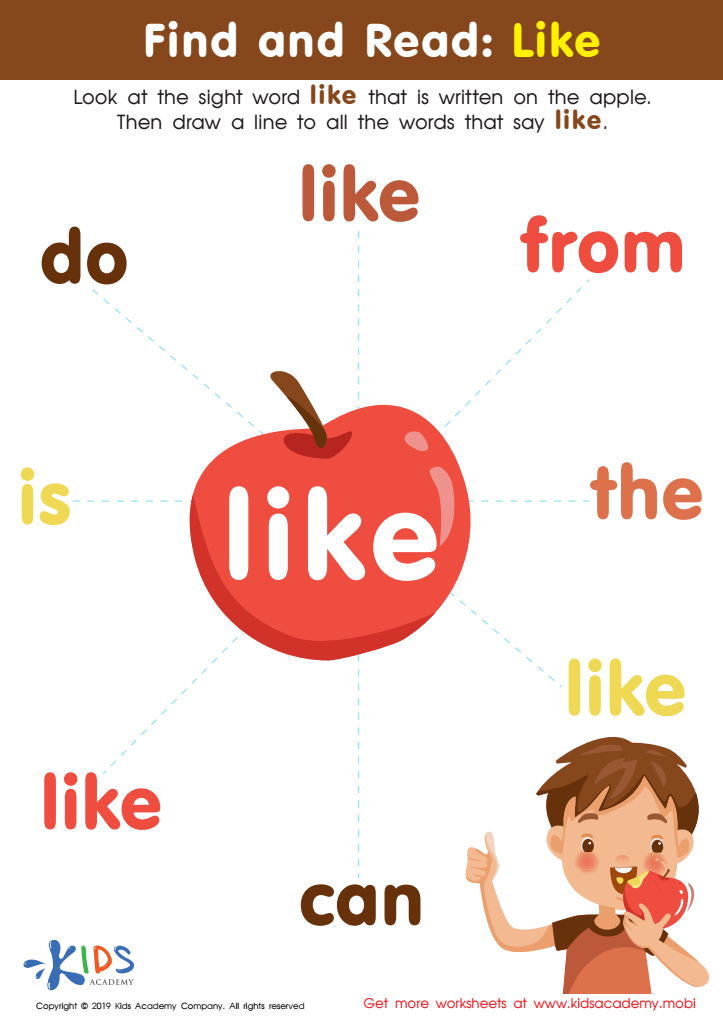
Find and Read: Like Worksheet
Reading starts with learning sight words. This free PDF worksheet helps kids learn the word "like" in various ways. It encourages their visual discrimination skills with its colorful design and traceable lines. It's a great way to help them recognize and differentiate this common sight word from other words that look similar.
Find and Read: Like Worksheet
Worksheet
Join Kids Academy for Free
Who is primarily going to use this learning content?







Vocabulary development is crucial for children ages 3-4 as it lays the foundation for their communication skills and overall learning. At this stage, children are like sponges, eagerly absorbing language from their surroundings. By enhancing their vocabulary, parents and teachers can significantly improve children's ability to express themselves, understand instructions, and engage in conversations.
Strong vocabulary skills promote literacy, aiding young learners in recognizing letters and words, which is essential as they transition into reading. When children have a rich vocabulary, they can comprehend stories better, making reading a more enjoyable and rewarding experience. This not only boosts their confidence but also fosters a lifelong love for books and learning.
Additionally, vocabulary development supports emotional and social growth. A robust vocabulary allows children to articulate their feelings and opinions, leading to healthier interactions with peers. It reduces frustration and helps them navigate social situations more effectively.
Moreover, early vocabulary enrichment can impact future academic success. Children who enter school with a strong vocabulary are more likely to excel in various subjects, creating a solid foundation for their education. Therefore, parents and teachers should prioritize vocabulary development to inspire curiosity and facilitate learning in young children.