Capitalization rules Easy Upper & Lowercase Letters Worksheets for Ages 3-5
3 filtered results
-
From - To
Introducing our "Capitalization Rules Easy Upper & Lowercase Letters Worksheets" for ages 3-5! These engaging and colorful worksheets are designed to help young learners grasp the basics of capitalization. Through fun activities, children will discover when to use uppercase letters, enhancing their reading and writing skills. Perfect for preschoolers, these worksheets not only reinforce alphabet recognition but also promote creativity and critical thinking. With a blend of playful illustrations and simple instructions, your child will enjoy mastering capital letters while developing essential literacy skills. Join us in fostering a love for learning with these delightful worksheets that make education both fun and effective!
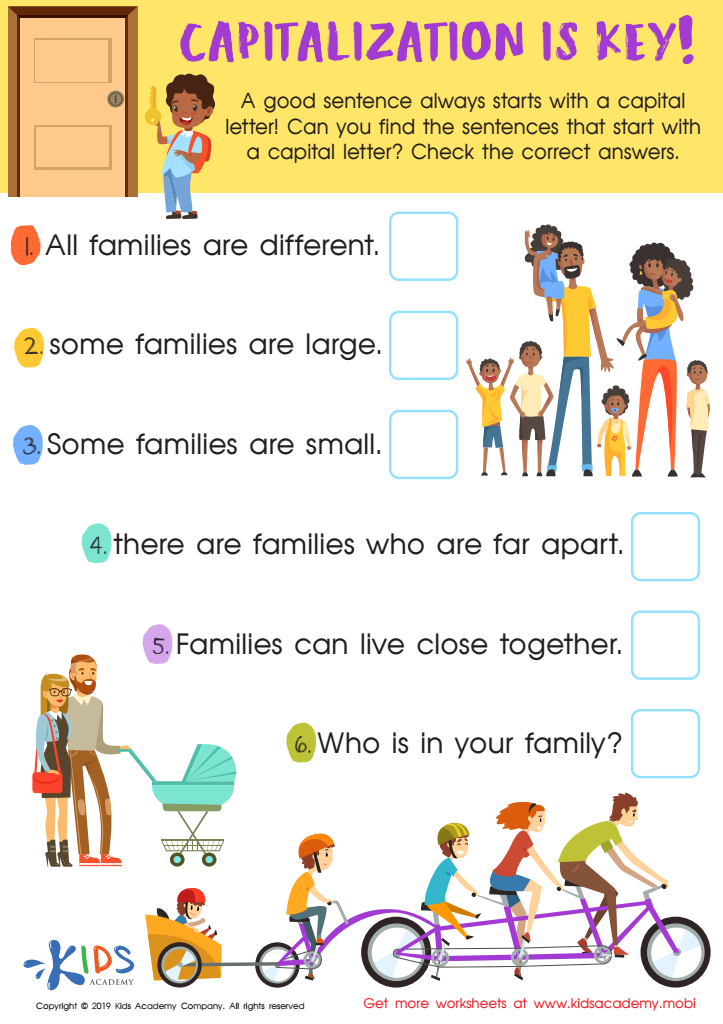
Capitalization Key Worksheet
 Assign to My Students

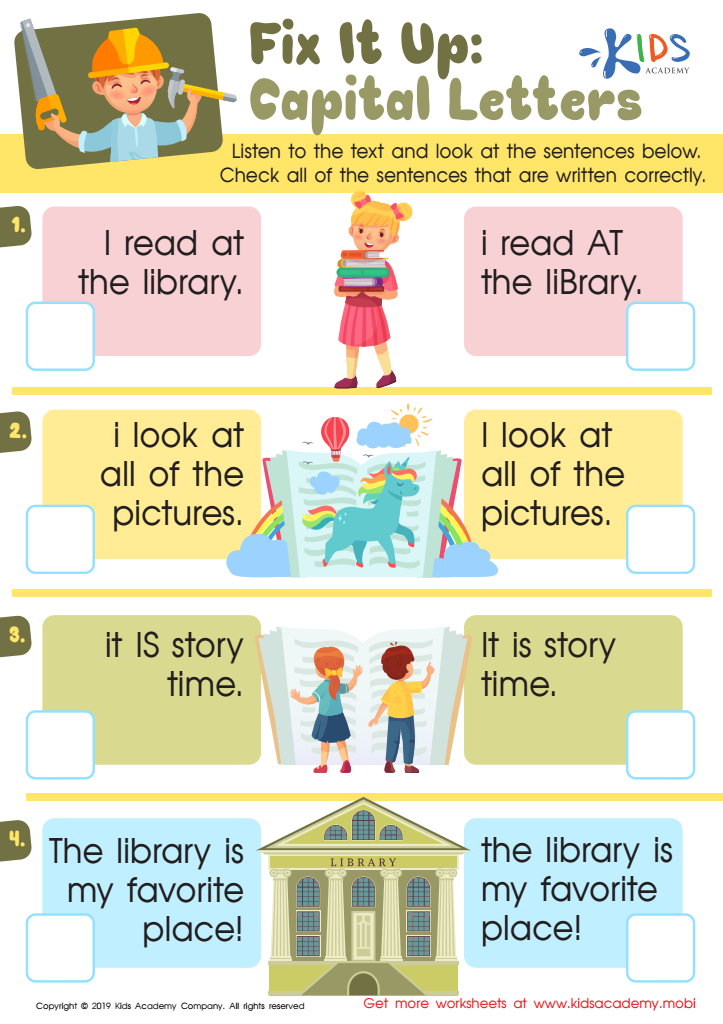
Fix Capital Letters Worksheet
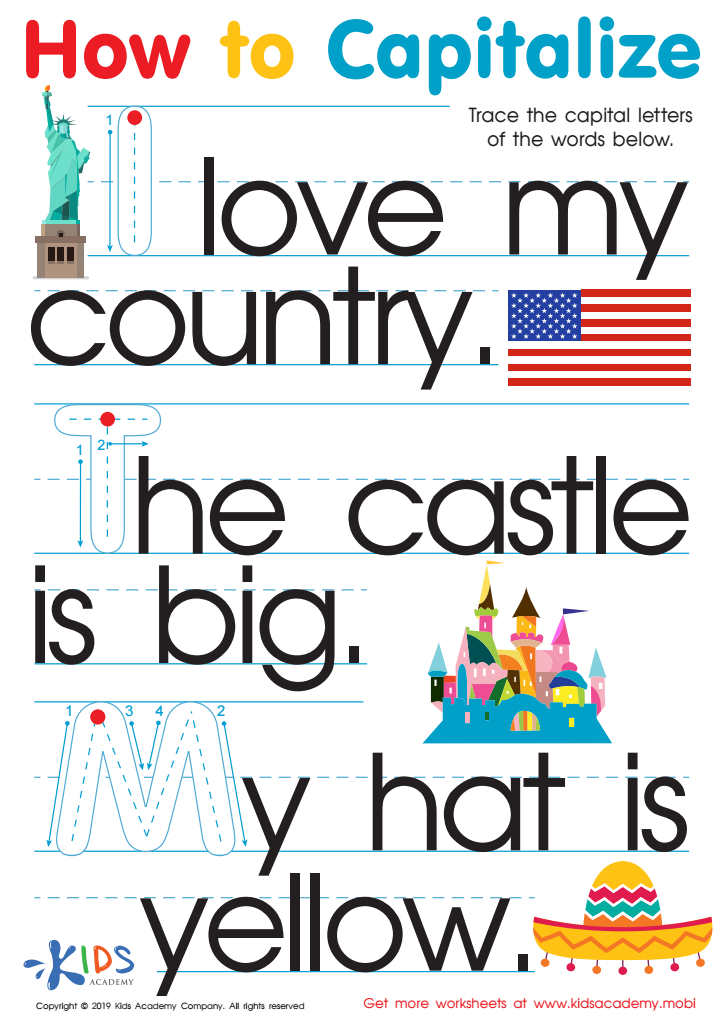
How to Capitalize Worksheet






Understanding capitalization rules is crucial for young learners, particularly those ages 3-5, as it lays the foundation for effective communication and literacy skills. For parents and teachers, fostering knowledge of uppercase and lowercase letters cultivates early reading and writing proficiency.
Capitalization serves various purposes; it differentiates between proper nouns, such as names and places, and common nouns. This understanding is essential for children as they begin to create simple sentences. Recognizing when to use capital letters enhances clarity in their writing, allowing them to convey their thoughts more accurately.
Additionally, learning capitalization rules encourages children to feel more confident in their literacy abilities. Mastering these basic concepts transforms reading and writing into enjoyable activities rather than challenging tasks. When children grasp uppercase and lowercase letters, they gain valuable tools for storytelling and personal expression.
Moreover, introducing capitalization early aligns with educational standards and expectations, preparing children for future academic success. With increased literacy competence predicts a positive trajectory through grade school and beyond. Ultimately, parents and teachers play a pivotal role in guiding young learners, helping them appreciate the nuances of language and boosting their enthusiasm for learning. Early exposure to these rules shapes their lifelong relationship with reading and writing.