
Fine Motor Skills Easy Addition & Subtraction Worksheets for Ages 3-5
5 filtered results
Difficulty Level
Grade
Age
-
From - To
Subject
Activity
Standards
Boost your little one's mathematical foundations with our Fine Motor Skills Easy Addition & Subtraction Worksheets for Ages 3-5! Designed specifically for preschoolers, these engaging worksheets combine fun mathematical exercises with essential fine motor skill development. Children will enjoy lively visuals and interactive activities, perfect for enhancing hand-eye coordination while learning basic addition and subtraction. Our resources include colorful illustrations and charming characters that make learning enjoyable. Help your child build confidence and competence in early math with worksheets that support skill mastery in a playful manner. Download today and nurture their growth as they explore numbers and improve motor skills!
Favorites
With answer key
Interactive
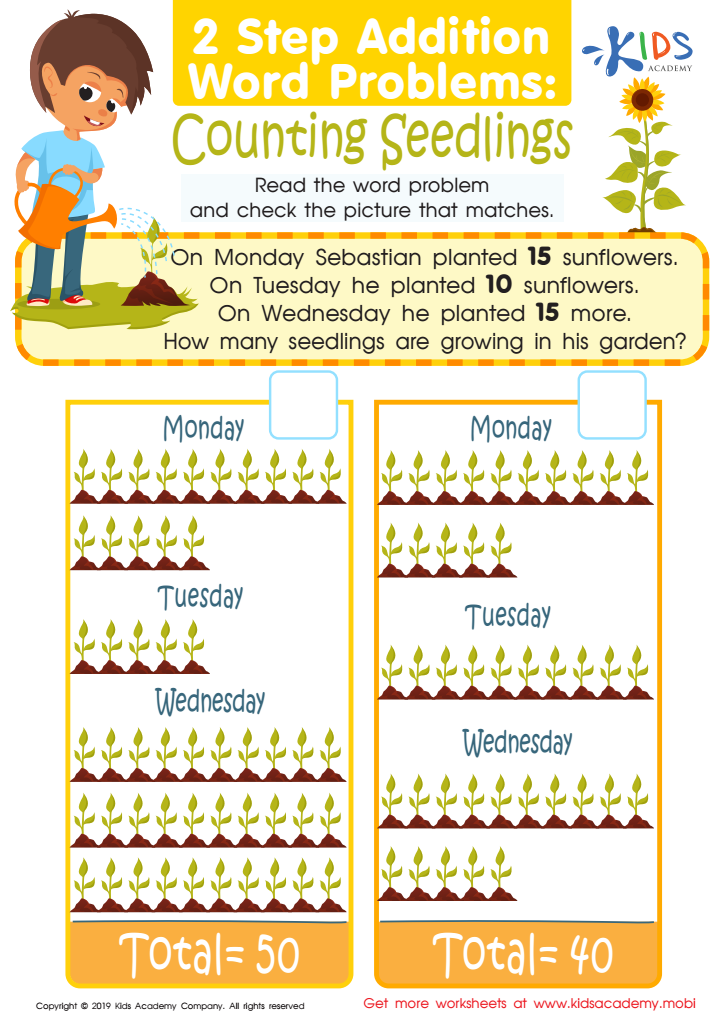
Counting Seedlings Worksheet
Understanding math word problems is key. Multiple steps can prove challenging - this free worksheet provides one-to-one picture representation to help kids solve multi-step addition word problems. Strengthen addition skills by choosing the matching picture to the answer.
 Assign to My Students
Counting Seedlings Worksheet
Worksheet
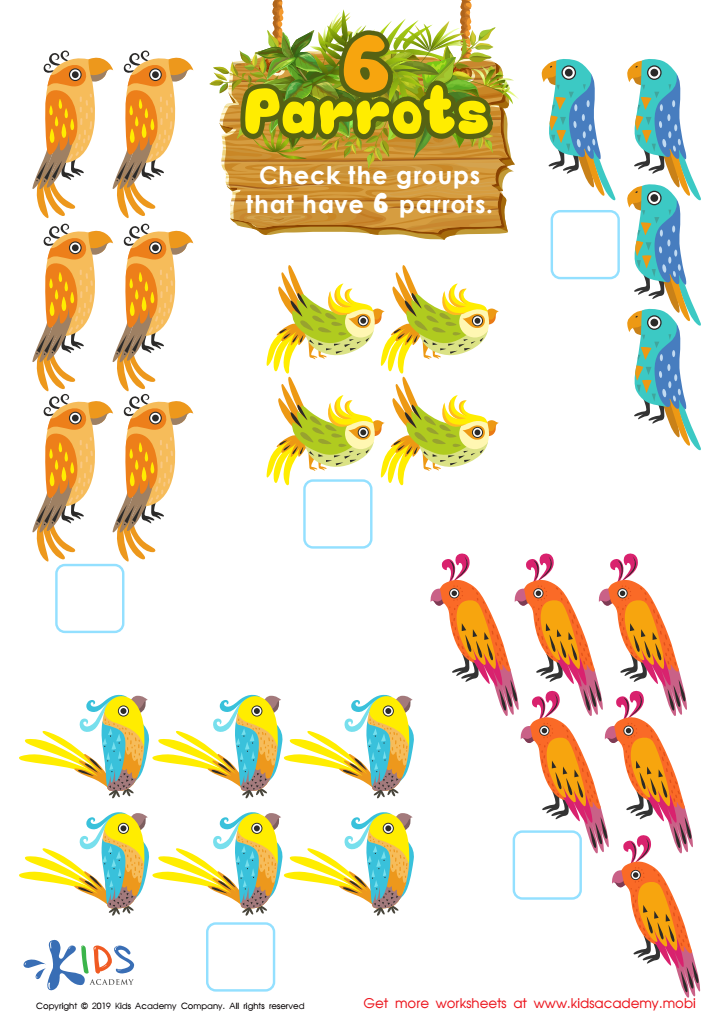
6 Parrots Worksheet
Love parrots? Here's a free worksheet to help your children practice counting to six with colorful parrot representations! Kids will adore counting the parrots and checking off groups of six - and it won't even feel like math! Just a fun way to make some new and exciting friends.
6 Parrots Worksheet
Worksheet
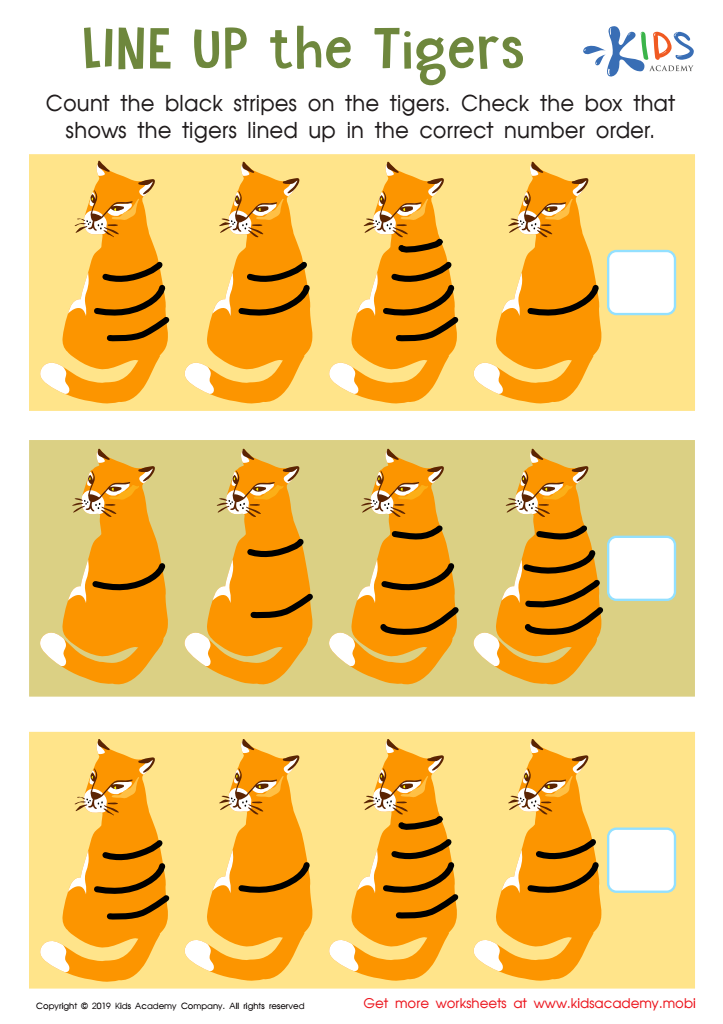
Line up the Tigers Worksheet
Give your preschoolers the right tools to succeed in math. Show them pictures of animals, then have them count the stripes and check the box that shows the tigers lined up in the right order. This will help them understand and make their journey easier.
Line up the Tigers Worksheet
Worksheet
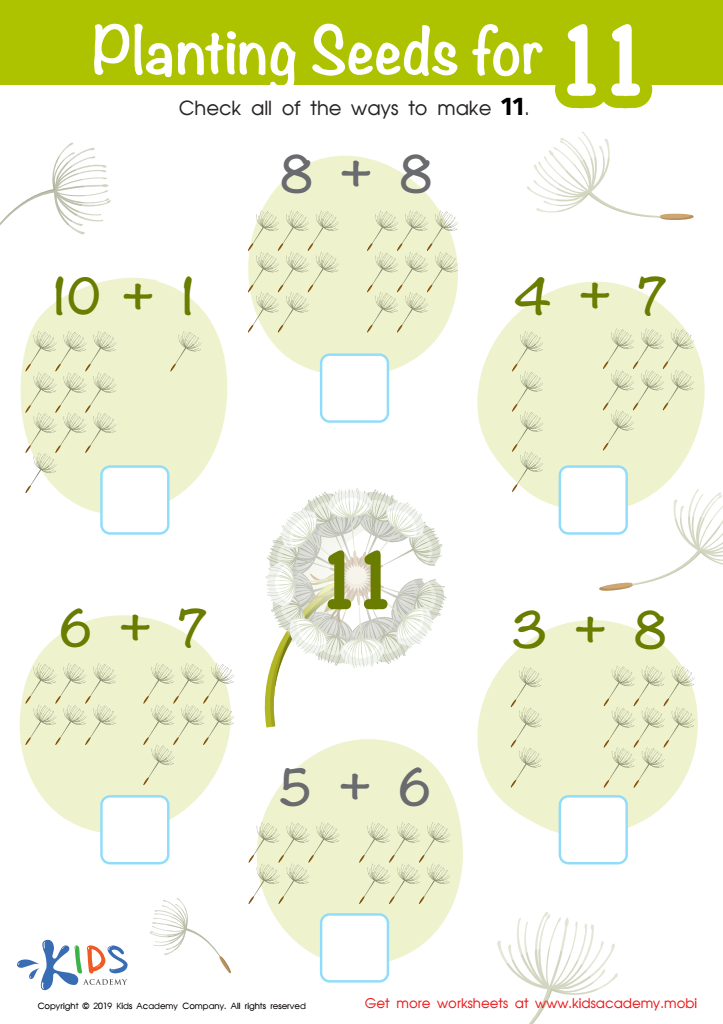
Planting Seeds for 11 Worksheet
Before starting, ask your students to count as high as they can. Explain that different numbers can add up to the same total. Give examples like 2+2 =4 and 3+1 =4. Ask if they can think of other examples. Then have them work through the equations in the printout and circle all that add up to 11.
Planting Seeds for 11 Worksheet
Worksheet
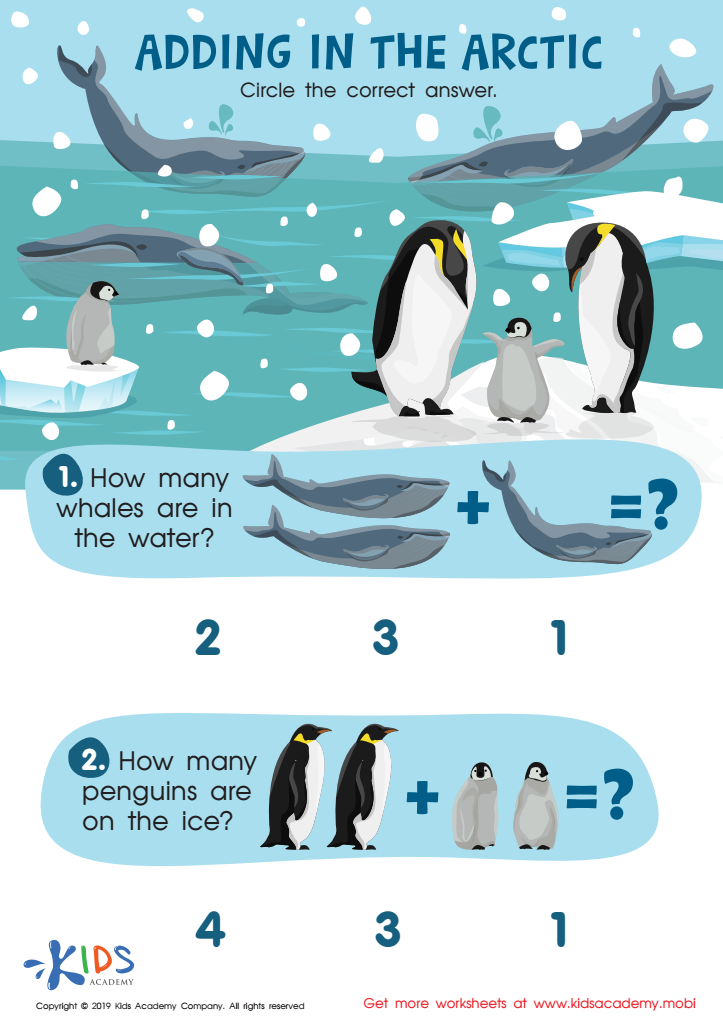
Adding in the Arctic Worksheet
Introduce your kids to the Arctic with this worksheet. Let them look at the pictures, teach them the name of the animals, and help them add up the correct number. Ask your kids to tell you some of the animals found there and what the weather is like. It's a fun and educational way to learn more about the Arctic.
Adding in the Arctic Worksheet
Worksheet
Join Kids Academy for Free
Who is primarily going to use this learning content?








Fine motor skills are essential for young children between ages 3-5 as they lay the foundation for successful later learning, particularly in areas like addition and subtraction. These skills involve the ability to use small muscles in the hands and fingers, which is vital for tasks such as holding pencils, cutting with scissors, and manipulating small objects—activities integral to early math learning.
When children engage in fine motor activities linked to easy addition and subtraction, they not only develop coordination and dexterity but also enhance their cognitive abilities. Counting blocks, threading beads, or using manipulatives to solve simple math problems allows children to physically represent mathematical concepts, making learning more interactive and engaging.
Moreover, these activities promote problem-solving skills, creativity, and perseverance, as children learn to work through challenges associated with math.
Parents and teachers should prioritize these skills to ensure children build confidence in their abilities and enjoy learning from a young age. Strengthening fine motor skills in tandem with math concepts fosters a holistic approach to education, preparing children for future academic success and lifelong learning. By incorporating fine motor activities into educational play, adults can cultivate an environment where children thrive in both motor and cognitive development.








