Improving vocabulary Easy Worksheets for Ages 3-6
3 filtered results
-
From - To
Discover a fun and effective way to boost your child's vocabulary with our easy worksheets designed for ages 3-6. At Kids Academy, our printable resources offer a delightful mix of engaging activities that make learning new words enjoyable. Each worksheet is carefully crafted to support early language development, using playful themes and colorful illustrations to capture young learners' attention. Enhance your child's communication skills and set a strong foundation for future reading success with our expertly designed vocabulary worksheets. Perfect for at-home practice or classroom use. Get started today and see the difference in your child's vocabulary!
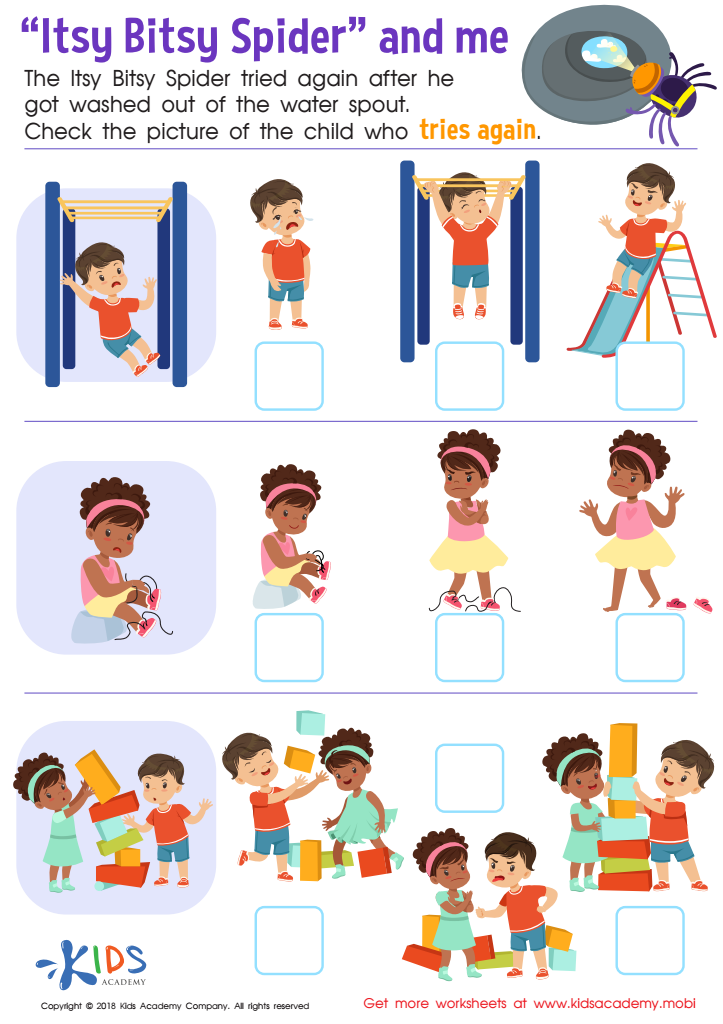
Itsy Bitsy Spider and Me Worksheet
 Assign to My Students
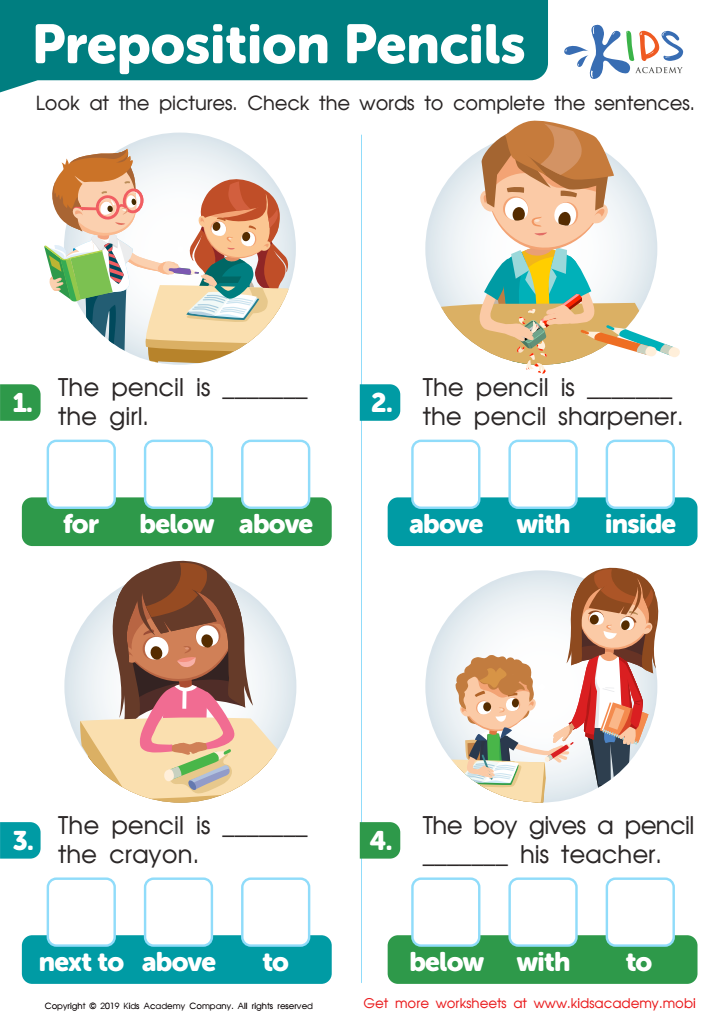
Preposition Pencils Worksheet
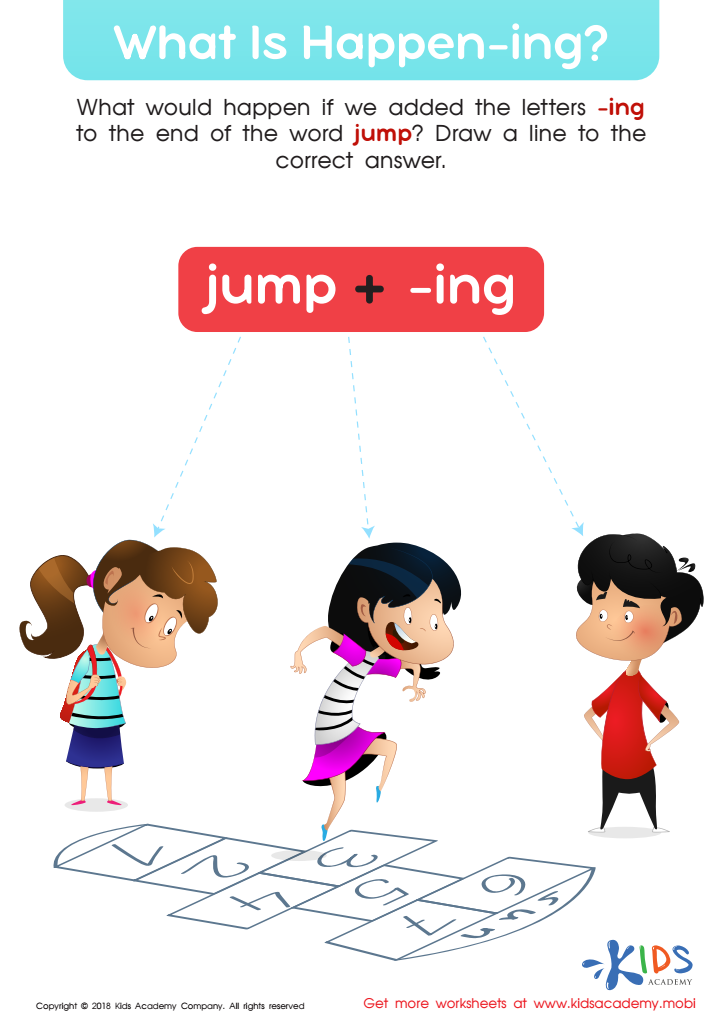
What Is Happen-Ing? Worksheet






Improving vocabulary for children ages 3-6 is crucial because this developmental period is a golden window for language acquisition. During these early years, children's brains are particularly receptive to learning new words and concepts. By enhancing their vocabulary, parents and teachers lay a strong foundation for future reading and communication skills, which are vital for academic success and social interactions.
Expanded vocabulary helps children express their thoughts and emotions more clearly, reducing frustration and promoting better behavior. When children have the words they need to describe their feelings and experiences, they can interact more effectively with peers and adults, fostering positive relationships.
Moreover, a rich vocabulary significantly boosts cognitive development. It aids in understanding complex ideas and enhances problem-solving abilities. As children learn new words, they also develop better listening skills, enhancing their ability to follow instructions and engage in conversations.
Parents and teachers play an essential role in this learning process. By reading together, playing word games, and engaging in meaningful conversations, they provide a stimulating environment for language growth. Investing time in vocabulary improvement is an investment in a child's future, equipping them with the tools they need to succeed academically, socially, and emotionally.








