Matching skills Easy Worksheets for Ages 3-6
3 filtered results
-
From - To
Spark your child's development with our fun and educational matching skills worksheets designed for ages 3-6! These carefully crafted activities will bolster your young learner's cognitive abilities, visual perception, and fine motor skills. With engaging themes, colorful images, and age-appropriate challenges, our printable worksheets make learning enjoyable and effective. Perfect for preschool, pre-K, and kindergarten students, our matching exercises aid in recognizing patterns, shapes, and similarities. Help your child build critical thinking and problem-solving skills while having fun. Discover our collection today and foster a love for learning from an early age!
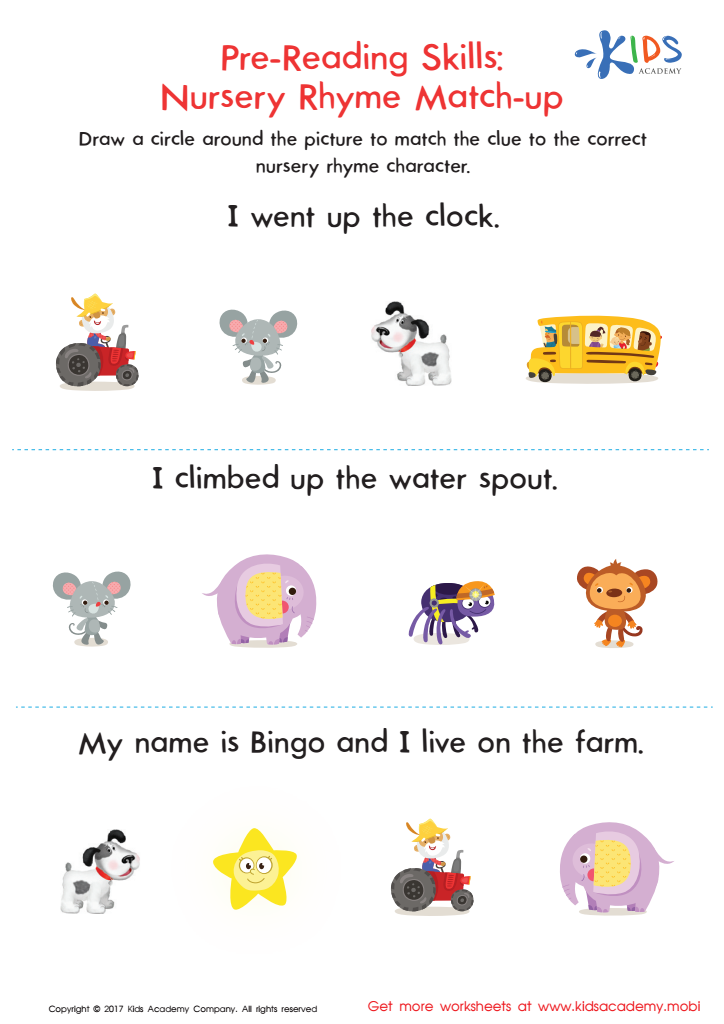
Nursery Rhyme Match–Up Worksheet
 Assign to My Students
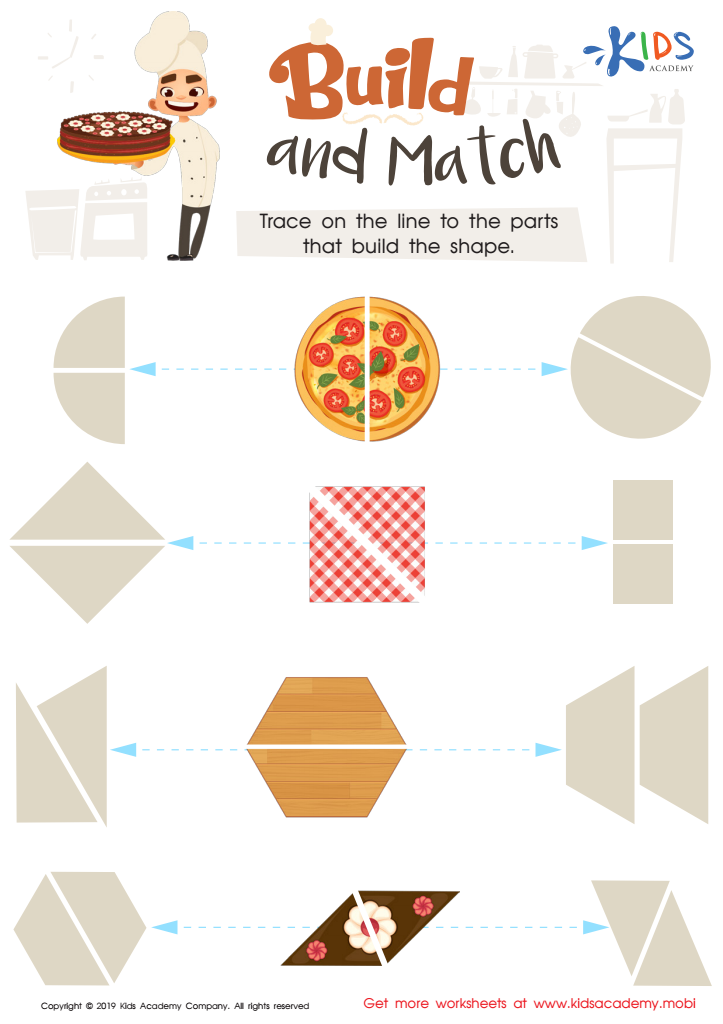
Build and Match Worksheet
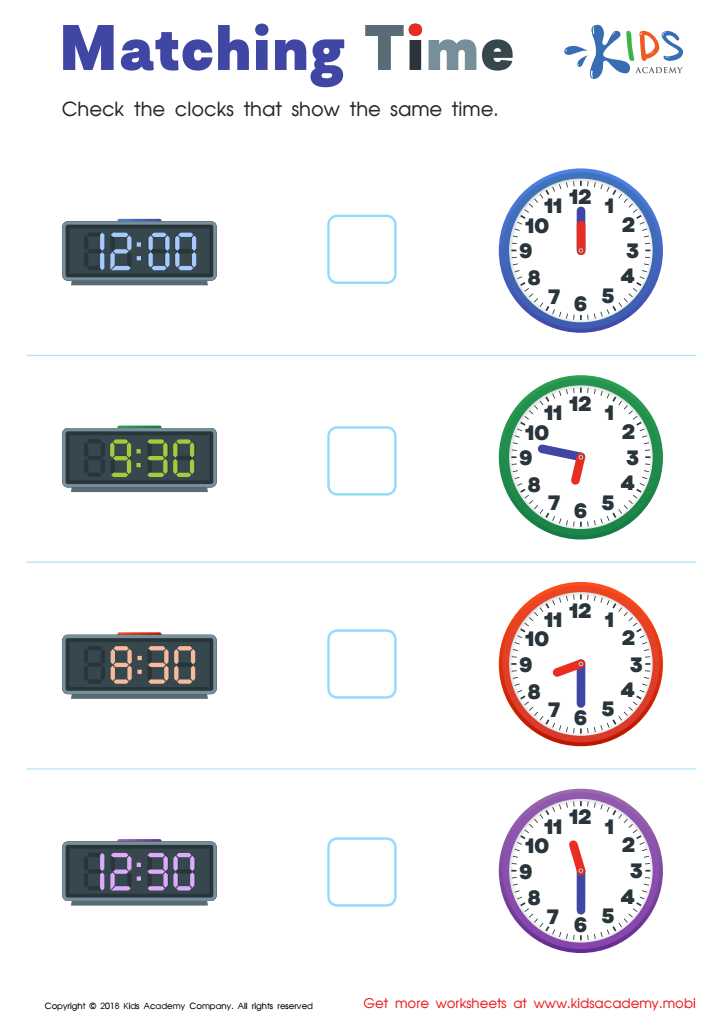
Matching Time Worksheet








Matching skills, involving activities where children pair similar items or recognize patterns, are essential for young learners aged 3-6 because they lay the foundation for critical thinking and cognitive development. At this age, children's brains are incredibly active and receptive to new information. By engaging in matching exercises, kids enhance their cognitive abilities by learning to categorize, identify relationships, and recognize sequences. This not only helps in developing problem-solving skills but also strengthens memory retention.
Moreover, matching games and activities can significantly support language development. As children match pictures to words or letters, they expand their vocabulary and improve their understanding of syntax and grammar. This early literary exposure is crucial for reading readiness and language skills as they progress in their education.
Matching skills also foster fine motor development. Activities such as matching cards or assembling puzzles enhance hand-eye coordination and dexterity, which are important for writing and other tasks later on.
Additionally, these exercises can help improve attention span and concentration. The focus required to successfully complete matching tasks encourages perseverance and patience, traits will benefit children throughout their school years.
In sum, caring about and nurturing matching skills in early childhood sets children up for success by enhancing cognitive, linguistic, and motor skill development in a fun and engaging way.








