
Pattern recognition Easy Worksheets for Ages 3-6
3 filtered results
Difficulty Level
Grade
Age
-
From - To
Subject
Activity
Standards
Unlock your child's potential with our engaging and interactive pattern recognition worksheets designed specifically for ages 3-6! These easy-to-follow activities help develop critical thinking and cognitive skills through fun and playful exercises. Your little learners will enjoy identifying, predicting, and creating patterns with vibrant illustrations and themes that capture their imagination. Each worksheet is crafted to encourage problem-solving and pattern recognition abilities, ensuring a solid foundation for future learning. Perfect for home or classroom use, our worksheets make learning enjoyable and effective. Explore our collection today and inspire your child's love for learning through the magic of patterns!
Favorites
With answer key
Interactive
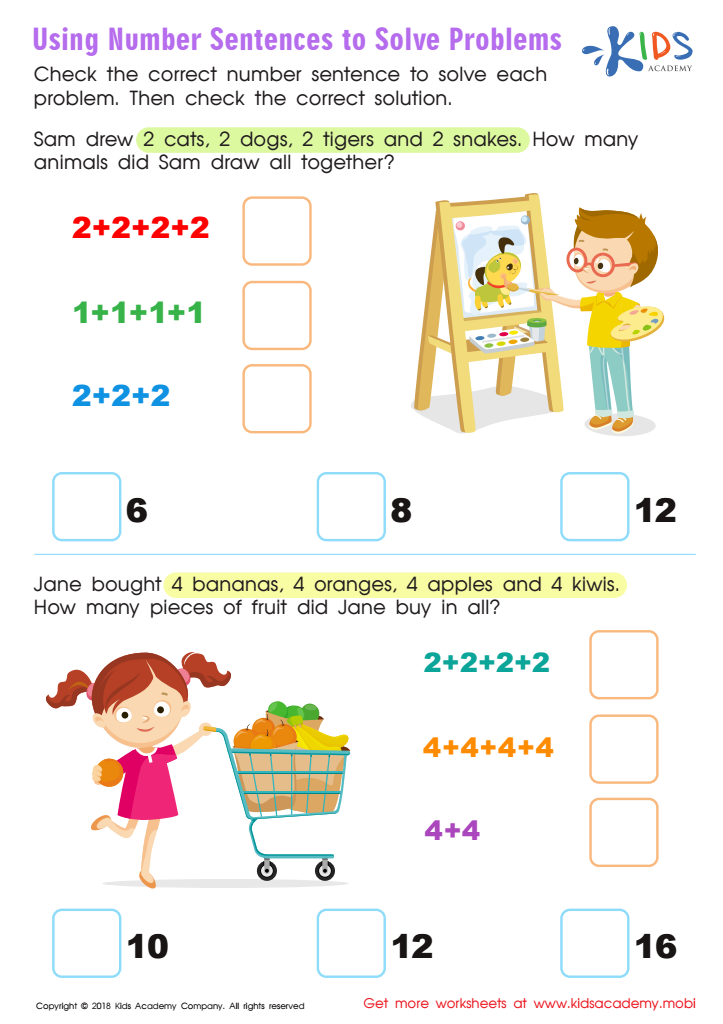
Using Number Sentences to Solve Problems Worksheet
Solving math problems requires an efficient strategy. Picture representation can help young mathematicians with basic addition problems, especially when it involves repeated addends. As they gain confidence, they'll be able to apply their number sentence solving abilities to more complex equations.
 Assign to My Students
Using Number Sentences to Solve Problems Worksheet
Worksheet
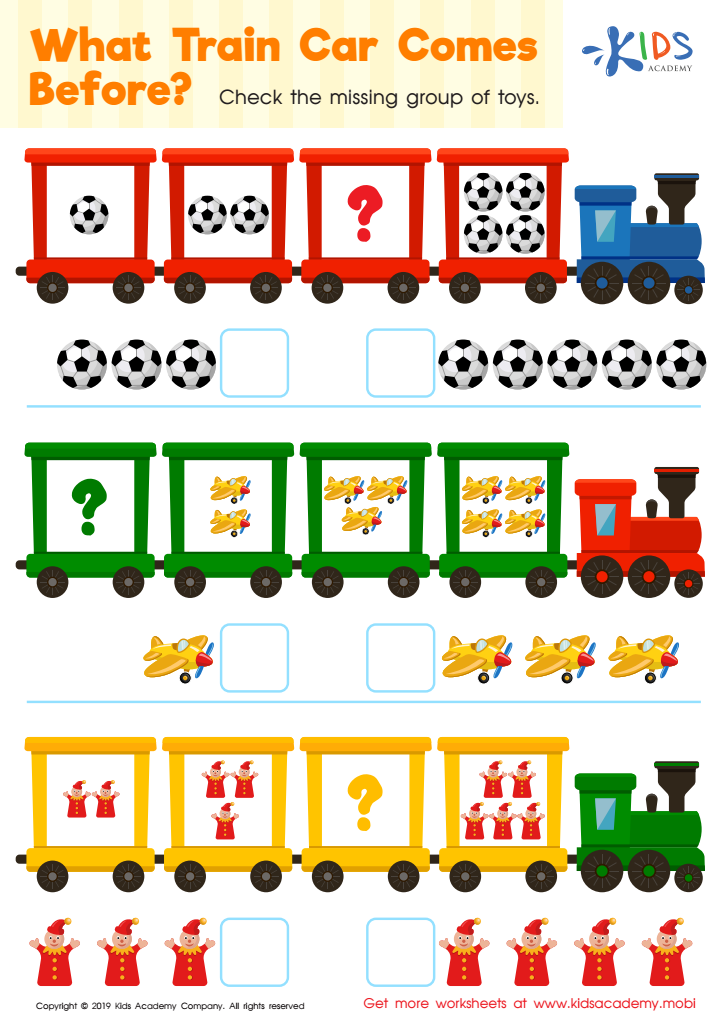
What Train Car Comes Before? Worksheet
Download this worksheet with your kids and have them identify the colorful objects pictured. Count the toys in the three trains together, then check the missing group of toys from the options provided. Have fun! (80 words)
What Train Car Comes Before? Worksheet
Worksheet
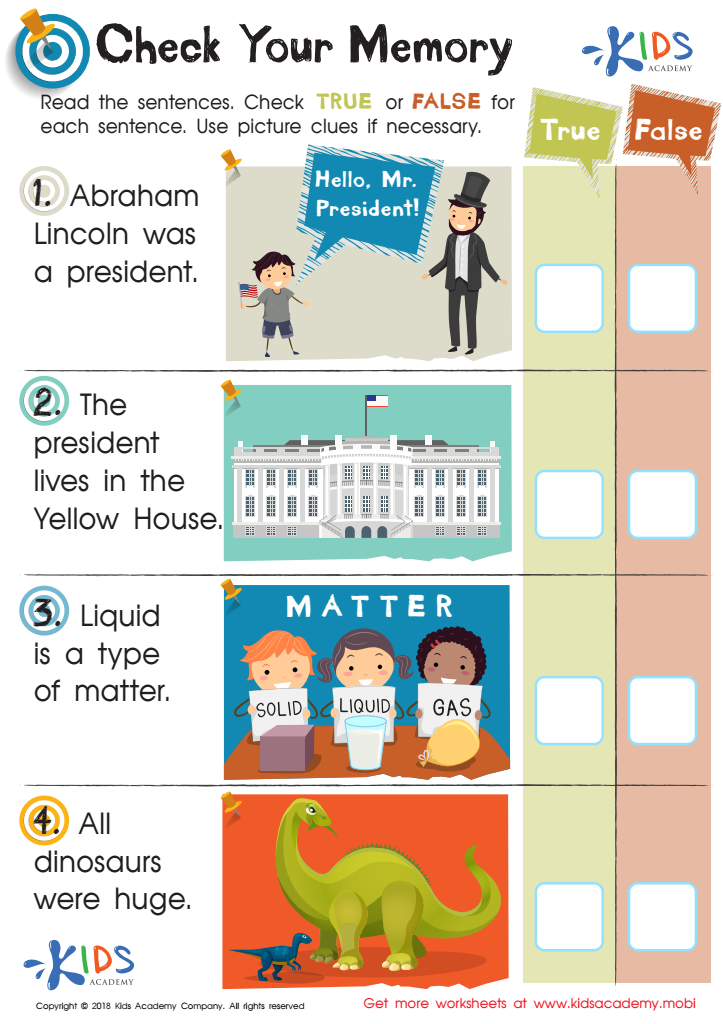
Check Memory Worksheet
Assisting your kids with their homework and using worksheets is a great way for them to learn. The vibrant visuals in this printout can help stimulate the mind and motivate your child. Have them read the sentences and then point to the associated images. Afterwards, ask them to state True or False for each sentence. If they are still uncertain, offer them the picture clues to assist further.
Check Memory Worksheet
Worksheet
Join Kids Academy for Free
Who is primarily going to use this learning content?






.jpg)
Pattern recognition is a foundational cognitive skill that serves as a building block for early learning in children ages 3-6. Understanding patterns helps kids make sense of the world around them, fostering critical thinking and problem-solving abilities. Parents and teachers should prioritize pattern recognition activities to cultivate brain development, as engaging with patterns sharpens observational skills and promotes logical reasoning.
When children identify and create patterns, they're not only learning to predict what comes next, but they're also enhancing their ability to process information and spot relationships between objects. This important skill set paves the way for mathematical reasoning, leading to stronger abilities in numeracy and literacy later on.
Furthermore, pattern recognition encourages creativity and language development; children often use descriptive words to communicate patterns, fostering vocabulary growth. Engaging learners in playful and interactive activities, such as sorting shapes, recognizing rhythms in music, or creating collages, not only makes learning fun but also reinforces social skills through cooperative play.
Ultimately, nurturing pattern recognition in young children enables them to build fundamental skills essential for school readiness and lifelong learning, making it an important focus for parents and educators alike.








