Sorting skills Easy Worksheets for Ages 3-6
5 filtered results
-
From - To
Introduce your little learners to the world of sorting with our "Sorting Skills Easy Worksheets for Ages 3-6." These fun, engaging, and age-appropriate worksheets are designed to help children develop essential categorization and organizational skills. Each activity encourages kids to sort objects by various attributes such as color, shape, and size. Through playful and interactive exercises, children will enhance their critical thinking, attention to detail, and problem-solving abilities. Perfect for both classroom and home use, these printable worksheets turn
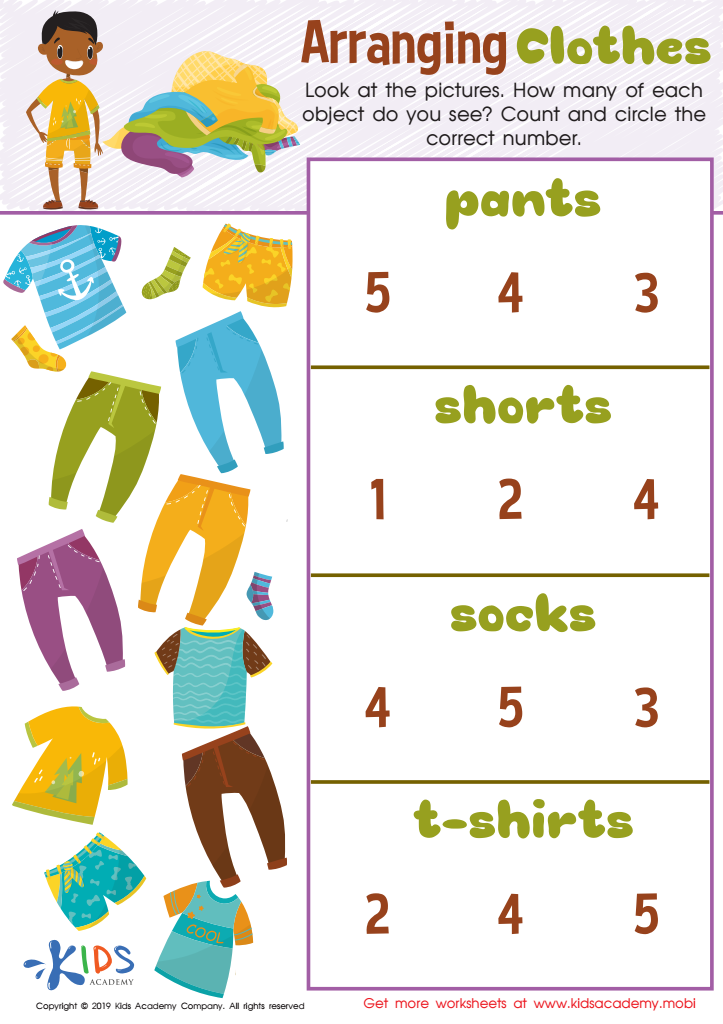
Arranging Clothes Worksheet
 Assign to My Students
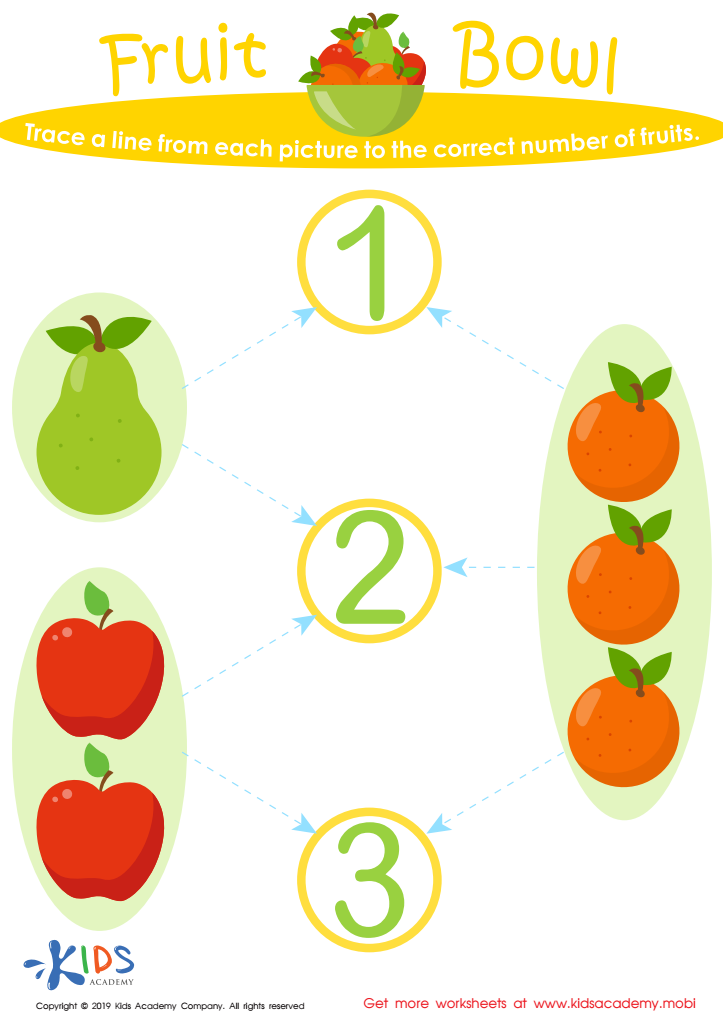
Fruit Bowl Worksheet
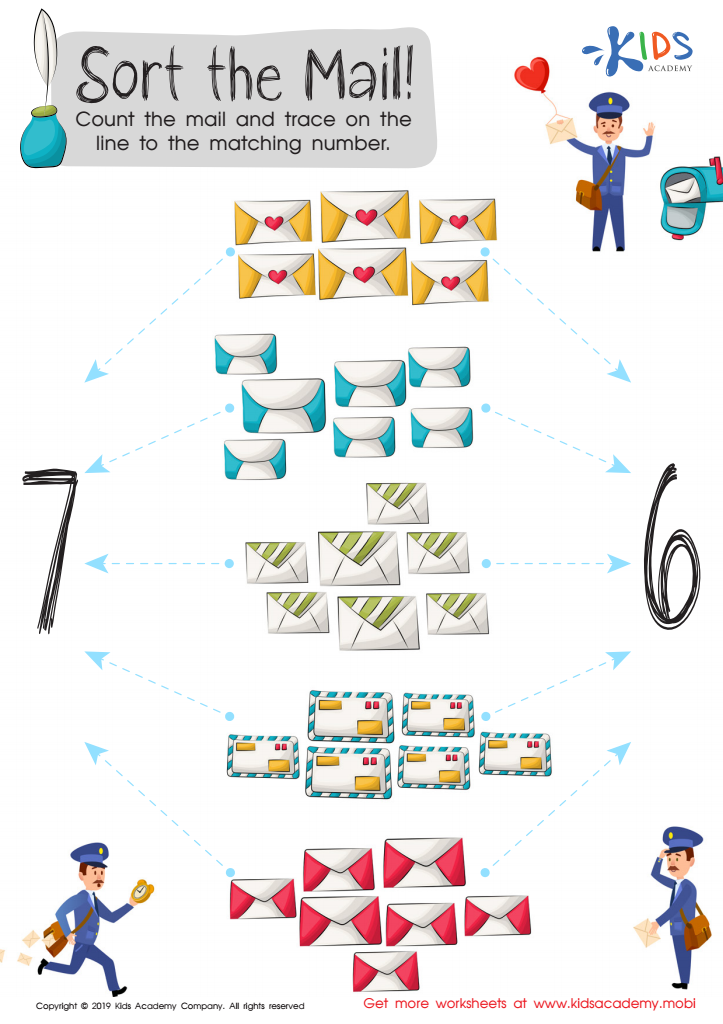
Sort the Mail Worksheet
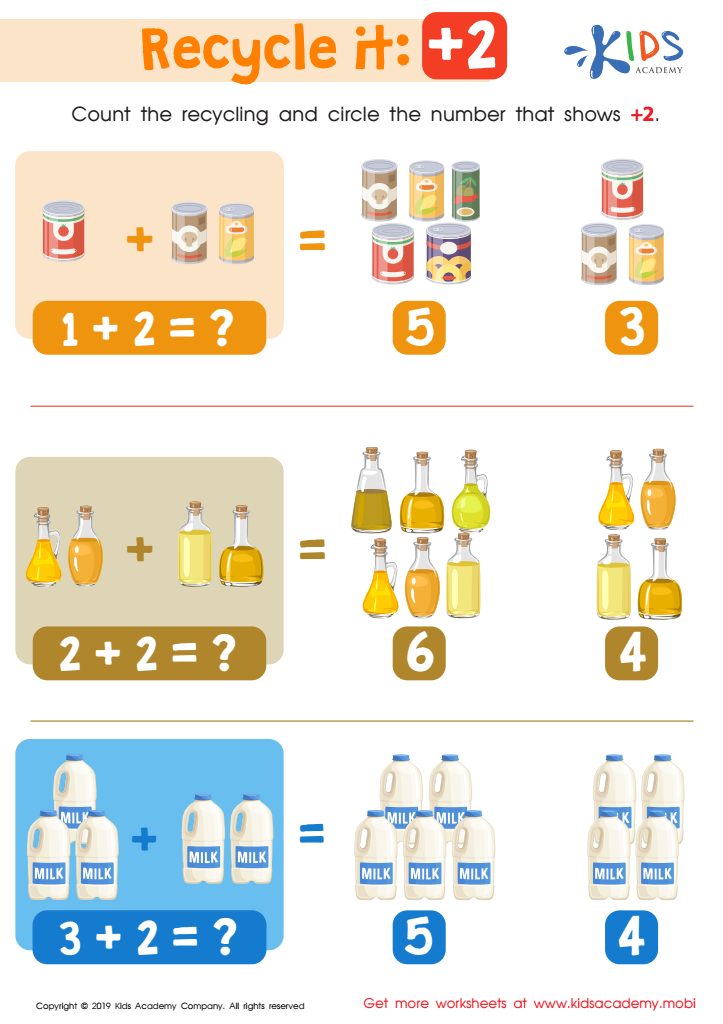
Recycle It: +2 Worksheet
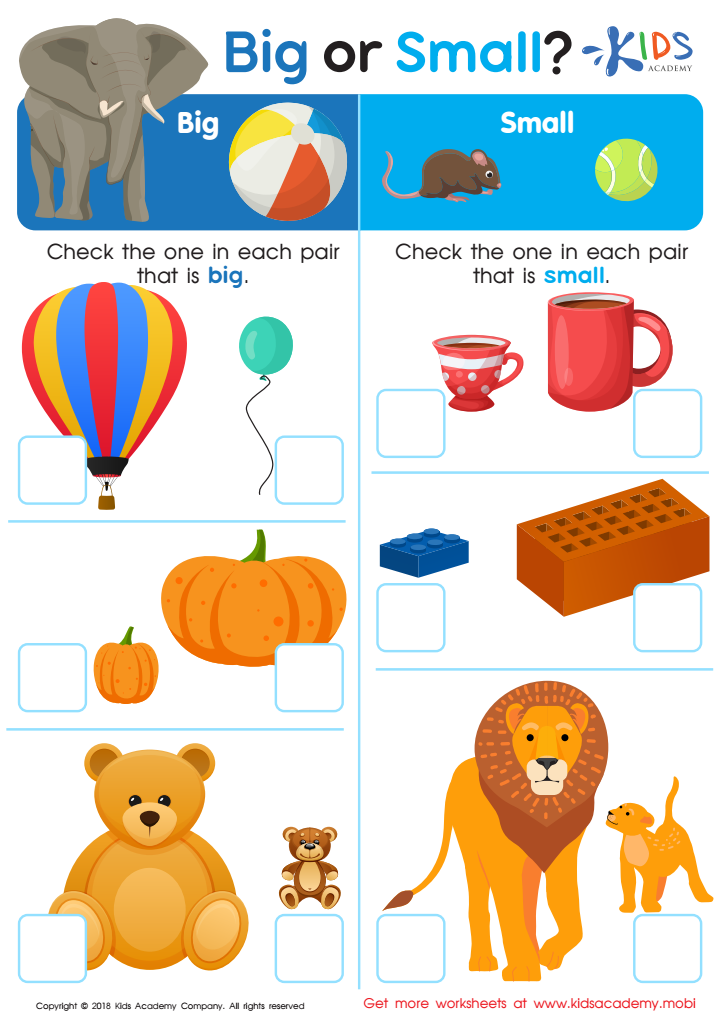
Big or Small? Worksheet




.jpg)



Sorting skills play a pivotal role in early childhood development for children aged 3-6. Parents and teachers should care about these skills because they lay the groundwork for fundamental cognitive processes. Sorting encourages children to observe, compare, and classify objects based on various attributes such as color, shape, and size. This fosters critical thinking and enhances their ability to make sense of the world around them.
From a developmental perspective, engaging in sorting activities helps improve a child's fine motor skills as they pick up and manage different objects. It also aids in the development of visual perception and memory, as kids learn to distinguish and categorize items.
Sorting is closely linked to early math skills. By recognizing patterns and categorizing different groups, children begin to understand basic mathematical concepts like counting, matching, and organizing, which are essential for their future learning in subjects like mathematics and science.
Moreover, sorting activities allow for language development. As children discuss their sorting criteria with parents or teachers, they learn new vocabulary and better understand descriptive language concepts.
In essence, sorting skills are foundational to a child's cognitive, motor, mathematical, and language development, and their acquisition should be encouraged both at home and in the classroom.








