Understanding citizenship Easy Worksheets for Ages 3-6
3 filtered results
-
From - To
Explore our "Understanding Citizenship" worksheets designed specifically for ages 3-6! These engaging, easy-to-follow activities help young learners grasp the basics of citizenship. Through fun illustrations and age-appropriate tasks, children will discover concepts such as community, sharing, and respectful behavior. Our worksheets promote critical thinking and encourage discussions about individual roles and responsibilities within a community, fostering a sense of belonging in young minds. Designed to make learning enjoyable, these resources are perfect for teachers and parents looking to instill important civic values from an early age. Start your child's journey towards becoming a responsible citizen today!
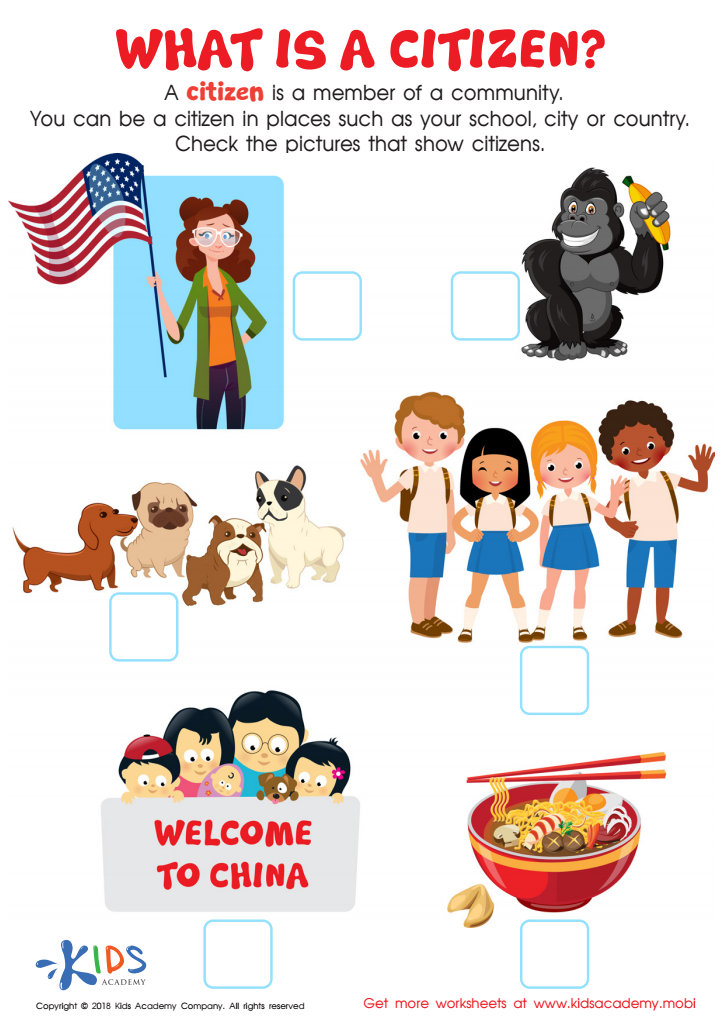
What is a Citizen? Worksheet
 Assign to My Students
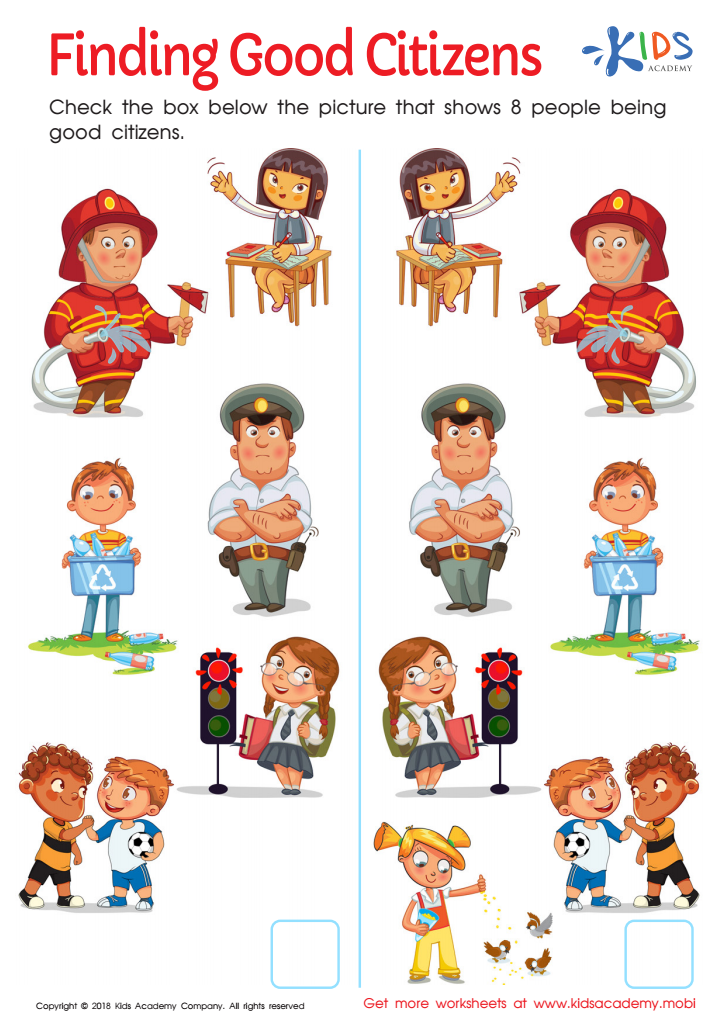
Finding Good Citizens Worksheet
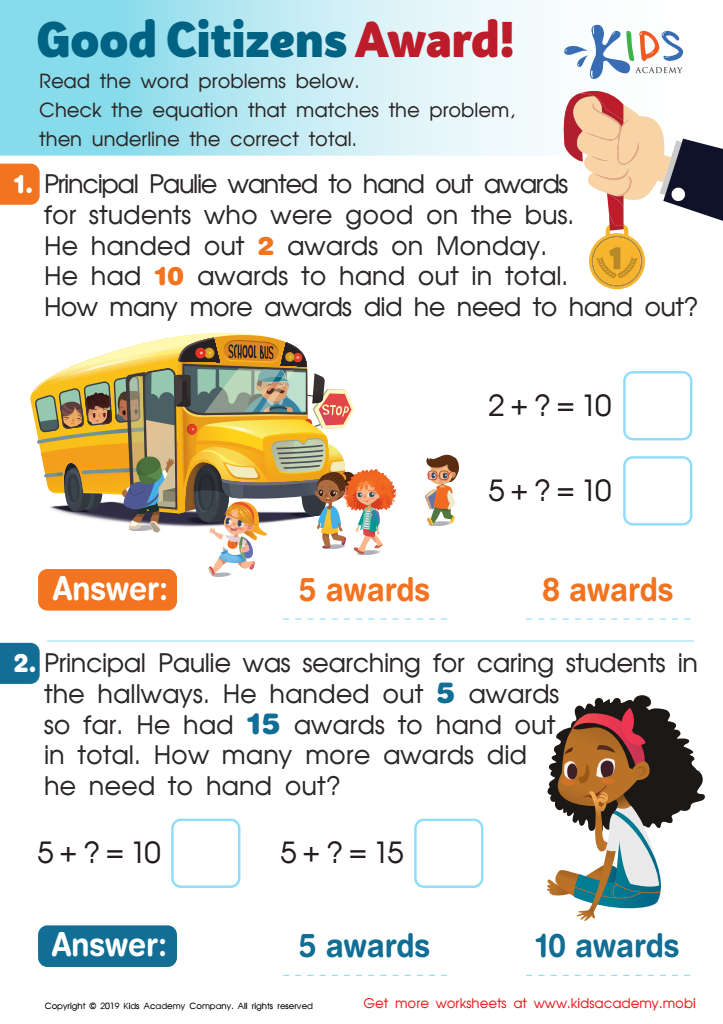
Good Citizens Award! Worksheet





Understanding citizenship is essential for young children aged 3-6 because it lays the foundation for their role in the community and society. At this age, kids begin to recognize themselves as part of a larger group. Teaching them about citizenship helps them understand important concepts like sharing, kindness, and respect.
When parents or teachers introduce simple ideas of citizenship, children learn about belonging, inclusion, and responsibility. They start to grasp the significance of listening to others, taking turns, and helping friends, which are fundamental social skills. These lessons promote cooperation and empathy among peers, fostering a sense of community even in a classroom setting.
Furthermore, instilling these values early cultivates future citizens who are more likely to participate responsibly in their communities. It encourages them to value diversity and understand the importance of standing up for fairness and justice. Engaging in activities about rights and responsibilities can be fun and interactive, reinforcing positive behaviors and attitudes.
Overall, emphasizing citizenship at this young age empowers children to grow into aware, respectful individuals who contribute positively to society. Therefore, understanding citizenship is not just an educational goal; it's a gift that parents and teachers can give children for a brighter future.








