Understanding opposites Easy Worksheets for Ages 3-6
4 filtered results
-
From - To
Explore our "Understanding Opposites Easy Worksheets" designed specifically for children ages 3-6. These engaging and colorful worksheets provide a fun way for young learners to grasp the concept of opposites. Through interactive activities, kids will identify and visualize pairs like big/small, hot/cold, and more, fostering essential cognitive skills. Tailored to spark creativity and promote language development, our worksheets make learning enjoyable! Ideal for home or classroom use, these resources encourage children to think critically while enhancing their vocabulary. Get ready for an exciting educational journey that helps little ones master the concept of opposites with ease and delight!
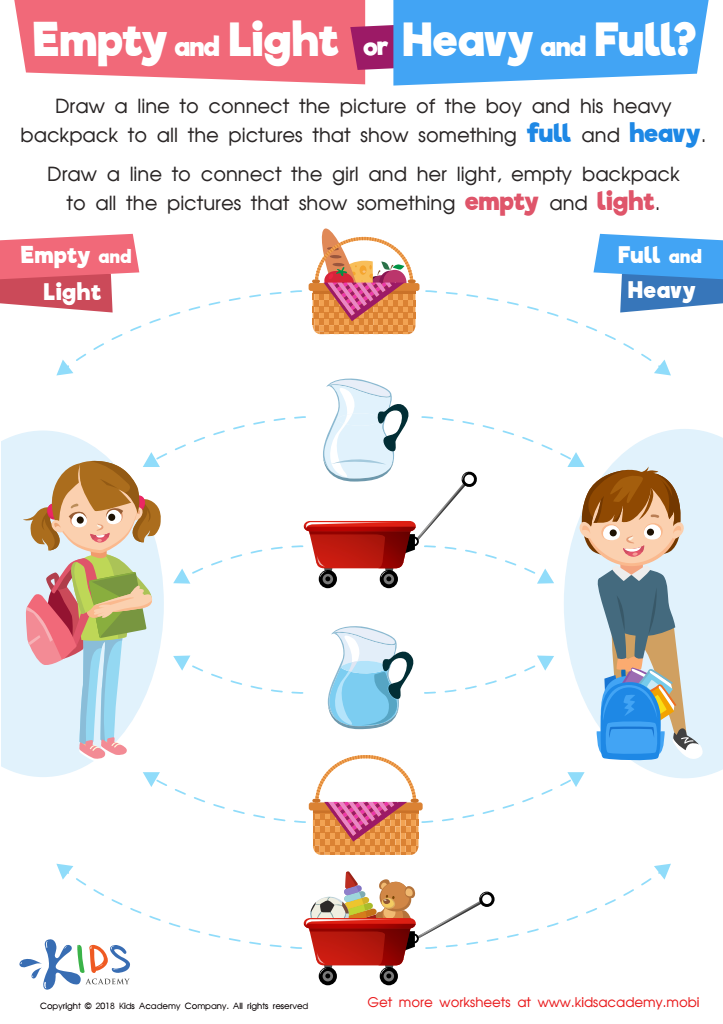
Empty and Light or Heavy and Full? Worksheet
 Assign to My Students
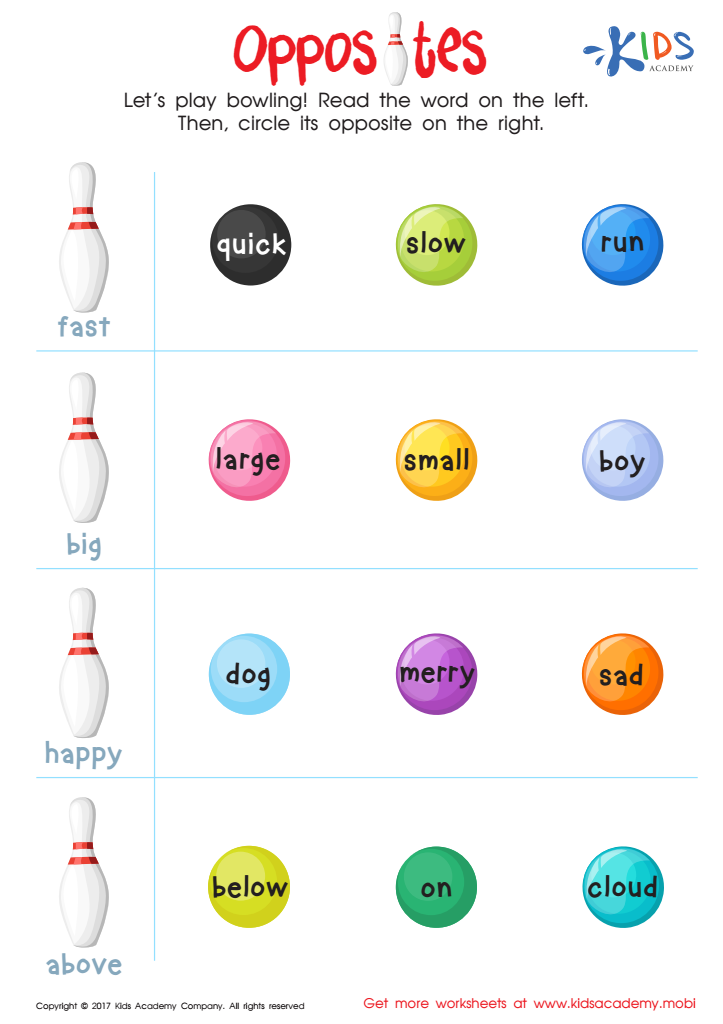
Opposites Worksheet
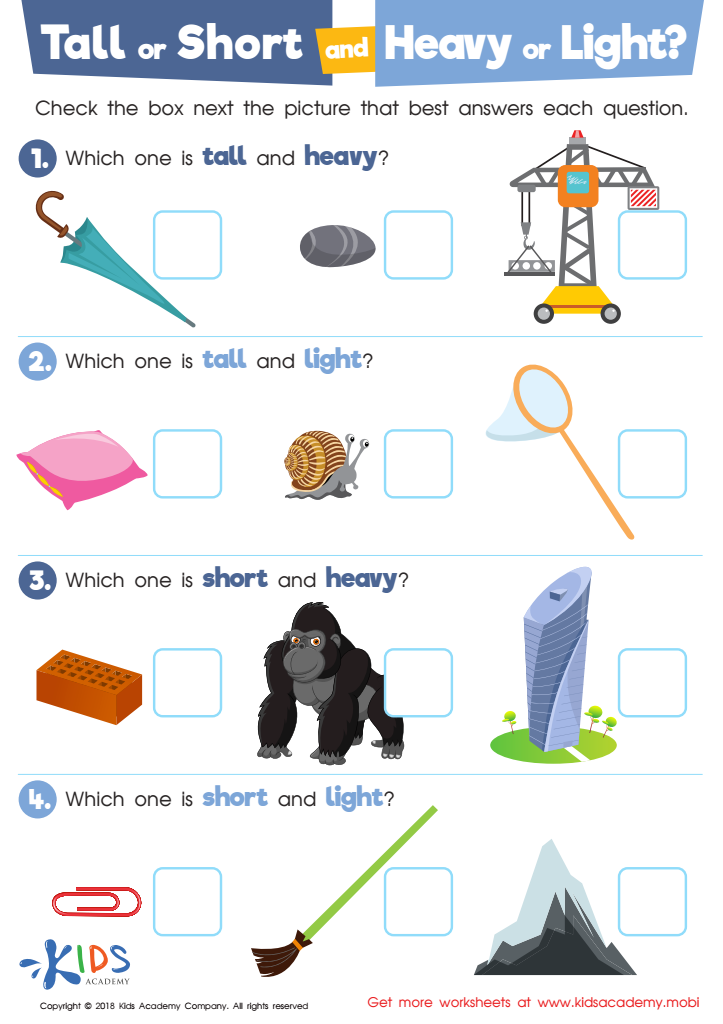
Tall or Short and Heavy or Light? Worksheet
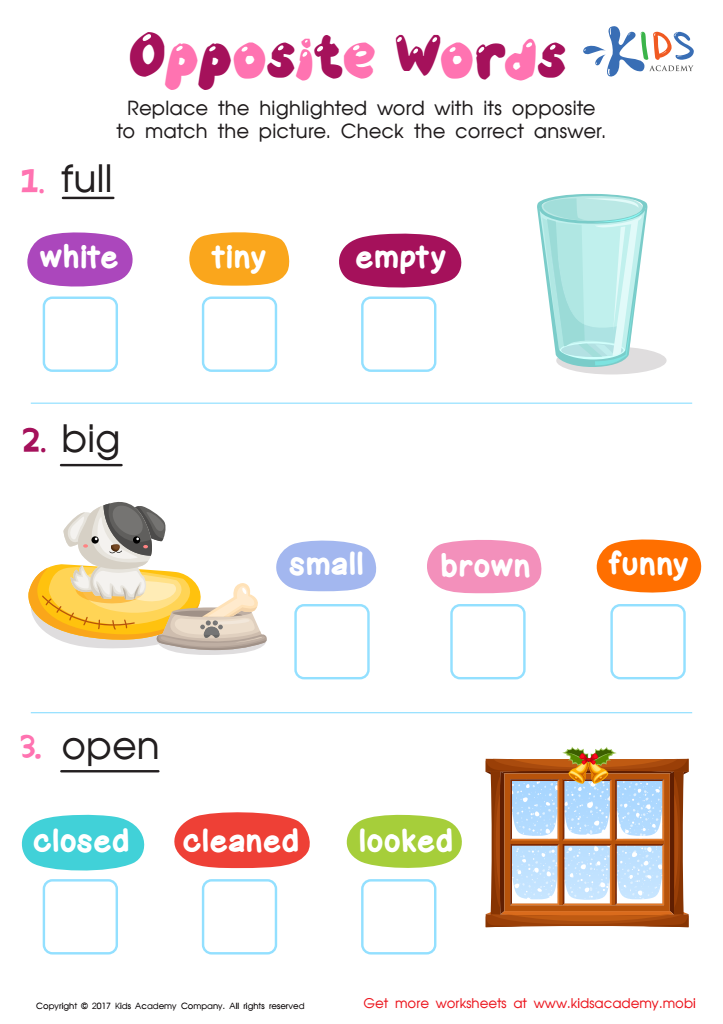
Opposite Words Worksheet




Understanding opposites is a fundamental concept that plays a crucial role in the early cognitive development of children aged 3-6. During these formative years, children begin to make connections and categorize information, and grasping the idea of opposites enhances their critical thinking skills. By learning about contrasting pairs, such as big/small, hot/cold, or happy/sad, young learners improve their vocabulary and comprehension skills, which are essential for effective communication.
Parents and teachers should care about this learning process because it forms the basis for more complex reasoning. Recognizing opposites helps children understand relationships and differences in the world around them, making it easier for them to navigate social situations and relationships. Additionally, exploring opposites can be fun and engaging, promoting a love for learning that can foster a positive attitude toward education.
Incorporating activities that focus on opposites into everyday life—through games, storytelling, or discussions—also bolsters social and emotional development. As children articulate their understanding of opposites, they build self-confidence and enhance their emotional awareness. Ultimately, teaching children about opposites lays a strong foundation for future academic success and personal growth.








