Problem-Solving Skills Easy Addition and Subtraction Word Problems Worksheets for Ages 3-6
7 filtered results
-
From - To
Discover our engaging "Problem-Solving Skills: Easy Addition and Subtraction Word Problems Worksheets" specially designed for children ages 3-6. These fun worksheets are perfect for young learners, helping them master fundamental math concepts while enhancing their problem-solving abilities. Each worksheet features colorful graphics and relatable scenarios that make math practice enjoyable and interactive. Kids will solve simple addition and subtraction problems by analyzing real-life situations, promoting critical thinking and comprehension. Ideal for both classroom and home use, these worksheets foster a strong mathematical foundation and encourage early learners to approach challenges with confidence. Start their math journey today!
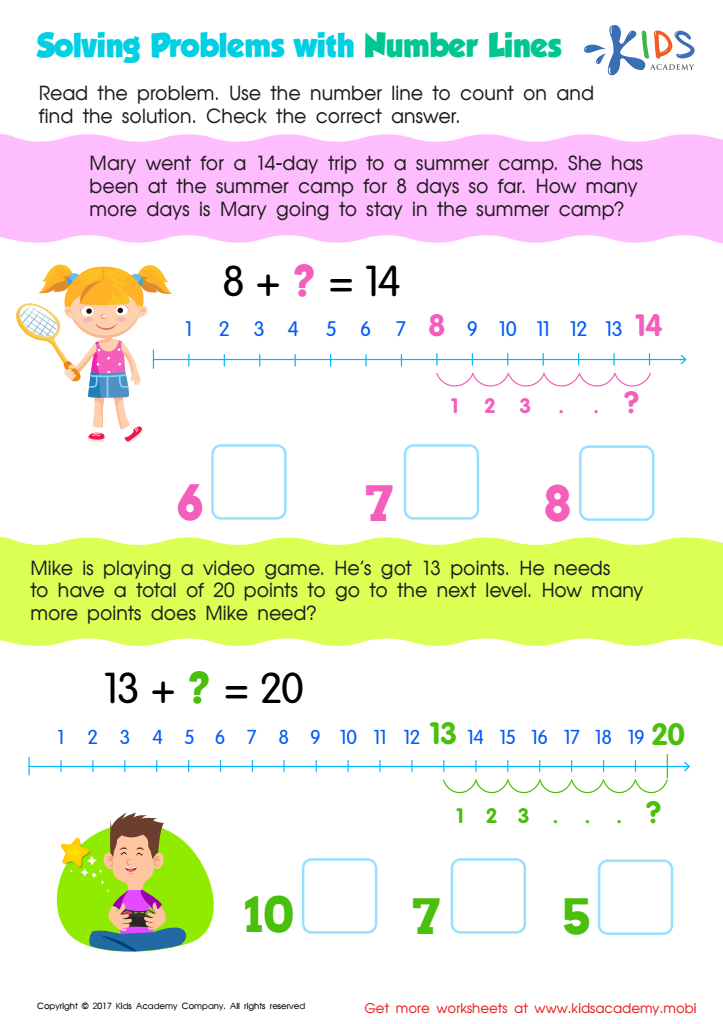
Solving Problems: Number Lines Worksheet
 Assign to My Students
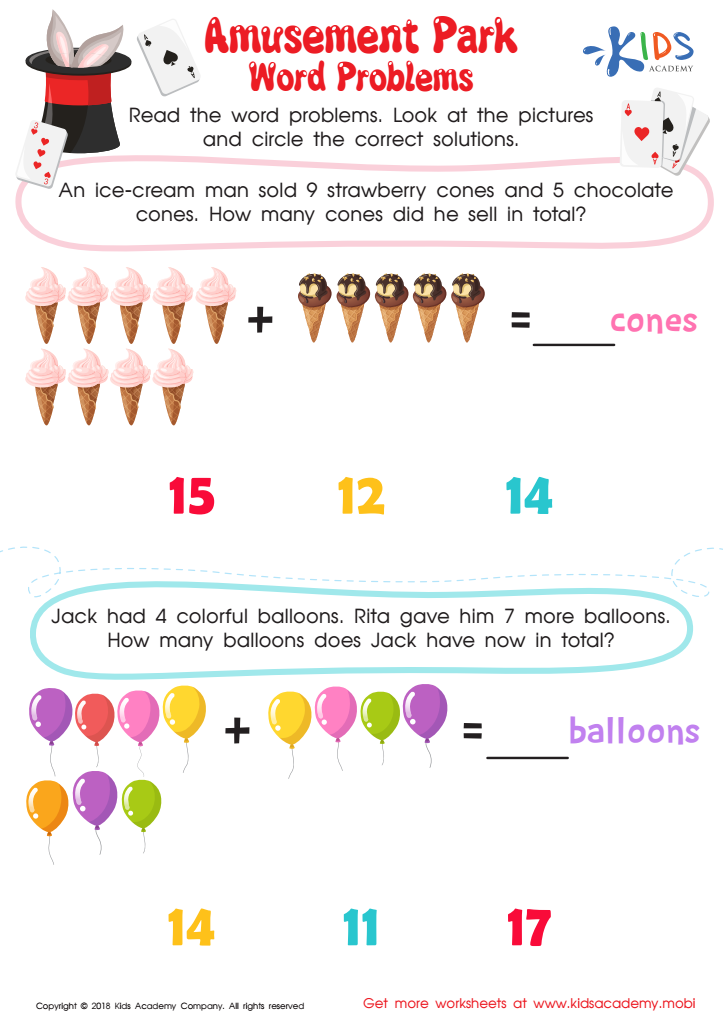
Amusement Park Word Problems Worksheet
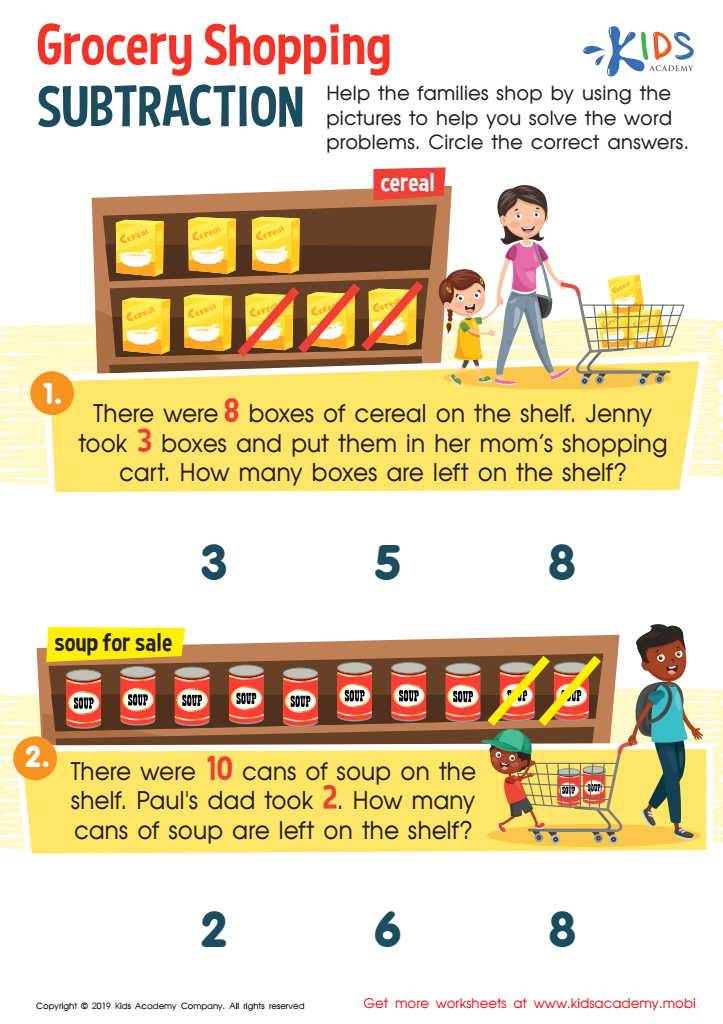
Grocery Shopping Subtraction Worksheet
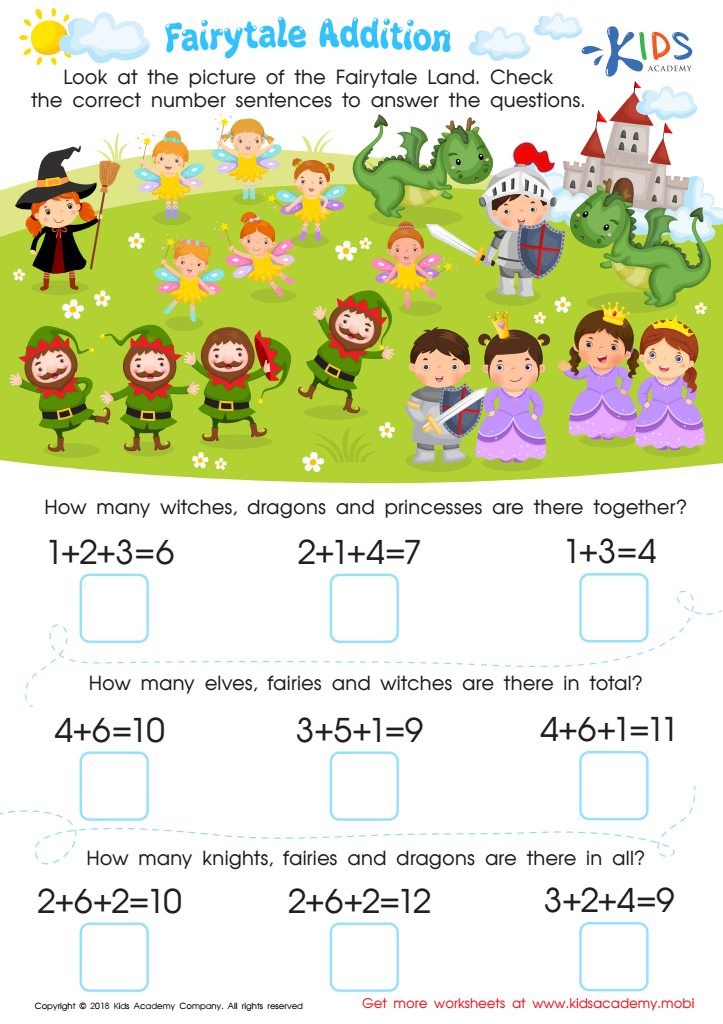
Fairytale Addition Worksheet
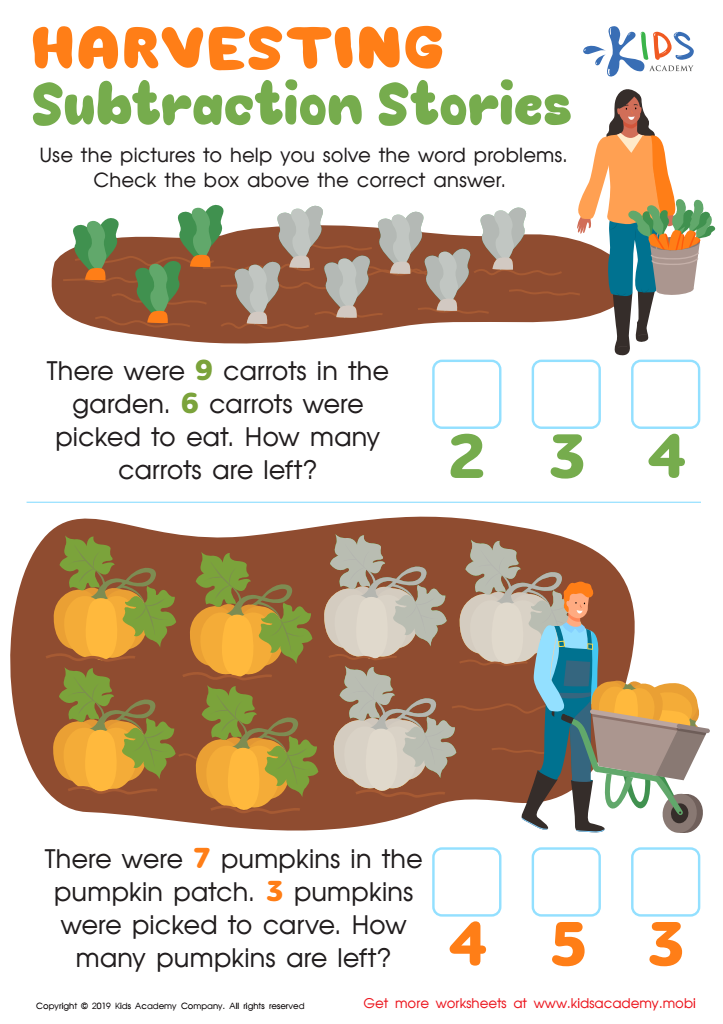
Harvesting Subtraction Stories Worksheet
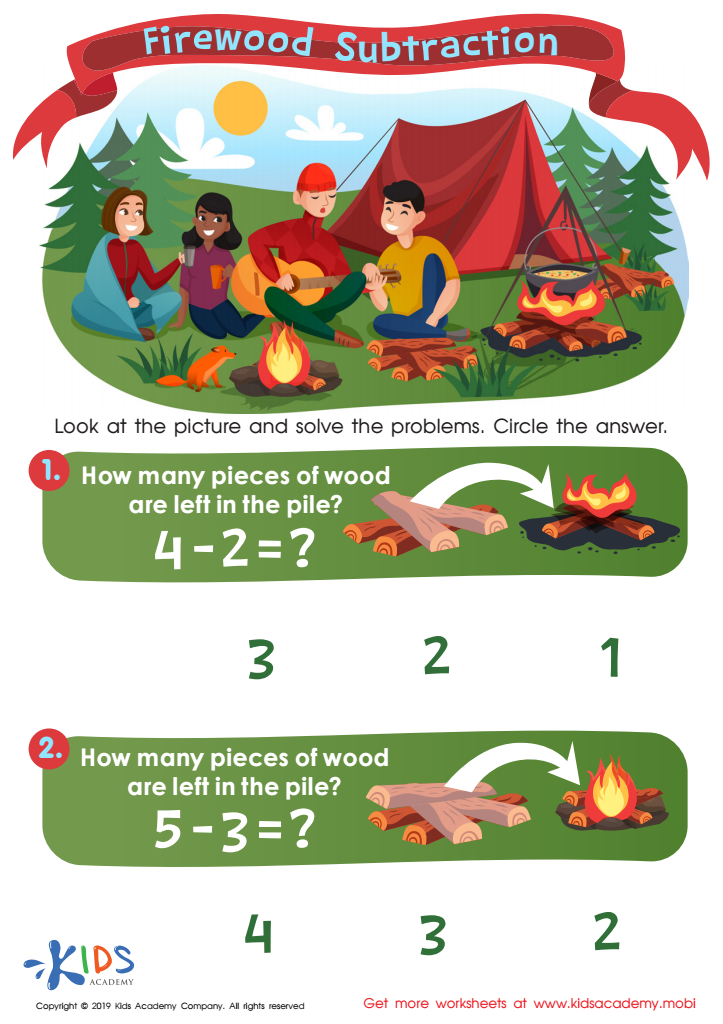
Firewood Subtraction Worksheet
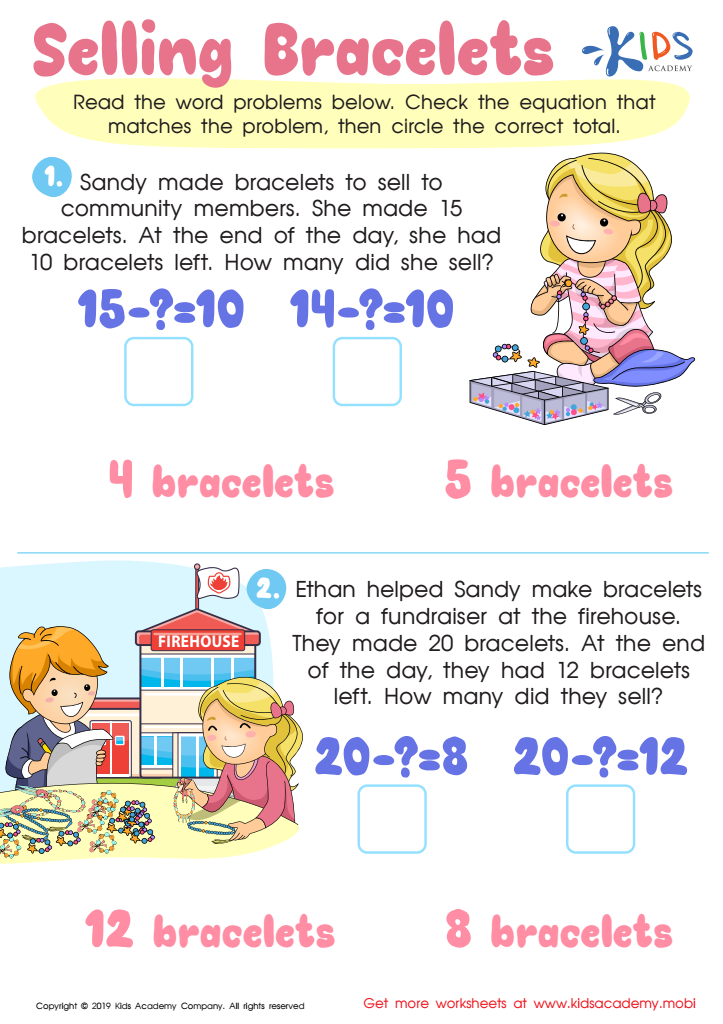
Selling the Bracelets Worksheet








Problem-solving skills, particularly through easy addition and subtraction word problems, are essential for children aged 3-6 as they lay the foundational groundwork for future mathematical understanding. At this early stage, children develop critical thinking and analytical abilities, which are vital not just for math but for life situations as well.
When parents and teachers engage children with word problems, they encourage skills like comprehension and interpretation. Children learn to extract relevant information, identify relationships between numbers, and apply basic operations in context. This problem-solving approach nurtures curiosity and a love for learning, making math feel relevant and fun.
Moreover, mastering these skills can significantly enhance a child's confidence in their abilities. As children learn to navigate and resolve problems, they experience a sense of achievement, which fosters a positive attitude toward school and learning overall. Collaborative activities involving word problems also enhance social skills, as children discuss and share their thought processes with peers or adults.
Fostering early problem-solving abilities equips children with tools to tackle complex challenges later in life. Therefore, parents and teachers play a crucial role in supporting this developmental milestone, enriching children's educational experiences, nurturing lifelong learners.