
Basic subtraction Easy Math Worksheets for Ages 3-6
3 filtered results
Difficulty Level
Grade
Age
-
From - To
Subject
Activity
Standards
Discover our "Basic Subtraction Easy Math Worksheets for Ages 3-6," designed to make learning subtraction enjoyable for young minds. Tailored for preschoolers and kindergarteners, these engaging worksheets provide a fun, interactive way to practice essential math skills. Each page features colorful illustrations and simple problems to help children easily grasp foundational subtraction concepts. With our thoughtfully crafted activities, kids build their confidence and foster a love for math. Perfect for parents and teachers alike, these worksheets support early learning and prepare children for future success in mathematics. Unlock your child's potential with our fun and educational subtraction worksheets!
Favorites
With answer key
Interactive
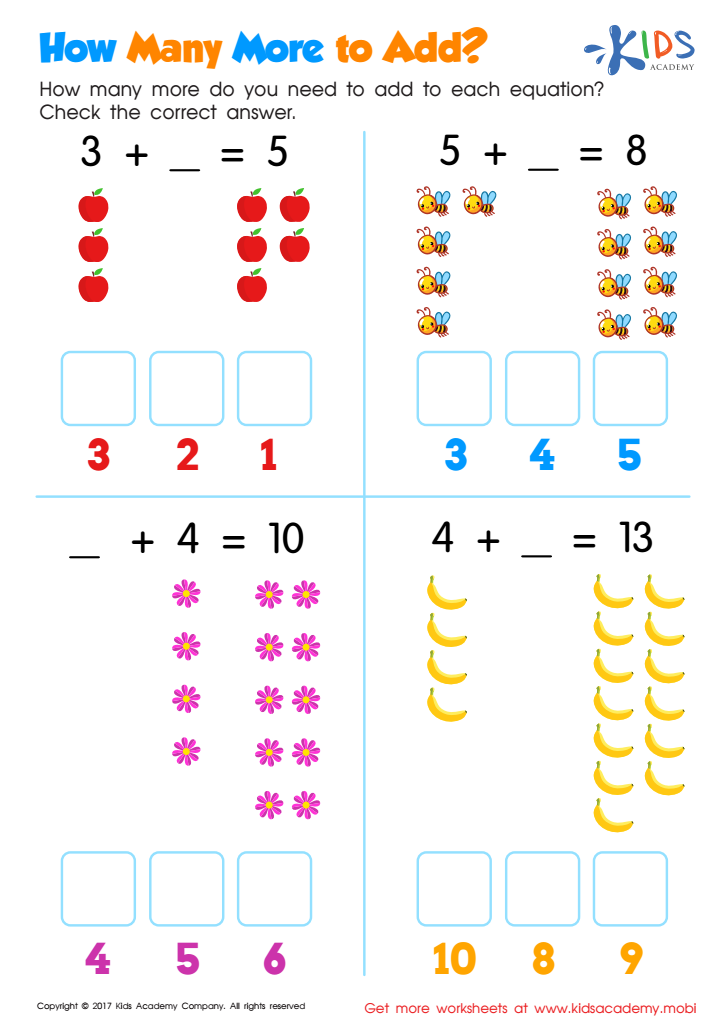
How Many More to Add Worksheet
Sharpen your child's math skills with this pdf worksheet. Help them figure out how many apples, bees, flowers and bananas are needed to reach the answer given. The possible answers are provided at the bottom of the boxes. Have some fun doing some addition and subtraction magic together and get those math skills sharpened!
 Assign to My Students
How Many More to Add Worksheet
Worksheet
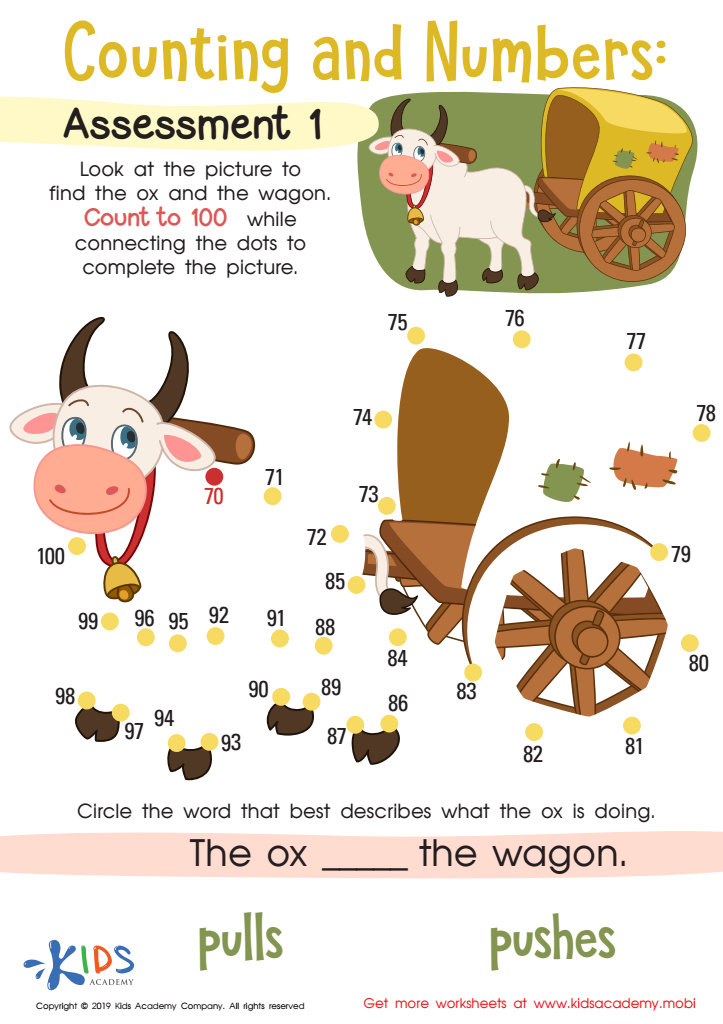
Counting and Numbers: Assessment 1 Worksheet
Let your kids use the picture as a guide and count from 70 to 100 to complete an ox pulling a wagon. As a comprehension check, have them answer the related question using words from the word bank. This dot-to-dot worksheet is a great way to assess their number reasoning and counting forward skills.
Counting and Numbers: Assessment 1 Worksheet
Worksheet
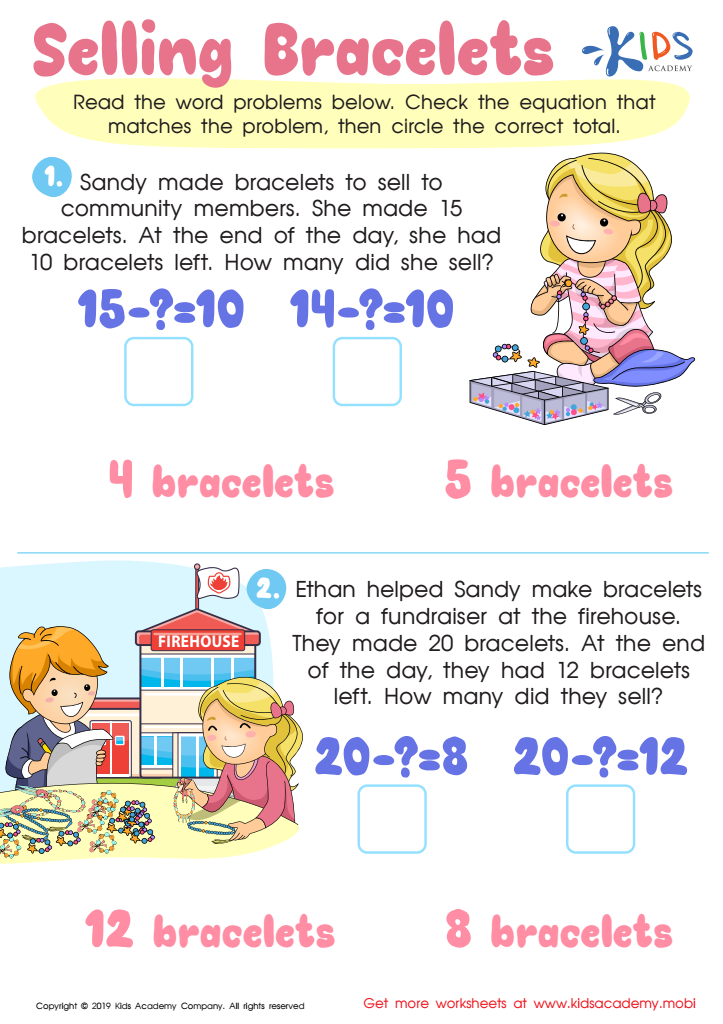
Selling the Bracelets Worksheet
Engage your kids with learning by making it fun! Try this creative worksheet: your kids can practice subtraction while making bracelets. Download the pdf; read the two word problems to them and help them choose the correct total. Have fun! (80 words)
Selling the Bracelets Worksheet
Worksheet
Join Kids Academy for Free
Who is primarily going to use this learning content?







Understanding basic subtraction at an early age forms a crucial foundation for a child's future academic success. For ages 3-6, mastering simple subtraction helps develop essential cognitive skills such as logical thinking and problem-solving. This early math skill encourages kids to think analytically and understand how quantities change, promoting a deeper grasp of the world around them.
Parents and teachers play pivotal roles in nurturing this critical skill. By introducing subtraction early, they help children build confidence in their abilities, making it easier for them to tackle more complex mathematical concepts later on. Early math skills, such as subtraction, are also linked to better performance in literacy and other academic areas, reflecting the interconnected nature of different learning domains.
Moreover, engaging children in basic subtraction activities can create a positive learning environment, fostering curiosity and a love for learning. Using fun and interactive methods, such as games, toys, and everyday scenarios, teachers and parents can make learning subtraction enjoyable and relevant. This early interest can set the stage for lifelong academic enthusiasm and success.
In summary, parents and teachers should prioritize basic subtraction for young children because it underpins critical thinking, academic confidence, and enthusiasm for future learning endeavors, laying a strong mathematical and cognitive foundation.








