Visual discrimination Easy Math Worksheets for Ages 3-6
3 filtered results
-
From - To
Discover our engaging Visual Discrimination Easy Math Worksheets specifically designed for children aged 3-6! These colorful activities help young learners develop essential visual discrimination skills, enabling them to differentiate between shapes, sizes, and patterns. Each worksheet is thoughtfully crafted to be both fun and educational, ensuring that children remain interested while honing their math abilities. Ideal for preschool and kindergarten settings, our worksheets make learning seamless and enjoyable for early learners. Explore our extensive collection to support your child's growth in foundational math concepts while building critical observation skills. Dive in today and watch their confidence in math flourish!
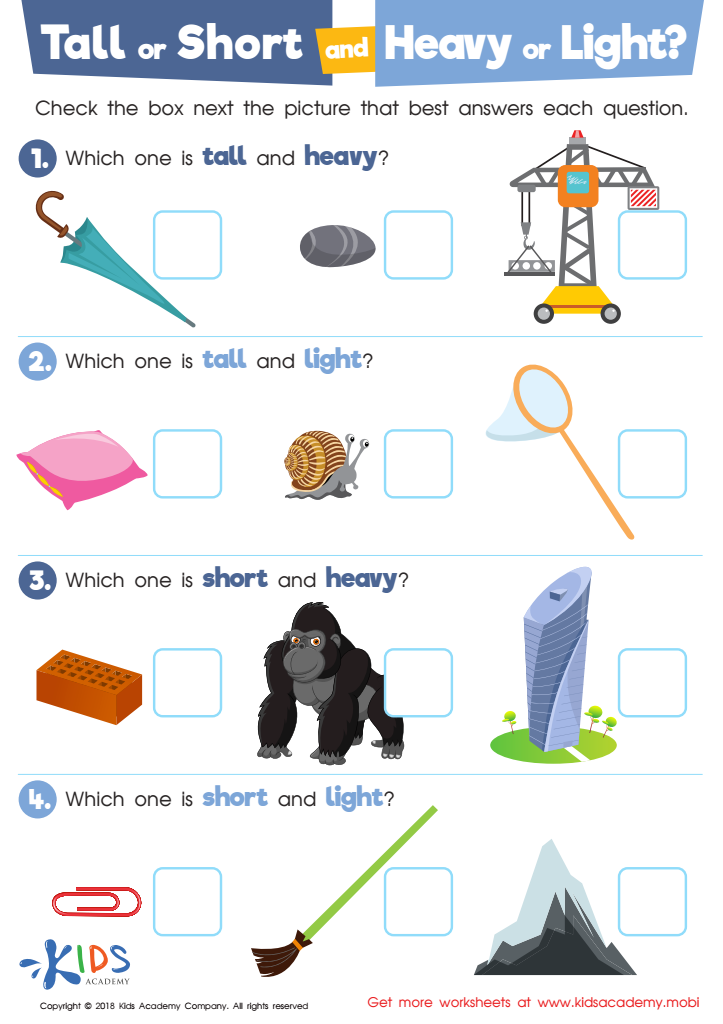
Tall or Short and Heavy or Light? Worksheet
 Assign to My Students
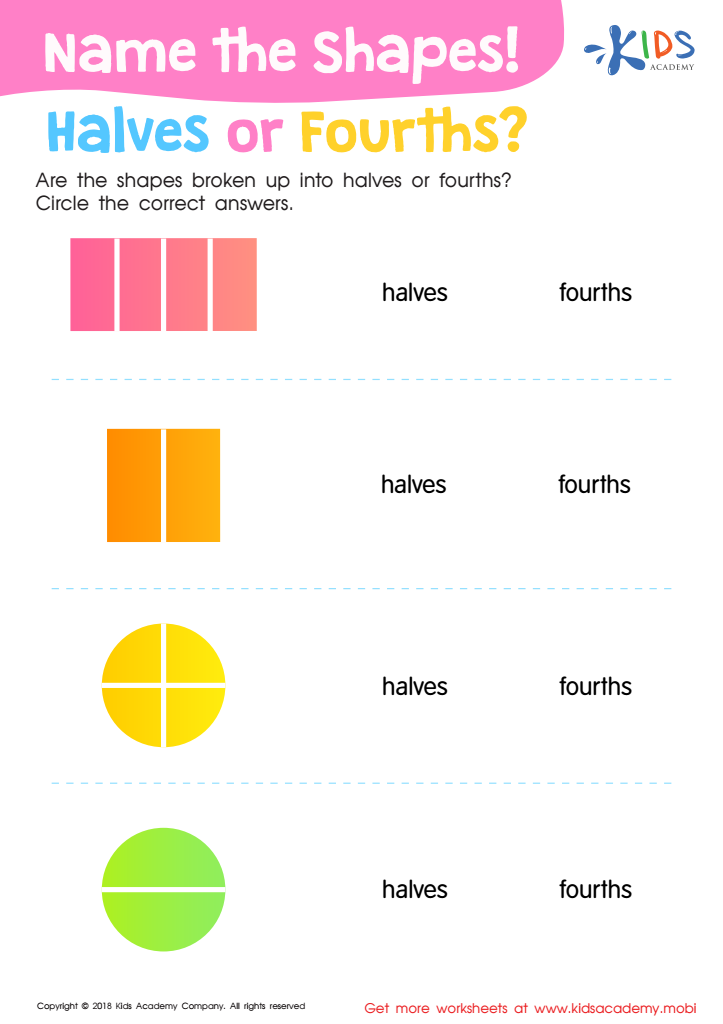
Name the Shapes Halves or Fourths? Worksheet
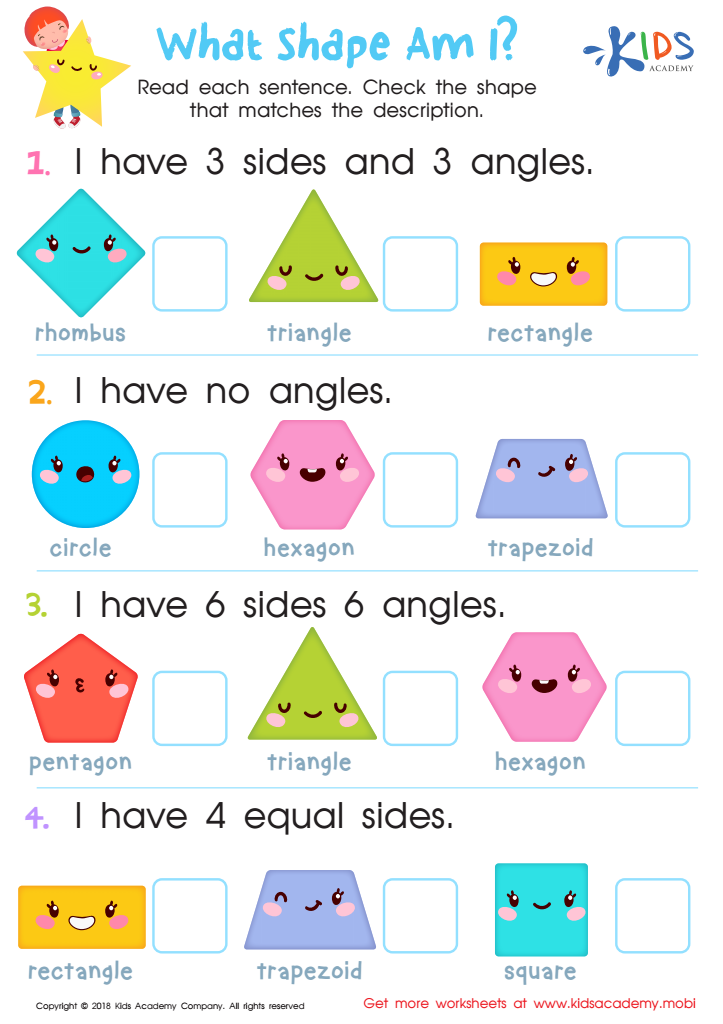
What Shape Am I? Worksheet








Parents and teachers should prioritize visual discrimination skills in early math education for children ages 3-6 because these skills form a foundational pillar for learning. Visual discrimination refers to the ability to identify differences and similarities among shapes, sizes, colors, and patterns. This ability is essential for young children as it enhances their understanding of mathematical concepts.
Children with strong visual discrimination skills can better recognize numbers, understand spatial relationships, and categorize objects—critical components for counting, addition, and subtraction. Engaging preschoolers in activities that promote visual discrimination, such as sorting shapes or completing puzzles, can also foster their problem-solving and critical-thinking abilities.
Moreover, early exposure to visual discrimination activities can help address potential learning challenges early on, ensuring that children are better prepared for more complex mathematical concepts in later grades. It nurtures their confidence and enjoyment in learning math, making it a positive experience rather than a daunting subject.
Encouraging parents and teachers to focus on visual discrimination ensures that children develop a robust mathematical foundation that will serve them well throughout their educational journey and future endeavors. Thus, the integration of visual discrimination activities into early math education should be a priority for fostering well-rounded learners.








