Basic measurement concepts Easy Measurement Worksheets for Ages 3-6
4 filtered results
-
From - To
Introducing our "Basic Measurement Concepts Easy Measurement Worksheets" designed specifically for children ages 3-6. These engaging worksheets provide a fun and interactive way for young learners to explore essential measurement skills, including comparing lengths, recognizing sizes, and understanding concepts of weight and volume. With colorful illustrations and simple exercises tailored for early learners, these resources make learning measurement concepts enjoyable and accessible. Perfect for use at home or in the classroom, our worksheets foster curiosity and confidence in young minds. Help your child take their first steps in math with these foundational measurement skills and watch them grow!
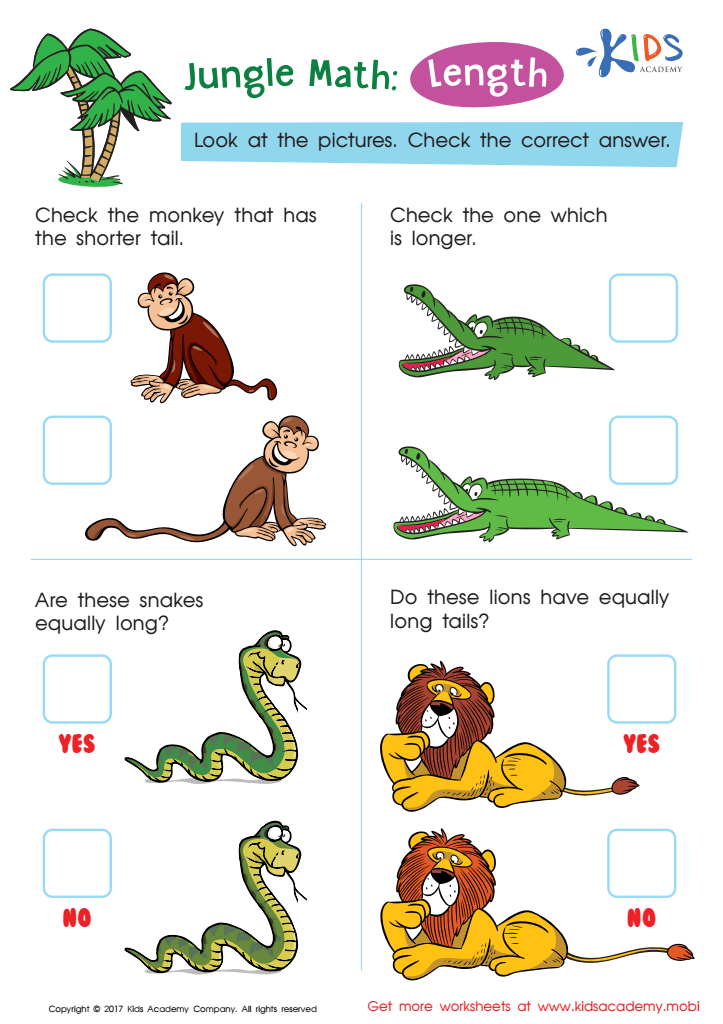
Which One Is Longer - Length Worksheet
 Assign to My Students
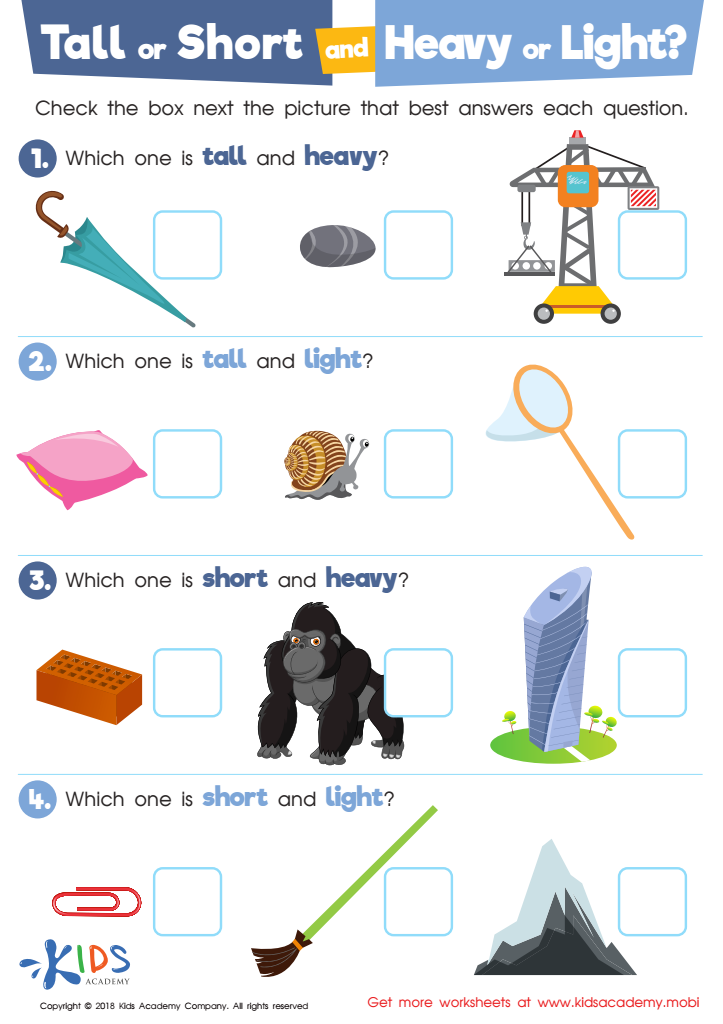
Tall or Short and Heavy or Light? Worksheet
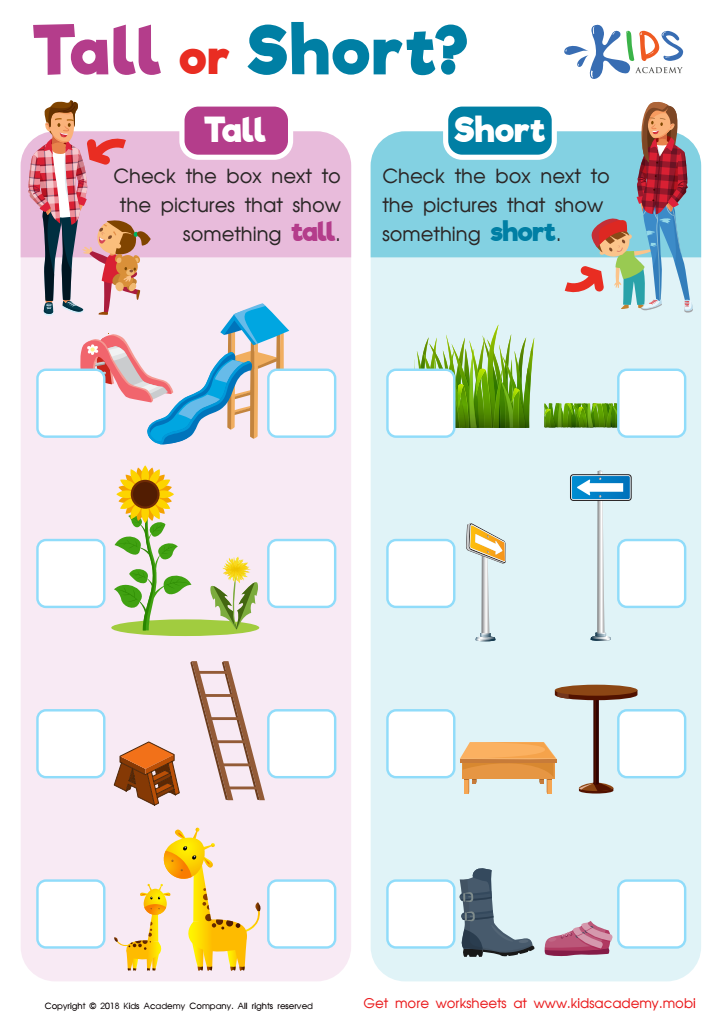
Tall or Short? Worksheet
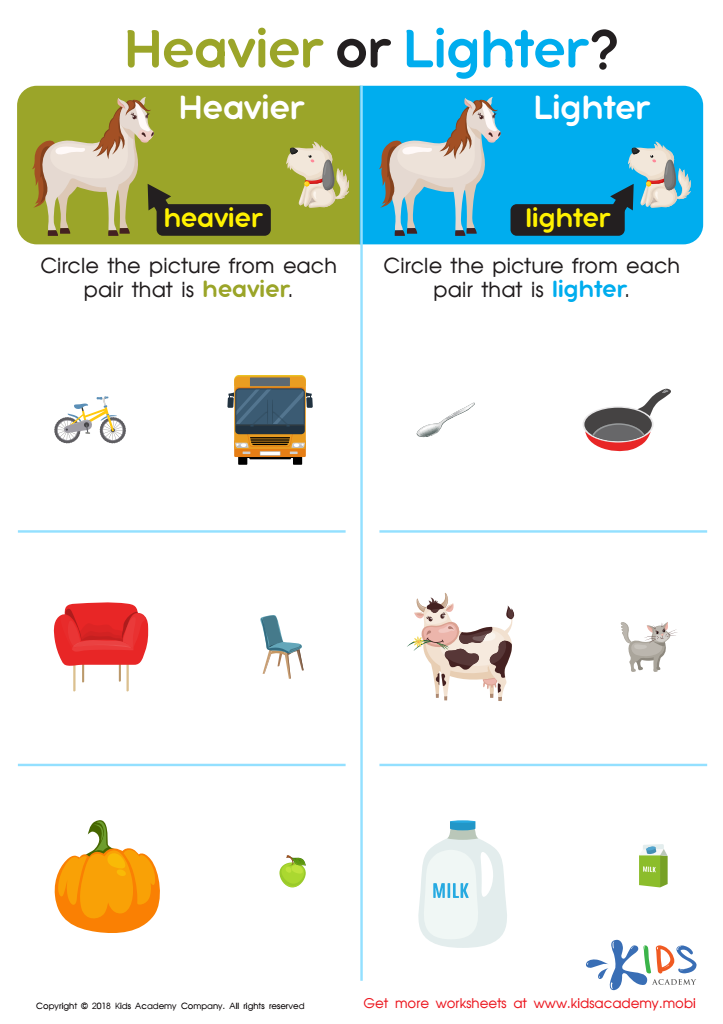
Heavier or Lighter? Worksheet








Parents and teachers should prioritize basic measurement concepts for young children aged 3-6 years as these foundational skills are essential for their cognitive development and everyday life. Understanding measurements, such as length, weight, and volume, enhances children's problem-solving abilities and critical thinking. Engaging in simple activities like comparing the height of objects, measuring ingredients for a recipe, or using measuring tapes fosters hands-on learning and sparks curiosity.
At this age, children are naturally inquisitive, and incorporating measurement into play can promote a love for learning and exploration. Recognizing differences in size, weight, and volume helps children build essential vocabulary and conceptual skills, laying the groundwork for more sophisticated math concepts in later years.
Moreover, measurement exercises foster fine motor skills and enhance concentration. Using tools like rulers, scales, and measuring cups not only familiarizes children with practical applications of measurement but also encourages teamwork and communication skills when working in groups or with family.
In essence, integrating basic measurement concepts into early education enriches children's mathematical understanding, prepares them for future academic success, and cultivates essential life skills, making it a crucial focus for both parents and teachers.








