Comparing numbers Easy Measurement Worksheets for Ages 3-6
3 filtered results
-
From - To
Discover our delightful "Comparing Numbers Easy Measurement Worksheets" designed specifically for children aged 3-6! These engaging worksheets help young learners grasp the concept of comparing numbers through fun illustrations and interactive activities. Kids will enjoy sorting, counting, and matching numbers in a playful, educational environment. The resources are tailored to develop critical early math skills while fostering a love for learning. Ideal for both classroom and at-home practice, these worksheets encourage hands-on exploration and boost confidence in foundational math concepts. Start your child’s numerical journey with our easy and effective comparing numbers worksheets today!
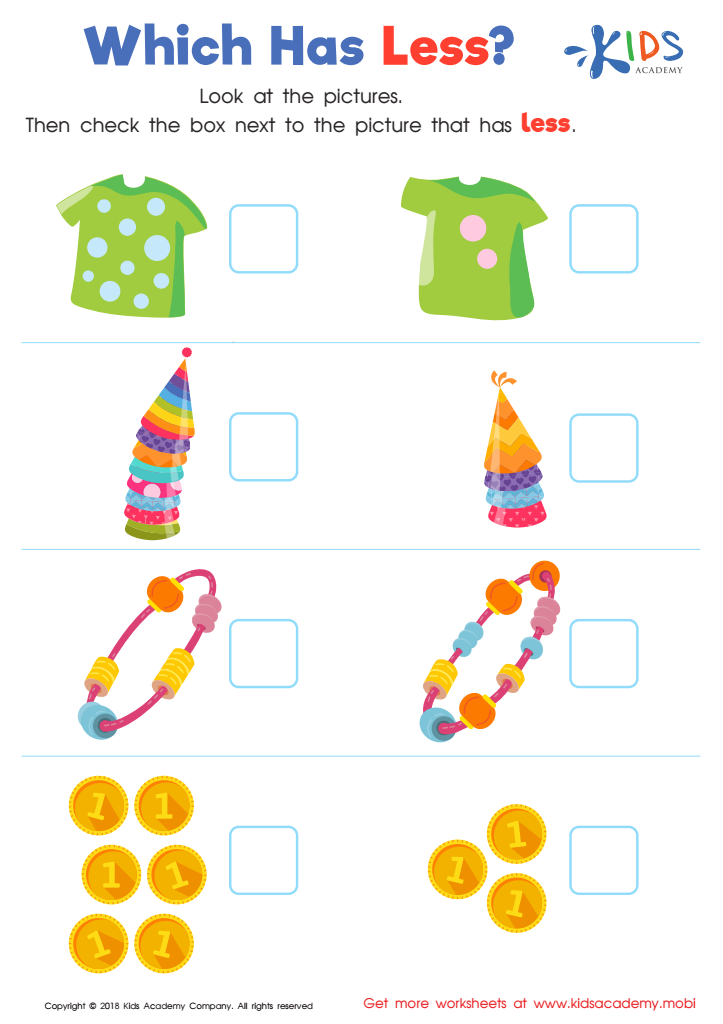
Which Has Less? Worksheet
 Assign to My Students
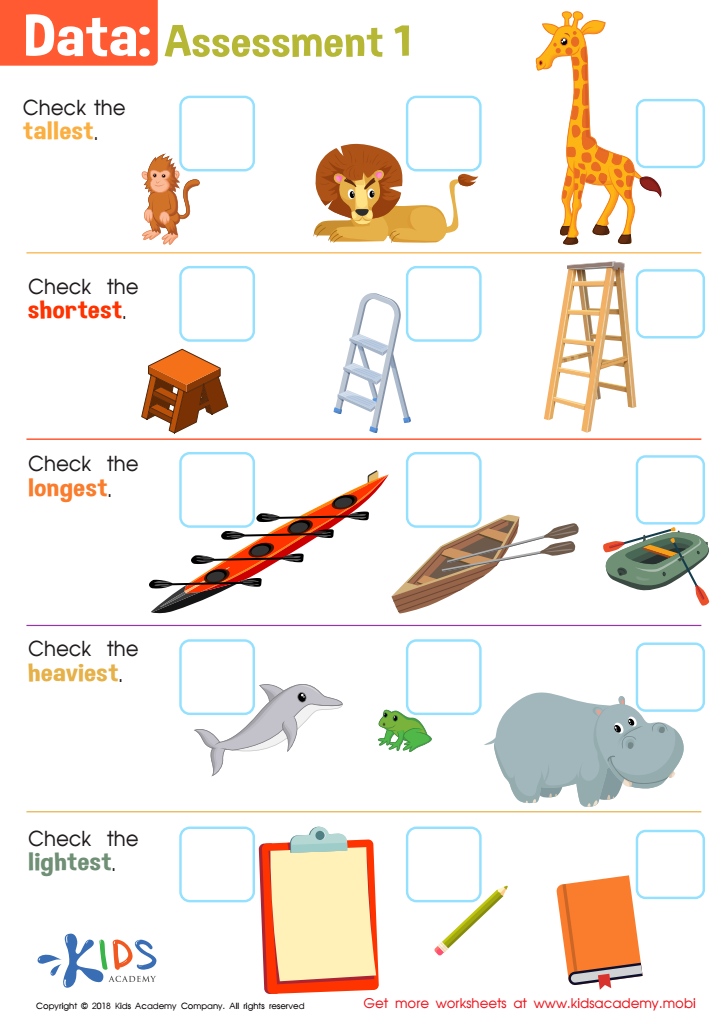
Data: Assessment 1 Worksheet
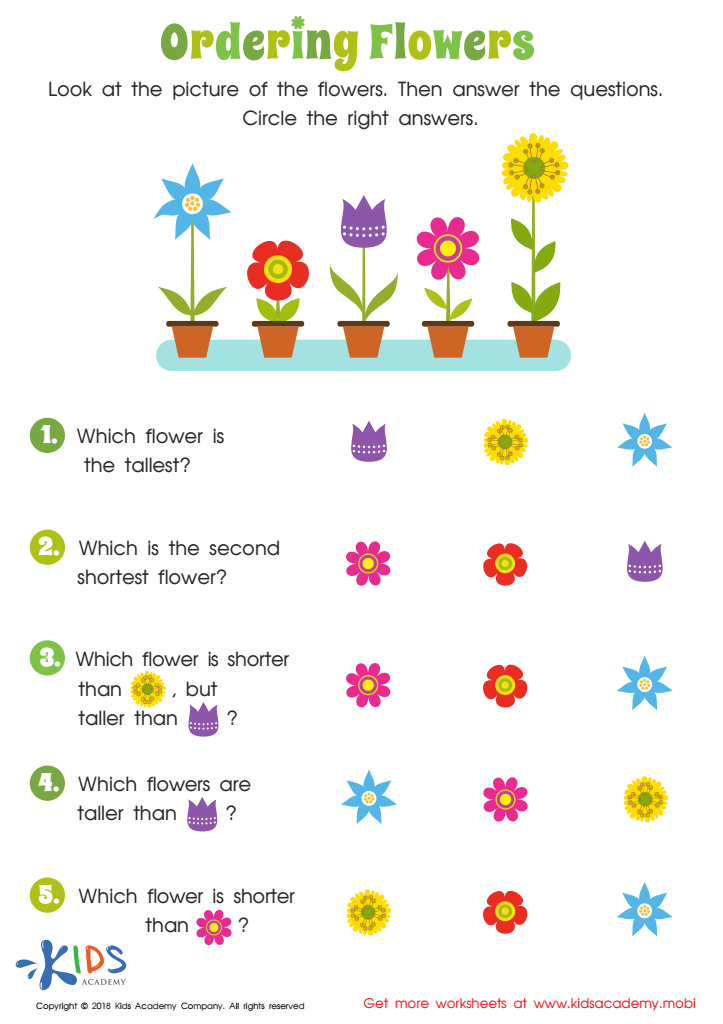
Ordering Flowers Worksheet








Comparing numbers and understanding measurement are fundamental skills for young children aged 3-6, serving as building blocks for future mathematical learning. During this crucial developmental stage, children are naturally curious about the world around them, and engaging in activities that involve comparing numbers and measuring introduces them to important mathematical concepts in a playful and relatable way.
Parents and teachers should care about these skills because they promote critical thinking and problem-solving abilities. By learning to compare quantities, children develop a foundational understanding of mathematical relationships, such as greater than, less than, and equivalence. This understanding forms the basis for more complex concepts, such as addition and subtraction, in later years.
Moreover, early exposure to measurement helps children make sense of real-world contexts, such as understanding sizes, lengths, and quantities in their everyday lives. Activities such as cooking, building with blocks, or measuring lengths with rulers even foster motor skills and enhance cognitive development.
Encouraging young learners to explore these concepts fosters confidence and enthusiasm for mathematics, creating a positive attitude that will benefit them throughout their education. By supporting children's early engagement in comparing numbers and measurement, parents and teachers play a vital role in building a strong foundation for lifelong mathematical understanding.








