Visual perception Easy Numbers 0–10 Worksheets for Ages 3-6
10 filtered results
Difficulty Level
Grade
Age
-
From - To
Subject
Activity
Standards
Introduce young learners to the world of numbers with our "Visual Perception Easy Numbers 0–10 Worksheets" designed for ages 3-6. These engaging worksheets are perfect for developing foundational math skills by combining number recognition with visual perception activities. Each worksheet offers colorful, fun exercises that help children identify, trace, and count numbers from 0 to 10. Ideal for home or classroom settings, our resources aim to enhance early childhood cognitive development while making learning exciting. Set the stage for future math success with these carefully crafted, easy-to-follow worksheets that capture young minds and make numbers magical.
Favorites
With answer key
Interactive
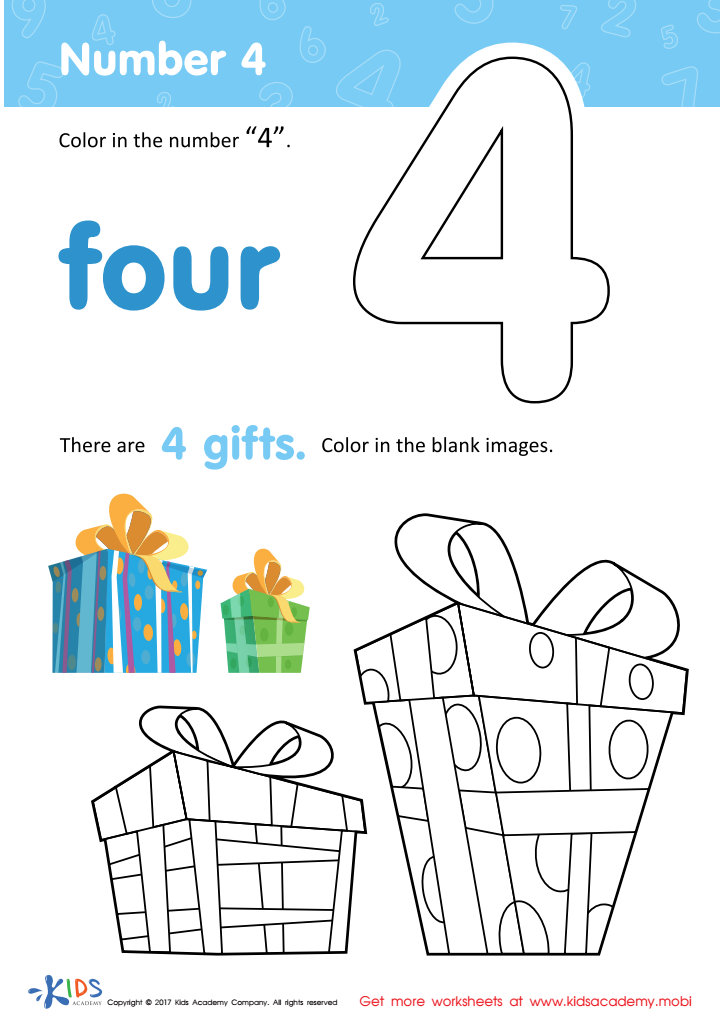
Number 4 Printable
Kids love gifts! Give your child a learning opportunity with this number 4 coloring page. As they design their own wrapping paper, they'll learn to read and recognize the number four. An exciting way to have fun and learn at the same time!
Download (PDF)
 Assign to My Students
Assign to My Students
Number 4 Printable
Worksheet
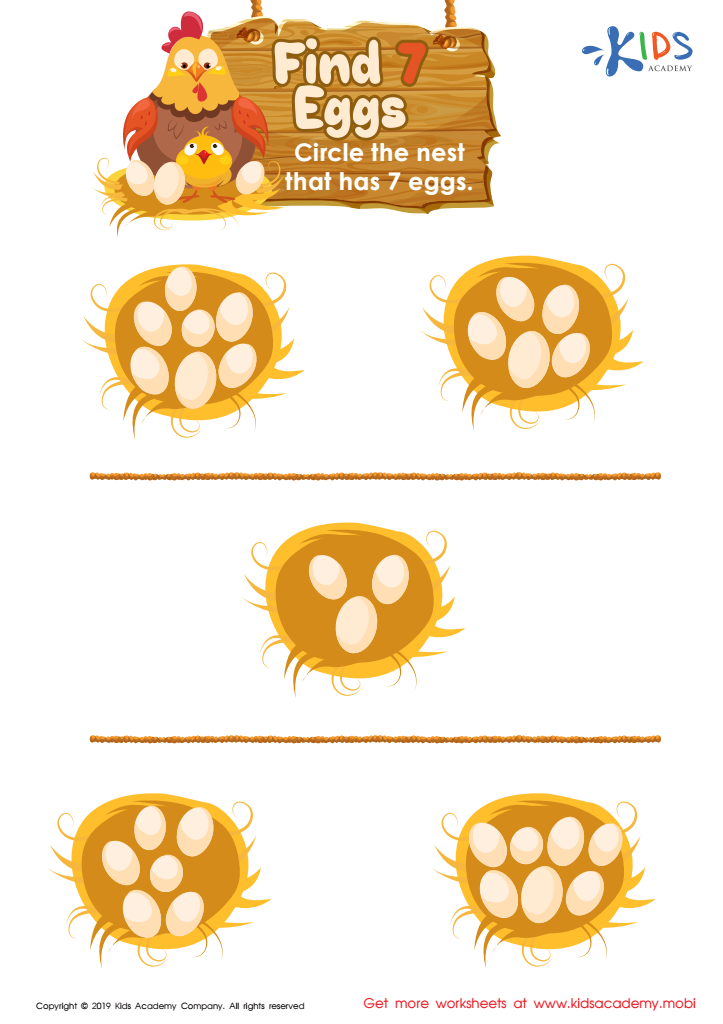
Find 7 Eggs Worksheet
Mama chicken needs help counting her eggs! Have your child use one-to-one number representation to count and circle the nests that have seven eggs with this free and fun worksheet. Picture representation is a great way to start building math skills. Download this PDF and make math time fast and enjoyable!
Find 7 Eggs Worksheet
Worksheet
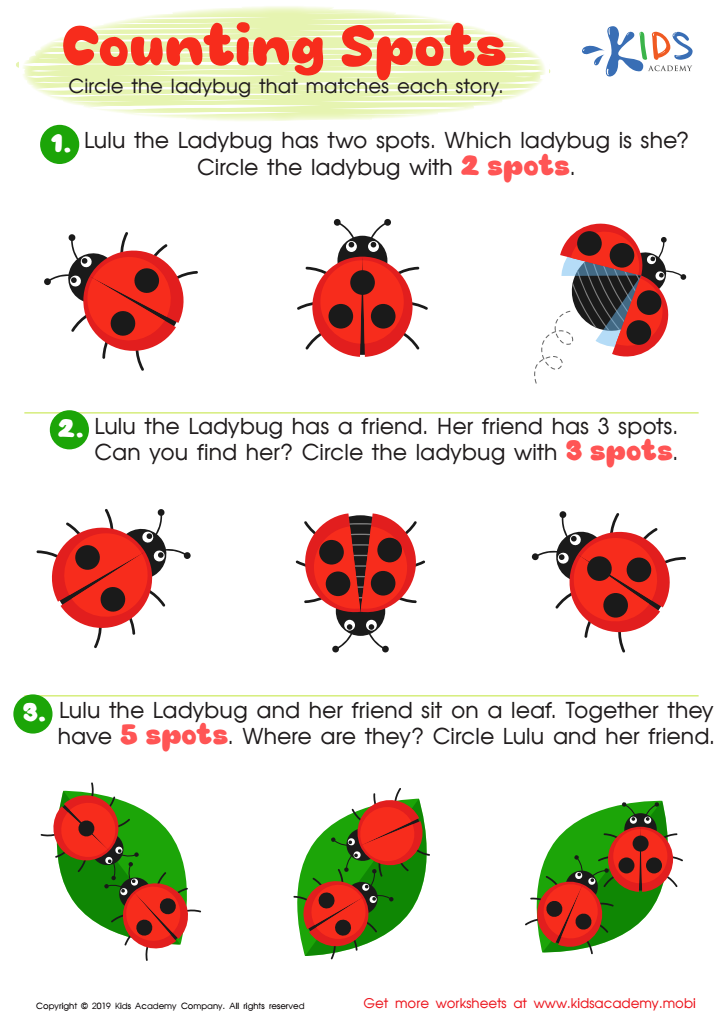
Counting Spots Worksheet
This worksheet is full of cute, colorful ladybugs. Help your kids identify Lulu, who has two spots on her body. Count the spots on each ladybug and circle the one with two spots. Then read the instructions on the other sections and help them find the ladybugs there, too!
Counting Spots Worksheet
Worksheet
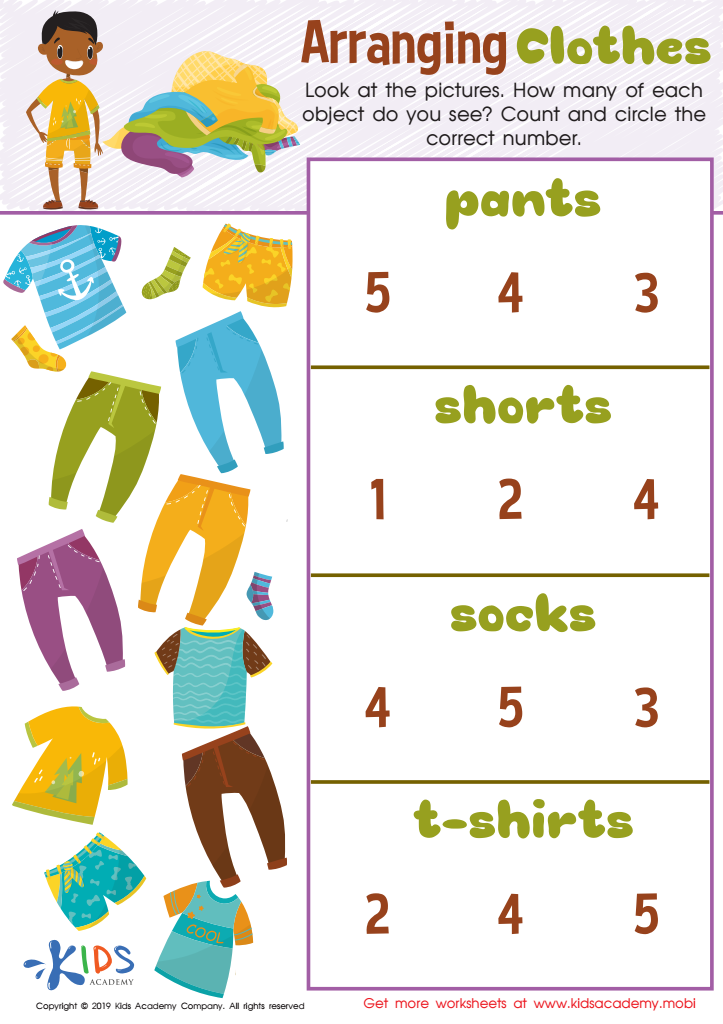
Arranging Clothes Worksheet
This worksheet uses familiar items, brightly colored to attract your kids. Ask them to name each item, then count them and circle the right number.
Arranging Clothes Worksheet
Worksheet
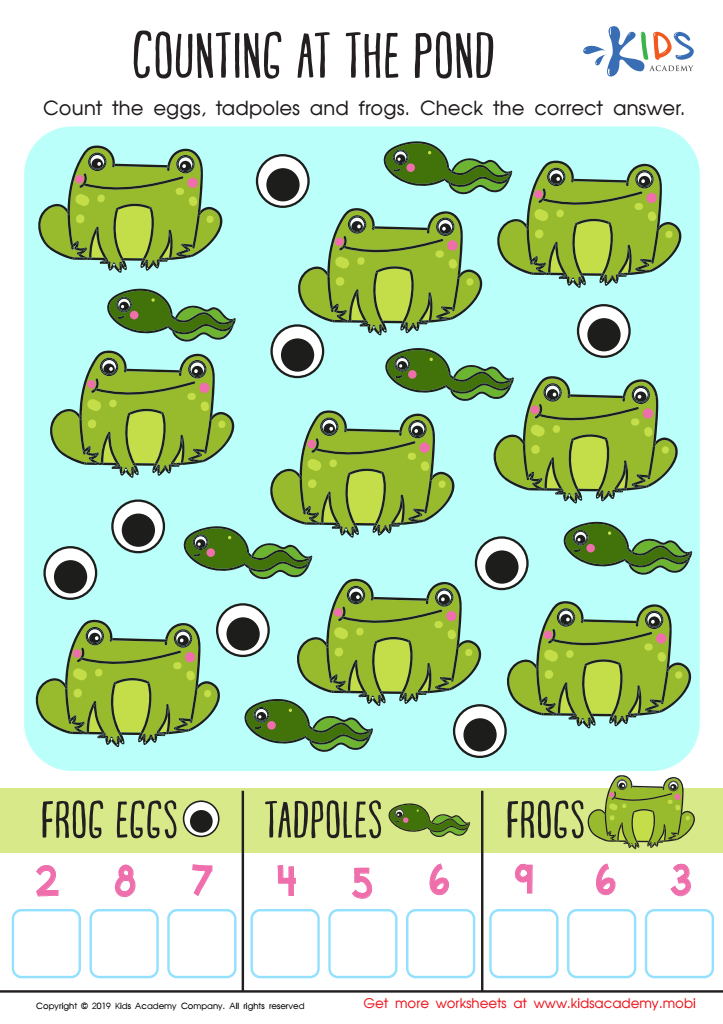
Counting at the Pond Worksheet
Ask your kids what they see in the picture. Can they identify the animal? Where does it live, what does it eat and what sound does it make? These questions will help get them in the math mood. Help them count the eggs, tadpoles and frogs, then check the answer.
Counting at the Pond Worksheet
Worksheet
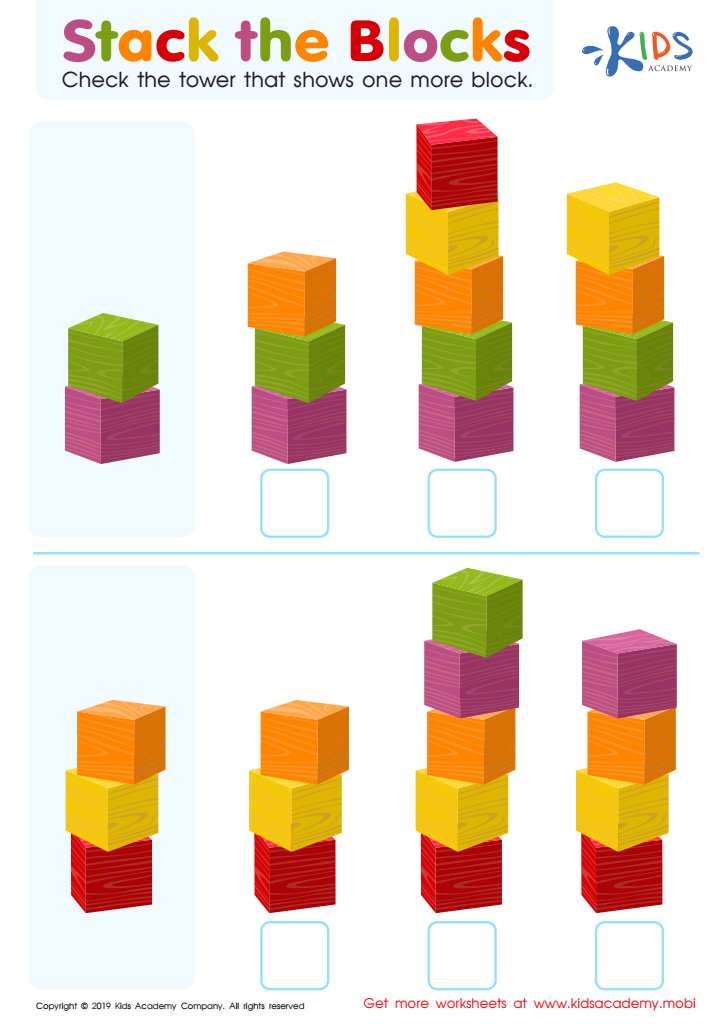
Stack the Blocks Worksheet
Playing with blocks is a great way for kids to learn! They can create patterns, shapes, and even count. In this worksheet, ask them to identify the colors and count each stack of blocks. If they can spot one extra block in the tower, even better! Encourage learning through play with these fun blocks.
Stack the Blocks Worksheet
Worksheet
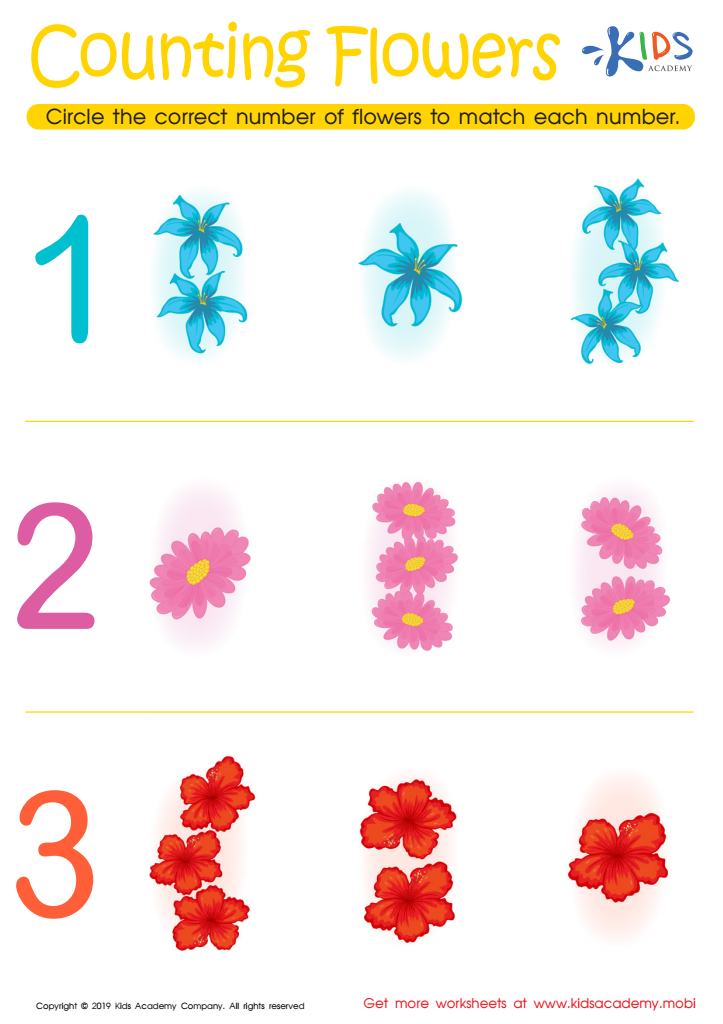
Counting Flowers Worksheet
Kids love Flower Power! This free PDF helps kids practice basic number sense and counting. They match the correct number of colorful flowers to the corresponding numeral. An enjoyable game that improves basic number sense - perfect!
Counting Flowers Worksheet
Worksheet
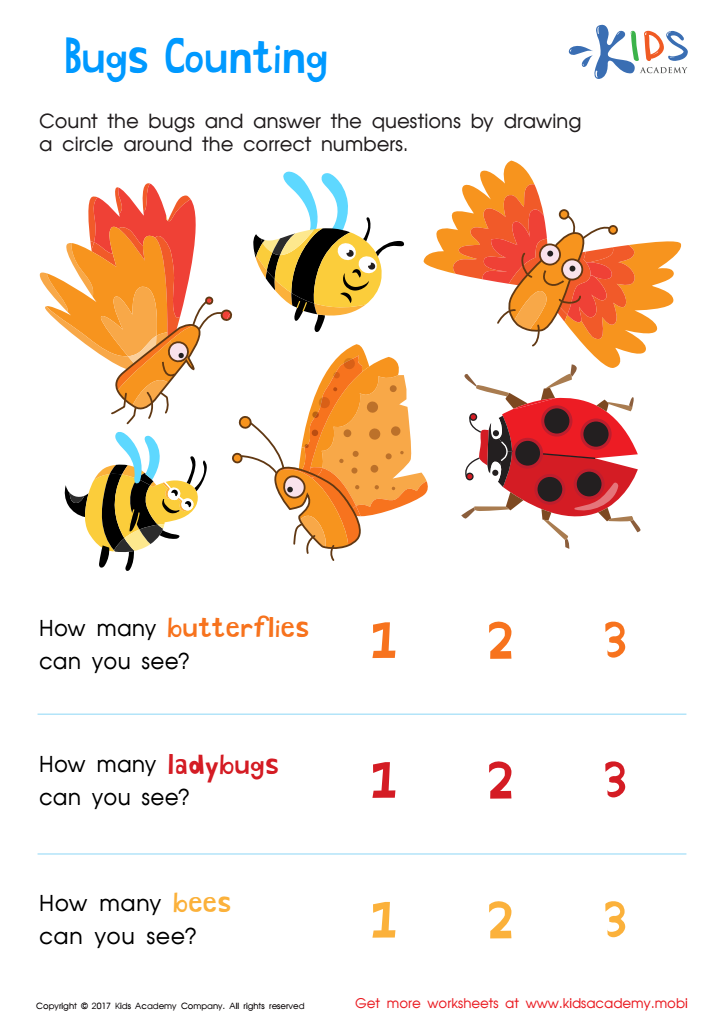
Bugs Counting Worksheet
Filled with bright reds, yellows, and oranges, your child will love solving these fun bug-related math problems.
Bugs Counting Worksheet
Worksheet
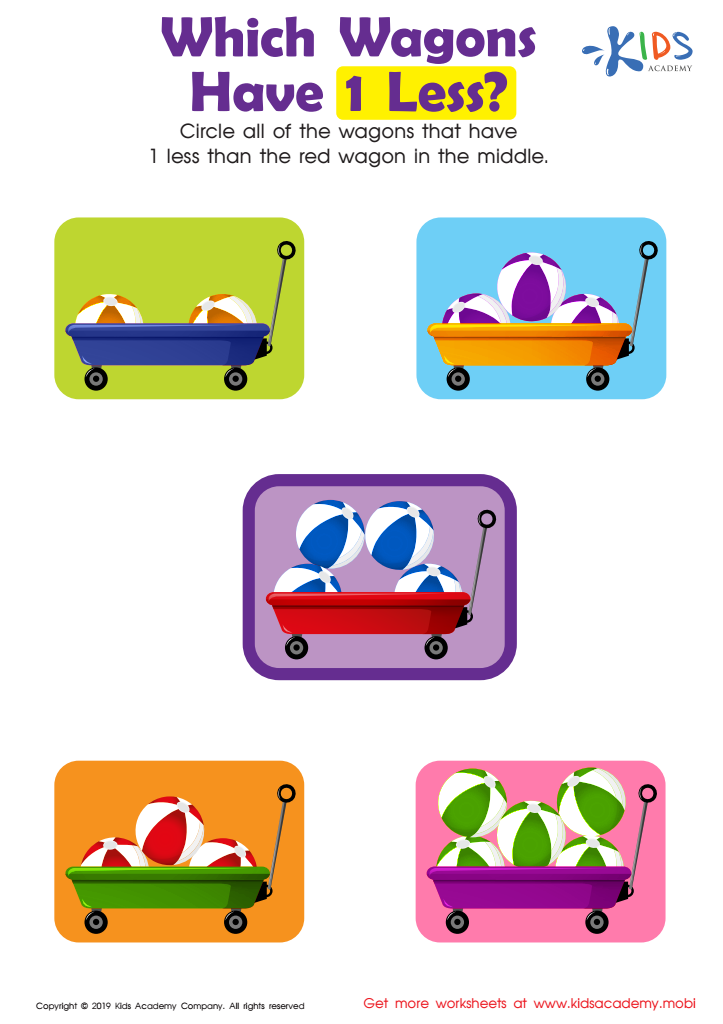
Which Wagons Have 1 Less? Worksheet
Test your kid's counting skills with a simple exercise. Ask them to count the balls in the five wagons shown and to circle the wagons with one less than the red wagon in the middle. This will give their brains a simple task that tests their knowledge of numbers.
Which Wagons Have 1 Less? Worksheet
Worksheet
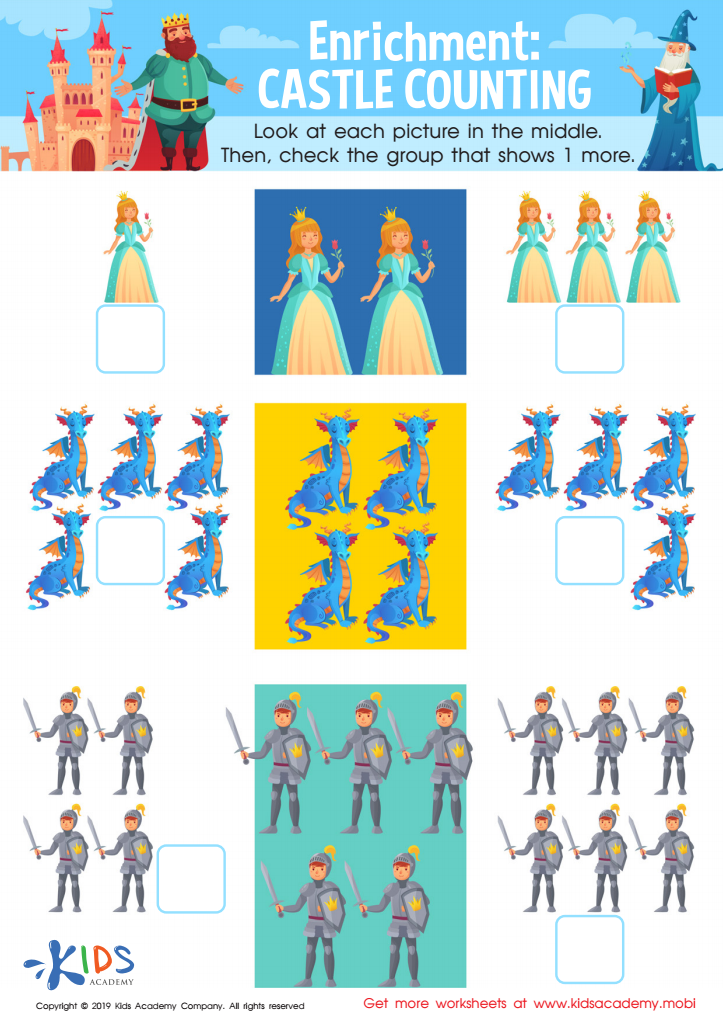
Enrichment: Castle Counting Worksheet
Help your kids learn to count. Start with easy counting of numbers as high as possible. Use the pictures in this printout. Point to the middle one, help them identify it and then count one more than it. Do this to help them get ready for more difficult math concepts like addition, subtraction and multiplication.
Enrichment: Castle Counting Worksheet
Worksheet
Join Kids Academy for Free
Who is primarily going to use this learning content?








Visual perception is the ability to make sense of information taken in through the eyes. For young children, developing strong visual perception skills is crucial, especially when it involves basic concepts like numbers 0–10. These foundational skills are vital for several reasons.
First, early numeracy forms the basis for all future mathematical learning. When children understand and recognize numbers 0–10, they build the stepping stones for more complicated concepts. Visual perception tools aid in this by using color, shape, and spatial awareness to make numbers easy and fun to grasp.
Second, mastering number recognition can boost cognitive development. Skills such as memory, attention to detail, and observation are honed during activities involving visual perception. As kids engage in sorting, matching, and identifying numbers, they also enhance their problem-solving and critical-thinking skills.
Third, a familiarity with numbers helps in everyday life. Whether it's counting toys, recognizing phone numbers or telling the time, these fundamental math skills are essential. Strong visual perceptual ability ensures children are not just performing rote memorization but truly understanding concepts.
Lastly, success in early math concepts boosts confidence. Whether at home or in the classroom, children who can easily understand numbers are likely to approach learning with enthusiasm and a positive attitude. Therefore, both parents and teachers play crucial roles in fostering an environment where visual perception related to numbers is actively developed.