Sound Association Easy Phonics Worksheets for Ages 3-7
3 filtered results
-
From - To
Discover our Sound Association Easy Phonics Worksheets, perfect for children aged 3-7! Designed to enhance reading and writing skills, these engaging activities help young learners connect letters and sounds. With vibrant visuals and fun exercises, children effortlessly master phonics, boosting their confidence in language skills. Our worksheets provide diverse activities, from matching sounds to letters, tracing, and simple word recognition. Foster early literacy and a love for learning in your child with these expertly-crafted phonics practice sheets. Ideal for both home and classroom settings, they make phonics learning enjoyable and effective for little learners. Explore today!
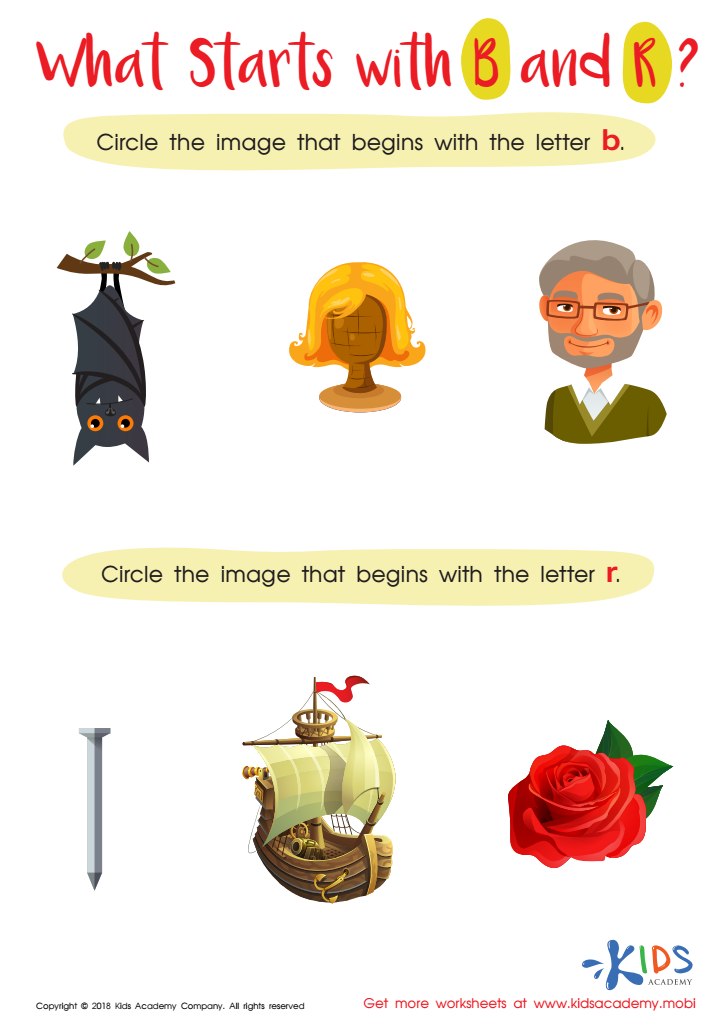
What Starts with B and R? Worksheet
 Assign to My Students
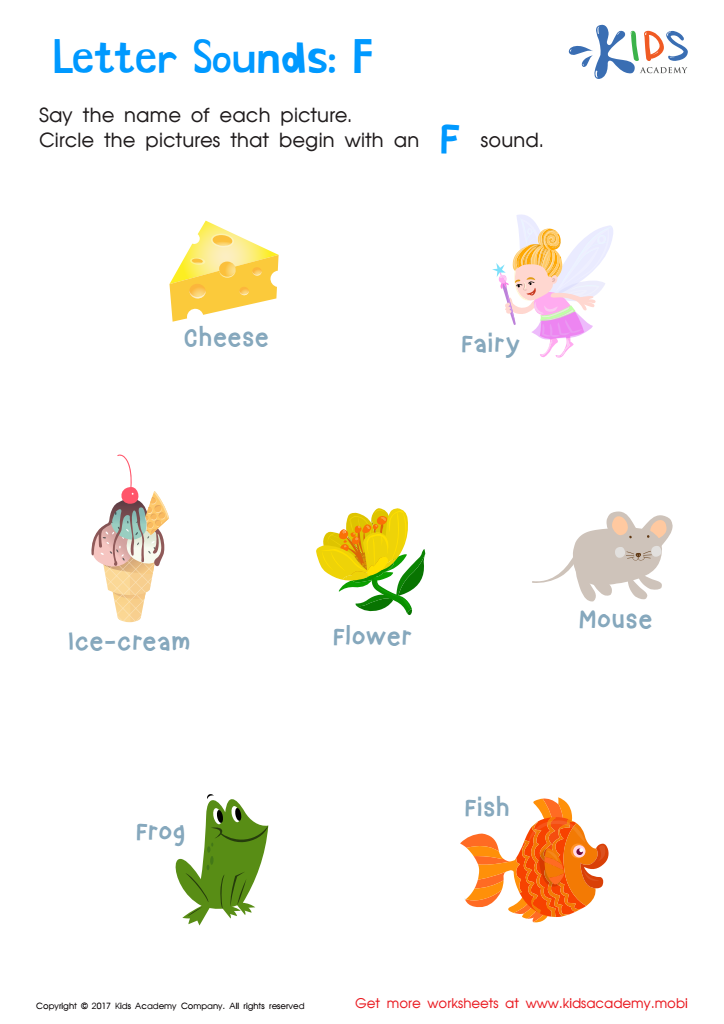
Letter F Sounds Worksheet
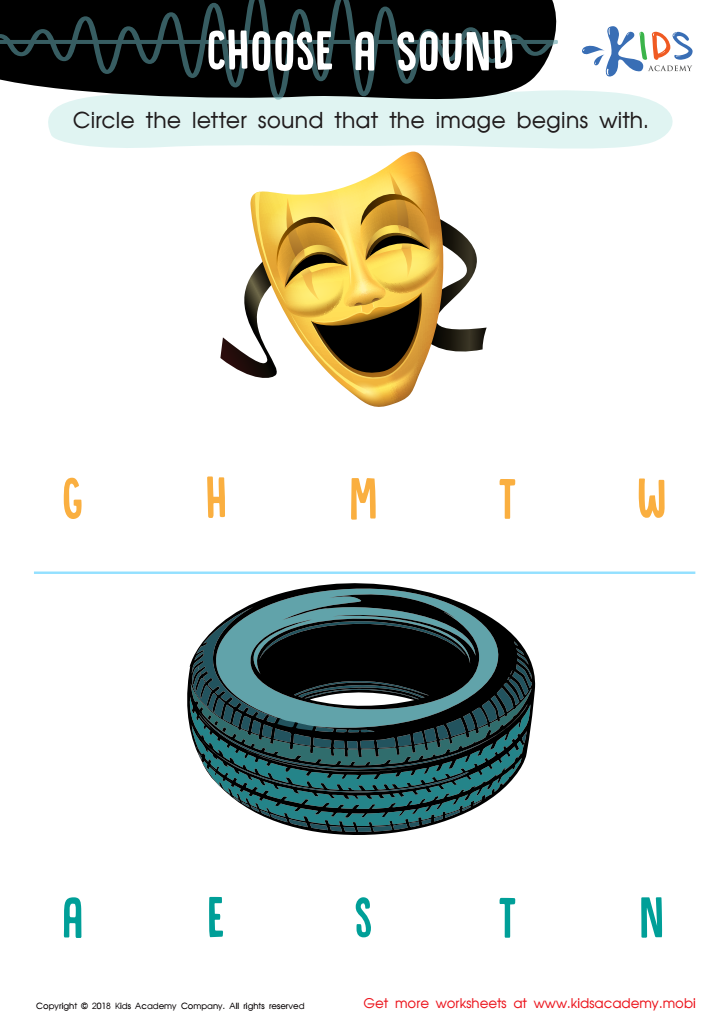
Choose a Sound Worksheet








Sound Association Easy Phonics for Ages 3-7 is essential because it lays a crucial foundation for literacy. During these formative years, children's brains are highly receptive to learning language skills. Phonics, which is the method of teaching reading by correlating sounds with letters or groups of letters, helps kids understand the building blocks of language.
By focusing on sound association, we enable children to break down words into their component sounds, making it easier to decode unfamiliar words in the future. This process is fundamental to both reading fluency and vocabulary development. For instance, a child who knows the "b" sound associates it with words like "bat" and "ball," enabling faster, more confident word recognition.
Phonics-based learning also supports spelling skills because children who understand sound patterns are better equipped to predict how words are spelled. This makes writing a less daunting task, encouraging creativity and communication at a young age.
For parents and teachers, incorporating a structured phonics program means fewer children struggling with reading difficulties later on. Early success in reading can also boost a child's confidence, setting a positive trajectory for their overall academic journey. Thus, investing in Sound Association Easy Phonics provides children with critical tools for lifelong learning and becomes a cornerstone for educational success.