Counting skills Easy Addition and Subtraction Word Problems Worksheets for Ages 3-7

Filters

6 filtered results

Clear all filters
Favorites
With answer key
Interactive

6 filtered results

Difficulty Level

Grade


Discover our engaging "Counting Skills: Easy Addition and Subtraction Word Problems Worksheets" designed for children aged 3-7. These worksheets provide a fun and interactive way to enhance your child's early math skills through relatable scenarios. Kids will love solving simple word problems that involve counting objects, adding, and subtracting in everyday contexts. Our resources support young learners in developing critical thinking and problem-solving abilities while building a strong foundation in mathematics. Perfect for parents and educators, these worksheets make learning enjoyable and effective. Explore our assortment of creative exercises and watch your child's confidence and counting skills grow!

Check out this FREE Trial Lesson on Addition and Subtraction Word Problems for age 3-7!

Drawing it Out Addition

Favorites
With answer key
Interactive
  • 3-7
  • Counting skills
  • Addition and Subtraction Word Problems
  • Easy
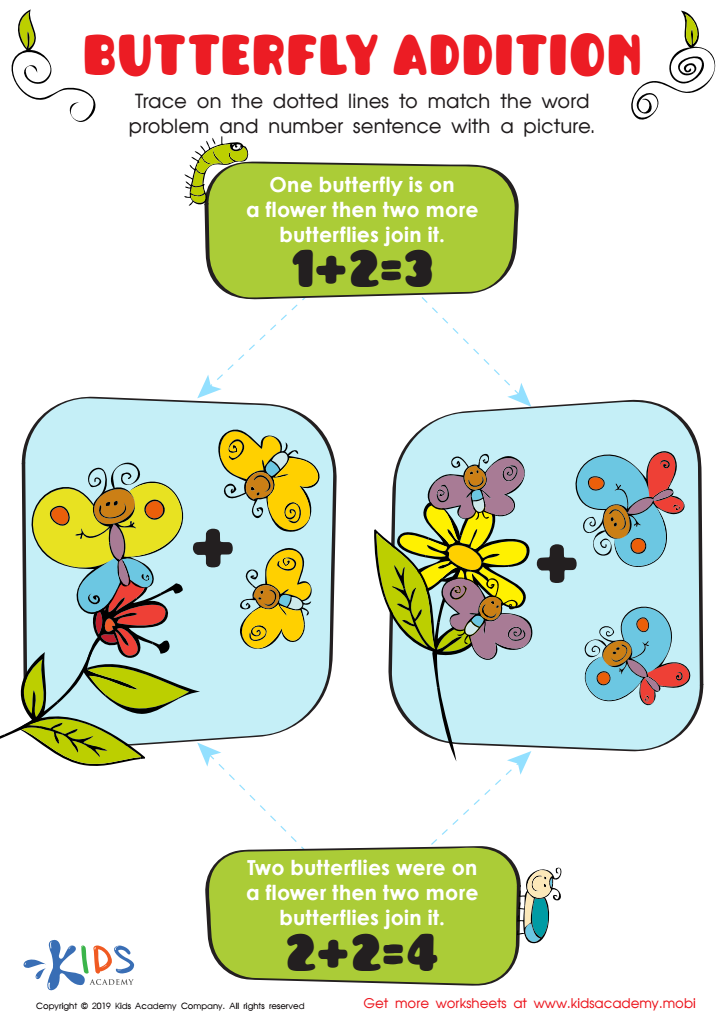
Butterfly Addition Worksheet

Butterfly Addition Worksheet

This tracing sheet is great for kids to work on math skills and have fun too. Read the word problems to them, then help them trace the dotted lines to match the problem and number sentence to a picture. Not only is it educational, it's beautiful too - your kids will love learning about butterflies!
Butterfly Addition Worksheet
Worksheet
Counting Seedlings Worksheet

Counting Seedlings Worksheet

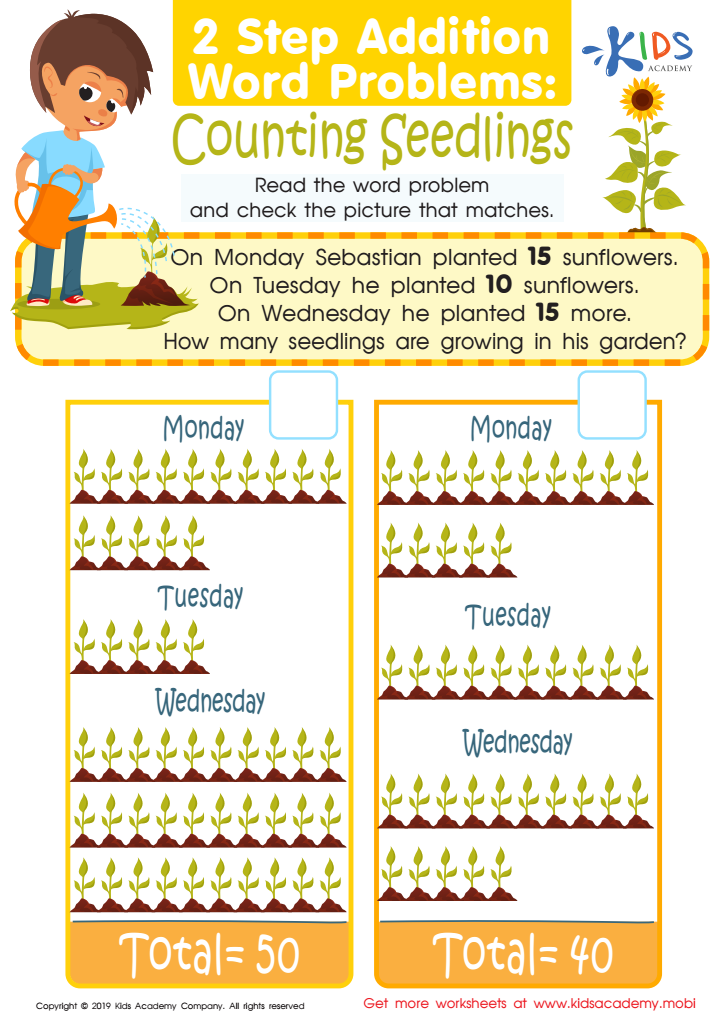
Understanding math word problems is key. Multiple steps can prove challenging - this free worksheet provides one-to-one picture representation to help kids solve multi-step addition word problems. Strengthen addition skills by choosing the matching picture to the answer.
Counting Seedlings Worksheet
Worksheet
Sea Math Worksheet
Sea Math Worksheet

Sea Math Worksheet

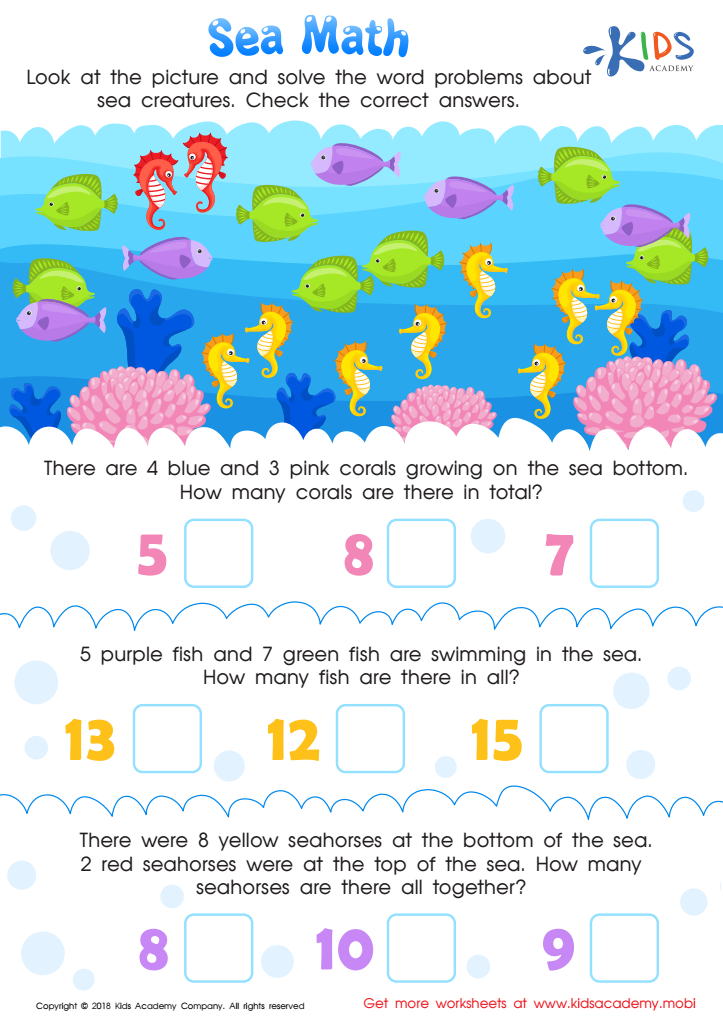
Dive into an ocean of addition with this fun math worksheet! Help your little mathematician count and add colorful coral and fish. Point out phrases like "in total" or "all together" as a reminder to use addition. Watch them add to find the answer and check the boxes to finish!
Sea Math Worksheet
Worksheet
Australian Animal Subtraction Worksheet

Australian Animal Subtraction Worksheet

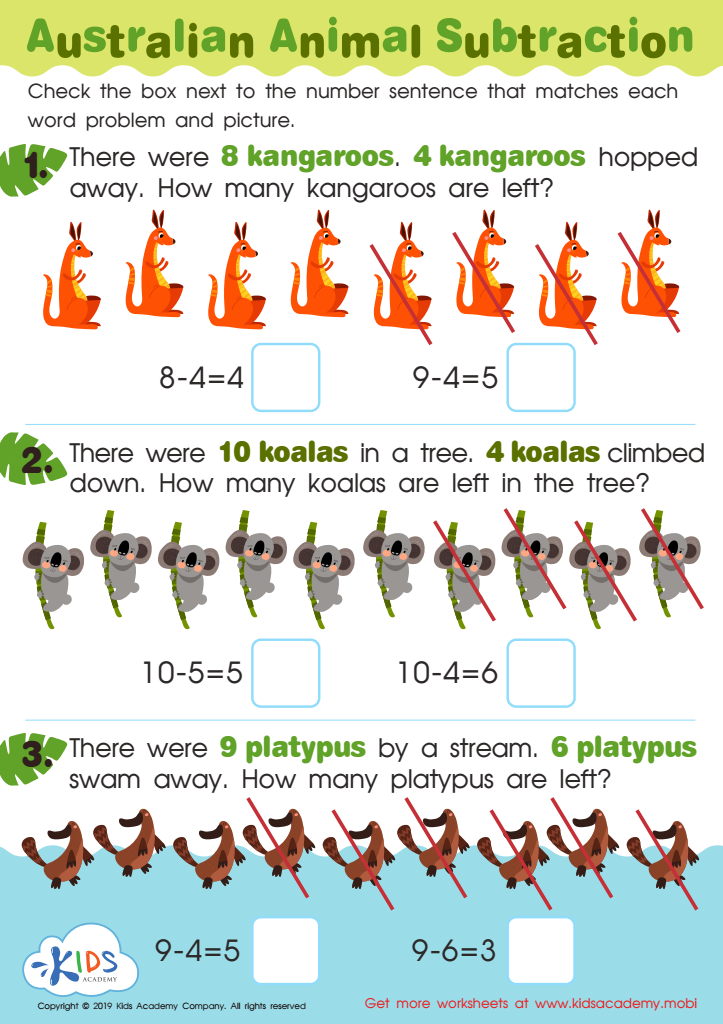
Test your child's wildlife knowledge. Ask them to name animals indigenous to Australia or other countries. Show them the animals in this worksheet and have them match each word problem and picture with the correct number sentence.
Australian Animal Subtraction Worksheet
Worksheet
Addition at the Zoo Worksheet

Addition at the Zoo Worksheet

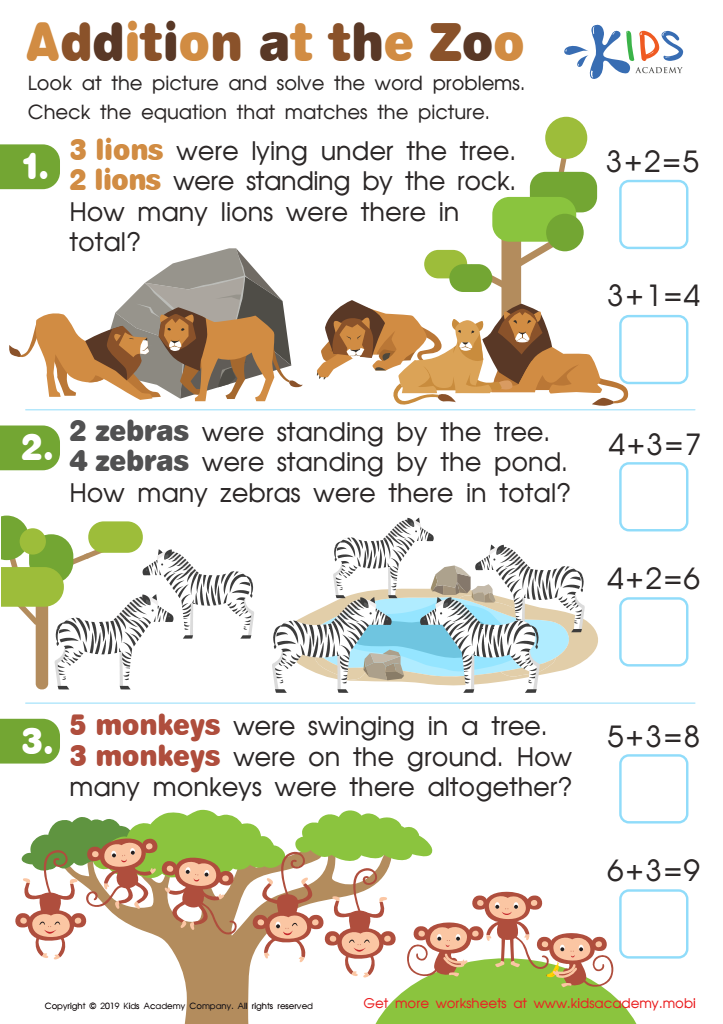
Visit the zoo with your kids and point out all the different animals. Ask them to name their favorites and identify animals on a worksheet. Challenge them to solve word problems related to the pictures. Ask them for the equation that fits the picture and check the answer.
Addition at the Zoo Worksheet
Worksheet
Animal Addition Worksheet


Animal Addition Worksheet

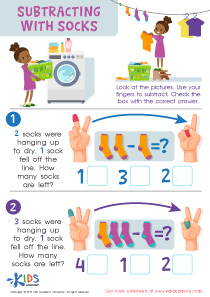
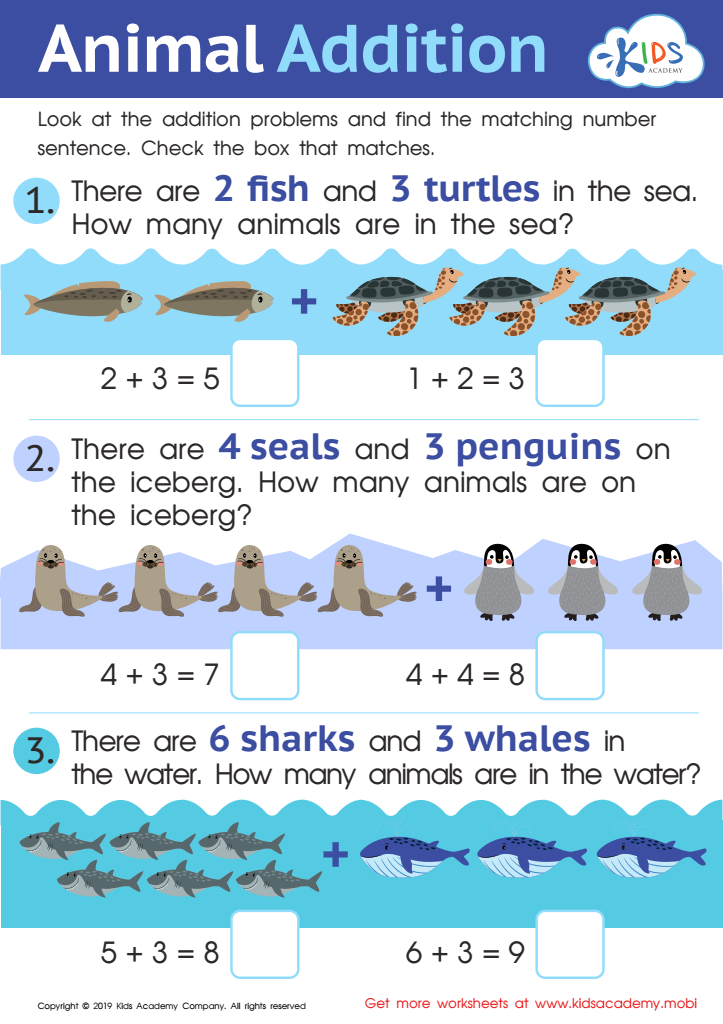
Get your kids learning addition and subtraction with this fun worksheet! Show them that solving equations can be enjoyable and help them match number sentences to the correct boxes. By doing this together, you'll create a positive learning experience that your kids won't forget.
Animal Addition Worksheet
Worksheet


Counting skills, along with easy addition and subtraction word problems, are fundamental to early childhood learning and significantly influence children's academic success. For parents and teachers, fostering these skills in children aged 3-7 lays the groundwork for critical cognitive development. Mastery of counting enables children to understand numbers, recognize patterns, and develop logical thinking.

Additionally, engaging children with simple addition and subtraction word problems enhances their problem-solving abilities. It encourages them to think critically about everyday situations, linking math to real-life contexts. This not only boosts their comprehension of math concepts but also helps develop language skills as they learn to verbalize their thought processes.

By introducing these concepts in a fun and approachable way, adults can instill a positive attitude toward math, helping to combat common fears or anxieties associated with the subject. Furthermore, these skills are crucial for later learning; children who struggle with basic math concepts may find it challenging to succeed in advanced topics.

Ultimately, parents and teachers should prioritize counting and basic math skills for young learners, as doing so significantly enhances their self-confidence, overall academic performance, and joy in learning, laying a strong foundation for lifelong skills in numeracy.