Understanding sequencing Easy Numbers Worksheets for Ages 3-7
3 filtered results
-
From - To
Discover our "Understanding Sequencing Easy Numbers Worksheets for Ages 3-7" designed to nurture foundational math skills for young learners. Perfect for preschool to early elementary students, these worksheets help children grasp the concept of sequential ordering through engaging, age-appropriate activities. Our worksheets focus on numerical order, pattern recognition, and logical thinking, making early math education fun and interactive. Boost your child’s confidence as they develop essential problem-solving skills in a playful, engaging way. Visit our website to explore a variety of worksheets designed to support your child's learning journey.
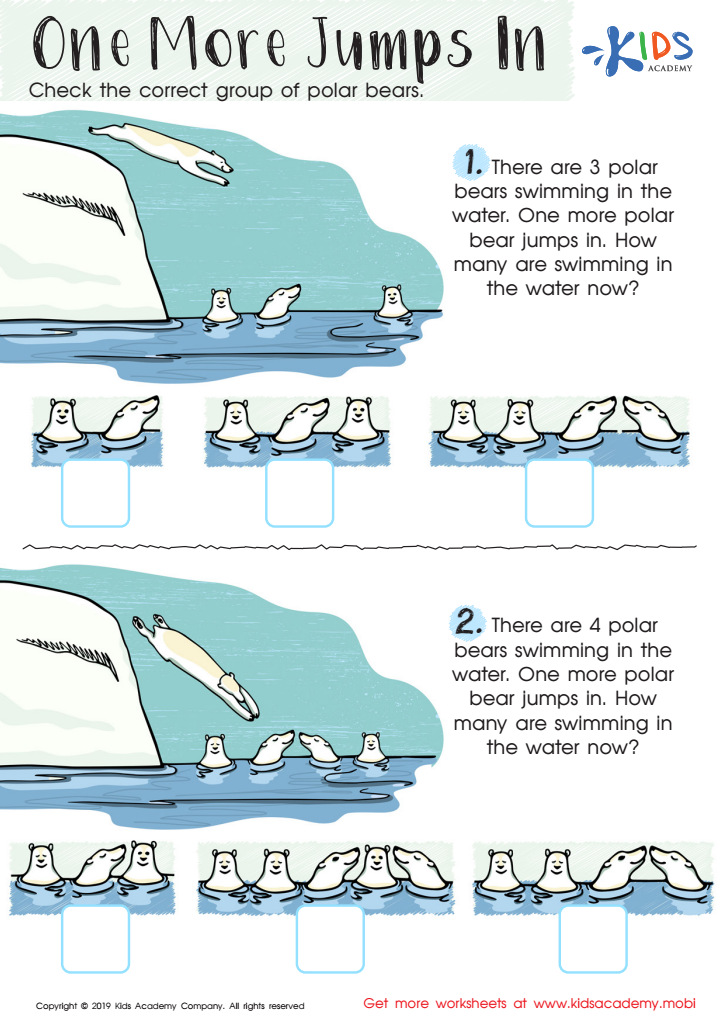
One More Jumps In Worksheet
 Assign to My Students
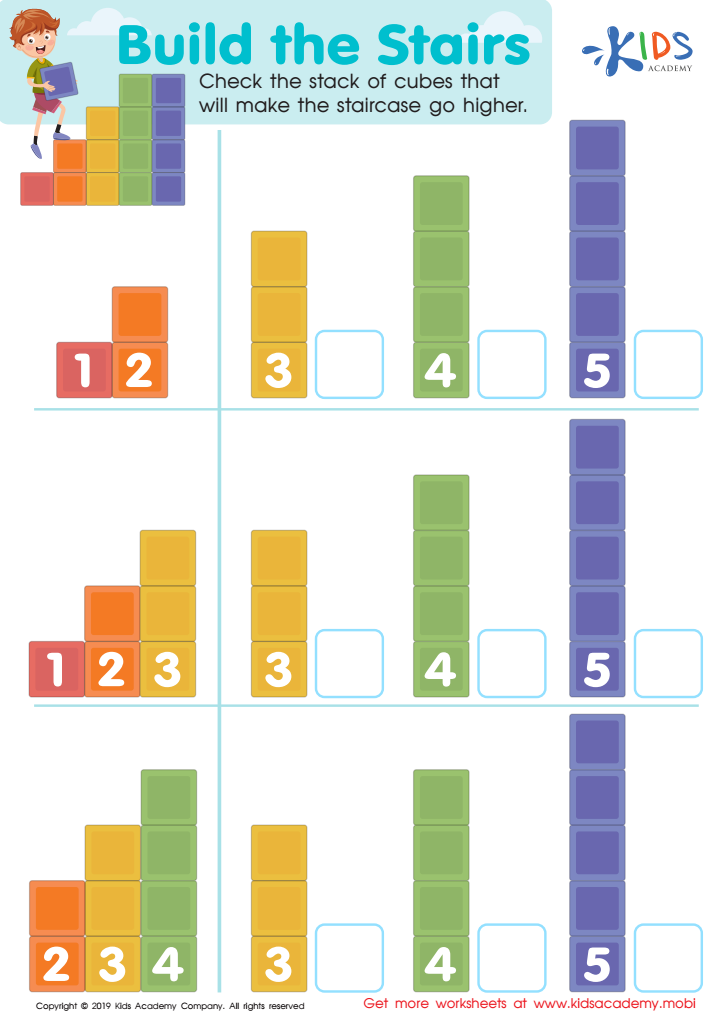
Build the Stairs Worksheet
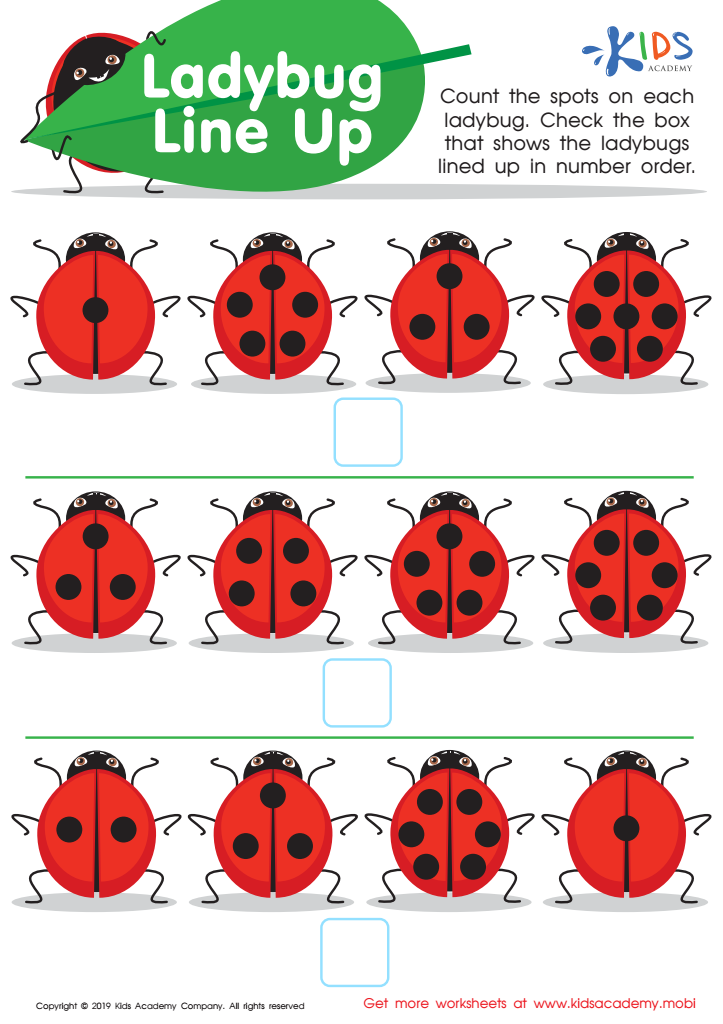
Ladybug Line Up Worksheet



%20(1).jpg)



Understanding sequencing, especially with easy numbers, is crucial for children ages 3-7 because it lays the foundation for critical cognitive and academic skills. When young learners grasp the concept of sequencing, they develop the ability to recognize patterns, organize thoughts, and understand the logical order of events—all of which are essential for problem-solving and reasoning.
For parents and teachers, emphasizing sequencing in early education supports the development of mathematical skills, such as number order, addition, and subtraction. Children learn to predict what comes next, which is fundamental for more complex math concepts later in life. Sequencing also enhances language development, as telling a story or following a set of instructions requires the ability to logically sequence words and events.
Moreover, mastering sequencing facilitates smoother transitions in daily routines, fostering independence and confidence in children. When they understand the sequential steps of brushing their teeth or getting dressed, they are better equipped to manage these tasks on their own.
By integrating activities that teach sequencing into play and lessons, caregivers and educators can ensure children build a strong foundation for future academic success and life skills. Engaging in activities like counting games, storytelling, and puzzle-solving makes learning sequencing enjoyable and effective, nurturing a love for learning in young minds.








