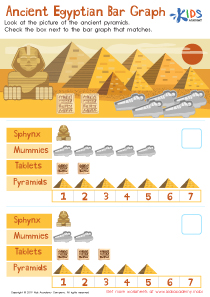
Color recognition Easy Math Worksheets for Ages 3-7
6 filtered results
-
From - To
Introduce your little learners to the vibrant world of math with our "Color Recognition Easy Math Worksheets for Ages 3-7." Designed for young explorers, these engaging worksheets seamlessly blend color recognition with foundational math skills. Each activity is crafted to captivate, making learning fun and effective. Bright visuals and playful exercises help children distinguish colors, count, and develop critical thinking. Perfect for home or classroom use, these downloadable resources are a delightful way to nurture early math proficiency and creativity in kids. Ignite a passion for learning through colorful math adventures!
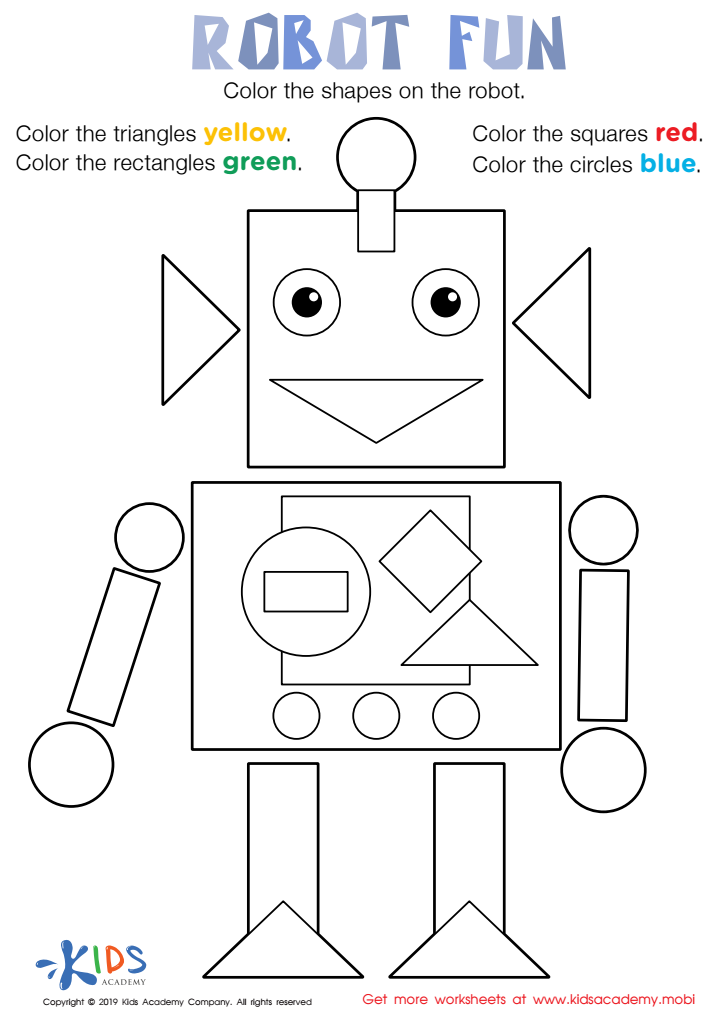
Robot Fun Worksheet
 Assign to My Students
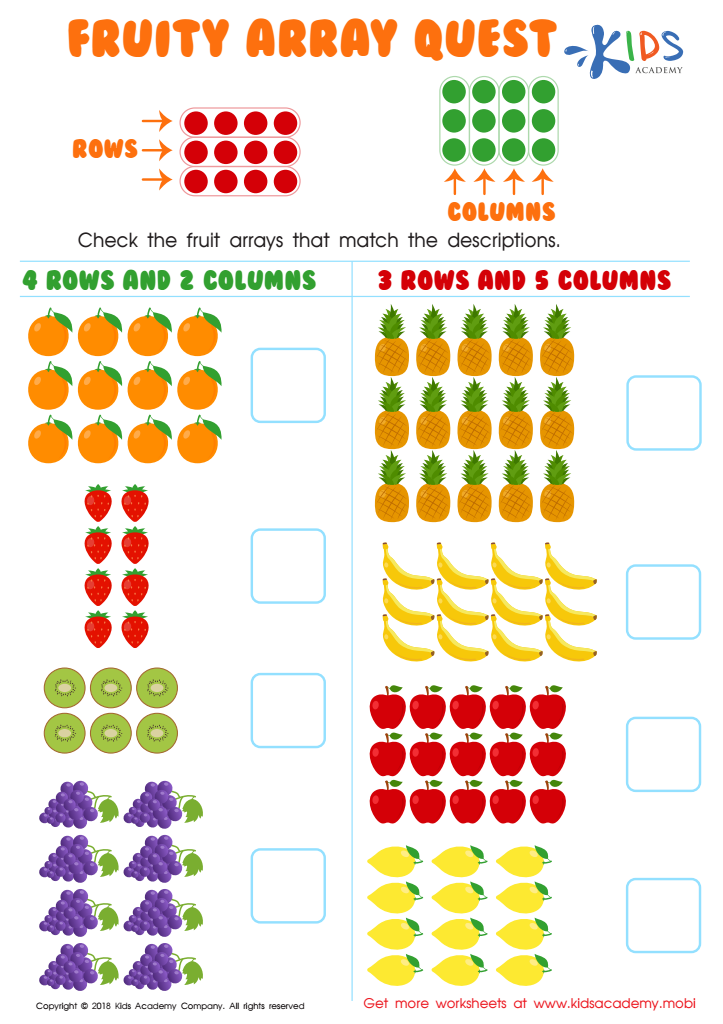
Fruity Array Quest Worksheet
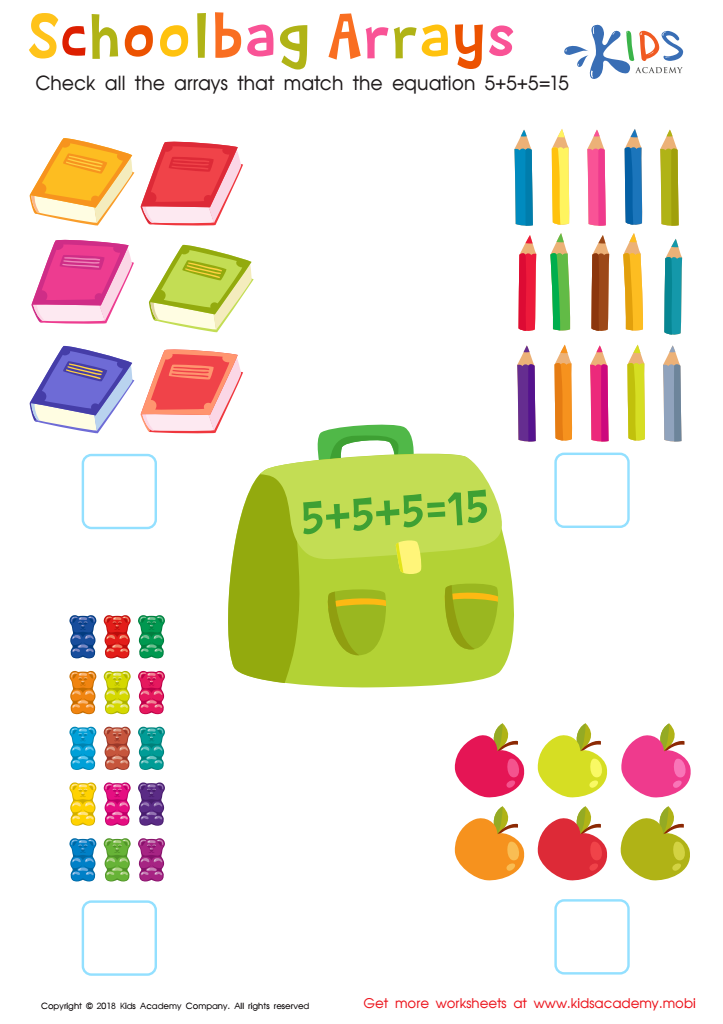
Schoolbag Arrays Worksheet
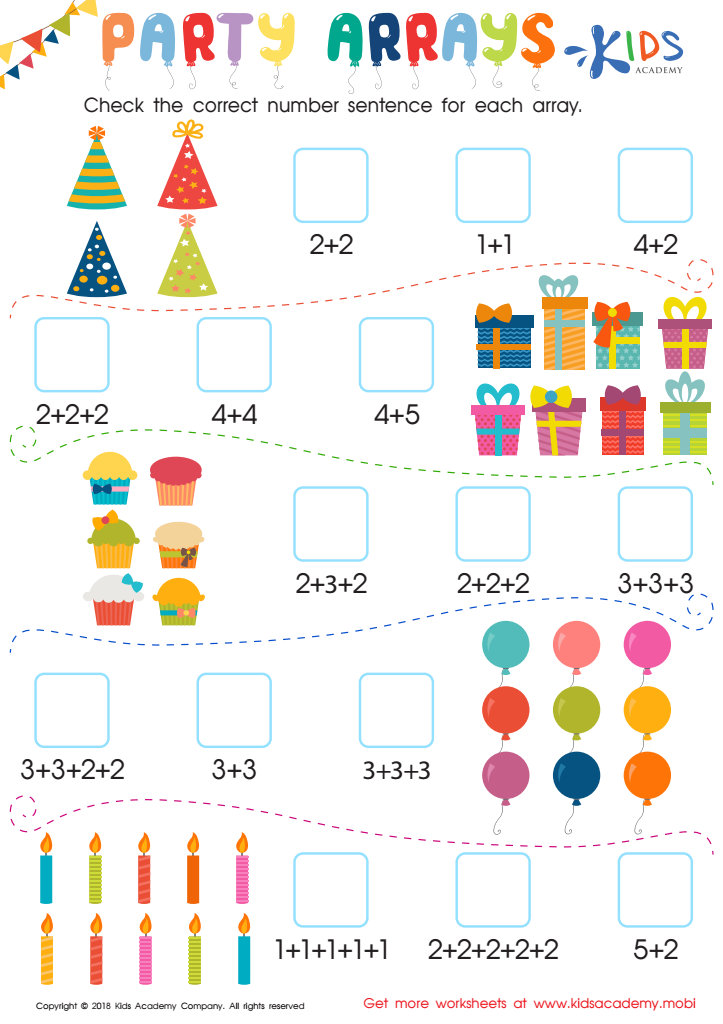
Party Arrays Worksheet
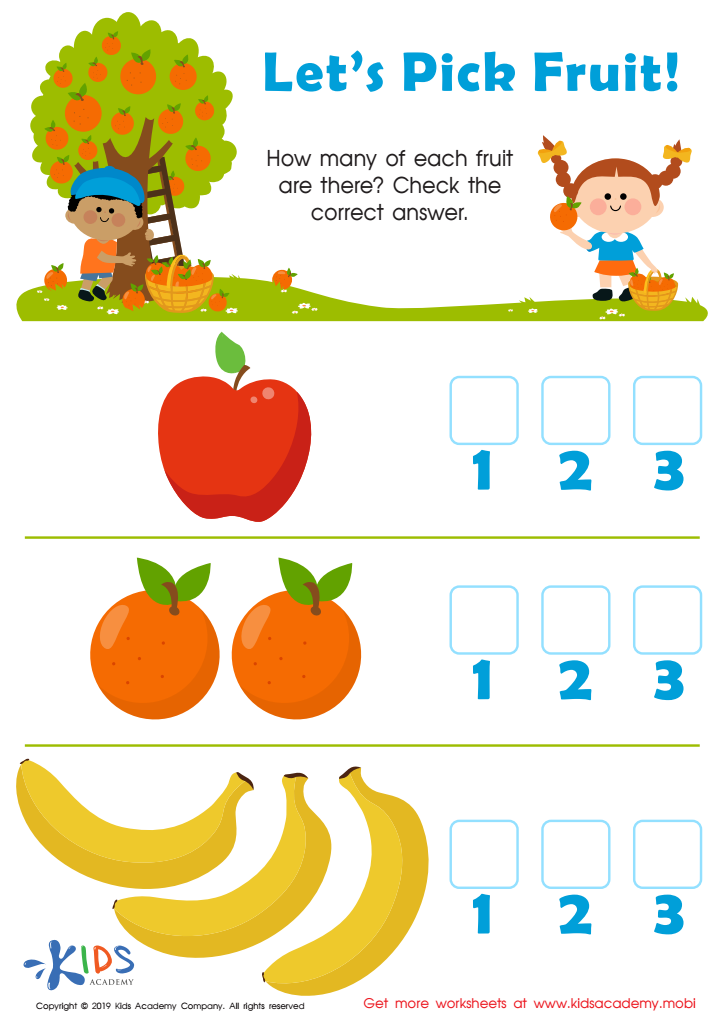
Let's Pick Fruit Worksheet
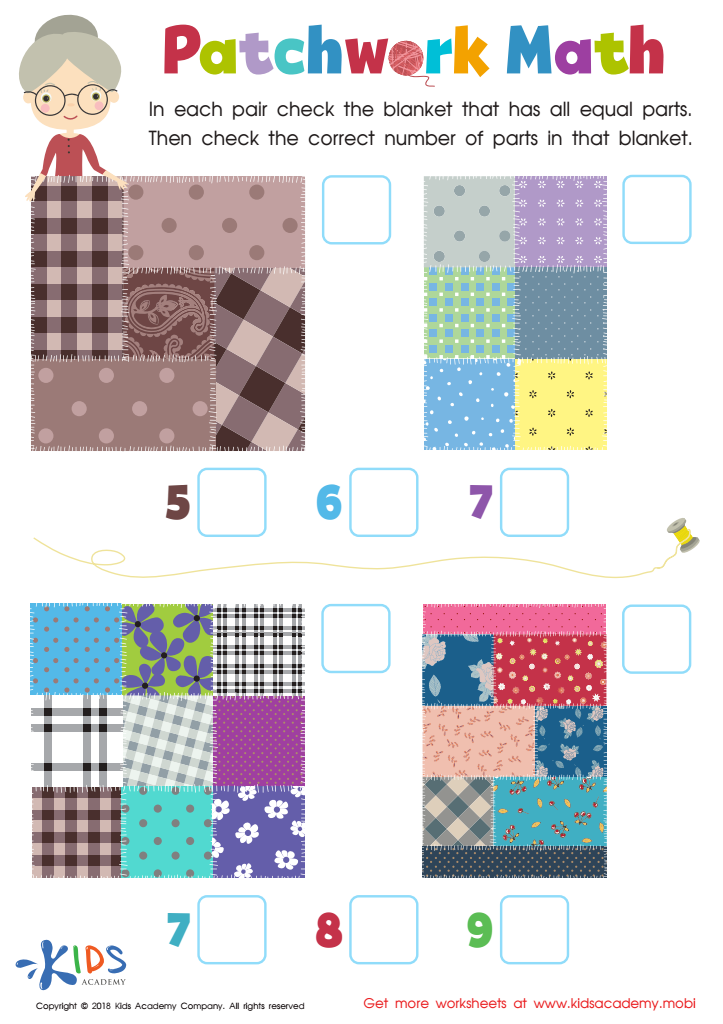
Patchwork Math Worksheet








Color recognition and basic math skills are foundational elements in early childhood development. For children aged 3-7, these skills are crucial for several reasons.
Firstly, understanding colors enhances visual perception and cognitive processing. Recognizing and naming colors allows children to better navigate their world, distinguishing between different objects and comprehending various concepts. It's a key part of language development as well, broadening their descriptive vocabulary and enabling clearer communication.
In parallel, mastering easy math concepts like counting, addition, and subtraction is essential at an early age. These skills lay the groundwork for more complex mathematical thinking and problem-solving abilities. Early exposure to math helps in fostering logical and analytical thinking. Furthermore, integrating color recognition with math, such as counting colored objects or sorting items by color, makes learning more engaging and interactive.
Parents and teachers can significantly influence a child’s enthusiasm and ability in these areas through playful activities and structured learning. Games, puzzles, and hands-on activities such as sorting colored blocks or counting items during everyday tasks can turn learning into an enjoyable experience, reinforcing these critical skills. By supporting early color recognition and math skills, adults help children build a solid foundation for future learning and academic success.