
Comparing numbers Easy Math Worksheets for Ages 3-7
3 filtered results
Difficulty Level
Grade
Age
-
From - To
Subject
Activity
Standards
Discover our engaging "Comparing Numbers Easy Math Worksheets" tailored for children ages 3-7! These worksheets are designed to make learning fun and interactive. Each activity focuses on helping young learners develop essential math skills such as identifying greater or lesser values and understanding number comparisons. With bright illustrations and user-friendly formats, kids will enjoy practicing their math skills while boosting their confidence. Ideal for both classroom and home use, these worksheets provide a solid foundation in numeracy. Explore our collection today and watch your child's math skills flourish! Perfect for early grade educators and parents alike!
Favorites
With answer key
Interactive
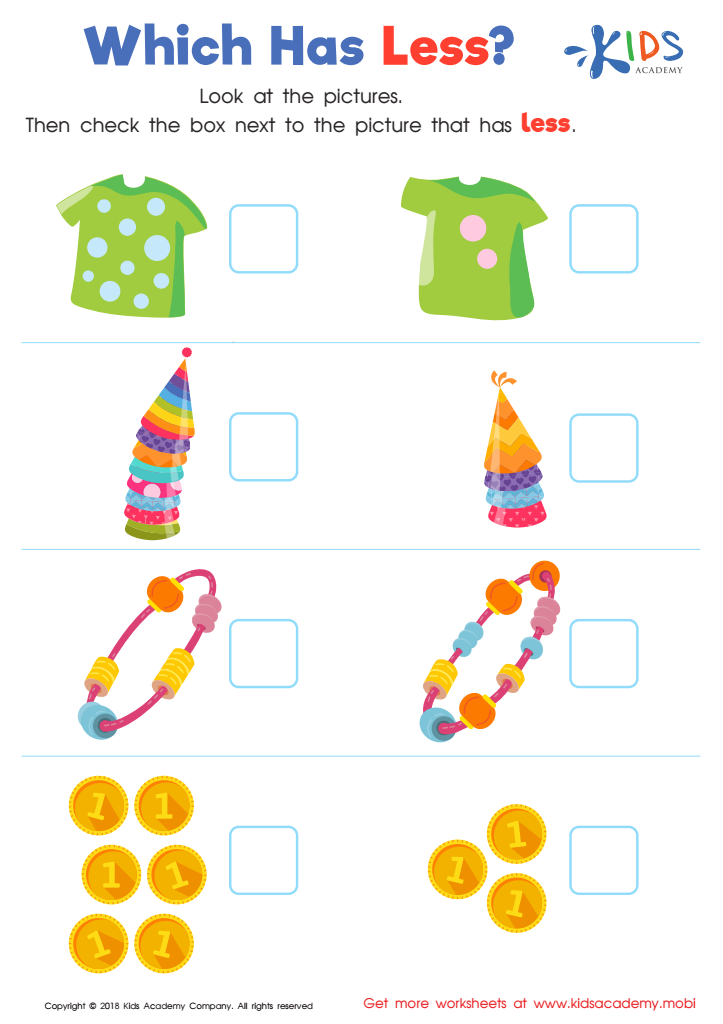
Which Has Less? Worksheet
Kids can develop their number sense by comparing and contrasting objects to identify which has less. This worksheet helps them practice: it's bright and colorful, featuring familiar objects and pictures to count, strengthening basic counting skills. It's the perfect warm-up for comparing and contrasting larger numbers.
 Assign to My Students
Which Has Less? Worksheet
Worksheet
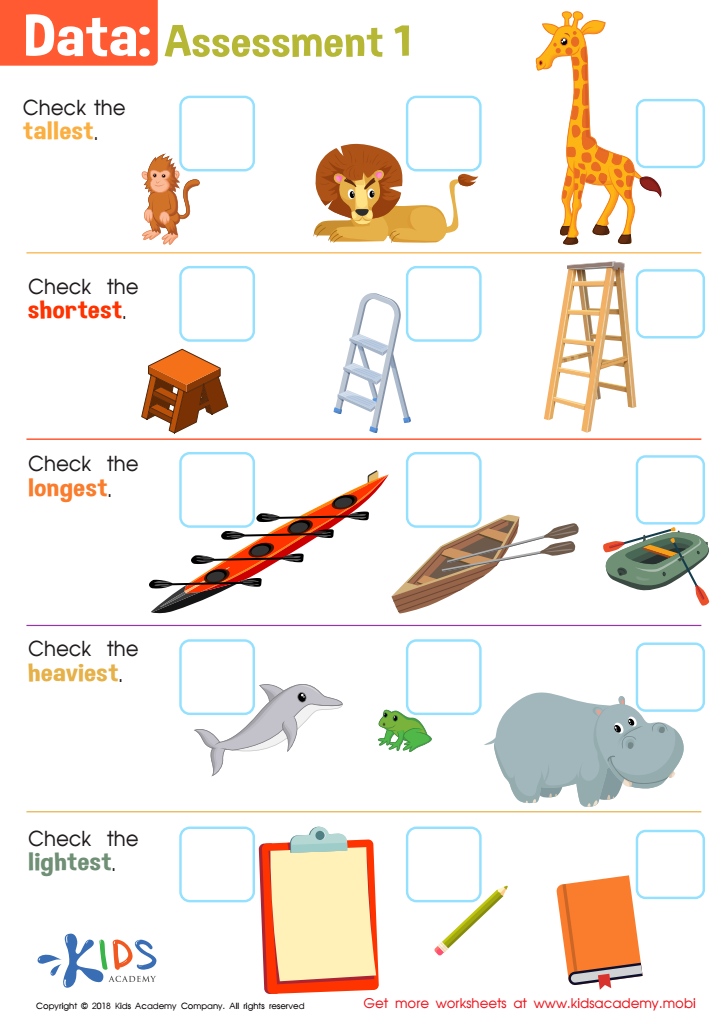
Data: Assessment 1 Worksheet
This free worksheet helps you assess where your young students are with measurement superlatives like tallest, shortest, heaviest, longest and lightest. It features cute, colorful pics of familiar objects so your kids have a reference, and helps you identify areas to work on.
Data: Assessment 1 Worksheet
Worksheet
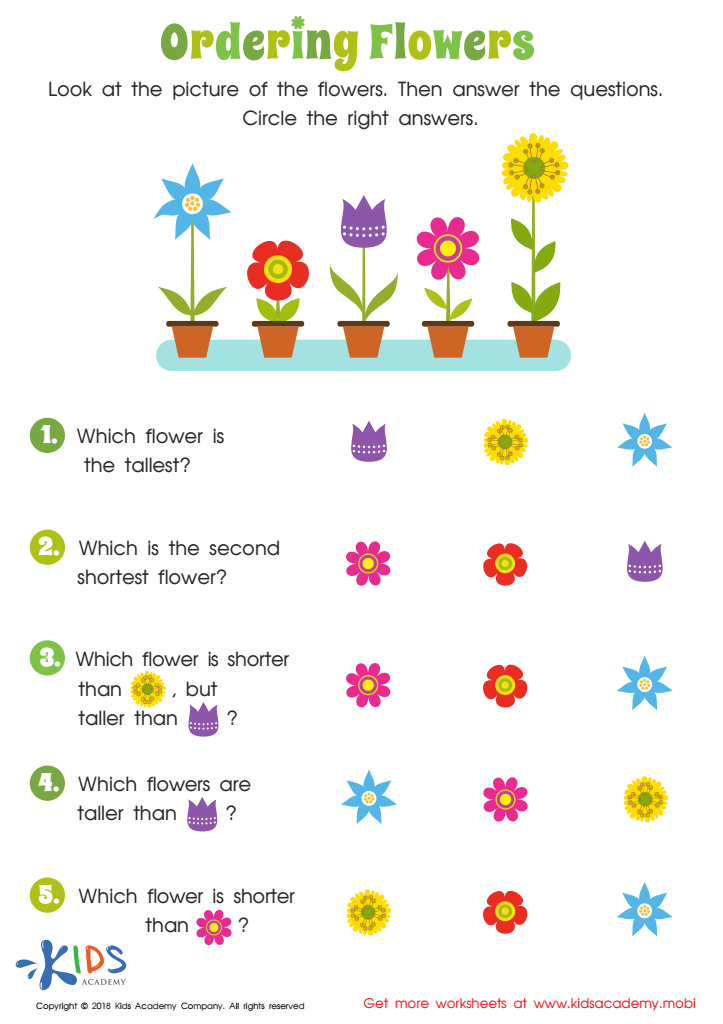
Ordering Flowers Worksheet
Preschoolers can start learning measurement with visuals! This worksheet uses colorful flowers of different heights. Ask your learner to observe the flowers, then help them compare/answer which is taller/shorter. It's an easy way for them to begin learning about measurement.
Ordering Flowers Worksheet
Worksheet
Join Kids Academy for Free
Who is primarily going to use this learning content?




.jpg)


Parents and teachers should prioritize teaching "Comparing Numbers" to children aged 3-7 because it lays a critical foundation for early mathematics, essential for cognitive development. At this age, children are naturally curious and eager to learn about their surroundings, and introducing number comparison encourages their analytical and critical thinking skills. By understanding concepts such as more than, less than, and equal to, young learners begin to recognize relationships between numbers, which enhances their ability to make sense of quantity and value.
Furthermore, comparing numbers is not only essential for math proficiency, but it also integrates vital life skills. Kids learn to assess situations and make choices based on comparative reasoning, which fosters decision-making abilities they will use throughout their lives. In an educational setting, these skills promote collaborative learning through games and group activities, making math enjoyable and engaging.
Additionally, developing a strong number sense early on helps mitigate future learning difficulties. When young children confidently compare numbers, they build self-esteem and a positive attitude toward mathematics. Thus, emphasizing comparing numbers in early education cultivates a strong, well-rounded foundation for lifelong learning and success in various subject areas.








