Time reading skills Easy Math Worksheets for Ages 3-7
4 filtered results
-
From - To
Enhance your child's understanding of time with our engaging "Time Reading Skills Easy Math Worksheets," designed for ages 3-7. These printable worksheets introduce essential concepts like telling time with clocks, understanding hours and minutes, and differentiating between morning and afternoon activities. With colorful visuals and fun activities, children will develop their time-telling abilities in a playful way. Ideal for both classroom and home learning, these worksheets encourage independent skill-building while fostering a love for math. Equip your little ones with the confidence to manage time effectively as they grow, all through enjoyable learning experiences tailored for their age group!
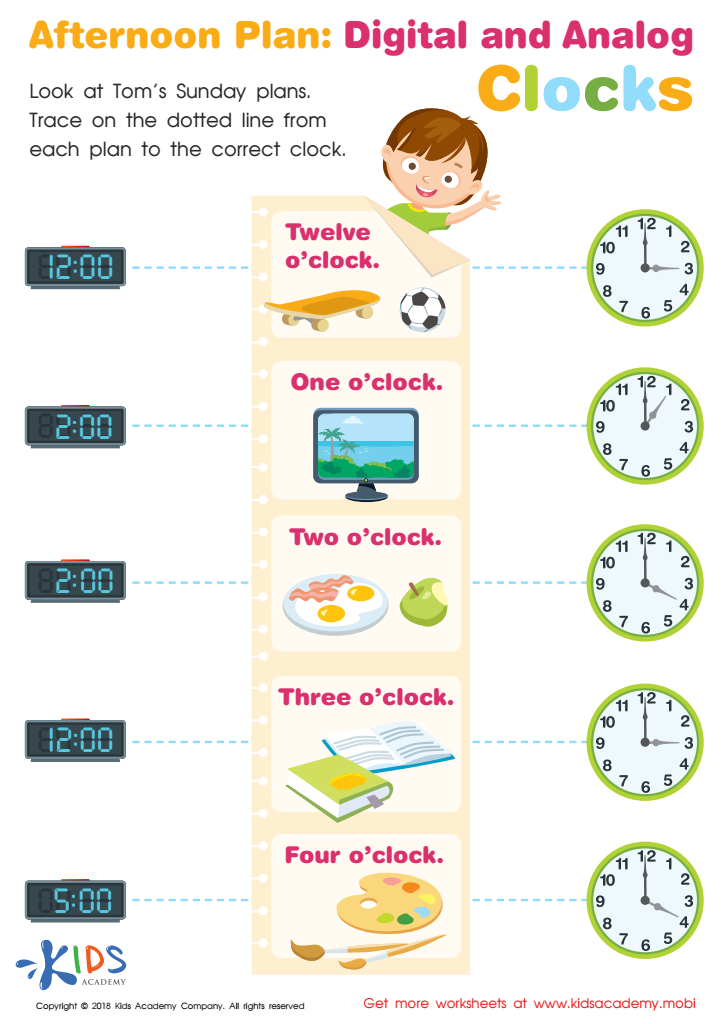
Afternoon Plan: Digital and Analog Clocks Worksheet
 Assign to My Students
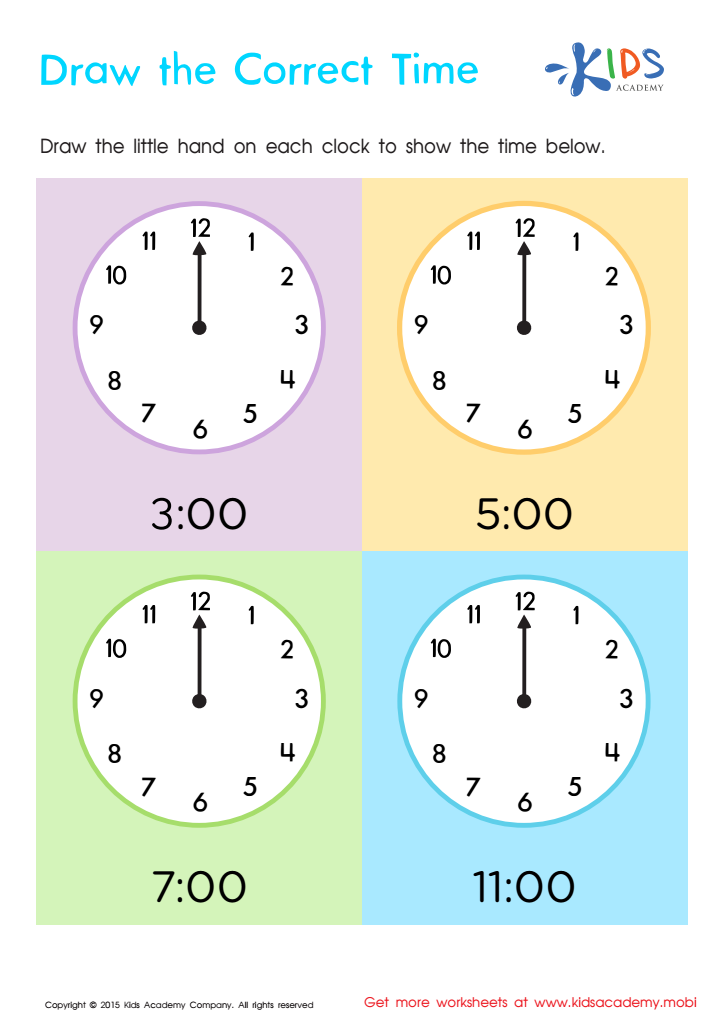
Telling The Time Worksheet: Part 1
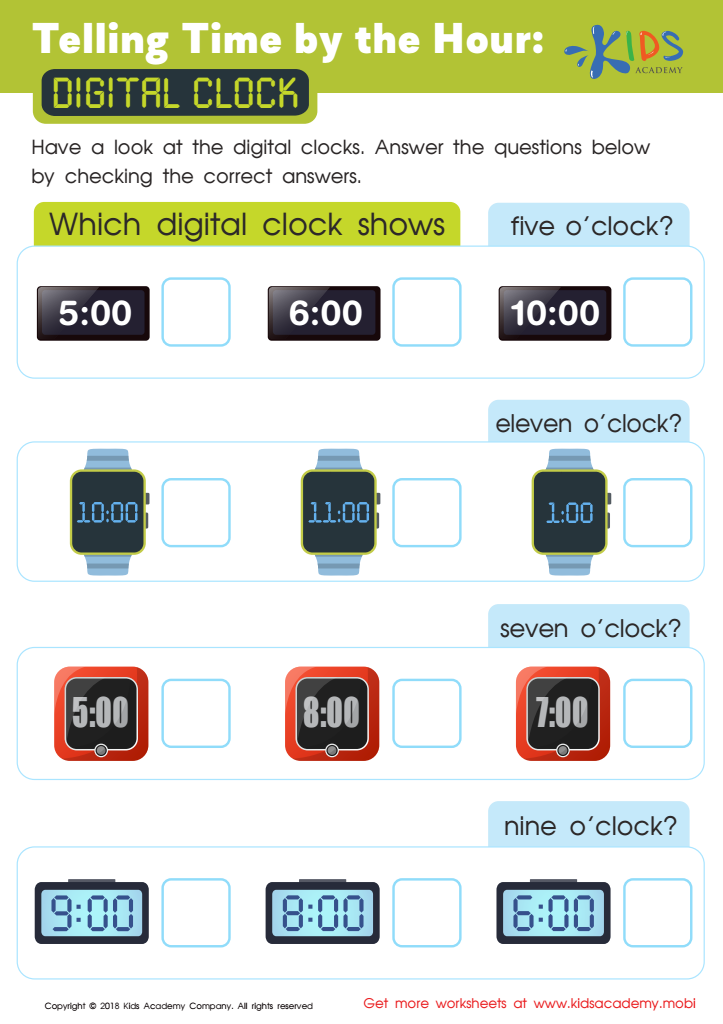
Telling Time by the Hour: Digital Clock Worksheet
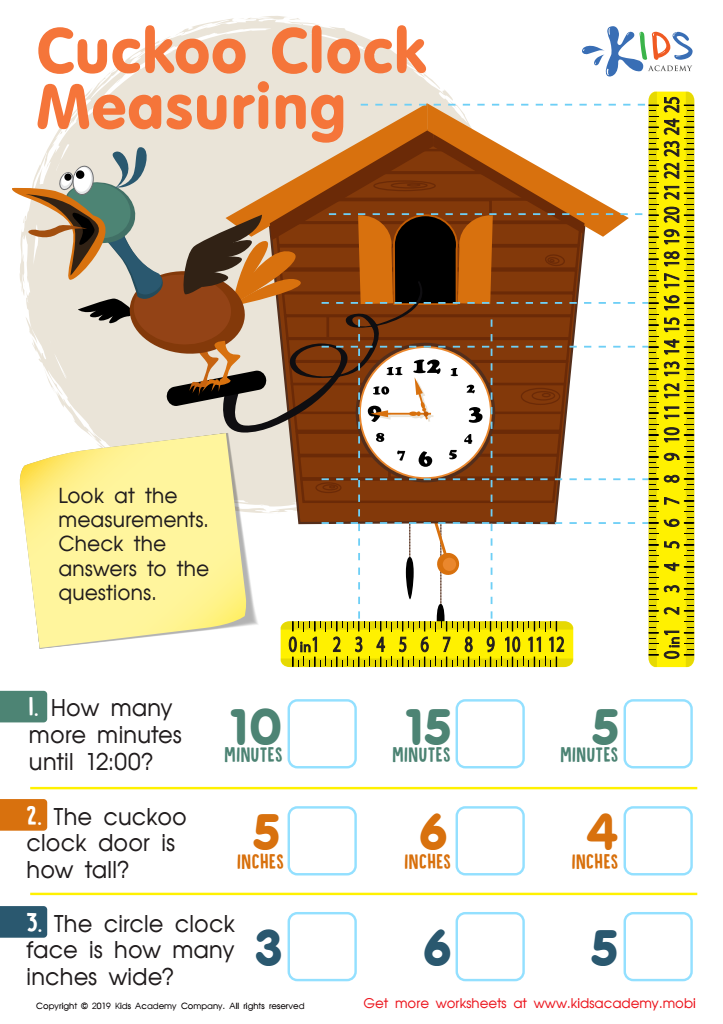
Cuckoo Clock Measuring Worksheet








Parents and teachers should prioritize time reading skills and easy math for children aged 3-7 as these foundational abilities are crucial for early development. At this young age, children are like sponges, soaking up information and learning patterns that will affect their future academic success.
Time reading skills, which include understanding clocks and the concept of time, help children develop essential life skills, promote independence, and enhance their scheduling abilities. Knowing how to read time instills a sense of responsibility and helps children grasp important concepts related to daily routines.
Similarly, easy math skills nurture critical thinking and problem-solving abilities. Engaging children with simple mathematical concepts through games, songs, and interactive activities can make learning enjoyable and effective. This early exposure to math fosters confidence and prepares them for more complex mathematical understanding in later grades.
Furthermore, developing these skills at an early age supports cognitive growth and enhances language development. By caring about these foundational skills, parents and teachers empower children to become confident learners who are well-equipped to tackle future academic challenges. Ultimately, fostering early literacy in time reading and mathematics sets the stage for lifelong success.








