Number Recognition Easy Numbers 11–20 Worksheets for Ages 3-7
6 filtered results
-
From - To
Boost your child's number skills with our "Number Recognition Easy Numbers 11–20 Worksheets" designed for ages 3-7. These engaging printables from Kids Academy are perfect for helping young learners recognize and understand numbers 11 through 20. Each worksheet combines fun activities with educational elements, ensuring your child develops confidence with counting and number identification. Tailored for early learners, these worksheets stimulate interest and provide a strong foundation in math. Enhance your child's learning journey with interactive exercises that turn number recognition into an enjoyable experience. Download today and watch your child's skills flourish!
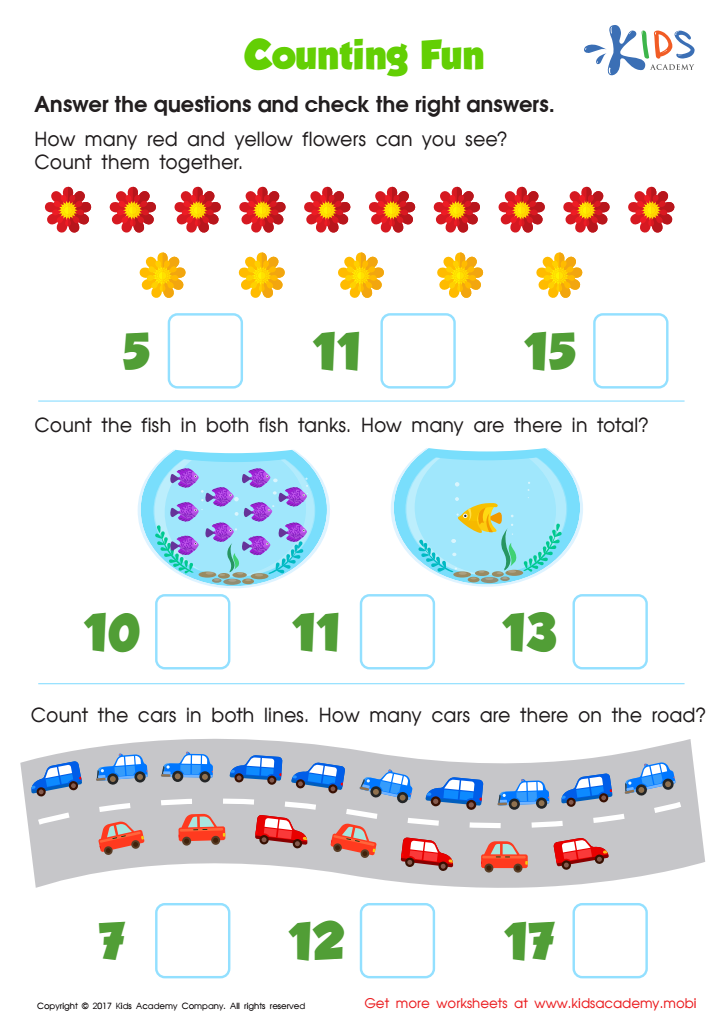
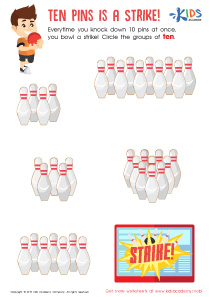
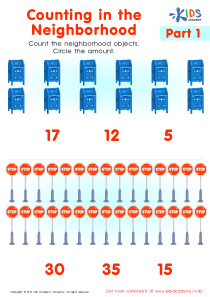
Counting Fun Worksheet
 Assign to My Students
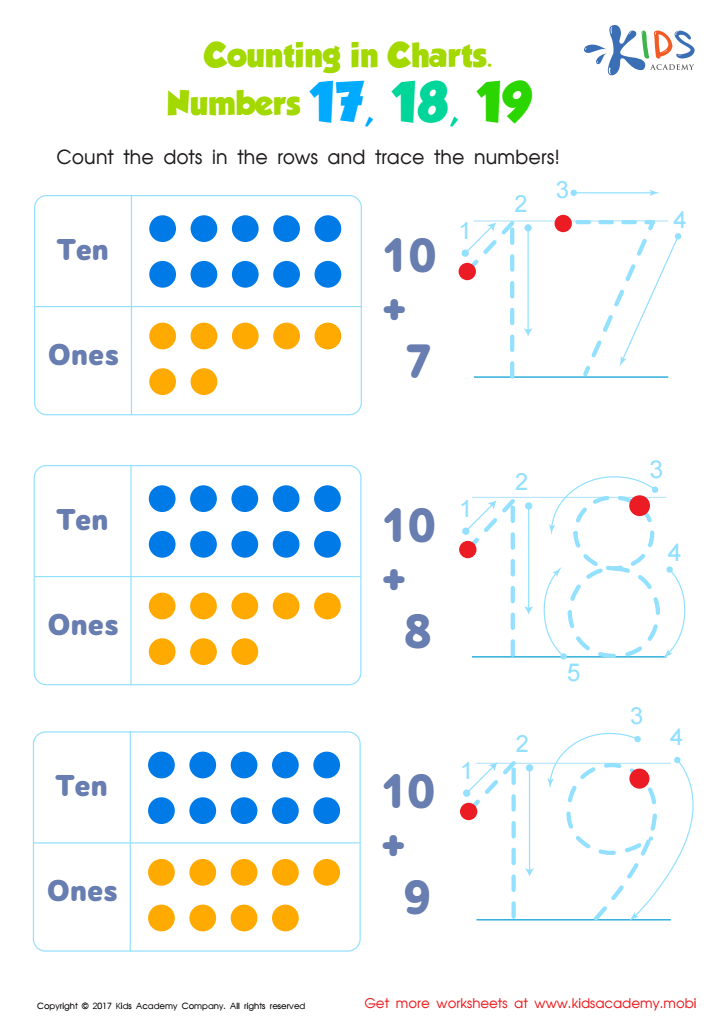
Kindergarten Number Tracing: Counting in Charts Worksheet
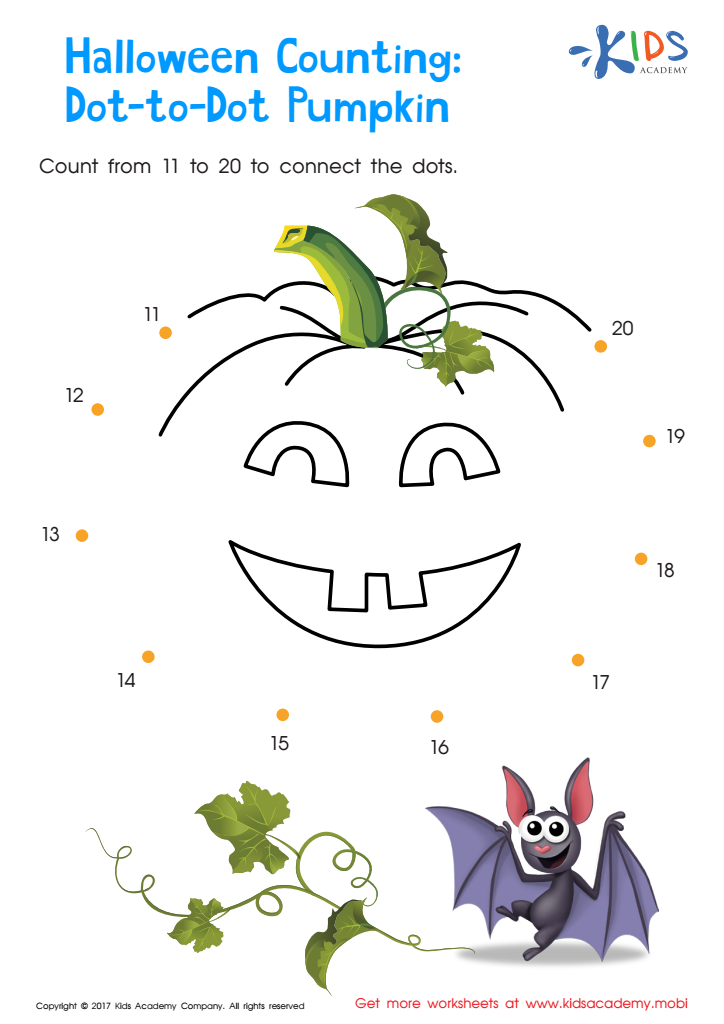
Ordering 11–20: Halloween Counting Worksheet
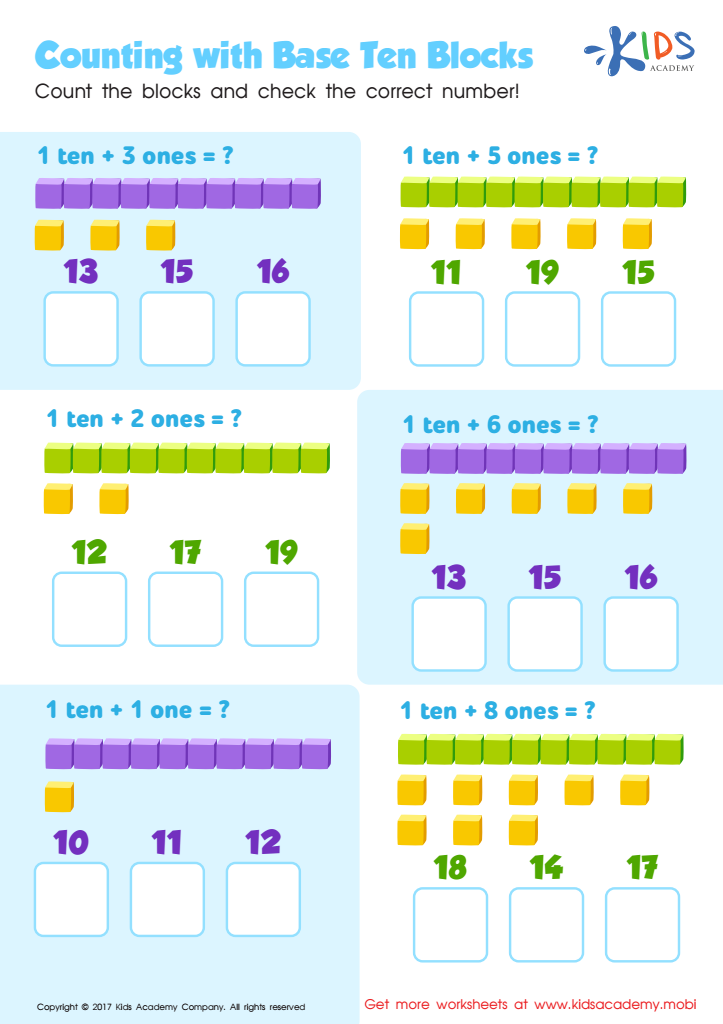
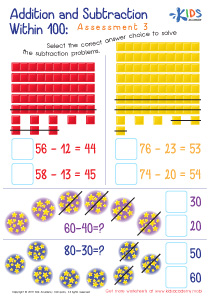
Counting with Base Ten Blocks Worksheet
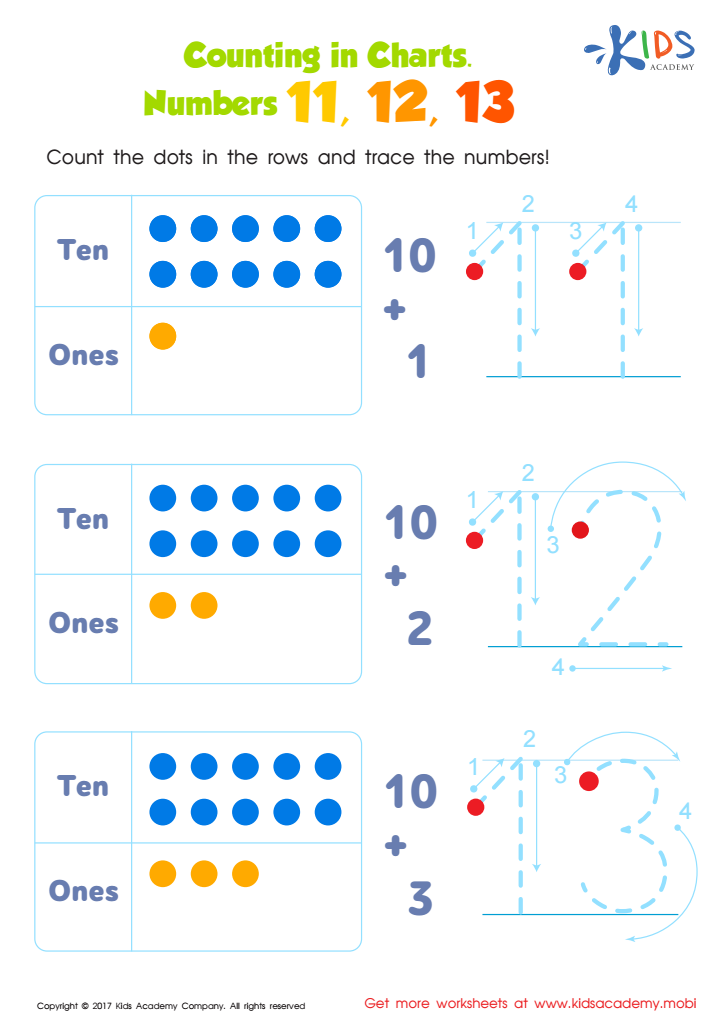
Number Tracing Worksheet For Kindergarten
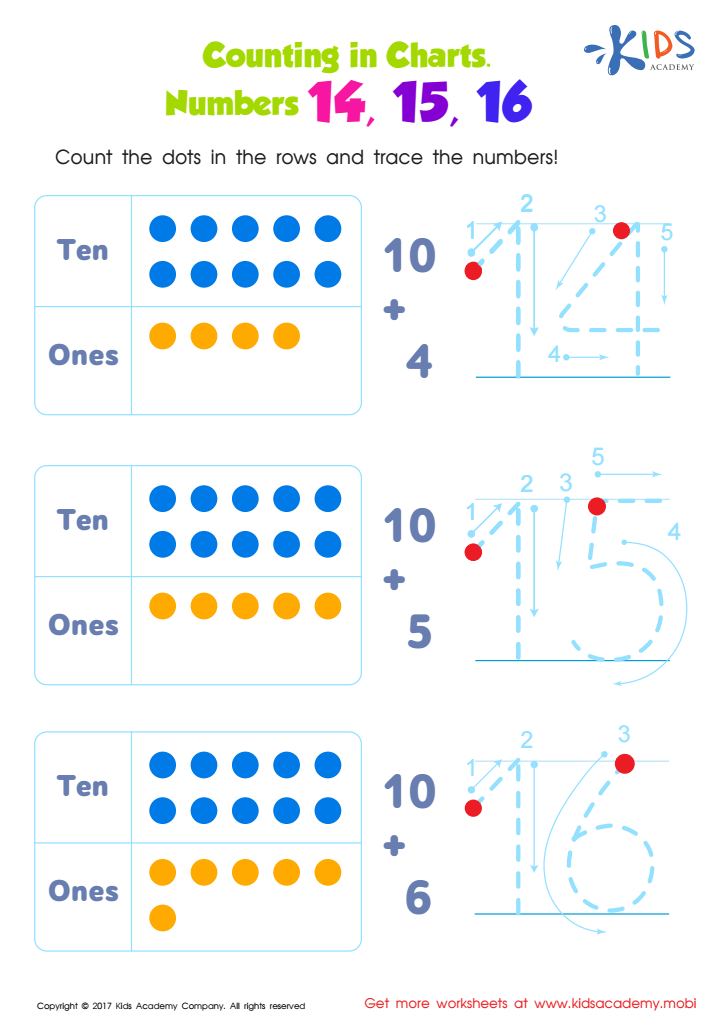
Number Tracing Worksheet



Number recognition, especially for easy numbers 11–20, is essential for young children's foundational math skills, laying the groundwork for future academic success. As children at ages 3-7 start developing their cognitive abilities, being able to recognize and understand numbers between 11 and 20 is crucial for several reasons.
Firstly, numbers beyond 10 introduce children to the concept of place value, which is fundamental for grasping larger numbers and operations like addition, subtraction, or even multiplication and division in the future. Understanding that 12 is not just a different symbol from 1 and 2, but actually represents one whole set of ten plus two more, is essential for mathematical reasoning.
Secondly, number recognition is directly linked to a child's ability to perform simple arithmetic operations. Familiarity with numbers 11–20 will facilitate ease in counting, sorting, and sequencing, all of which are essential skills in early education.
Furthermore, early number skills are also indicators of broader academic achievements. Studies have shown that children who grasp early math concepts are more likely to succeed in later schooling compared to their peers.
Finally, confident number recognition promotes a child’s self-esteem, making learning feel like a positive and achievable endeavor, influencing their attitudes toward education across other subjects as well. Therefore, parents and teachers should actively engage in activities that encourage and reinforce recognizing numbers 11-20 to foster comprehensive and lasting mathematical skills.