Vocabulary expansion Easy Writing Worksheets for Ages 3-7
7 filtered results
-
From - To
Unlock your child's potential with our Vocabulary Expansion Easy Writing Worksheets designed for ages 3-7! These engaging worksheets encourage young learners to explore new words while developing their writing skills. Filled with fun activities, each worksheet introduces age-appropriate vocabulary yet ensures an enjoyable learning experience. Kids will enhance their understanding of language through creative exercises that foster curiosity and imagination. Ideal for home or classroom use, these worksheets align with educational standards to ensure progress in literacy. Watch as your child gains confidence and expands their vocabulary effortlessly while having a blast! Start their journey to language mastery today!
 Assign to My Students
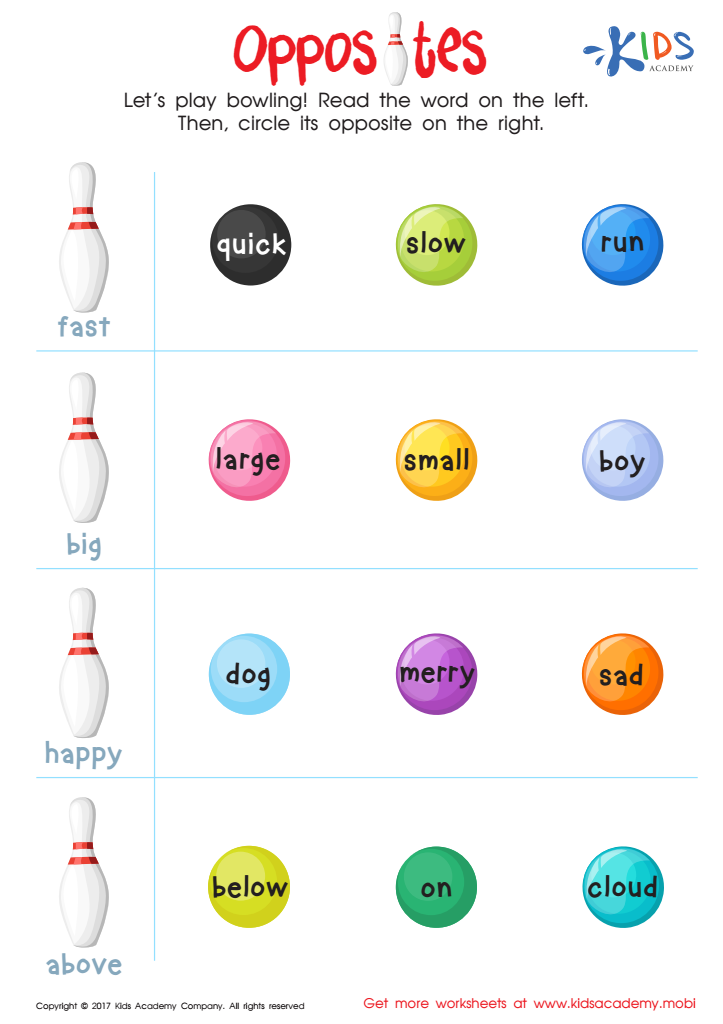
Opposites Worksheet
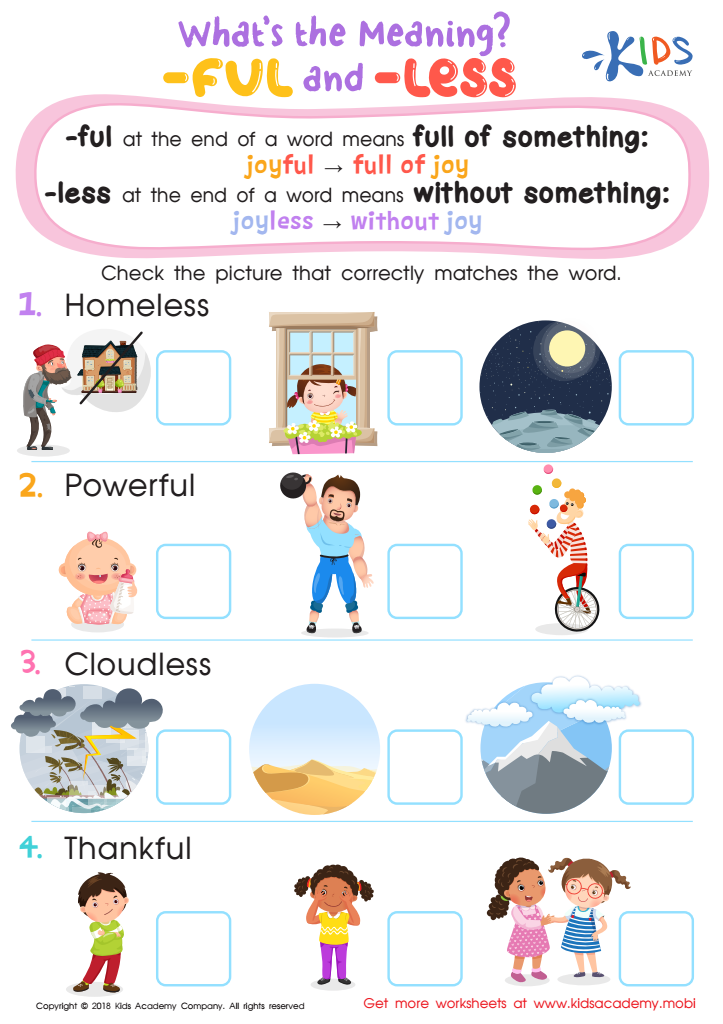
What's the Meaning? Worksheet
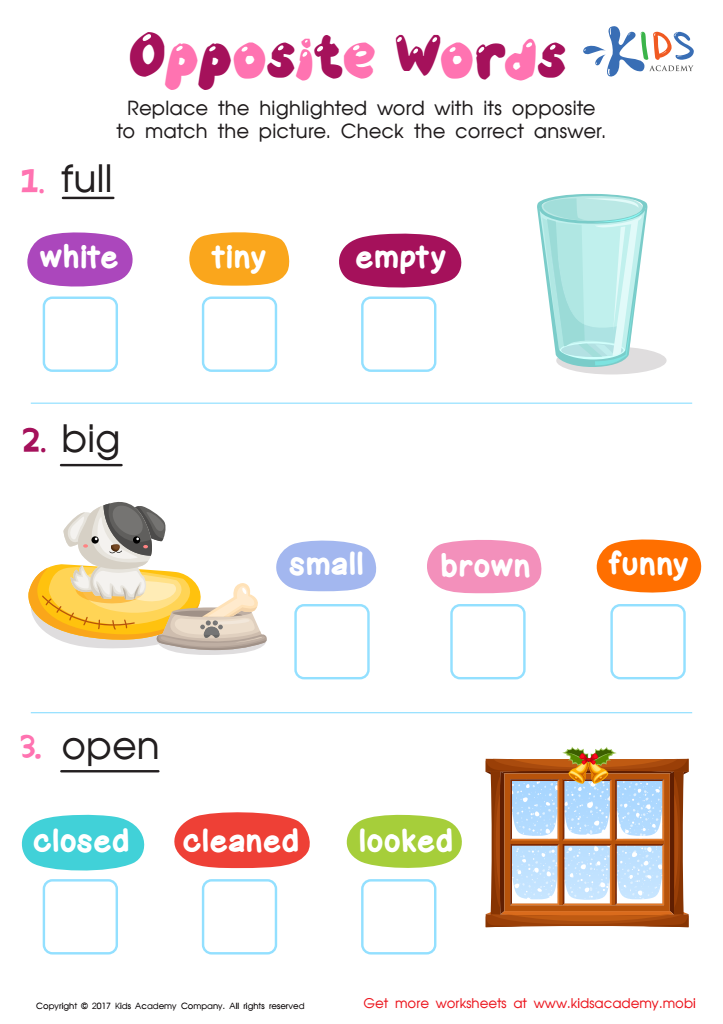
Opposite Words Worksheet
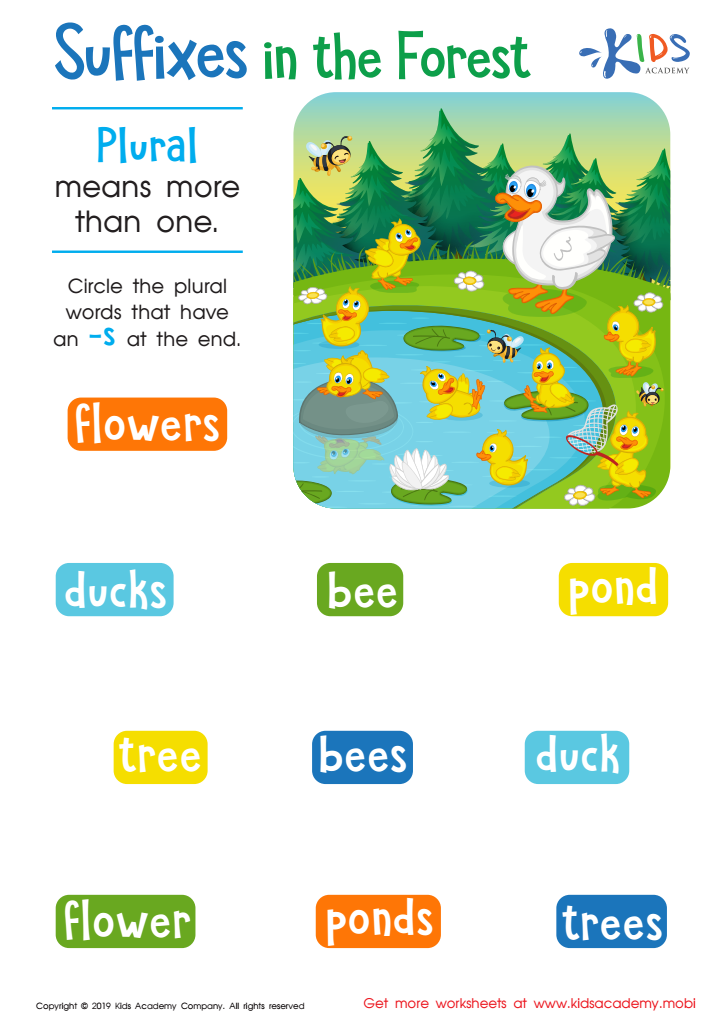
Suffixes in the Forest Worksheet
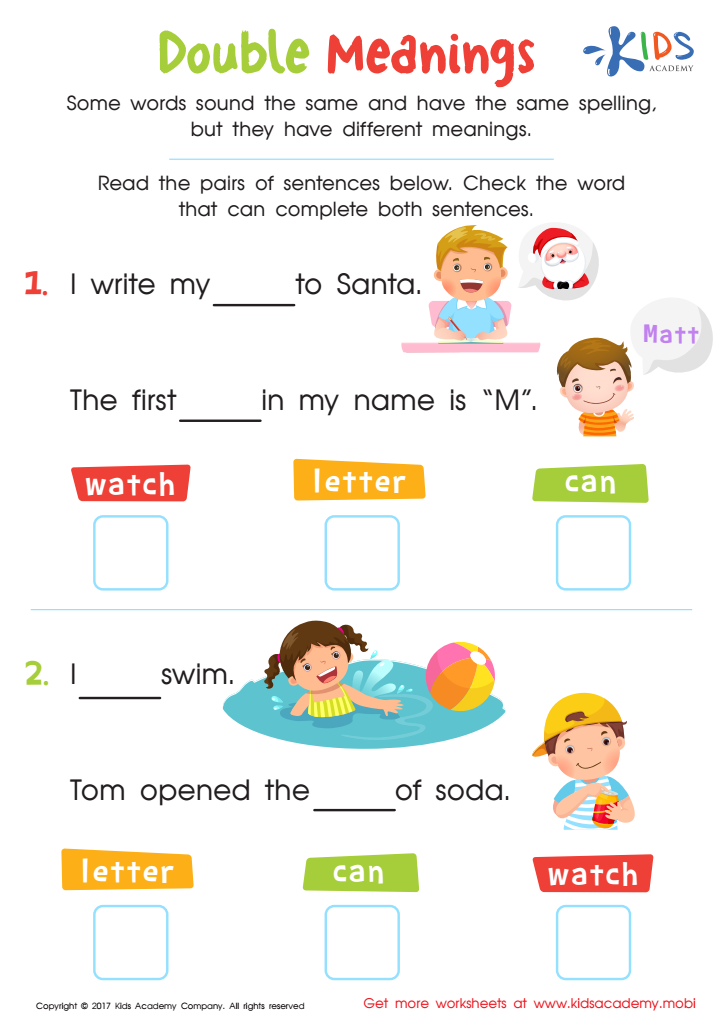
Double Meanings Worksheet
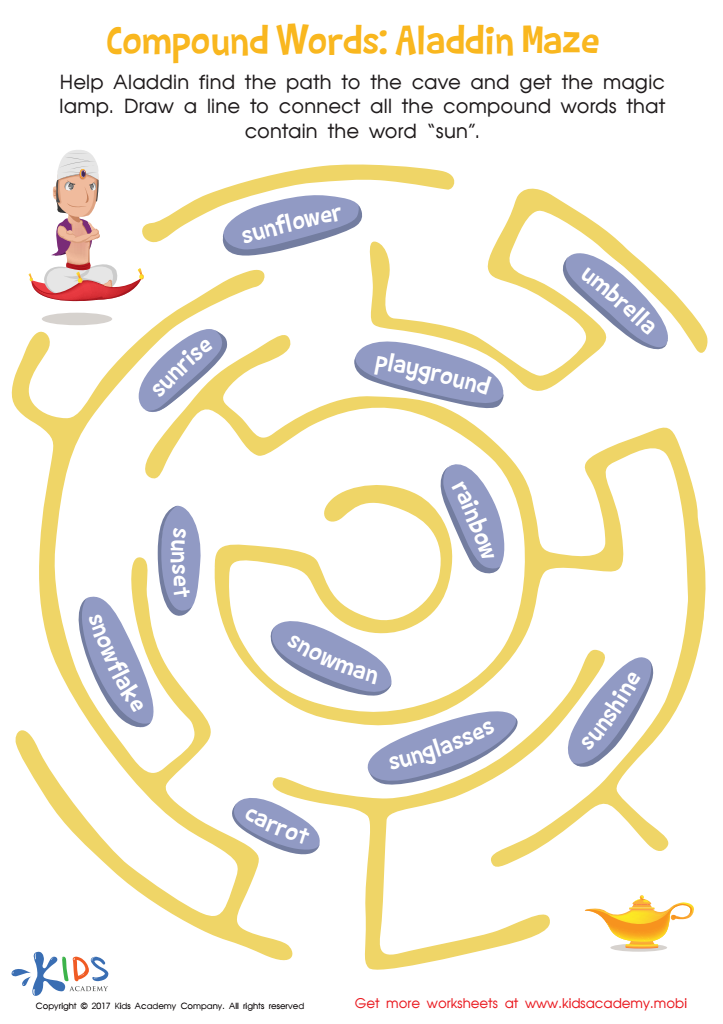
Compound Aladdin Maze Word Structure Worksheet





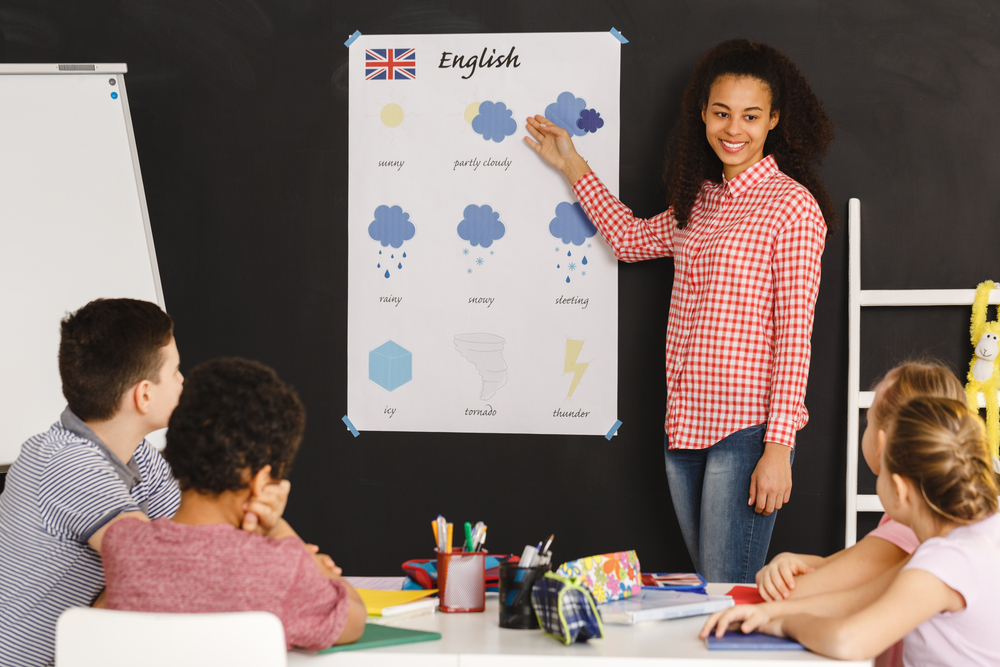

Parents and teachers should care about vocabulary expansion for children aged 3-7 because it's a critical period for language development. During these early years, kids rapidly acquire the building blocks of communication. A rich vocabulary enhances their ability to express thoughts, emotions, and ideas, fostering better social interactions and emotional intelligence.
By expanding vocabulary, we also bolster reading skills. Children with a strong vocabulary are more likely to comprehend what they read, leading to academic success. As they encounter new words in stories or conversations, their inquisitiveness grows, prompting them to ask questions, which in turn leads to deeper learning.
Furthermore, vocabulary expansion enhances critical thinking skills. When children have the words to articulate their feelings or opinions, they can engage in discussions, solve problems, and make informed choices, all essential skills for lifelong learning.
Lastly, providing children with a variety of words nurtures creativity and imagination. As they learn new expressions, they begin to see the world from different perspectives and can articulate their unique thoughts clearly. Encouraging vocabulary expansion not only prepares children for future academic challenges but also lays the foundation for effective communication throughout their lives.