Visual Learning Easy Addition and Subtraction Word Problems Worksheets for Ages 3-8
3 filtered results
-
From - To
Discover engaging and effective worksheets designed for ages 3-8 that enhance visual learning in addition and subtraction through fun word problems. These activities help young learners grasp math concepts by presenting challenges in relatable, everyday scenarios. Each worksheet encourages the development of critical thinking and problem-solving skills while making arithmetic enjoyable. Ideal for classroom settings or at-home practice, these visually appealing exercises cater to varying skill levels, ensuring that every child can excel in their mathematical journey. Foster a love for learning and bolster numerical fluency with our visually stimulating word problems tailored specifically for budding mathematicians!
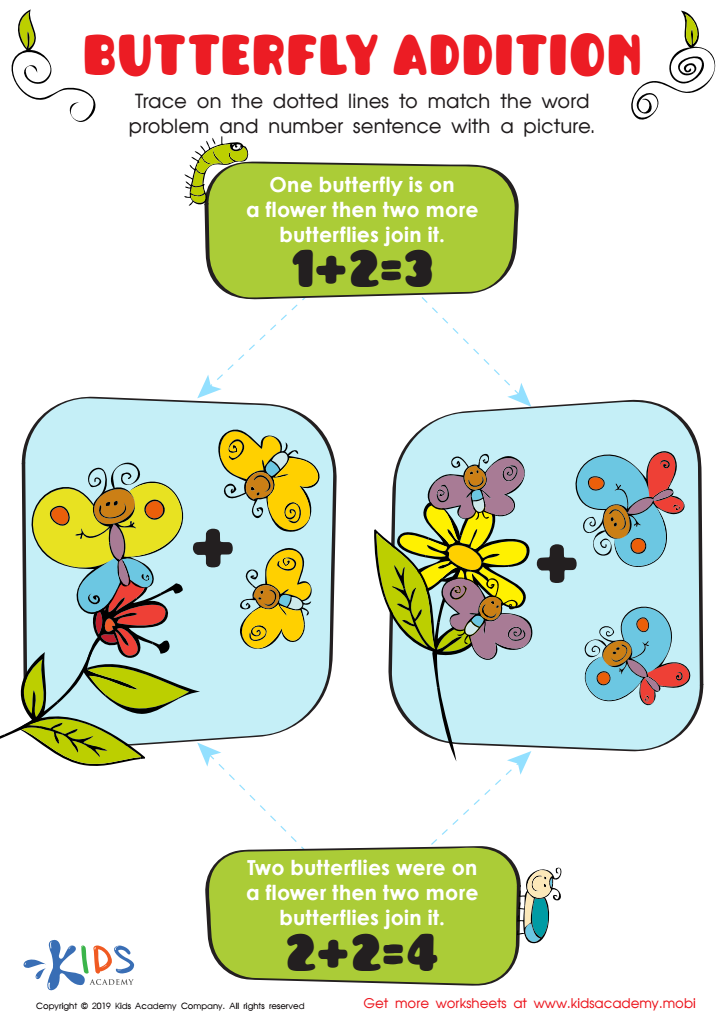
Butterfly Addition Worksheet
 Assign to My Students
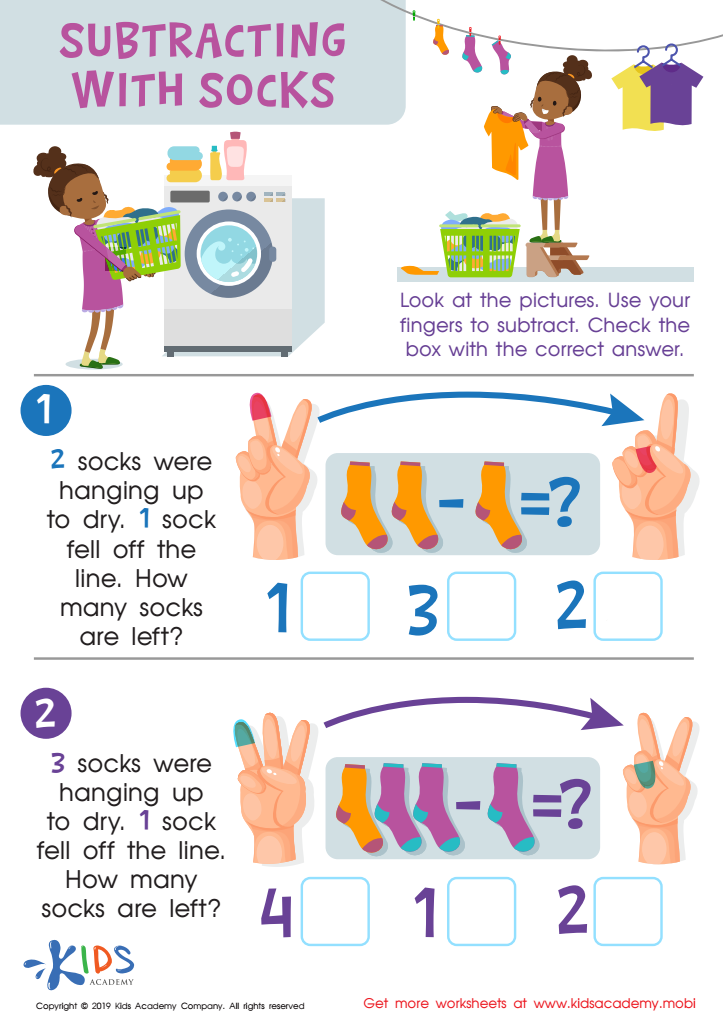
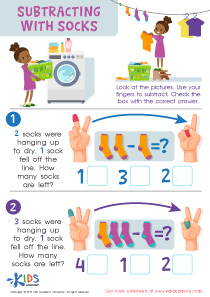
Subtracting Socks Worksheet
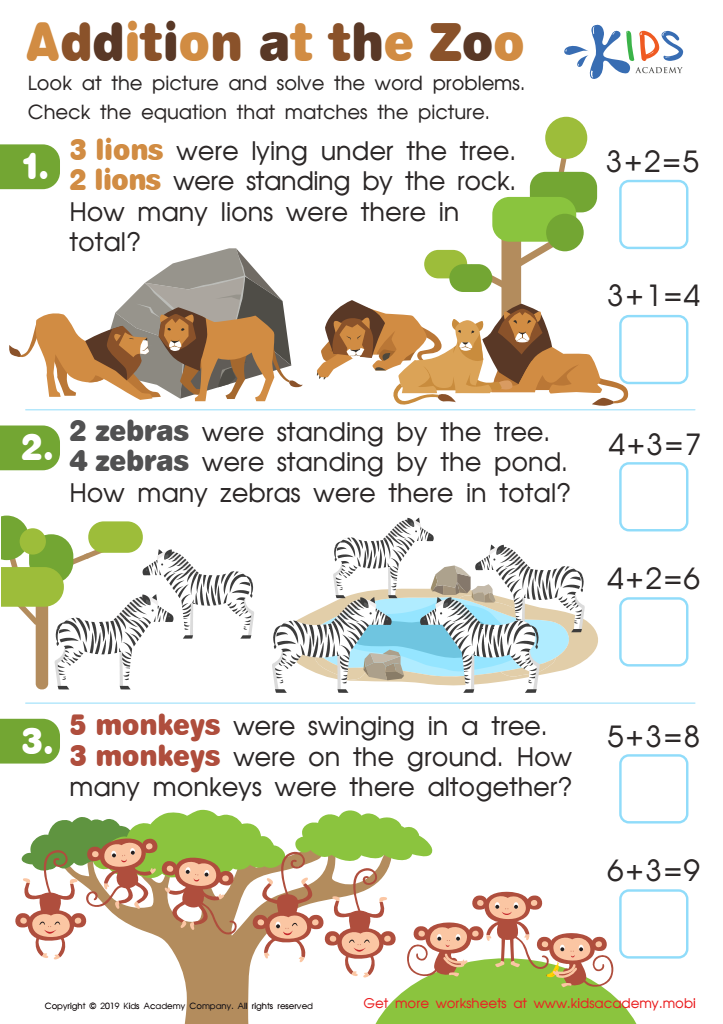
Addition at the Zoo Worksheet








Parents and teachers should care about Visual Learning Easy Addition and Subtraction Word Problems for Ages 3-8 because these foundational skills are crucial for early mathematical development. Visual learning engages young children by using images, diagrams, and tangible objects, making abstract concepts more concrete and understandable. Through visual aids, children can see the relationships between numbers and quantities, aiding comprehension and retention.
Moreover, word problems stimulate critical thinking and problem-solving skills. By interpreting everyday situations in math terms, children learn to apply their knowledge in real-world contexts, which fosters a positive attitude towards math and builds a strong analytical foundation. This early exposure to word problems helps develop literacy alongside numeracy, as children practice reading comprehension by analyzing the language used.
Additionally, engaging visual learning tools cater to different learning styles and needs, ensuring that all children can participate and thrive. By integrating fun and colorful visual elements, learning becomes a more enjoyable and motivating experience, leading to greater enthusiasm in tackling math.
Overall, prioritizing visual learning for addition and subtraction word problems not only boosts mathematical competence but also promotes a lifelong love of learning in young children.