Comparing quantities Easy Math Worksheets for Ages 3-8
4 filtered results
-
From - To
Welcome to our "Comparing Quantities Easy Math Worksheets" page, specifically designed for children ages 3-8. These engaging worksheets help young learners grasp the essential concept of comparing quantities through fun and interactive activities. By using visual aids and relatable scenarios, kids will develop their understanding of more, less, and equal. Our worksheets are tailored to suit various skill levels, ensuring that each child can progress at their own pace. Ideal for both classroom use and at-home learning, these resources will foster a love for math while building foundational skills. Dive into math fun and see your child thrive!
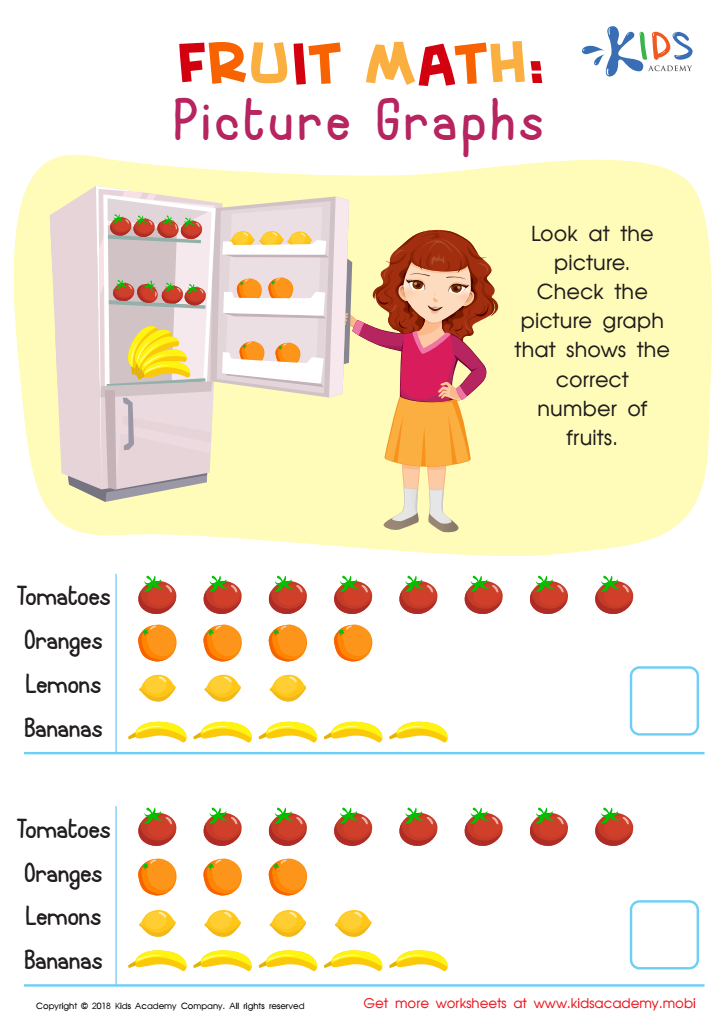
Fruit Math: Picture Graphs Worksheet
 Assign to My Students
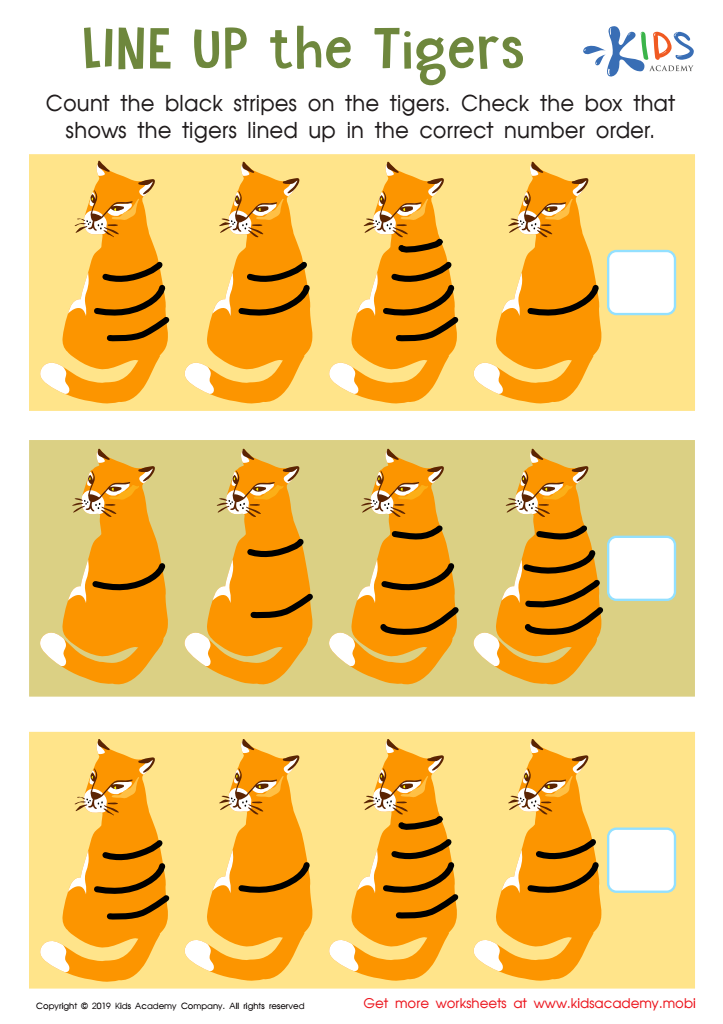
Line up the Tigers Worksheet
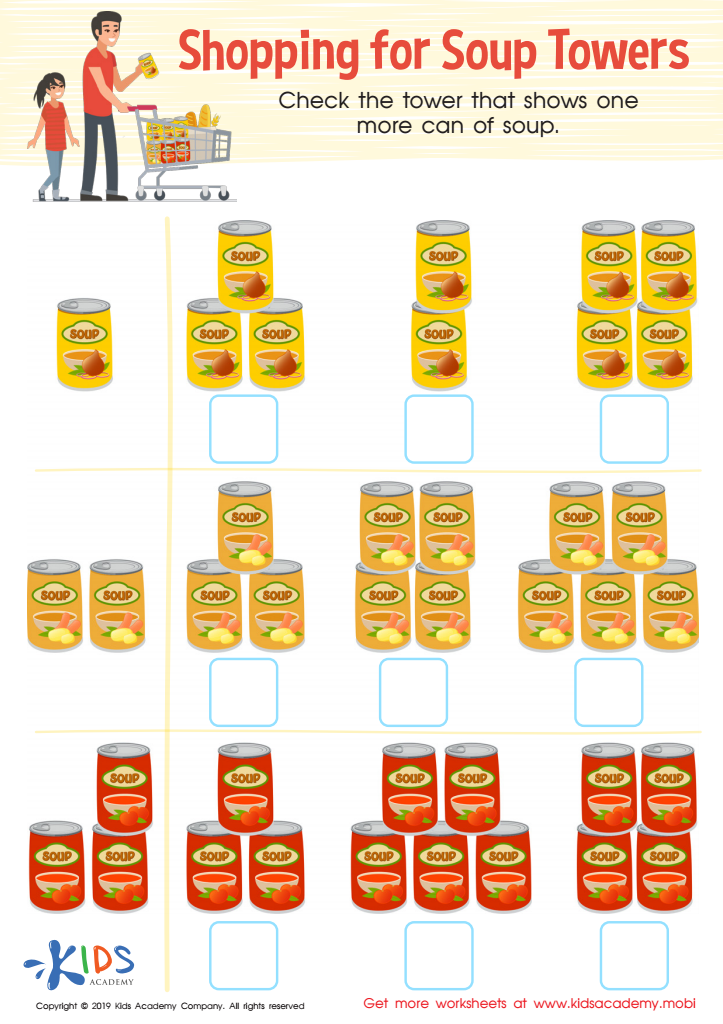
Soup Towers Worksheet
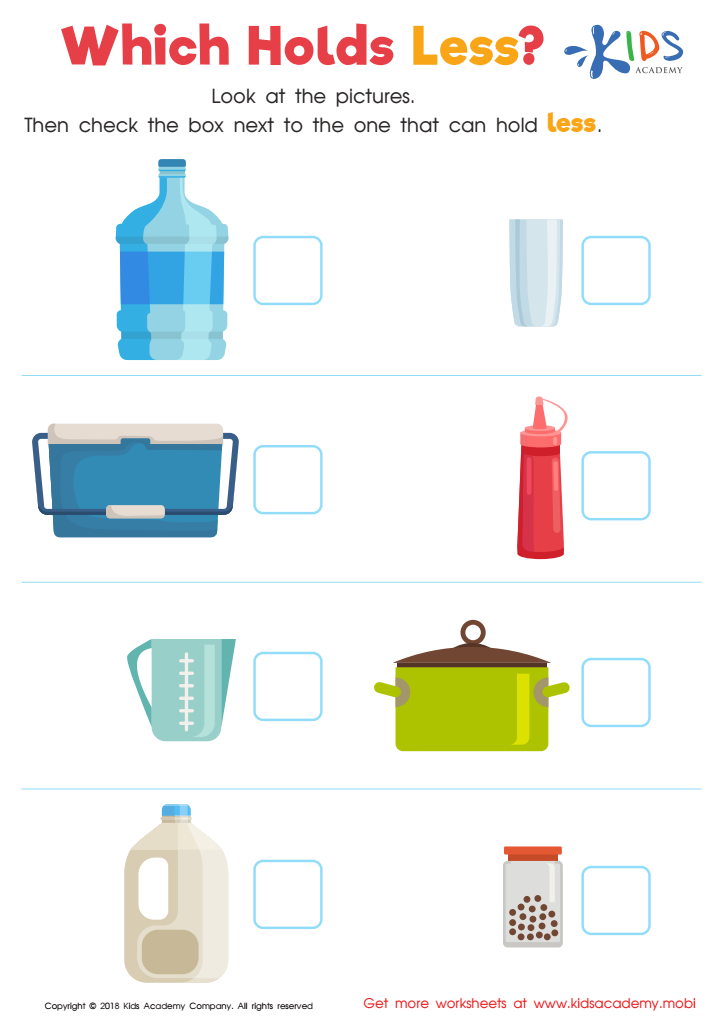
Which Holds Less? Worksheet








Comparing quantities is a fundamental math concept for children aged 3-8 that lays the groundwork for their future mathematical understanding and skills. For parents and teachers, recognizing the importance of this skill is essential in supporting children's early development.
First, comparing quantities fosters critical thinking and analytical skills. Children learn to assess different sets of items, which enhances their ability to make connections between numbers and the world around them. This form of reasoning is crucial as they encounter more complex math concepts later in their education.
Second, early exposure to comparing quantities boosts numerical fluency. Young learners gain comfort with numbers, which facilitates easier transitions to addition, subtraction, and eventually, more elaborate arithmetic operations. Rooted in hands-on experiences, such discrepancies ignite children's interest in math, making learning enjoyable and engaging.
Finally, understanding quantities encourages social skills through collaborative activities such as games or group projects. Children can share their discoveries or challenge each other in friendly competitions, hence, fostering teamwork and communication.
In summary, by investing time in teaching children how to compare quantities, parents and teachers provide vital support for their cognitive, social, and emotional development, setting them up for mathematical success in the future.








