Understanding times tables Easy Multiplication Worksheets for Ages 3-8
3 filtered results
-
From - To
Unlock the world of multiplication with our "Understanding Times Tables" worksheets, specially designed for children ages 3-8. These engaging, easy-to-follow multiplication worksheets make learning times tables fun and accessible. With vibrant illustrations and interactive exercises, young learners will build a solid foundation in multiplication, boosting their confidence and math skills. Each worksheet gradually introduces key concepts, ensuring children can grasp and retain essential multiplication facts. Perfect for home or classroom use, these resources encourage hands-on learning and offer ample opportunities for practice and reinforcement. Start your child's journey to mastering multiplication in a playful and enjoyable way today!
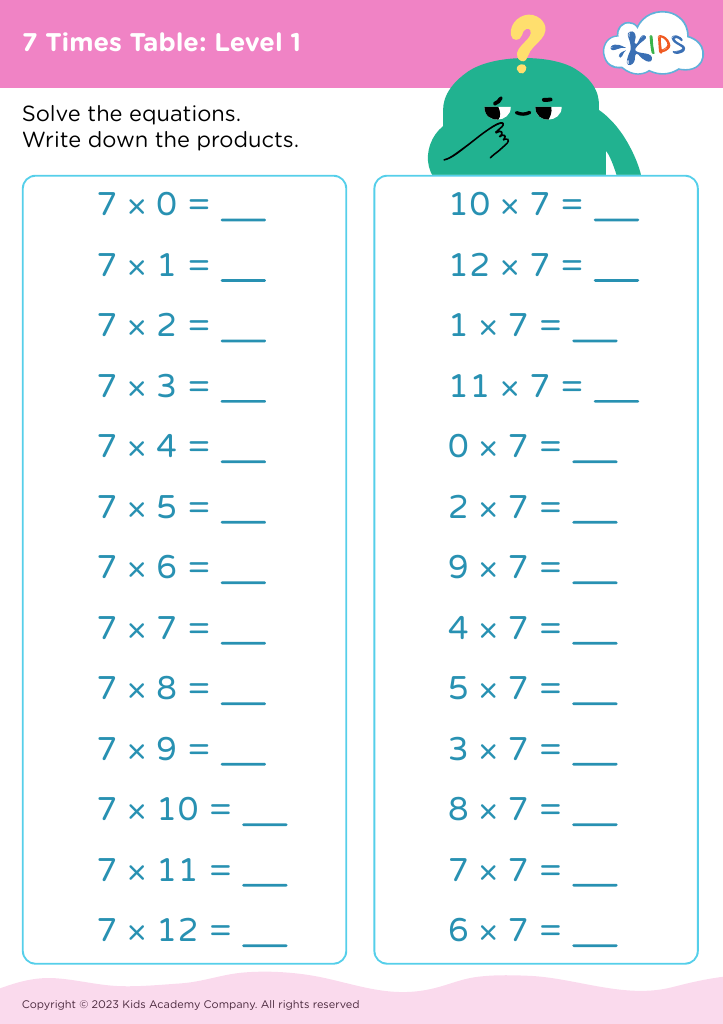
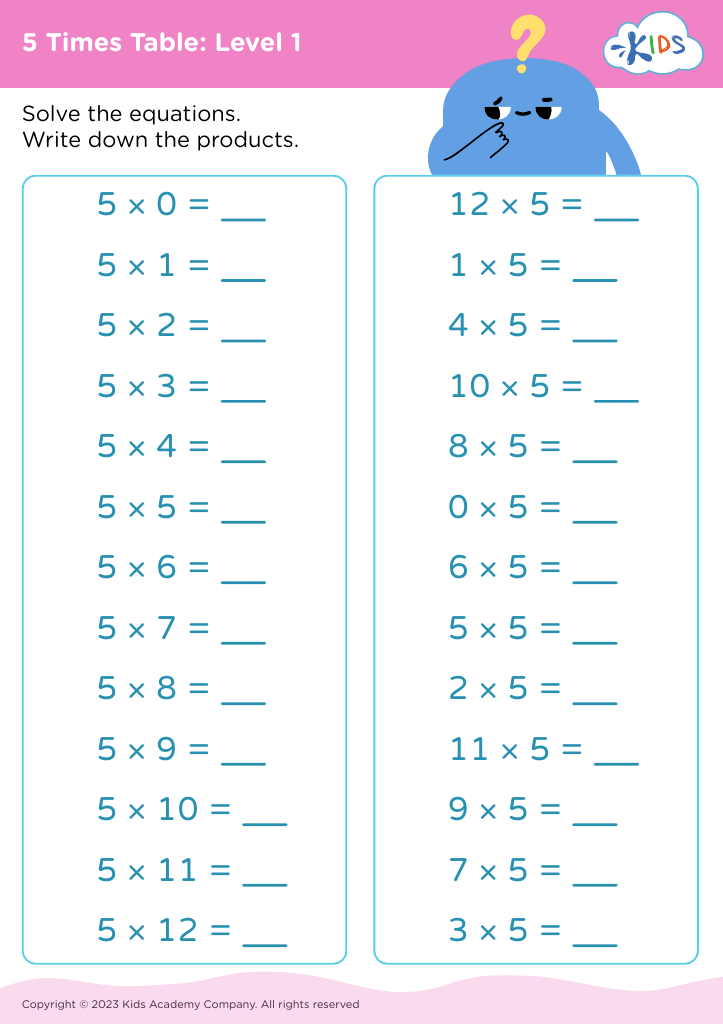
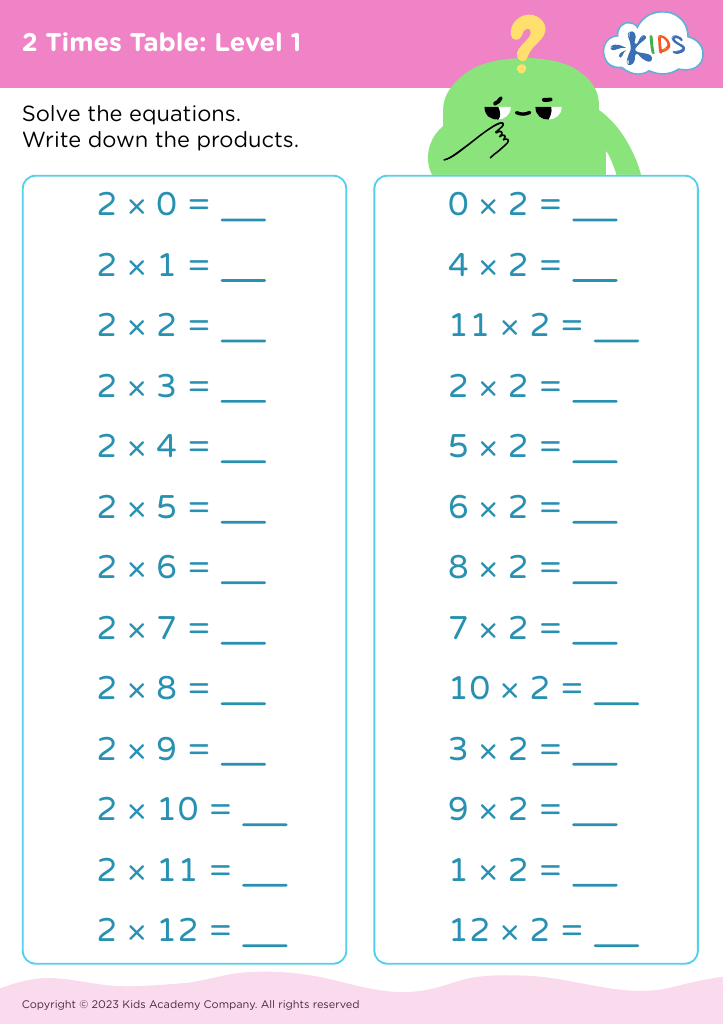








Understanding times tables and easy multiplication is crucial for children aged 3-8 as it lays the foundational skills for their future mathematics learning. Early mastery of these concepts not only boosts their confidence but also enhances their problem-solving abilities. Learning multiplication helps students recognize patterns in numbers, making it easier to understand more complex math topics later on.
While formal multiplication skills begin around late elementary school, exposure to the concept through engaging activities with parents or teachers can ignite interest and understanding early on. Using everyday situations, such as sharing snacks or counting toys in groups, can make learning multiplication relatable and fun.
Additionally, grasping multiplication establishes a strong number sense, crucial for future success in more advanced math subjects, including division, fractions, and geometry. With a solid grasp of these concepts, children become equipped to tackle daily math challenges confidently.
Moreover, parental and teacher involvement in early math learning underscores its value, teaching children that math is vital in life. By encouraging exploration and providing engaging resources, adults can help lay the groundwork for a positive attitude toward math, setting students on a path for academic success.








