Phonics recognition Easy Phonics Worksheets for Ages 3-9
5 filtered results
-
From - To
Enhance your child's reading skills with our "Easy Phonics Worksheets" designed specifically for ages 3-9! Our engaging and interactive phonics recognition worksheets make learning fun by introducing essential letters and sounds through colorful visuals and exciting activities. Each worksheet is tailored to boost phonemic awareness, helping young learners decode words with confidence. Perfect for at-home practice or classroom use, these worksheets encourage early literacy development and foster a love for reading. With a variety of exercises incorporating both sounds and letter recognition, your child will be ready to embark on their reading journey. Start your phonics adventure today!
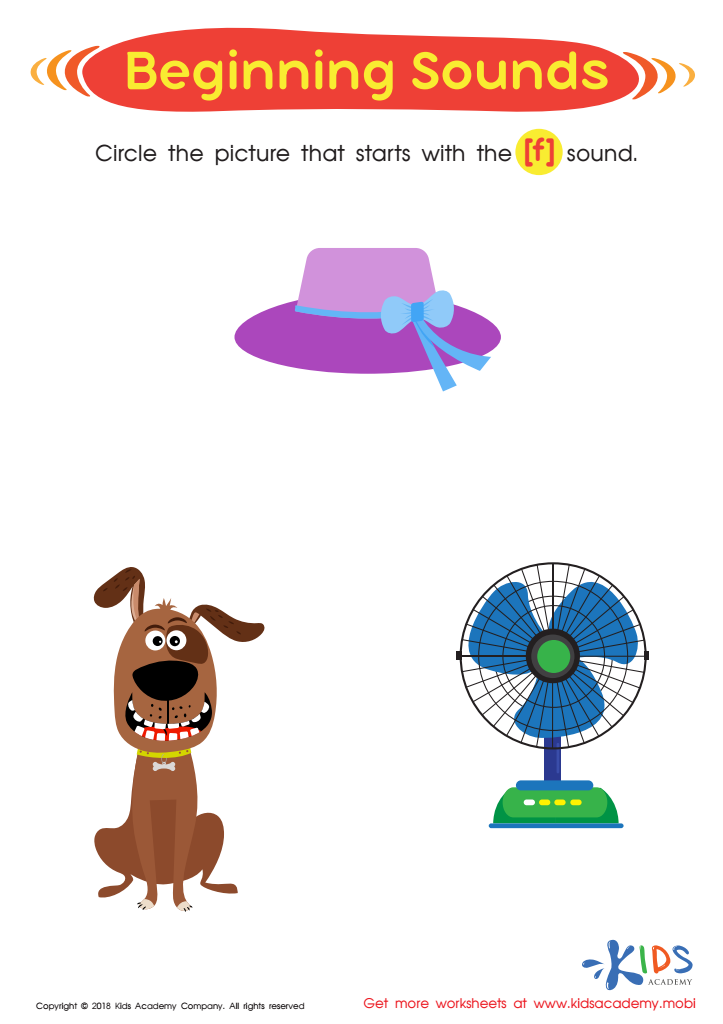
Beginning Sounds Assessment Printable
 Assign to My Students
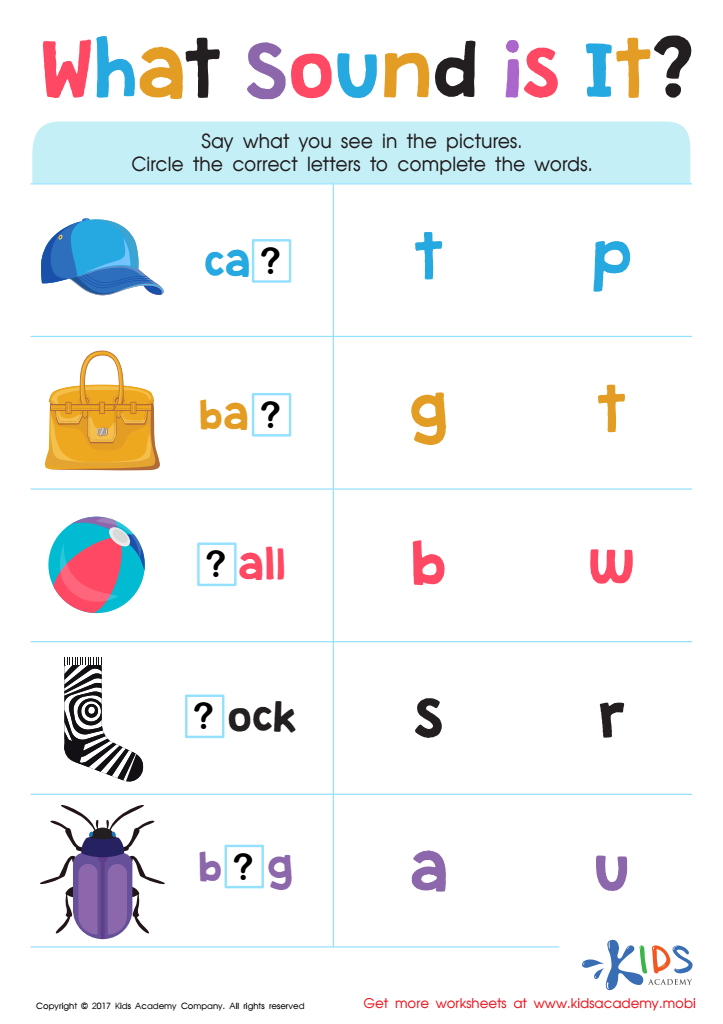
What Sound Is it? Worksheet
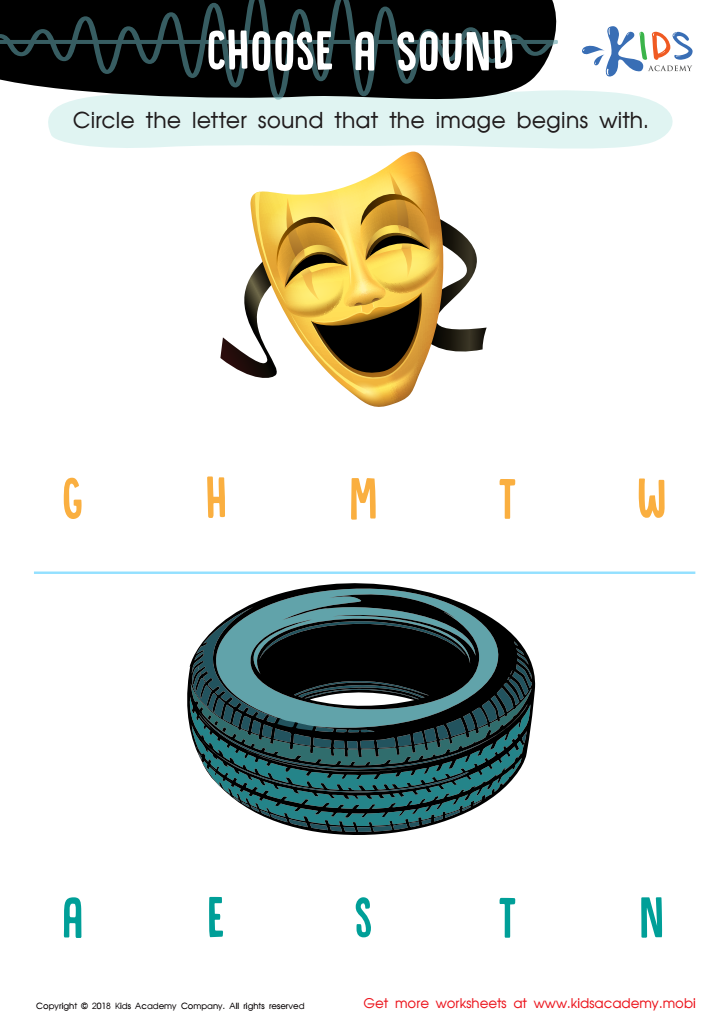
Choose a Sound Worksheet
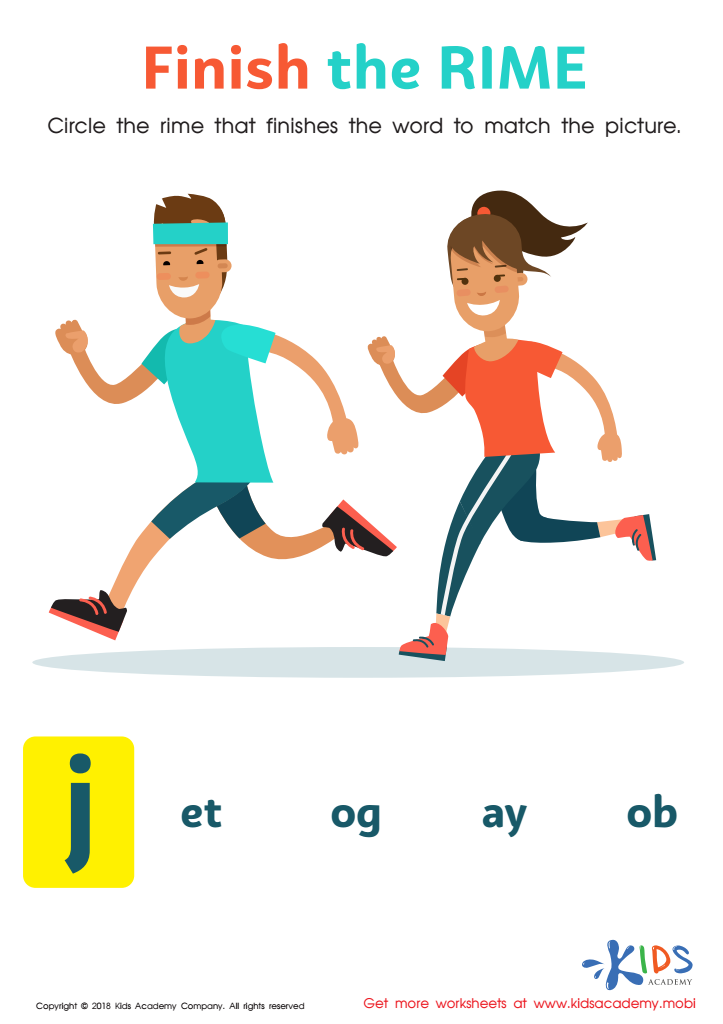
Finish the Rime Worksheet
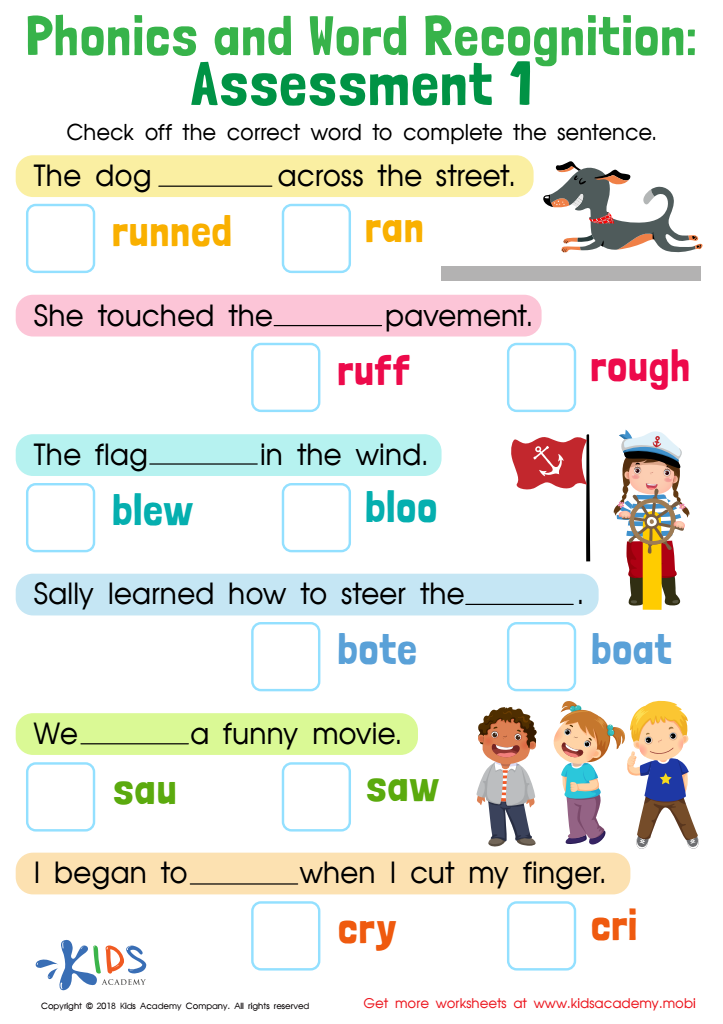
Phonics and Word Recognition: Assessment 1 Worksheet








Phonics recognition is a fundamental skill essential for literacy development in early childhood education. For parents and teachers of children aged 3-9, understanding the importance of phonics is crucial for several reasons.
Firstly, phonics provides children with the foundations for reading and writing. It teaches them the relationship between sounds and letters, enabling them to decode words independently. This skill encourages confidence and fluency in their reading abilities.
Secondly, phonics recognition helps improve oral language skills. As children learn to identify and pronounce sounds, they enhance their vocabulary and comprehension, setting the stage for deeper understanding of more complex texts in the future.
Furthermore, early phonics instruction can mitigate the risk of literacy difficulties later on. Research shows that children who grasp phonics early are less likely to struggle with reading as they progress through school. This proactive approach ensures that all children have equitable access to learning opportunities.
Additionally, engaging in phonics activities can foster a love for language and literature. By making learning fun through games and songs, parents and teachers can nurture a positive attitude towards reading.
In conclusion, prioritizing phonics recognition in early education not only equips children with vital skills but also inspires a lifelong appreciation for reading.