
Categorization skills Easy Math Worksheets for Ages 3-9
6 filtered results
Difficulty Level
Grade
Age
-
From - To
Subject
Activity
Standards
Enhance your child's learning journey with our "Categorization Skills Easy Math Worksheets" designed for ages 3 to 9! These engaging worksheets provide fun and interactive activities that help young learners develop essential categorization skills. Through colorful visuals and relatable themes, children will explore sorting, grouping, and classifying objects, improving their critical thinking and organizational abilities. Perfect for home or classroom use, these worksheets promote age-appropriate math concepts while keeping kids excited about learning. Watch your little ones gain confidence as they master categorization, readying them for more advanced math challenges ahead. Grab your easy math worksheets today for endless educational fun!
Favorites
With answer key
Interactive
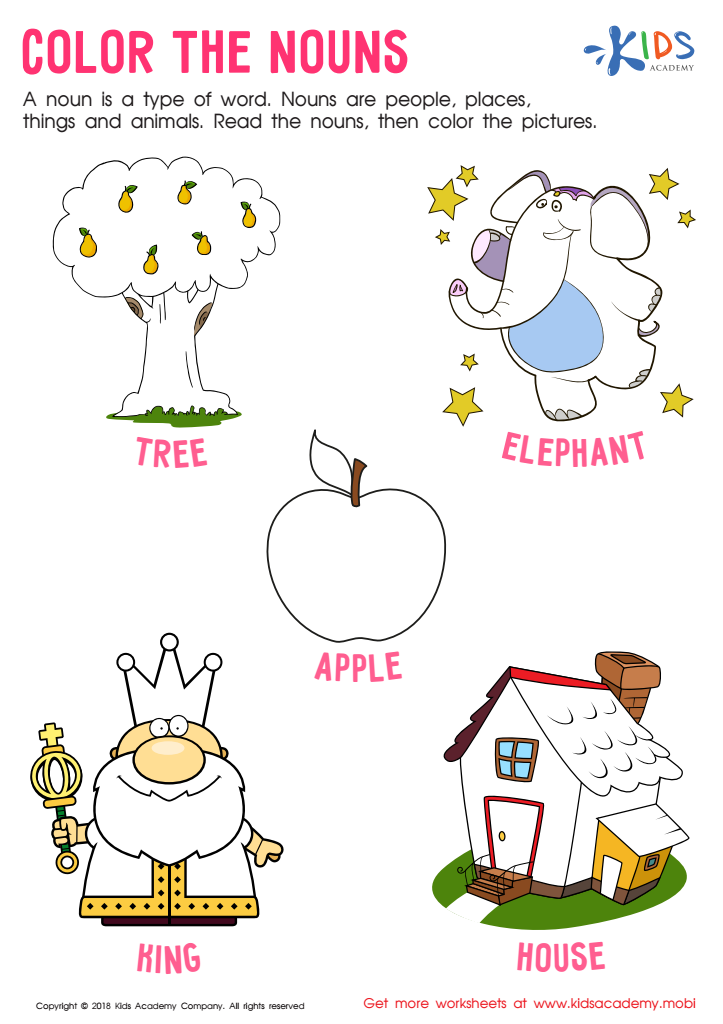
Color the Nouns Worksheet
Test your child's understanding of nouns with this downloadable worksheet. Explain that nouns are words for people, places, animals and things. With the coloring sheet, read each word and color the corresponding picture. By the end of it, your child should be able to recognize common nouns.
Download (PDF)
 Assign to My Students
Assign to My Students
Color the Nouns Worksheet
Worksheet
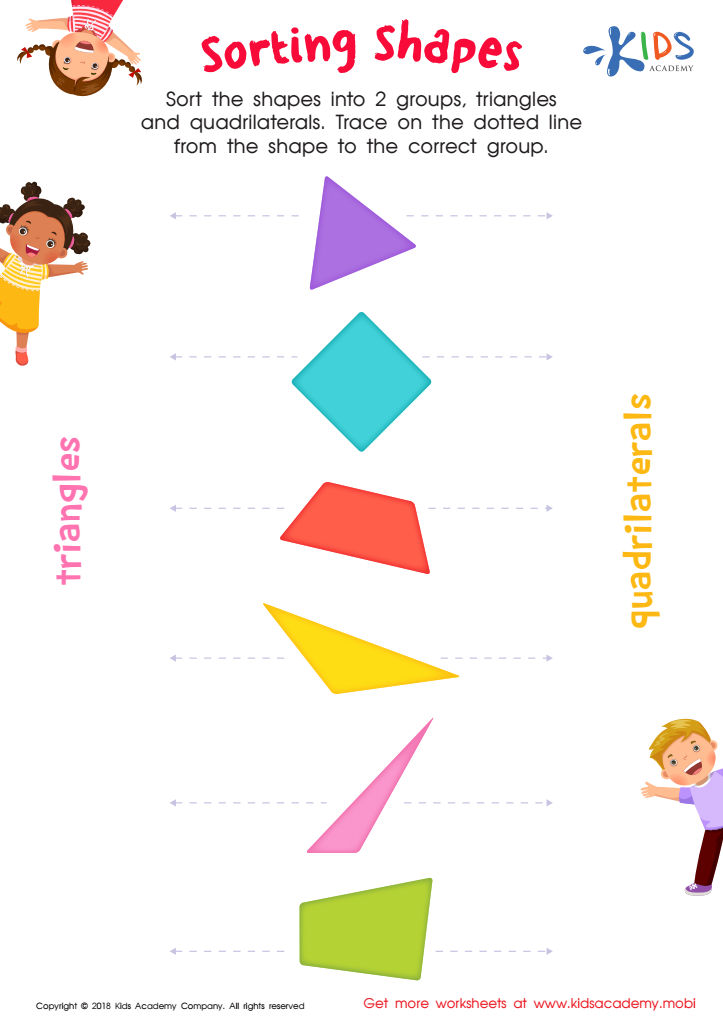
Sorting Shapes Worksheet
Before beginning, ensure your child is familiar with quadrilaterals (4 sides) and triangles (3 sides). This tracing exercise is easy: sort the shapes into the two groups and trace the dotted lines to the correct group.
Sorting Shapes Worksheet
Worksheet
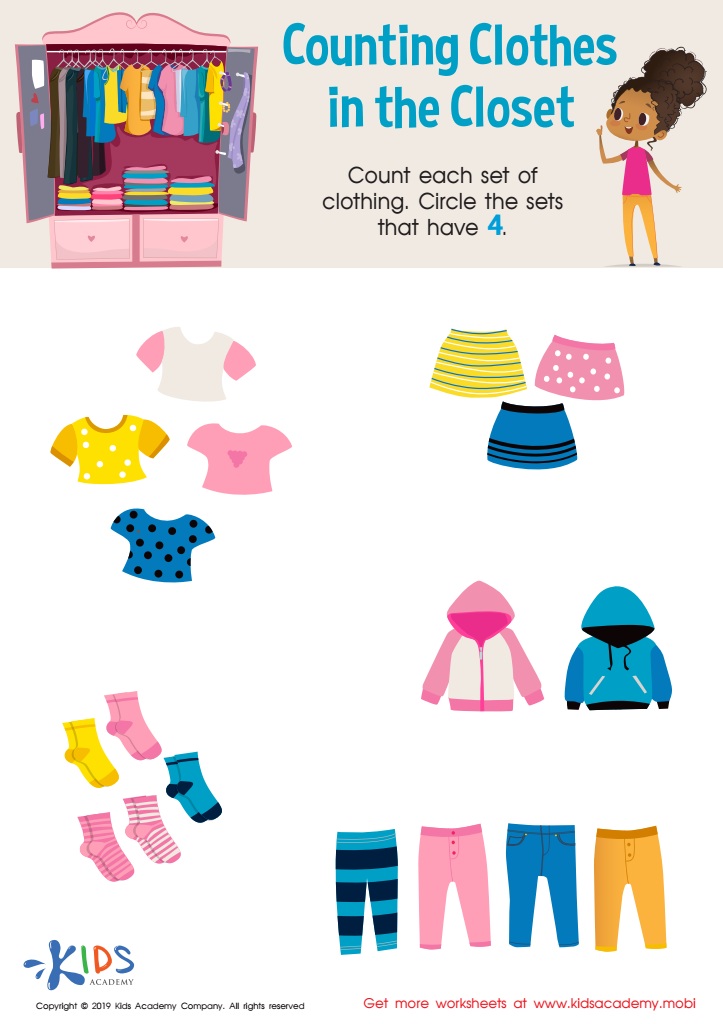
Counting Clothes Worksheet
Help your kids become better counters with fun exercises and objects they can relate to. Print out this worksheet and assist your kid in counting 5 sets of clothing. Have them circle the sets that have 4 so they can master counting small numbers. Strengthen their math skills with your help.
Counting Clothes Worksheet
Worksheet
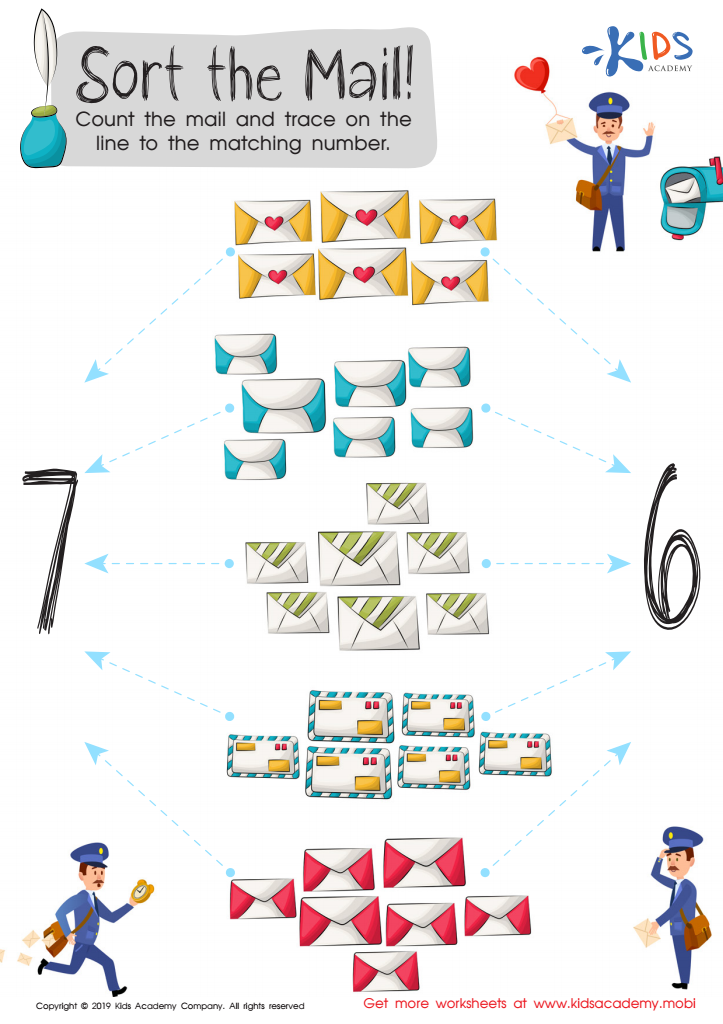
Sort the Mail Worksheet
Kids can learn number sense with one-to-one representation! This worksheet helps them connect groups of letters with the correct numbers by tracing the lines. They'll count and decide whether each group has 6 or 7 envelopes. This exercise gives children a better understanding of numerical representation.
Sort the Mail Worksheet
Worksheet
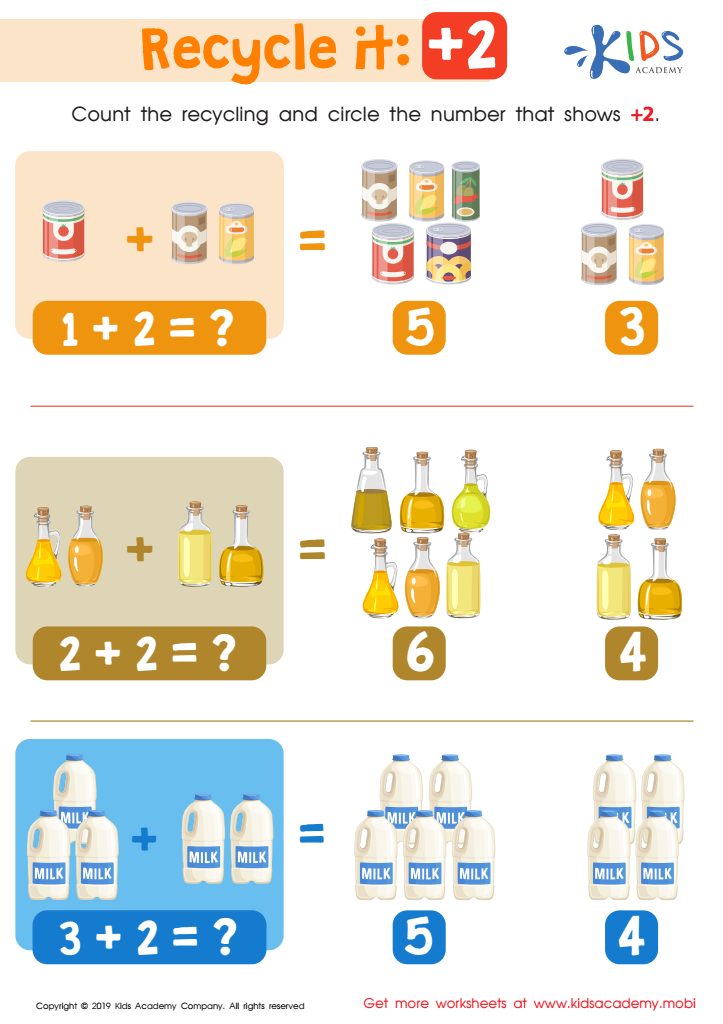
Recycle It: +2 Worksheet
Your kindergartners likely count everything they see, which is great for practice. Give them simple exercises such as in this worksheet to stimulate their minds. Ask them to count the recycling cans and then circle the number that shows +2.
Recycle It: +2 Worksheet
Worksheet
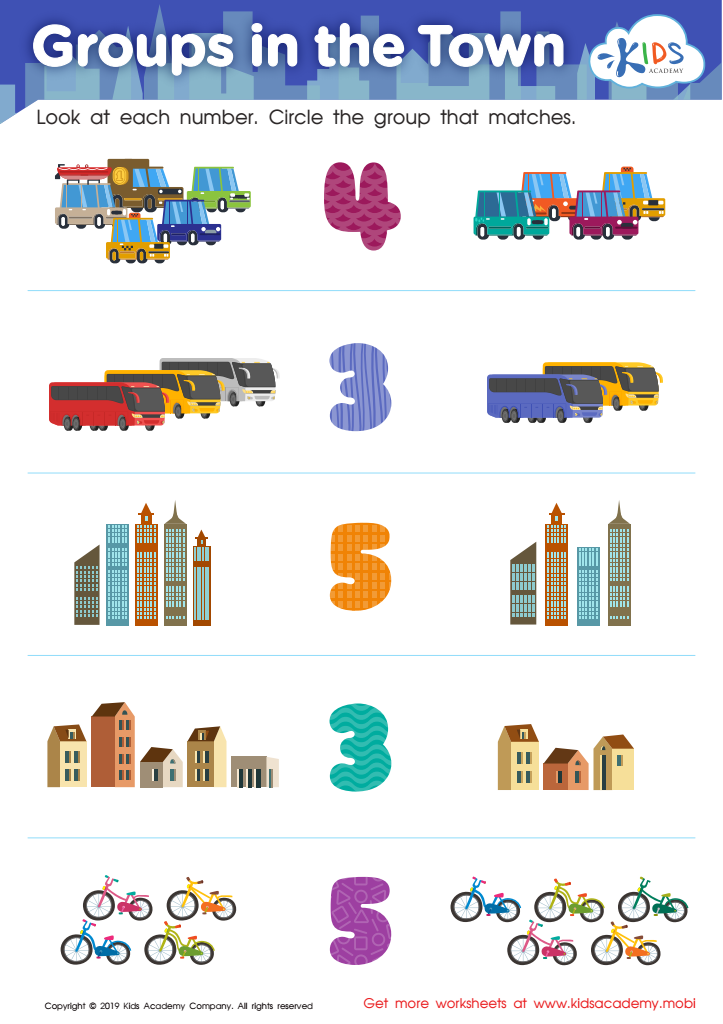
Groups in the Town Worksheet
Help your kids learn to count with this worksheet! Look at each number of objects and circle the group that matches. This simple activity can give them extra practice to support what they learn in school. Learning doesn't have to be a struggle; make it fun and interactive with this worksheet.
Groups in the Town Worksheet
Worksheet
Join Kids Academy for Free
Who is primarily going to use this learning content?



.jpg)




Categorization skills are essential for children aged 3-9 because they lay the groundwork for critical thinking and problem-solving abilities. These skills involve grouping objects based on shared characteristics, such as size, color, shape, or function. Understanding how to categorize helps children make sense of the world around them, enhancing their cognitive development.
Developing categorization skills at an early age supports mathematical understanding. For instance, recognizing patterns and similarities among objects can lead to more complex skills such as sorting, classifying, and eventually, addition and subtraction. When children learn to categorize, they also improve their language development, as they must articulate their thinking and negotiate criteria for sorting.
Furthermore, engaging in categorization activities nurtures social skills. When children collaborate to classify items, they learn to communicate, cooperate, and share ideas effectively.
Parents and teachers play a vital role by creating opportunities for categorization in fun, engaging ways, such as through games, hands-on activities, and everyday interactions. By fostering these skills early on, adults can empower children not only to excel in math but also to navigate academic challenges and everyday situations throughout their lives. Promoting categorization skills is crucial for a well-rounded educational foundation.








