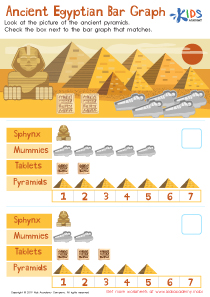
Color recognition Easy Math Worksheets for Ages 3-9
6 filtered results
-
From - To
Discover our engaging Color Recognition Easy Math Worksheets for children aged 3-9! Designed to blend fun and learning, these worksheets help young learners develop crucial math skills while enhancing their understanding of colors. With interactive activities and vibrant illustrations, kids will enjoy sorting, matching, and identifying colors, all while reinforcing their math abilities. Ideal for homeschooling or classroom settings, our worksheets cater to various learning styles and encourage independent exploration. Foster a love for learning and build foundational skills with our comprehensive resources. Start your child's journey to success today with these delightful color recognition worksheets!
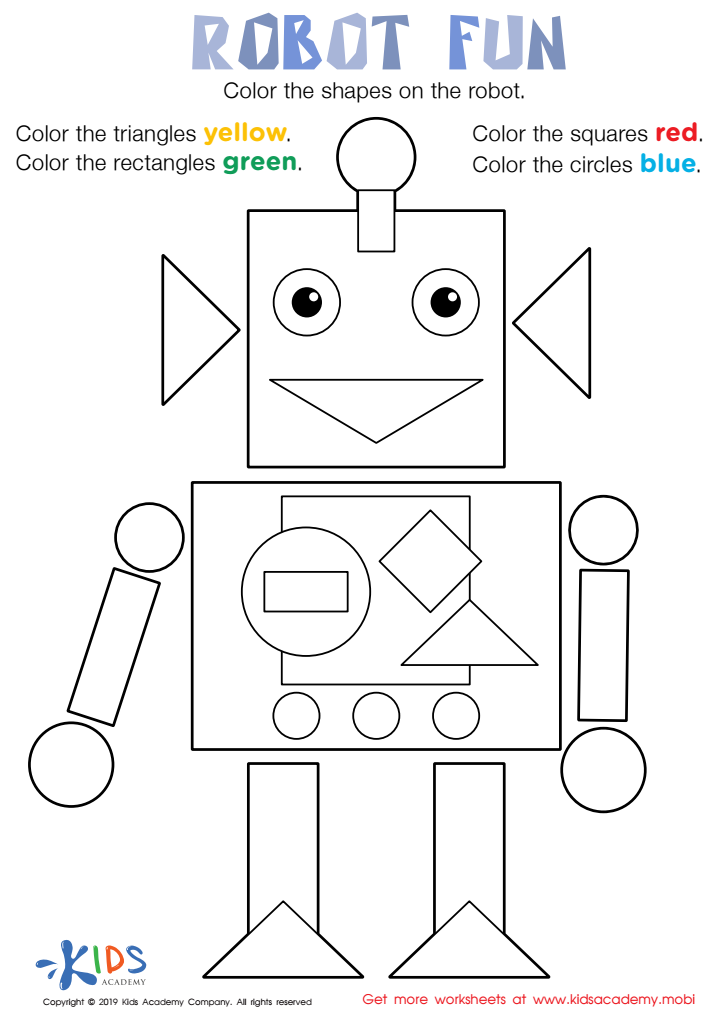
Robot Fun Worksheet
 Assign to My Students
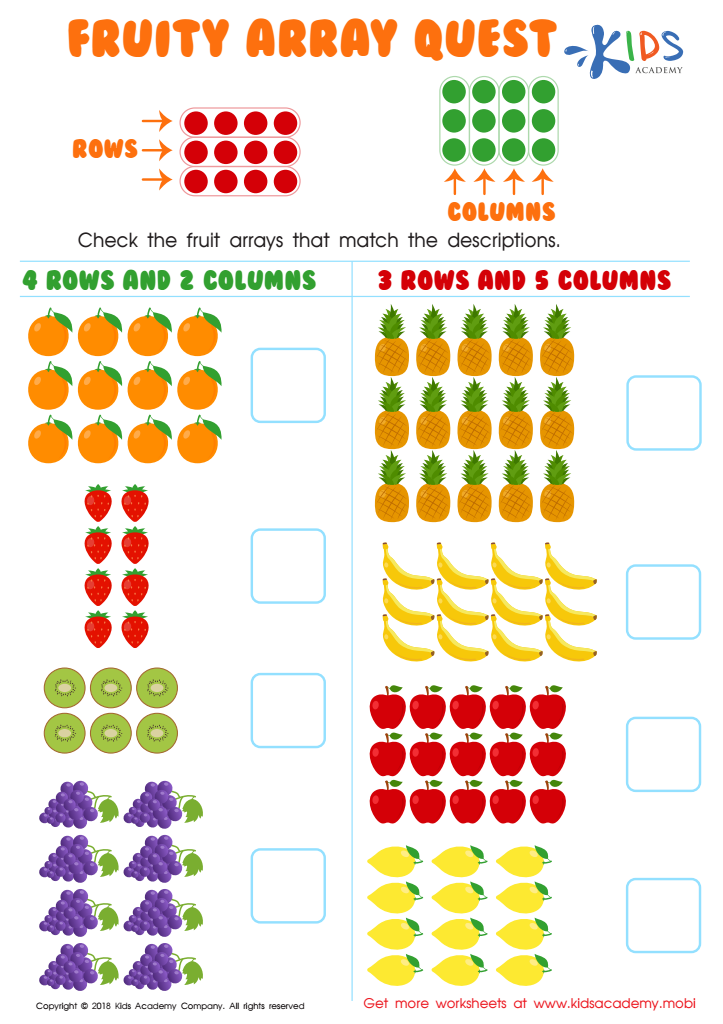
Fruity Array Quest Worksheet
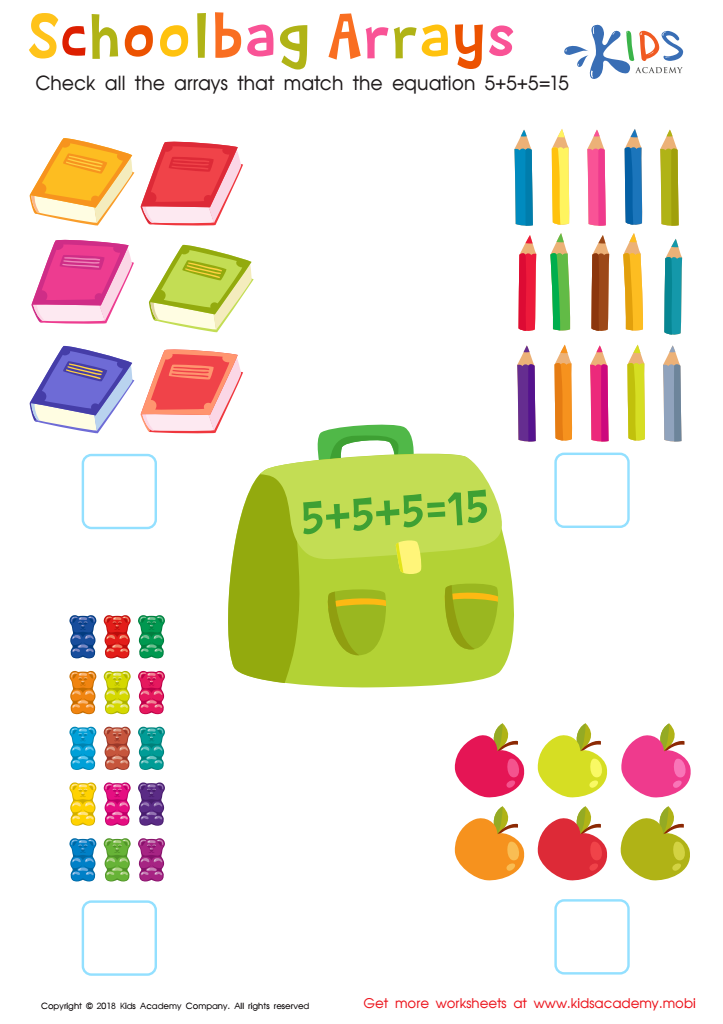
Schoolbag Arrays Worksheet
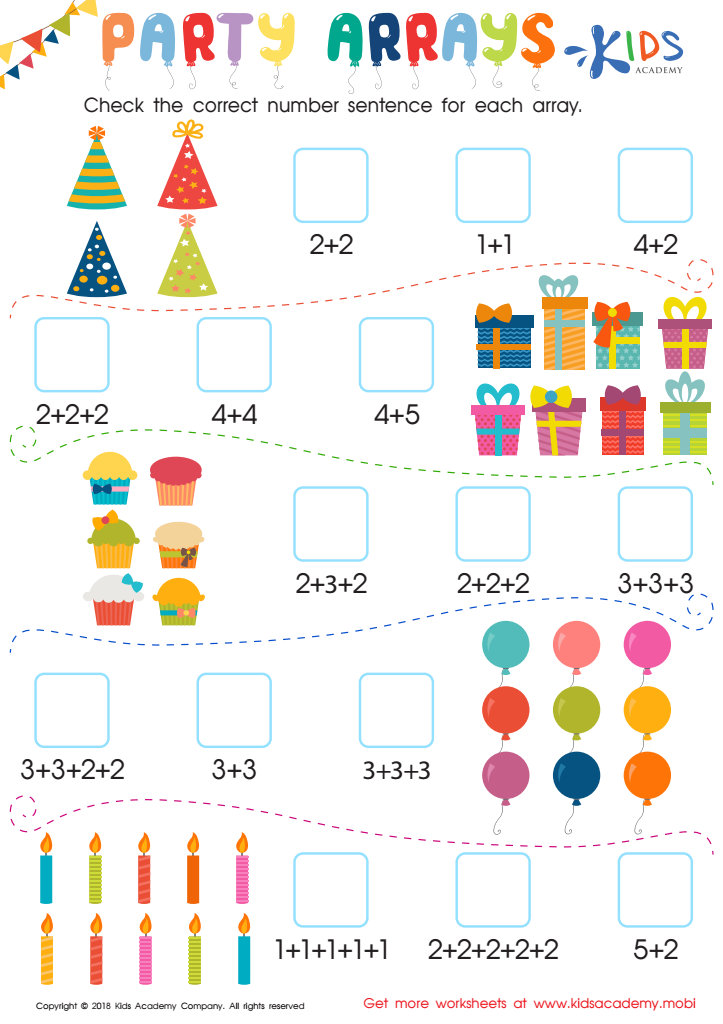
Party Arrays Worksheet
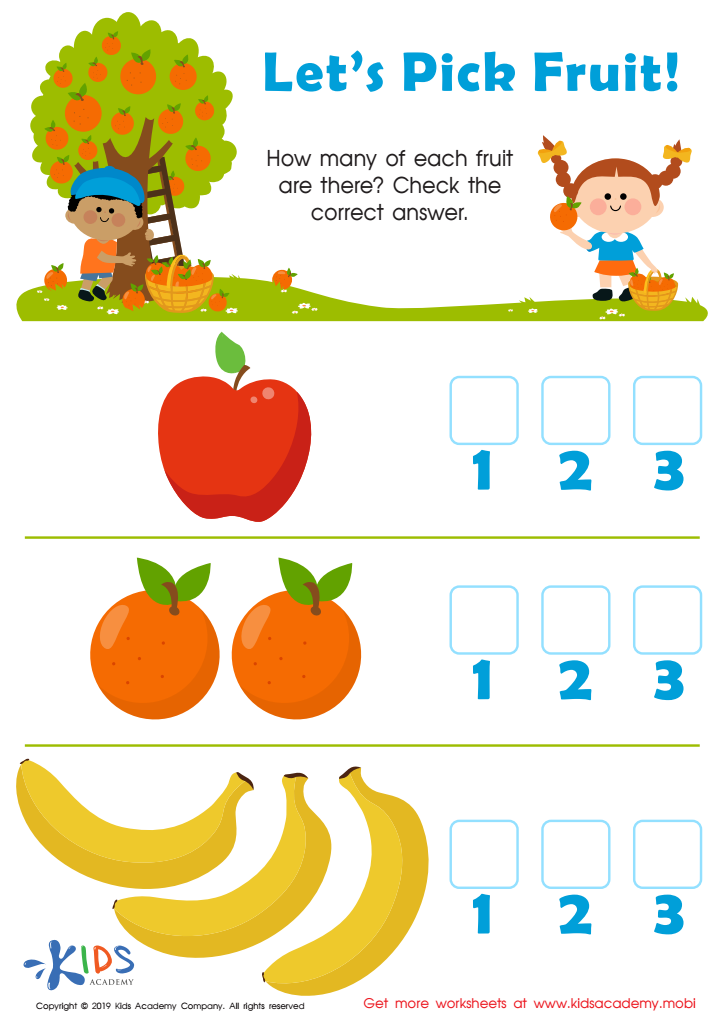
Let's Pick Fruit Worksheet
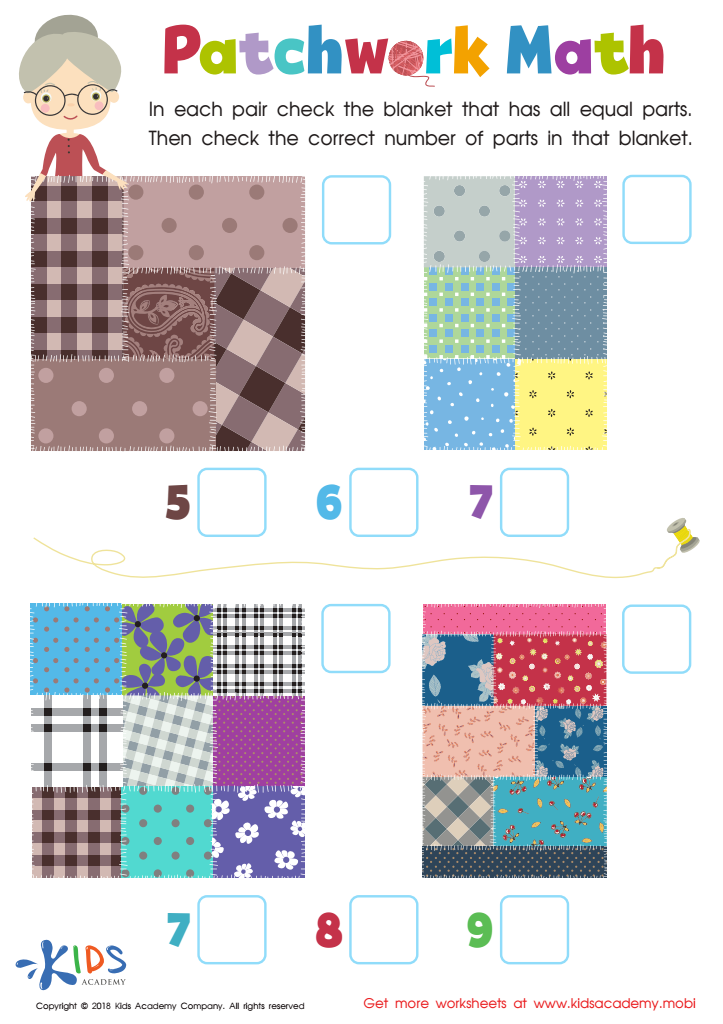
Patchwork Math Worksheet








Color recognition and easy math are essential foundational skills for children aged 3-9, and both parents and teachers should prioritize these areas for several key reasons.
Firstly, color recognition fosters cognitive development. Identifying colors enhances children's ability to categorize and differentiate objects, which is a fundamental cognitive skill. This can improve critical thinking and boost problem-solving abilities, laying the groundwork for more complex learning.
Moreover, integrating color recognition into early math lessons can make learning more engaging and interactive. Using colorful objects in counting and simple math operations helps children visualize numbers and mathematical concepts, making them tangible and easy to understand.
Additionally, learning colors and numbers simultaneously promotes language development. Young children often learn through repetition and association, and discussing colors and numbers can enhance vocabulary and comprehension skills.
Furthermore, these skills are valuable in everyday life and play a crucial role in social interactions and emotional development. Understanding colors can help children express preferences and emotions, while basic math skills build confidence in making decisions.
Overall, fostering color recognition and easy math in early childhood education encourages well-rounded development, preparing children for future academic success and everyday challenges. Therefore, involvement and support from both parents and teachers are critical in nurturing these skills.