Mathematical reasoning Easy Math Worksheets for Ages 3-9
4 filtered results
-
From - To
Welcome to our "Mathematical Reasoning Easy Math Worksheets" designed specifically for children aged 3 to 9. These engaging worksheets foster essential math skills while making learning enjoyable. Packed with colorful illustrations and age-appropriate exercises, they help young learners develop critical reasoning abilities, number sense, and problem-solving skills. Our carefully crafted activities encourage hands-on learning and creativity, ensuring kids stay motivated while mastering fundamental math concepts. Whether in the classroom or at home, these worksheets provide a fun way to build confidence in mathematical reasoning. Discover the joy of math learning and watch your child thrive with our interactive resources!
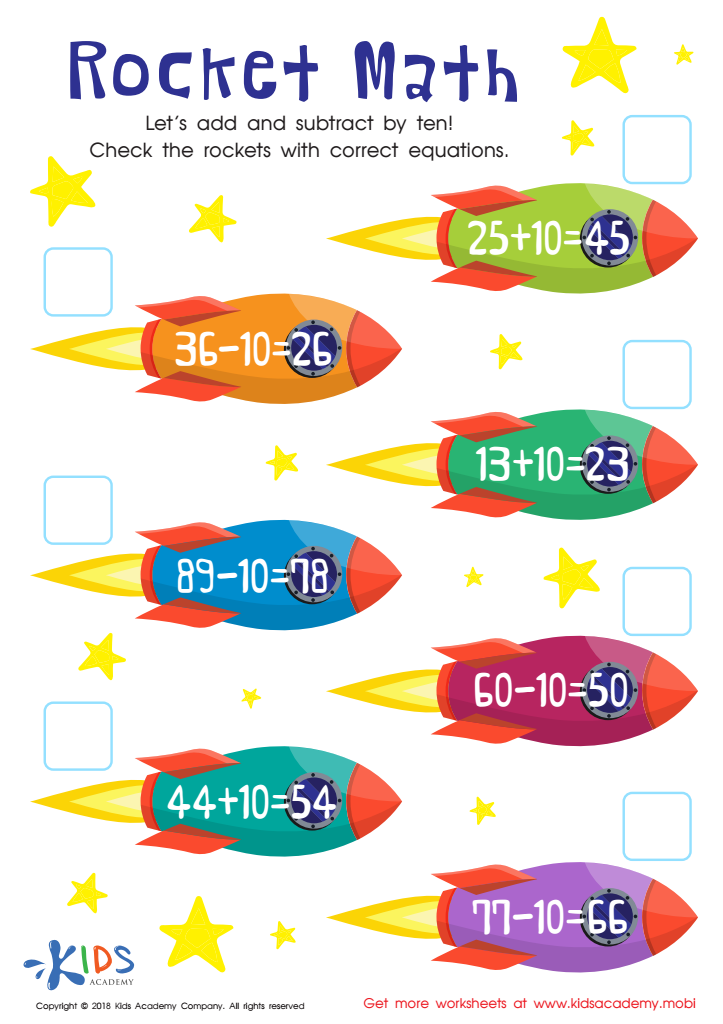
Rocket Math Worksheet
 Assign to My Students
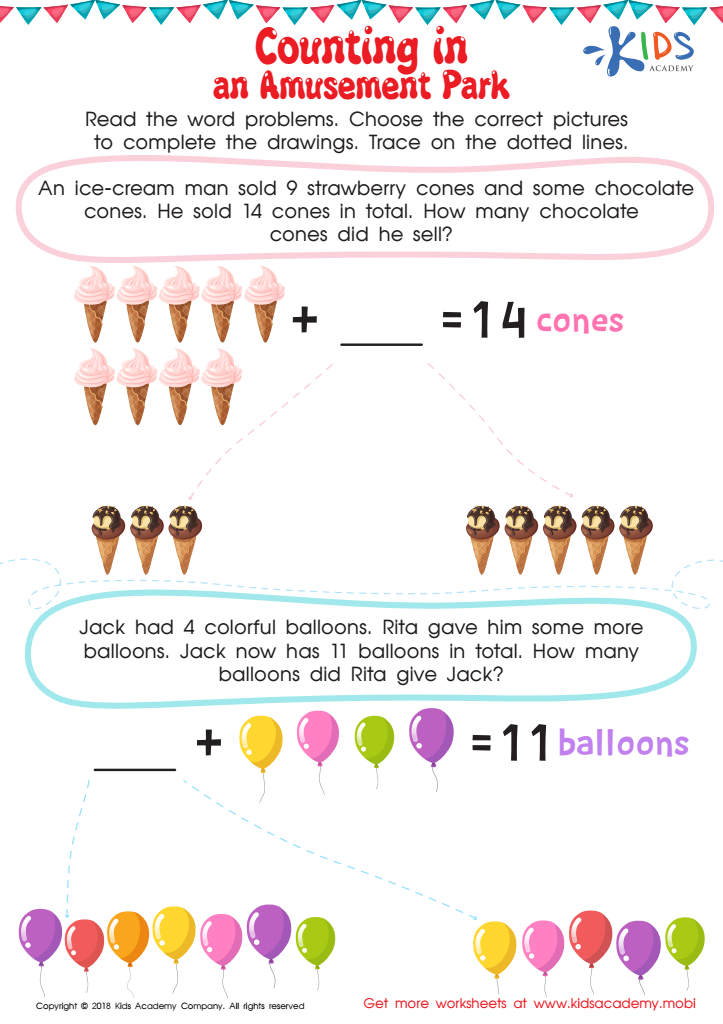
Counting in an Amusement Park Worksheet
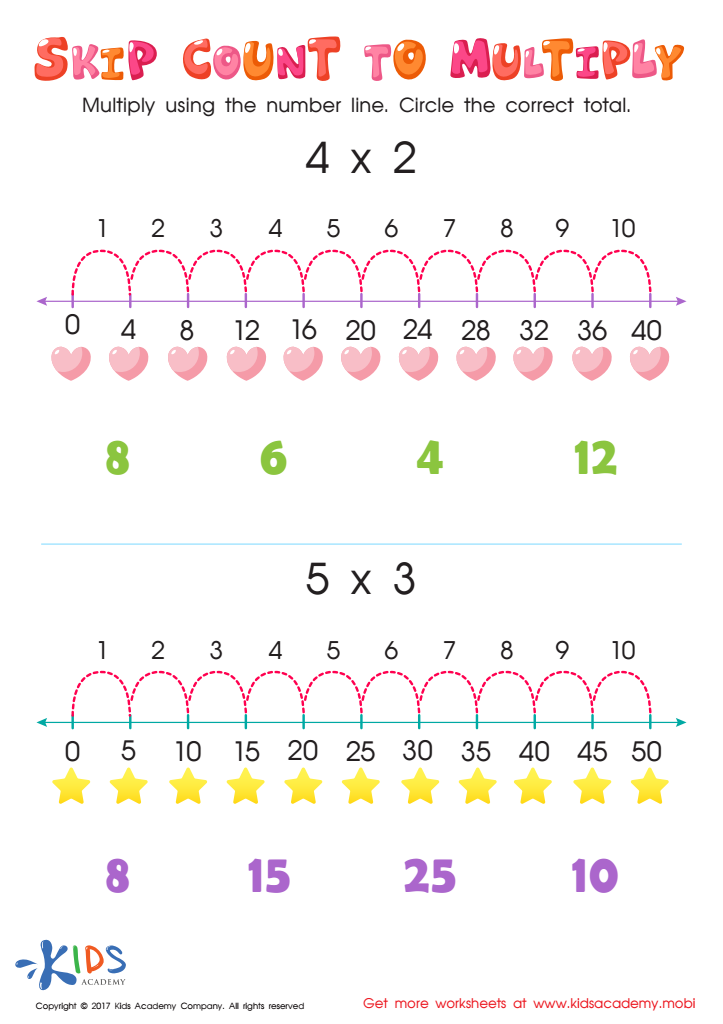
Skip Count Multiplication Worksheet
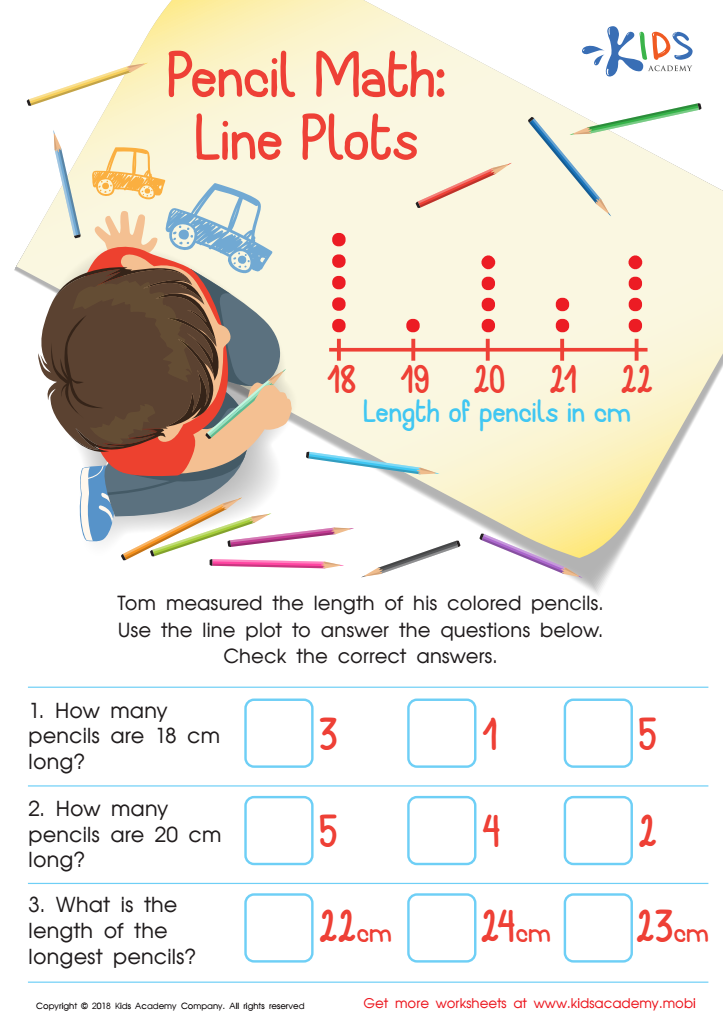
Pencil Math: Line Plots Worksheet








Mathematical reasoning for young learners, especially ages 3-9, lays the crucial foundation for complex problem-solving and critical thinking skills that benefit children throughout their educational journey. At this age, children absorb concepts quickly, making it an ideal time to introduce dimensions of mathematical reasoning that extend beyond rote memorization.
Teaching young children Easy Math encourages them to think logically, recognize patterns, and make connections between numbers and real-world situations. It nurtures their innate curiosity, fostering a love for learning that contributes to their overall development. By engaging in activities that emphasize reasoning, parents and teachers can help children develop essential skills such as estimation, comparison, and problem-solving.
Additionally, these math skills are interconnected with literacy and social-emotional growth. Children learn to articulate their thought processes, working collaboratively with peers, and setting a stage for academic confidence. As these foundational skills strengthen, they prepare children to tackle more challenging mathematical concepts in school and beyond, setting them up for lifelong success. Ultimately, prioritizing mathematical reasoning nurtures well-rounded individuals who can think critically and navigate an increasingly complex world. Parents and teachers should advocate for this early learning phase as it significantly shapes a child's future capabilities.








