
Time reading skills Easy Math Worksheets for Ages 3-9
4 filtered results
Difficulty Level
Grade
Age
-
From - To
Subject
Activity
Standards
Unlock your child's potential with "Time Reading Skills Easy Math Worksheets for Ages 3-9." These engaging and educational worksheets offer a fun way to master reading clocks and understanding time. Perfect for young learners, our printables feature vibrant visuals and step-by-step activities designed to build confidence and proficiency in telling time. Created by educational experts, these resources cater to various skill levels, ensuring every child progresses at their own pace. Prepare your little ones for academic success while making math enjoyable. Start developing critical time-reading skills today with our expertly crafted worksheets, exclusively at Kids Academy.
Favorites
With answer key
Interactive
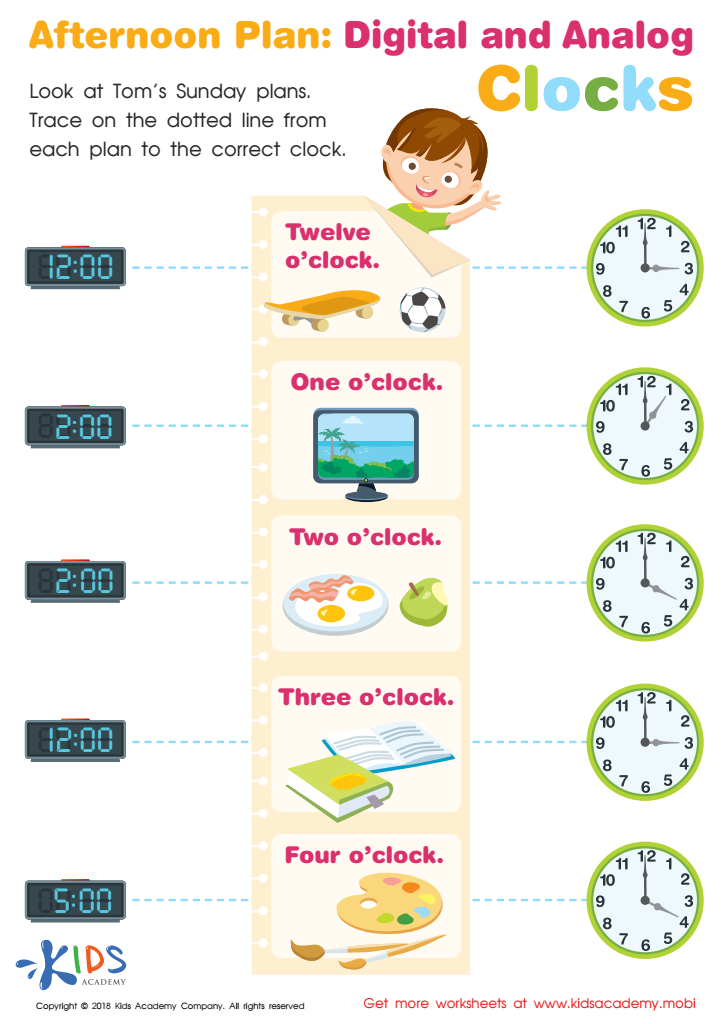
Afternoon Plan: Digital and Analog Clocks Worksheet
Tom's got Sunday plans and your kids can use this worksheet to help them learn how to tell the time. With tracing dotted lines from plans to the correct clock, they'll gain the skills to accurately convert digital time to analog. It'll be a great way to get them better at telling the time.
 Assign to My Students
Afternoon Plan: Digital and Analog Clocks Worksheet
Worksheet
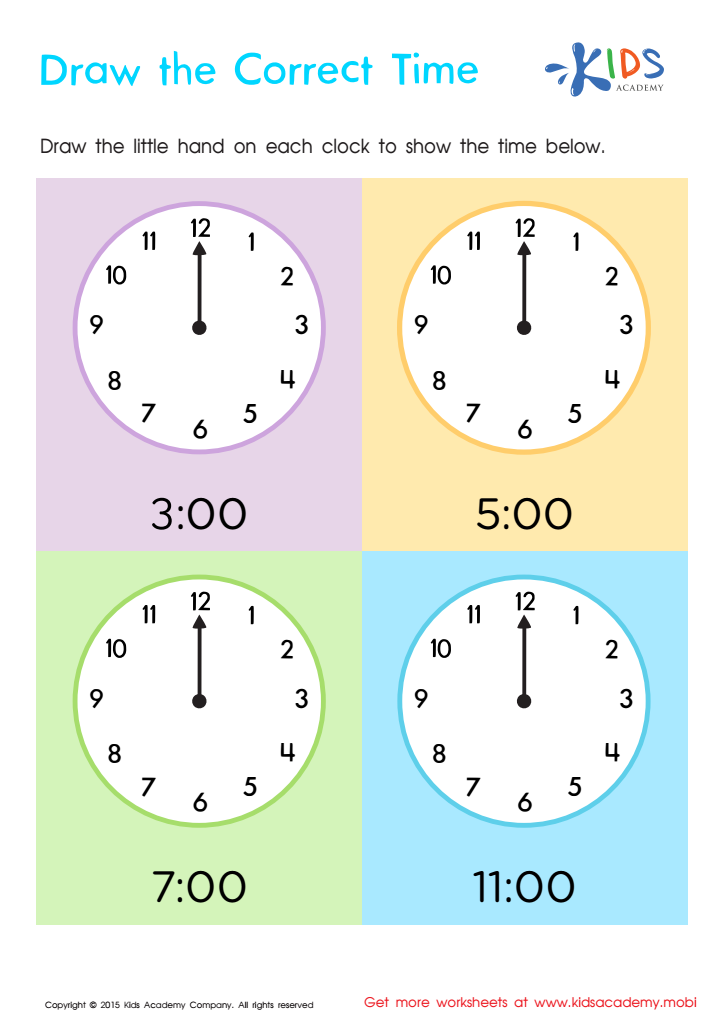
Telling The Time Worksheet: Part 1
Practice telling the time with Kids Academy. Our worksheets make it fun for kindergarteners to learn about clocks and reading the time. Find our free math worksheets on telling the time and draw the little hand on the clock faces to show the time. Let's learn together!
Telling The Time Worksheet: Part 1
Worksheet
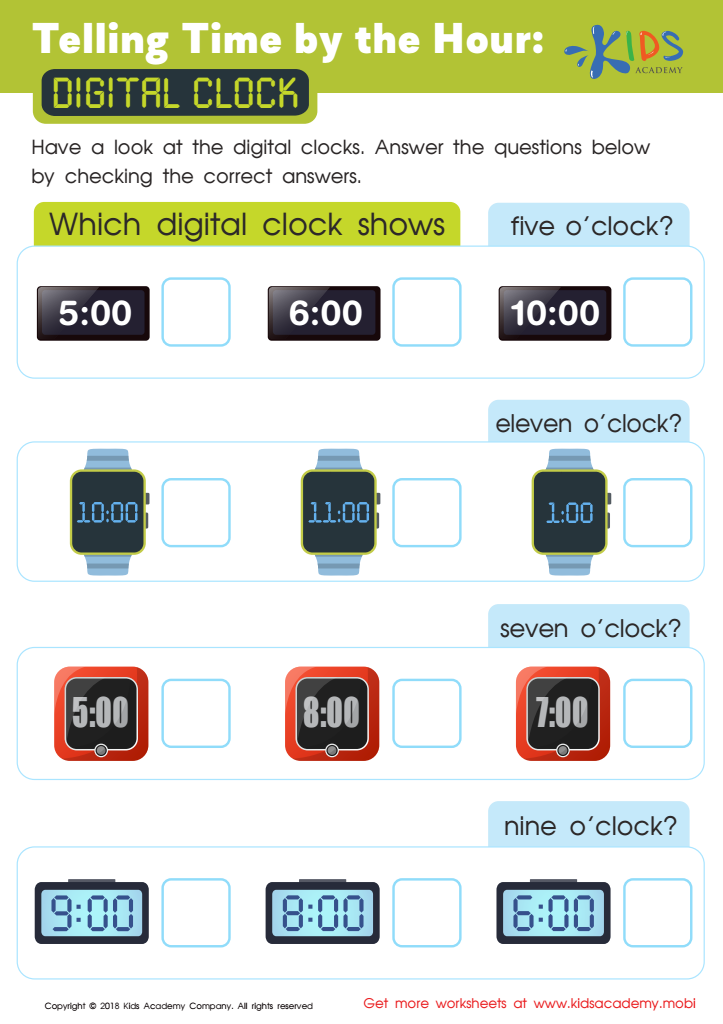
Telling Time by the Hour: Digital Clock Worksheet
Introduce your students to digital clocks. This worksheet will help them become familiar with them. Guide them through answering the questions - they're simple and stimulating. Encourage their young minds to explore the digital clocks in the exercise.
Telling Time by the Hour: Digital Clock Worksheet
Worksheet
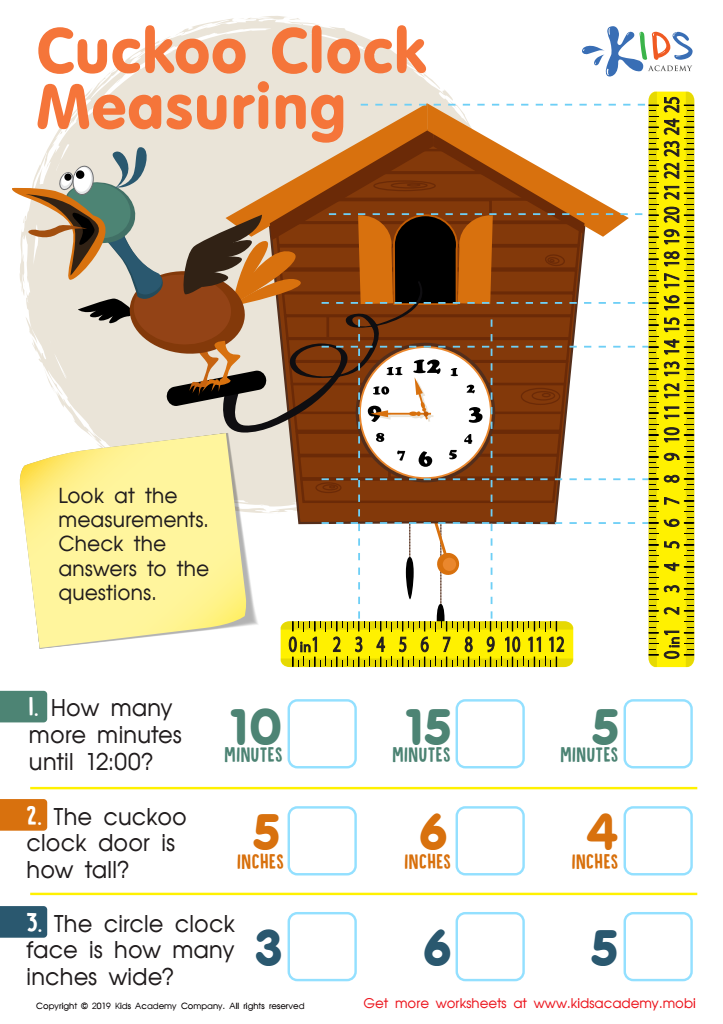
Cuckoo Clock Measuring Worksheet
Check out the fun picture in this worksheet. Ask your kids to identify the object. It's a cuckoo clock - the bird pops out every hour to announce the time. See if your child knows how to measure the clock. Help them answer the 3 questions and test their knowledge of time!
Cuckoo Clock Measuring Worksheet
Worksheet
Join Kids Academy for Free
Who is primarily going to use this learning content?



.jpg)


Parents and teachers should prioritize time reading skills and easy math for children aged 3-9 because these foundational abilities are critical for early cognitive development. During these formative years, children are rapidly expanding their understanding of the world, and mastering time reading skills sets a cornerstone for effective time management, structure, and daily routines. Children who can tell time can better understand the sequence of events, develop punctuality, and begin to grasp cause-and-effect relationships, which are essential for academic and personal growth.
Similarly, introducing easy math concepts early on fosters logical reasoning, problem-solving skills, and analytical thinking. Math proficiency at a young age builds confidence, encouraging a positive attitude toward learning and schooling. Simple math tasks like counting, addition, and subtraction underpin more complex future learning and directly relate to real-world skills such as handling money and measuring ingredients in recipes.
Moreover, integrating these skills into daily activities supports a seamless learning experience that feels natural and enjoyable. By laying this academic groundwork, educators and parents equip children with the cognitive tools necessary for successful, lifelong learning, providing them with a head start in both educational and life-skills arenas. Overall, these investments in early education foster overall intellectual growth and emotional development.








