Understanding Quantities Easy Math Worksheets for Ages 3-9
6 filtered results
-
From - To
"Understanding Quantities Easy Math Worksheets for Ages 3-9" are specially designed to make learning math engaging and fun for young children. These printable worksheets help kids build a solid foundation in numeracy by recognizing and counting quantities in different scenarios. Featuring vibrant images and interactive activities, these worksheets are perfect for home or classroom use. Through hands-on practice, kids enhance their counting skills, understand numerical relationships, and develop confidence in math. Ideal for parents and educators, these resources make early math education accessible, enjoyable, and effective for young learners. Explore and make math easy today!
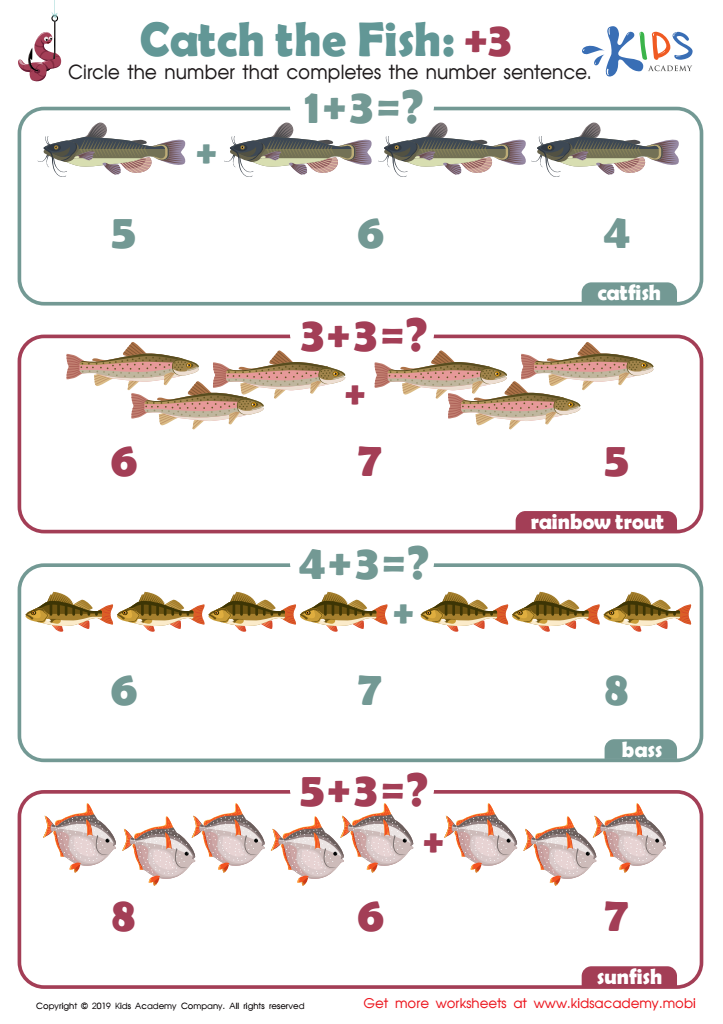
Catch the Fish: +3 Worksheet
 Assign to My Students
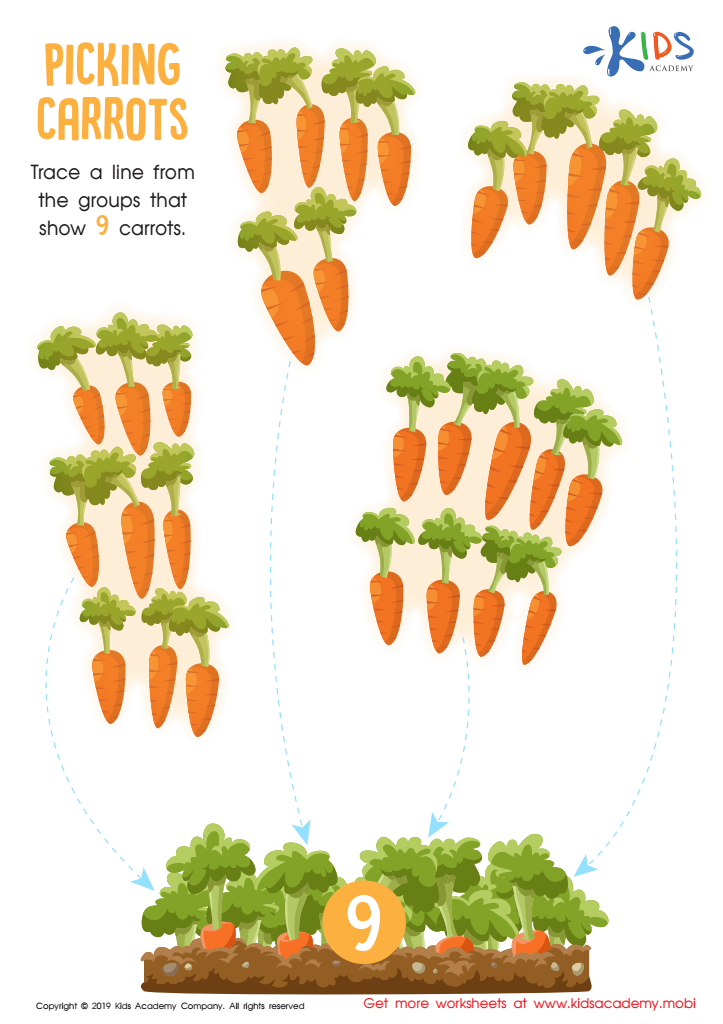
Picking Carrots Worksheet
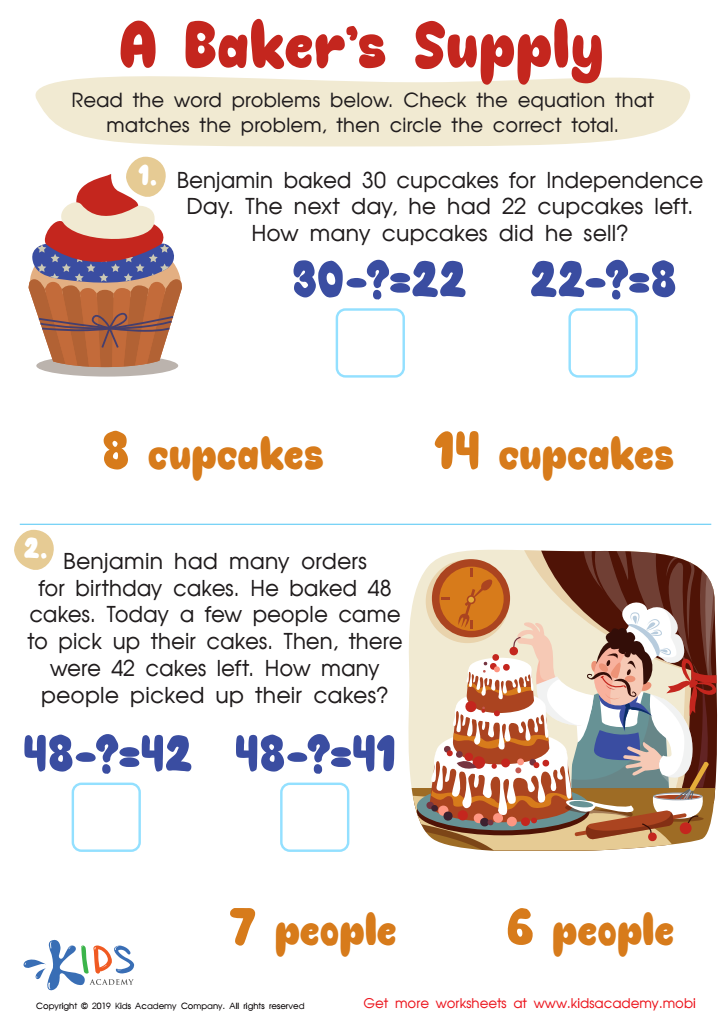
A Baker's Supply Worksheet
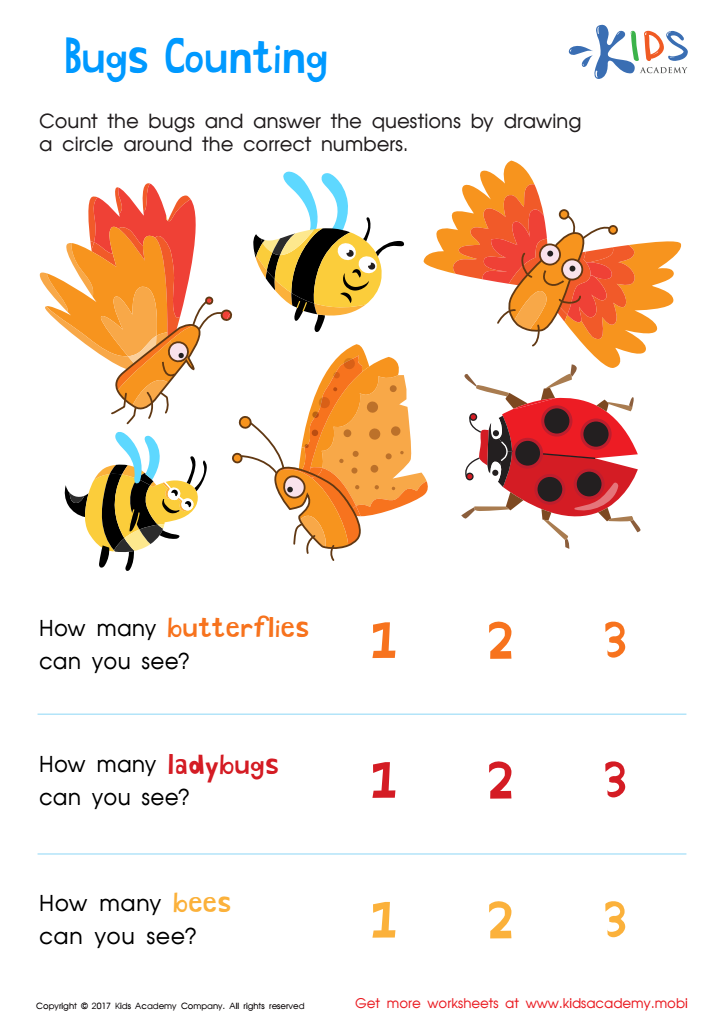
Bugs Counting Worksheet
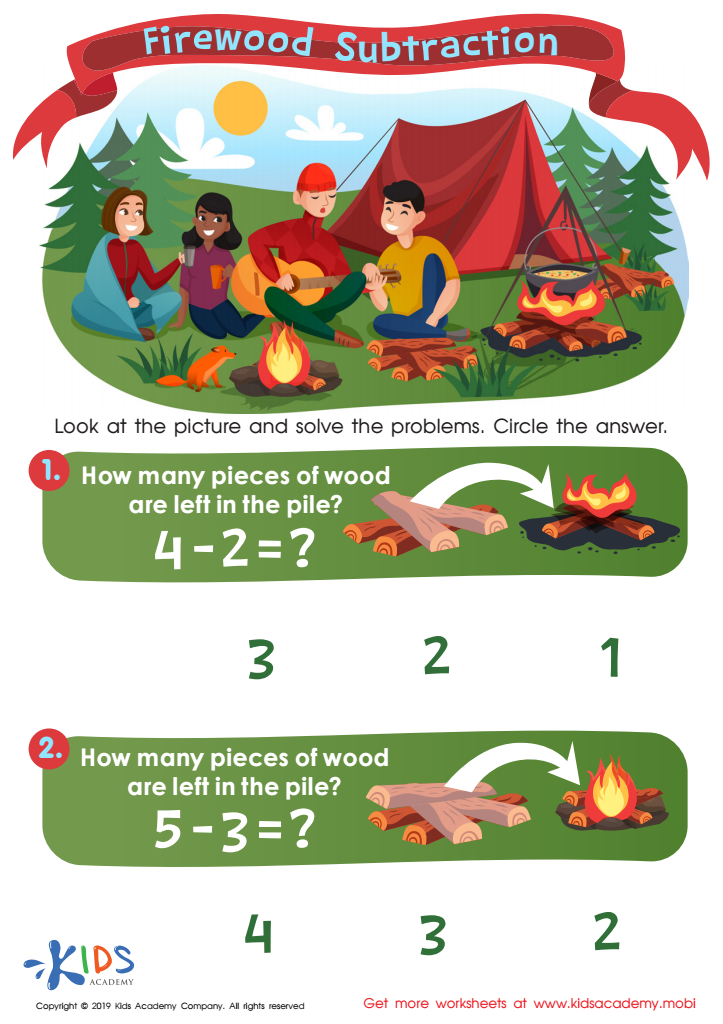
Firewood Subtraction Worksheet
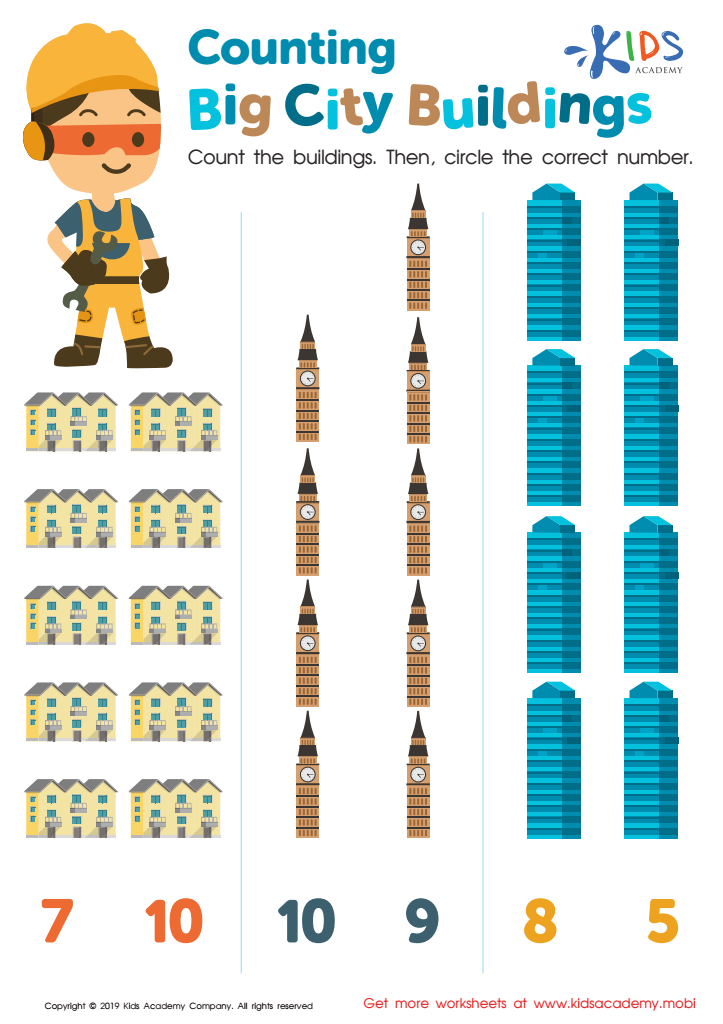
Counting Big City Buildings Worksheet








Understanding quantities is foundational for young children (ages 3-9) as it directly influences their ability to grasp more advanced mathematical concepts later. For parents and teachers, nurturing this early understanding is crucial and should be a priority.
First, a strong sense of quantity helps children relate numbers to real-life situations, forming a tangible link between abstract numbers and the real world. This practical application is essential for their cognitive development and problem-solving skills. When children can distinguish between different quantities, as straightforward as understanding that two apples are less than three, they begin to develop critical thinking and reasoning abilities.
Moreover, early exposure to the idea of quantities paves the way for more complex arithmetic operations such as addition, subtraction, and comparison. If children grasp basic quantity concepts early, math will feel less intimidating as they progress academically, leading to greater confidence and enthusiasm toward the subject.
Teachers and parents play a pivotal role by integrating fun, hands-on activities that involve sorting, counting, and measuring into daily routines. This doesn't just build skills; it fosters a positive, curious attitude towards math.
Ultimately, a focus on understanding quantities equips children with essential life skills, promotes academic success, and cultivates a lifelong appreciation for learning. Therefore, ensuring children receive ample support in this area should be a community-wide commitment.








