Understanding times tables Easy Math Worksheets for Ages 3-9
3 filtered results
-
From - To
Unlock the world of multiplication with "Understanding Times Tables Easy Math Worksheets" designed for children aged 3-9. Our engaging worksheets provide a fun and interactive way to help young learners grasp the fundamentals of times tables. Featuring bright colors, playful illustrations, and step-by-step instructions, these resources make math enjoyable and accessible. Perfect for parents and educators alike, our worksheets cater to various skill levels, ensuring every child progresses at their own pace. Use these easy math exercises to build a strong foundation in multiplication, enhance problem-solving skills, and boost confidence in math. Start your child’s journey to math mastery today!
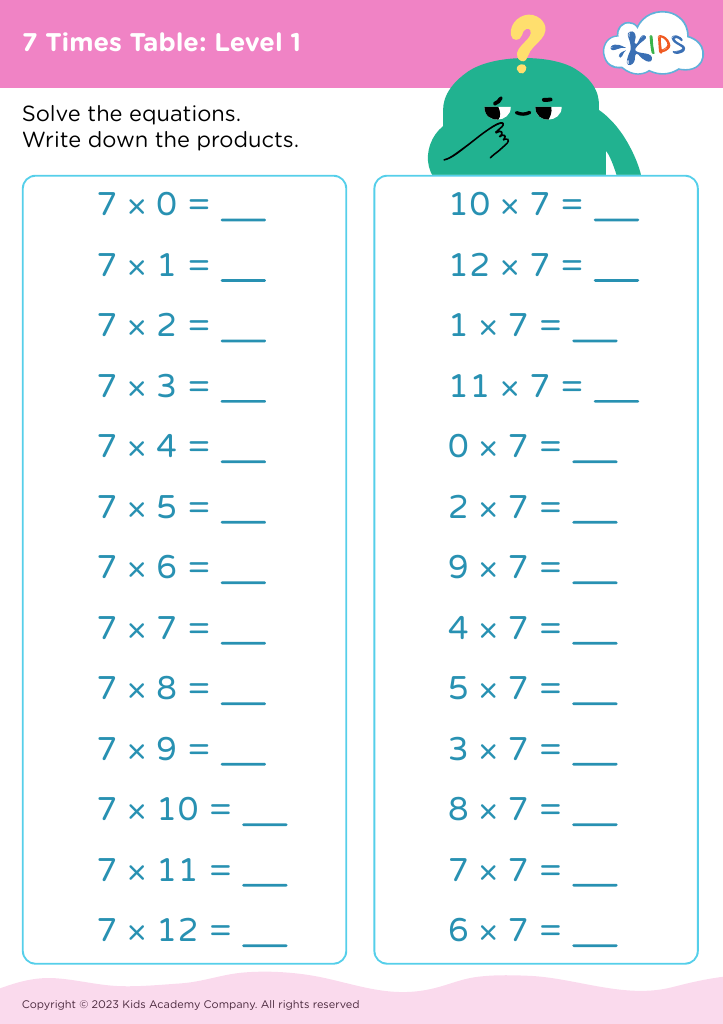
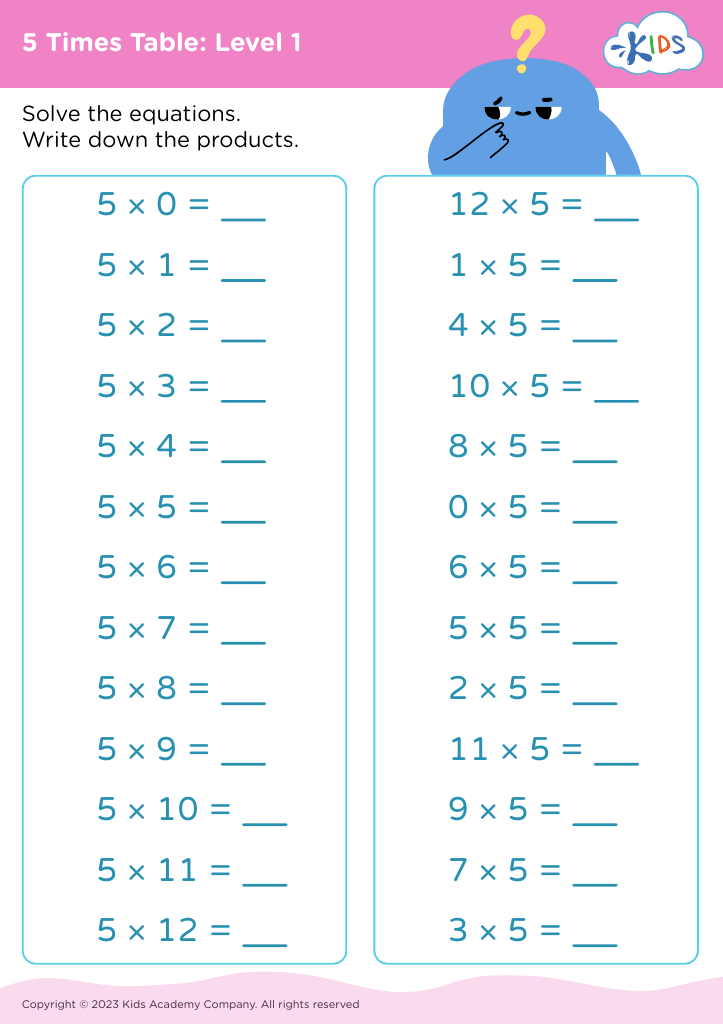
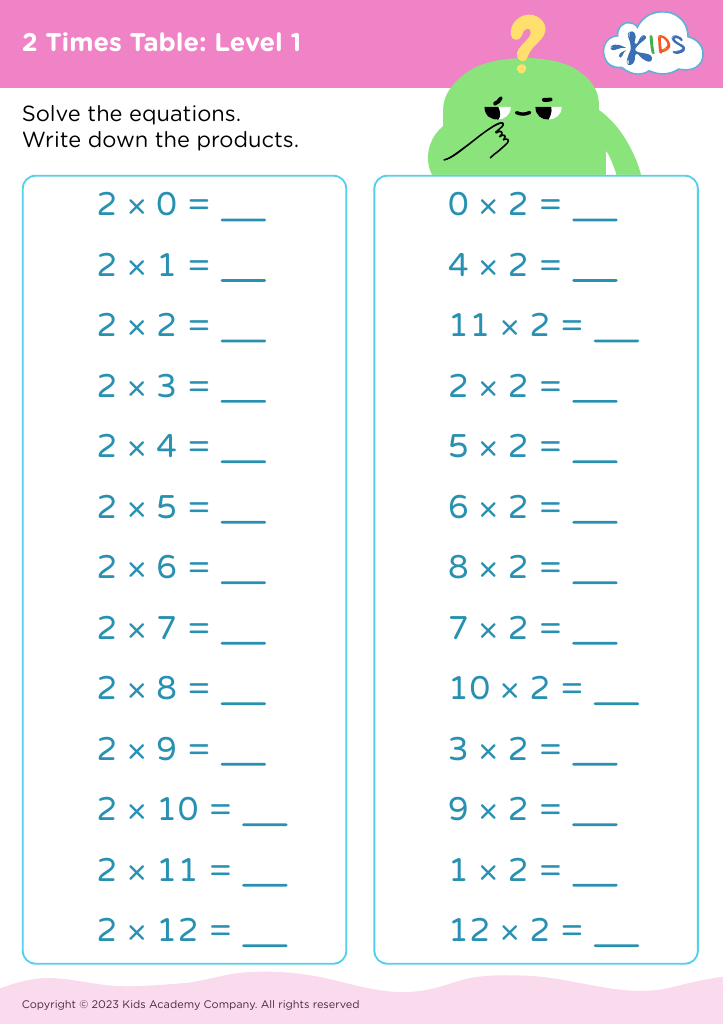








Understanding times tables is crucial for children aged 3-9, as it lays the foundation for their overall mathematical development. During these formative years, children are continually building cognitive skills such as problem-solving and critical thinking. Learning multiplication not only enhances their numerical fluency but also strengthens their ability to recognize patterns, make connections, and gain confidence in their math skills.
First, mastering times tables helps children develop mental math skills, allowing them to tackle more complex arithmetic with ease. This becomes essential as they progress through school, where advanced calculations become more frequent. Parents and teachers should care about this because a strong grasp of multiplication opens doors to understanding fractions, algebra, and various math-related concepts.
Moreover, early exposure to times tables through engaging methods—like songs or visual aids—can spark a love for math and encourage a positive attitude toward learning. Parents and teachers can promote a supportive environment that praises effort over perfection, reducing math anxiety and fostering resilience.
In short, establishing a strong foundation in times tables equips young learners with the skills they need for academic success and lifelong learning. Engaging children in this process can instill a crucial sense of accomplishment and enthusiasm for mathematics.








