
Vocabulary Enrichment Easy Math Worksheets for Ages 3-9
3 filtered results
Difficulty Level
Grade
Age
-
From - To
Subject
Activity
Standards
Enhance your child's math vocabulary and skills with our Vocabulary Enrichment Easy Math Worksheets designed for ages 3-9. Ideal for young learners, these engaging printable worksheets blend fundamental math concepts with vocabulary building exercises, helping kids understand and apply math terms in a fun and meaningful way. Each worksheet offers a mix of colorful illustrations, age-appropriate challenges, and interactive tasks to foster both numerical skills and language development. Perfect for both classroom and at-home learning, our worksheets provide a solid foundation for future academic success. Make math enjoyable for your little ones with our expertly crafted enrichment materials!
Favorites
With answer key
Interactive
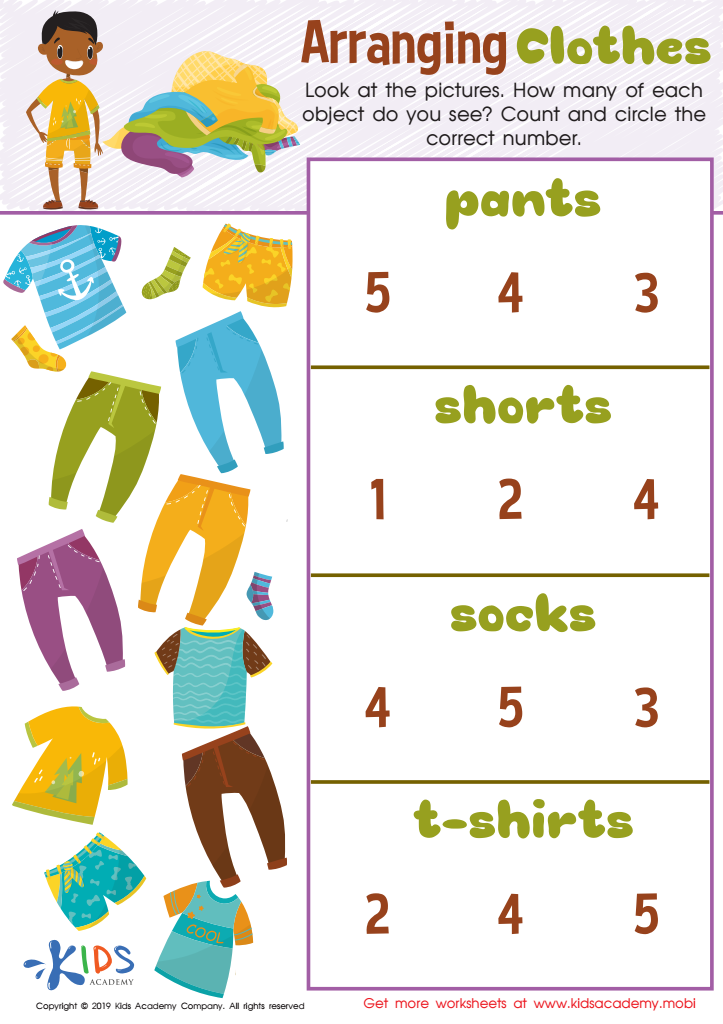
Arranging Clothes Worksheet
This worksheet uses familiar items, brightly colored to attract your kids. Ask them to name each item, then count them and circle the right number.
 Assign to My Students
Arranging Clothes Worksheet
Worksheet
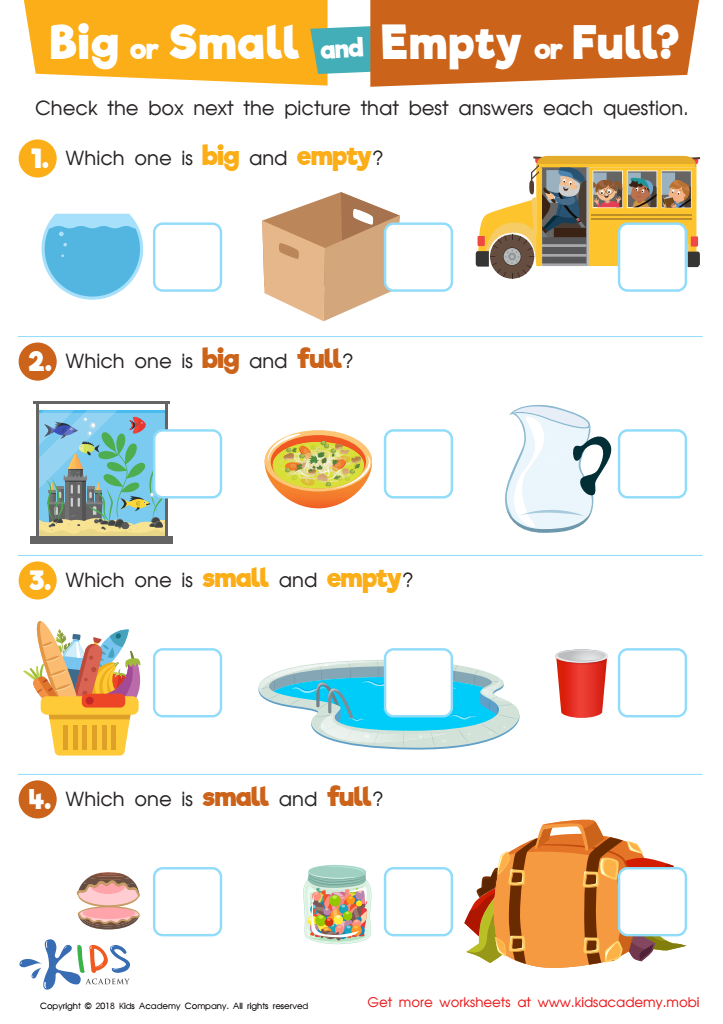
Big or Small and Empty or Full? Worksheet
Early learners can develop their math skills by using this Worksheet with fun, familiar pictures. It reinforces concepts like big/small and empty/full, helping them to differentiate and identify objects that meet those definitions.
Big or Small and Empty or Full? Worksheet
Worksheet
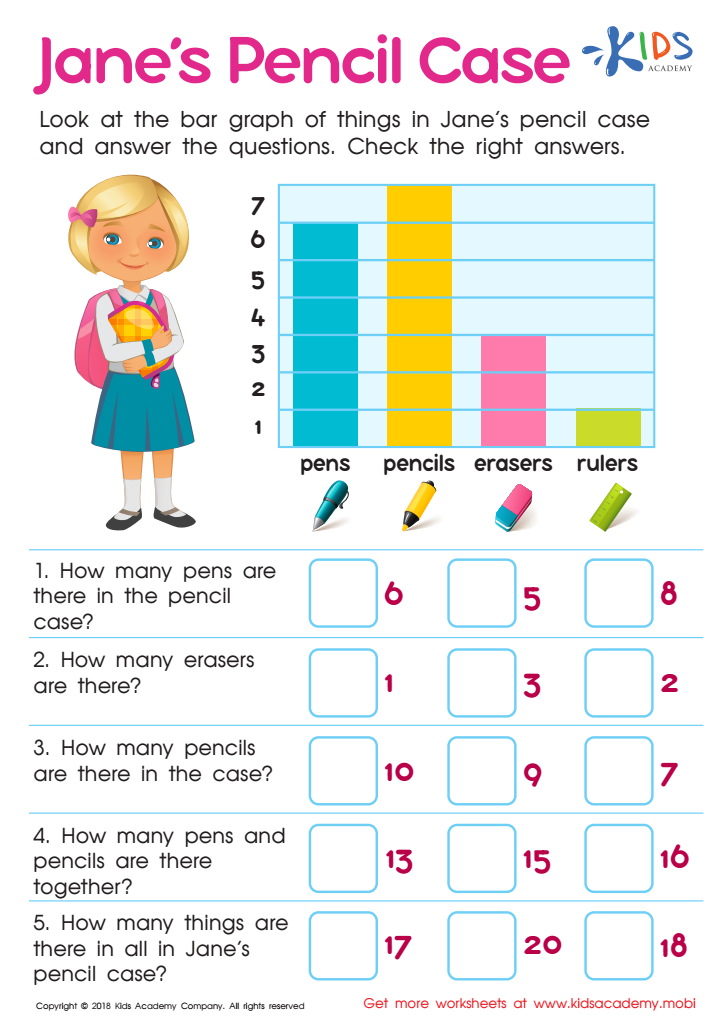
Jane's Pencil Case Worksheet
Help Jane organize her pencil case! Have your child look and the bar graph on the worksheet and interpret the data. Ask them to read each problem, then check the box next to the correct number. It's a fun way to practice reading graphs and reporting data.
Jane's Pencil Case Worksheet
Worksheet
Join Kids Academy for Free
Who is primarily going to use this learning content?








Vocabulary enrichment and easy math exercises for children aged 3-9 are crucial for several key reasons. Firstly, this period, known as the formative years, is when a child's brain is most adaptable and ready to absorb new information. Introducing rich vocabulary early on lays a foundation for strong reading and language skills, ultimately fostering better communication abilities. It helps children express themselves clearly, understand instructions, and engage in more meaningful conversations.
Similarly, starting with easy math helps build essential numeracy skills, presenting the building blocks for more complex mathematical concepts. This practice enhances problem-solving abilities, logical thinking, and cognitive development. Math exercises can be both educational and enjoyable, making learning feel like a game rather than a chore, which helps to cultivate a positive attitude towards math.
Combining vocabulary enrichment with easy math practices caters to a comprehensive developmental approach, balancing both linguistic and analytical skills. Parental and teacher involvement is integral in this process. Providing consistent support and varied learning opportunities ensures that children remain engaged and motivated. This involvement not only aids in academic success but also contributes to a child's confidence and enthusiasm for exploring new knowledge. Investing time in such foundational skills will set children on a path of lifelong learning and curiosity.








