Understanding times tables Easy Multiplication Worksheets for Ages 3-9
3 filtered results
-
From - To
Unlock the keys to mastering multiplication with our "Understanding Times Tables: Easy Multiplication Worksheets for Ages 3-9". Specifically designed for young learners, these engaging and colorful worksheets make understanding times tables fun and effortless. Ideal for ages 3 to 9, each worksheet builds on essential multiplication skills, helping kids gain confidence and achieve success in math. Our resources cater to different learning paces, ensuring no child is left behind. From simple exercises to more challenging problems, our worksheets turn learning into an exciting adventure. Join us at Kids Academy and watch your child's math skills flourish!
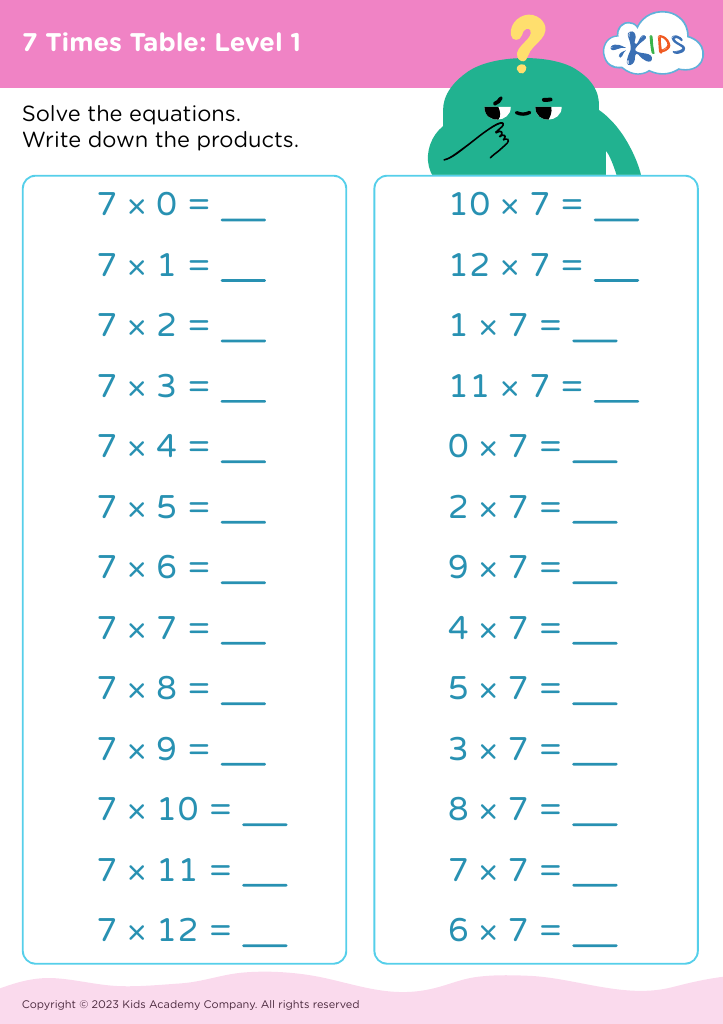
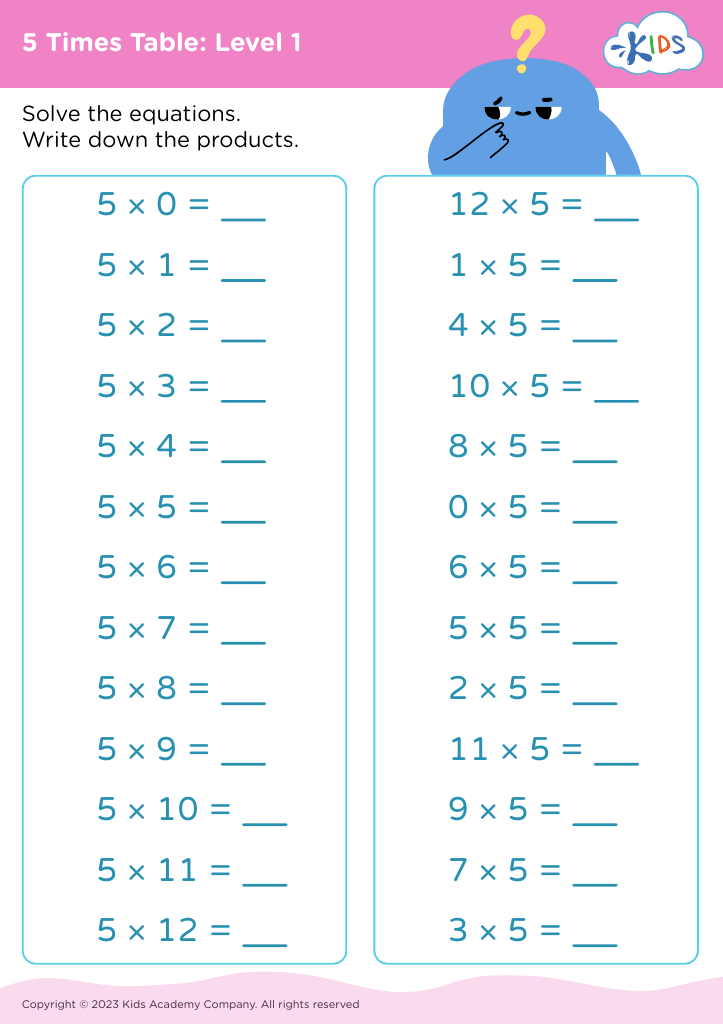
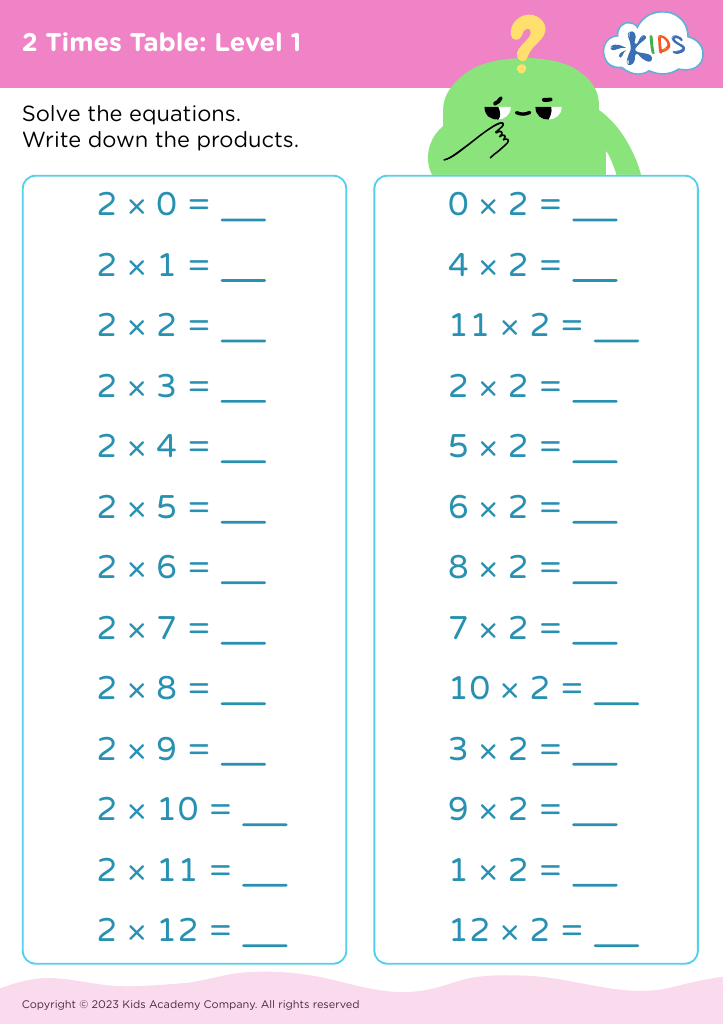








Understanding times tables and easy multiplication is crucial for children aged 3-9 for several reasons. First, mastering these foundational math skills at an early age boosts academic confidence and fosters a positive attitude towards mathematics. When children internalize their times tables, it not only expedites their problem-solving speed but also enhances their ability to understand more complex mathematical concepts in the future, such as division, fractions, and algebra.
Additionally, early mastery of multiplication is important for practical, everyday math applications. For instance, kids frequently encounter scenarios that require basic multiplication, such as sharing cookies among friends or understanding patterns in nature. This hands-on experience makes math tangible and reinforces its importance in real-life contexts.
Moreover, learning times tables involves memorization and pattern recognition, which improve cognitive abilities like memory and logical reasoning. These skills are transferable to other academic areas and foster overall intellectual development.
Parents and teachers should also recognize the confidence boost and the love of learning these early successes can instil in young learners. By making times tables fun and accessible through games, songs, and engaging activities, they can turn math into an enjoyable challenge rather than a daunting task. Investing time in teaching easy multiplication now lays a strong foundation for a child's future academic and everyday life success.








