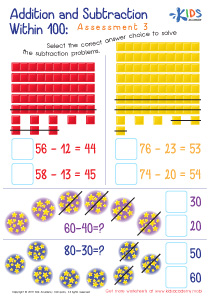
Basic Math Skills Easy Numbers 0–10 Worksheets for Ages 3-9
4 filtered results
-
From - To
Unlock your child's potential with our "Basic Math Skills Easy Numbers 0–10 Worksheets for Ages 3-9." Tailored for young learners, these worksheets are perfect for teaching foundational math skills, including number recognition, counting, and early addition. Designed by educators, our engaging and fun activities will help build confidence and understanding in a playful setting. Ideal for both classroom use and home practice, each worksheet offers a step-by-step approach to ensure gradual learning progress. Ensure your child’s success in math from the start with these expertly crafted resources. Join today and watch your little learner thrive!
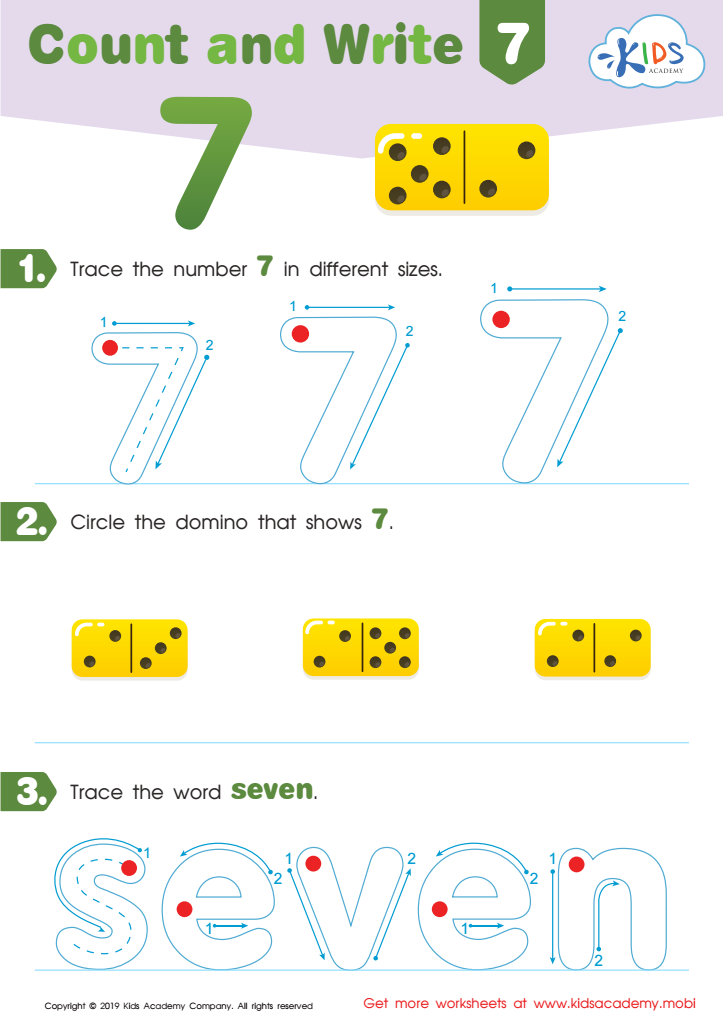
Count and Write 7 Worksheet
 Assign to My Students
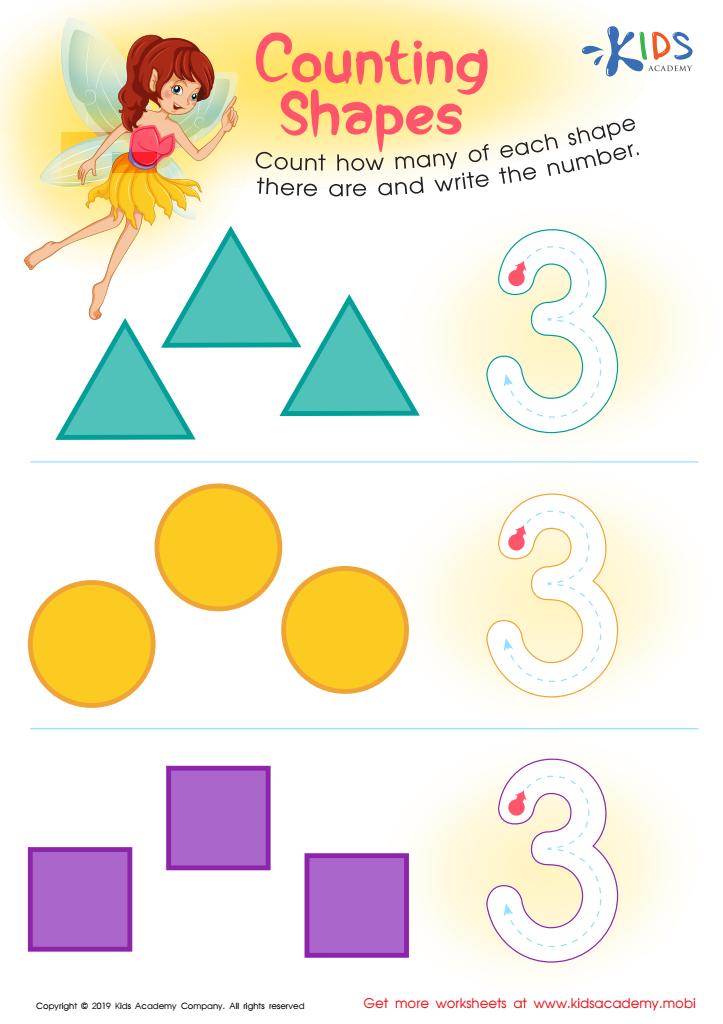
Counting Shapes Worksheet
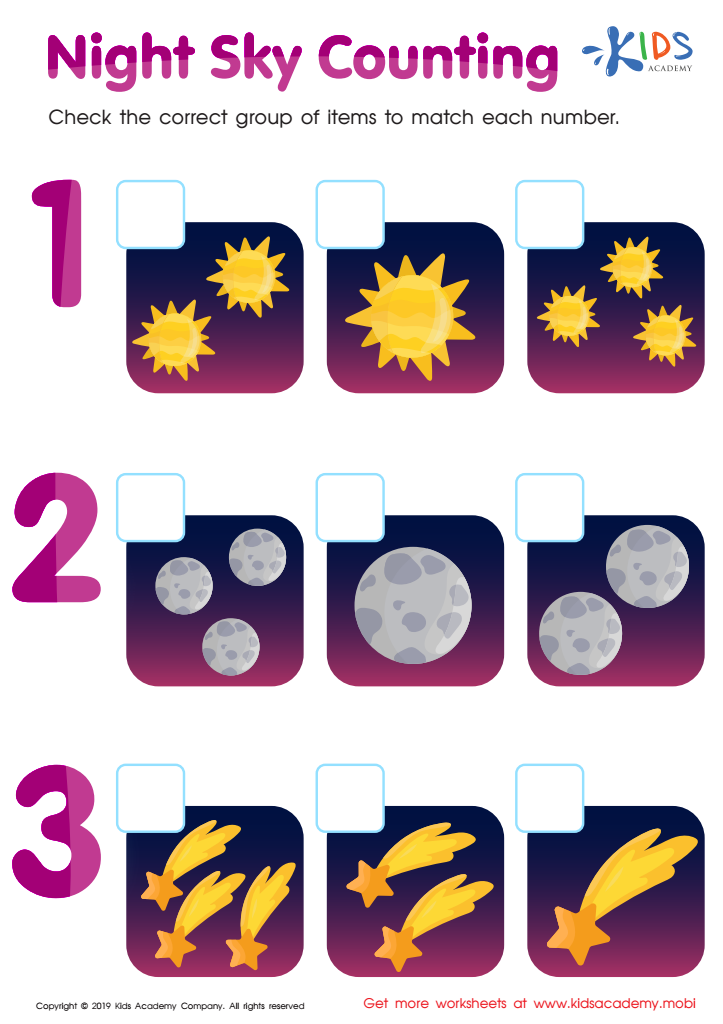
Night Sky Counting Worksheet
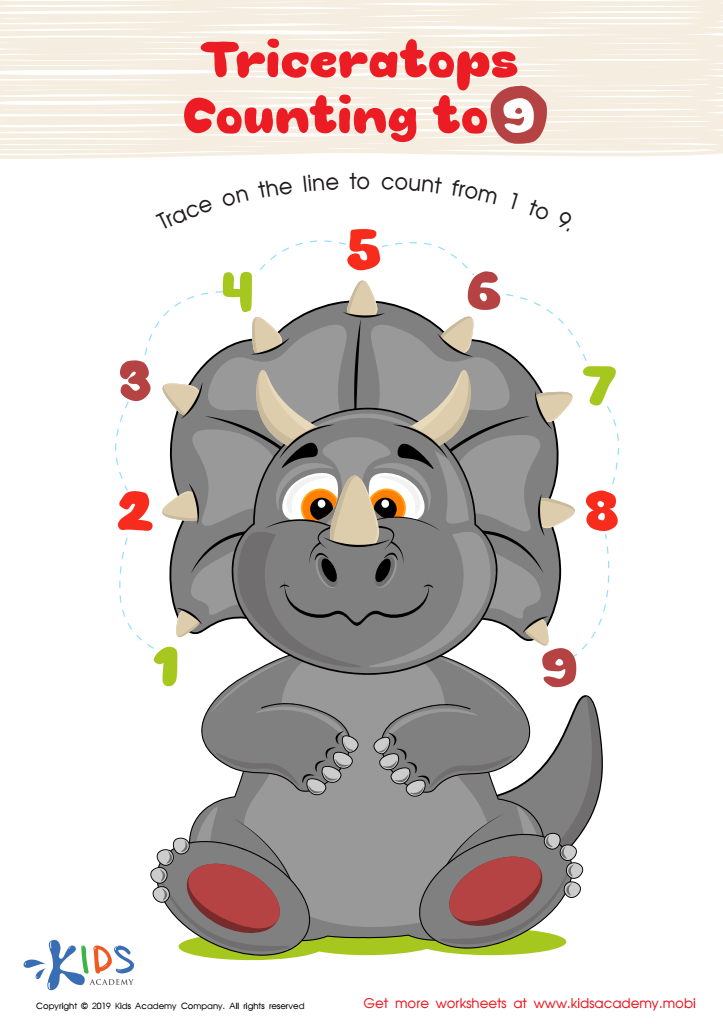
Triceratops Counting to 9 Worksheet








Basic math skills, particularly understanding numbers from 0 to 10, form the cornerstone of a child's future academic success and everyday problem-solving abilities. For children aged 3-9, these early skills are critical as they establish the foundational understanding required for more complex mathematical concepts encountered later in life. Recognizing and counting numbers 0-10 helps to develop number sense, which is crucial for understanding cardinality (the idea that the last number in a count represents the total quantity), one-to-one correspondence (matching one number to one object), and the ability to perform simple arithmetic operations like addition and subtraction.
For parents and teachers, emphasizing these skills can significantly enhance a child's cognitive development, fostering logical thinking, pattern recognition, and analytical abilities. Moreover, early proficiency in basic math boosts confidence and promotes a positive attitude toward learning, which is essential for continued success across all academic subjects. Engaging young learners with fun, interactive activities like counting games or using everyday items for practice encourages engagement and eases the learning process. Therefore, investing time and effort in teaching numbers 0-10 during these formative years is not only fundamental for academic achievement but also for nurturing critical thinking and problem-solving skills that will benefit children throughout their lives.