Filters

6 filtered results

Clear all filters
Favorites
With answer key
Interactive

6 filtered results

Difficulty Level

Grade


Welcome to our "Number Recognition Easy Numbers 11–20 Worksheets" designed for children ages 3-9! These worksheets provide a fun and engaging way for your preschool and early elementary learners to master number recognition through a variety of interactive activities. From tracing to coloring and matching, each worksheet is tailored to enhance counting skills and boost confidence in recognizing numbers from 11 to 20. Perfect for classrooms or at-home learning, these resources support early math development in a playful and educational manner. Help your child build a strong foundation in numeracy with our easy-to-use worksheets today!

Check out this FREE Trial Lesson on Numbers 11–20 for age 3-9!

Write 11-20

Favorites
With answer key
Interactive
  • 3-9
  • Number Recognition
  • Numbers 11–20
  • Easy
Counting Fun Worksheet

Counting Fun Worksheet

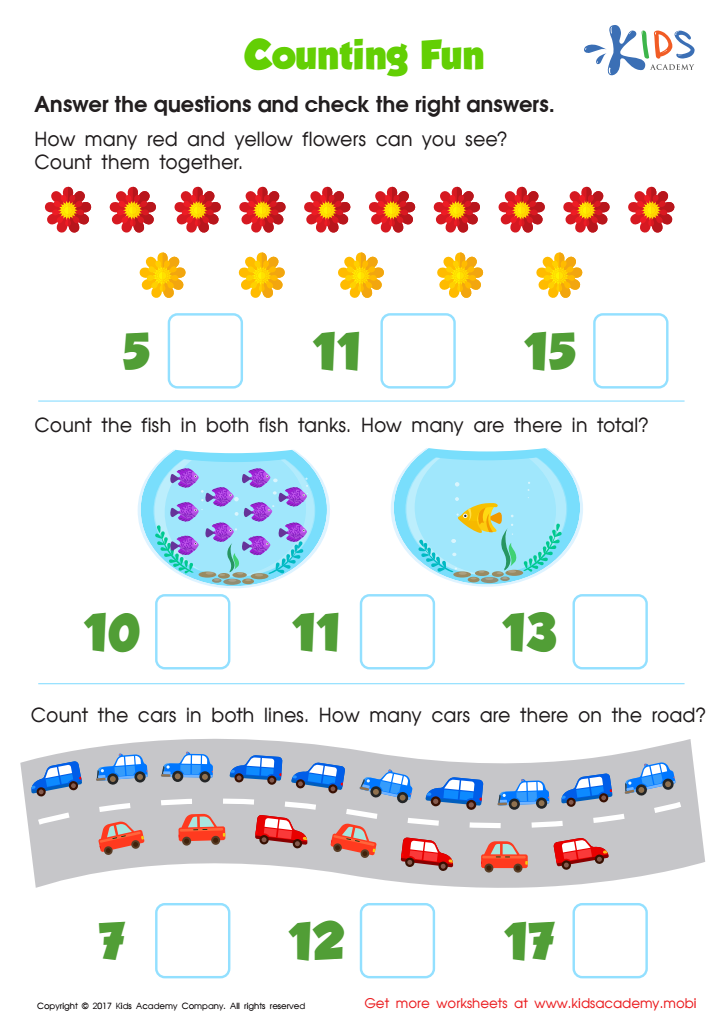
Math and fun can go hand-in-hand with this free PDF worksheet! Bright, colourful illustrations will activate your child's brain, as they count the red and yellow flowers. How many can you see? Count together and write down the total. Make learning and counting fun for your little ones!
Counting Fun Worksheet
Worksheet
Kindergarten number tracing PDF worksheet

Kindergarten Number Tracing: Counting in Charts Worksheet
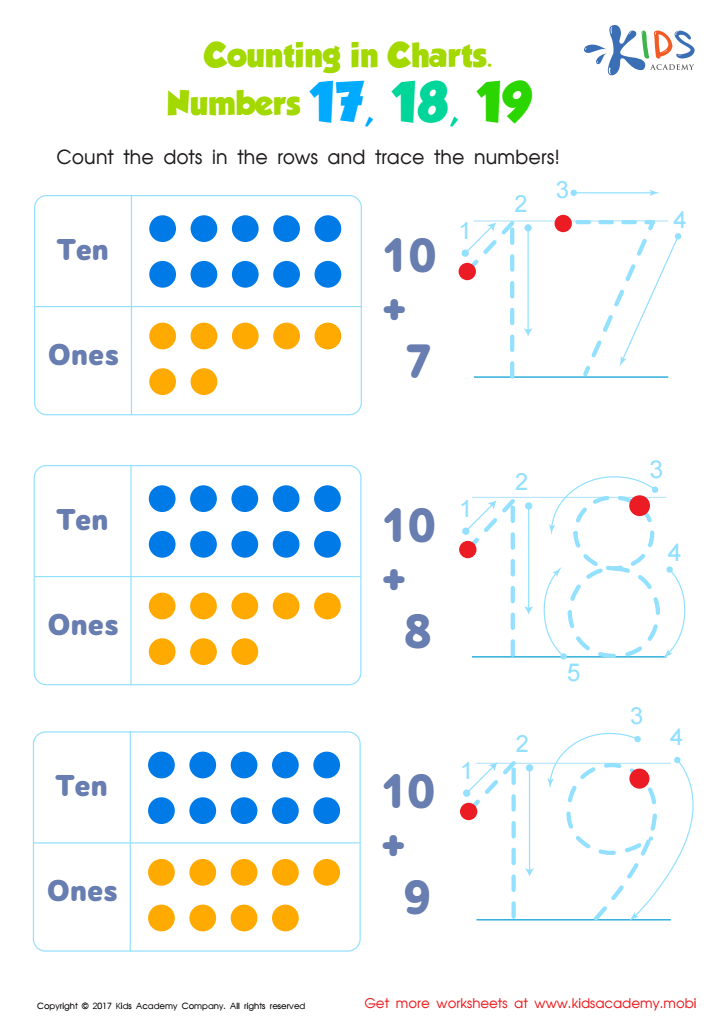
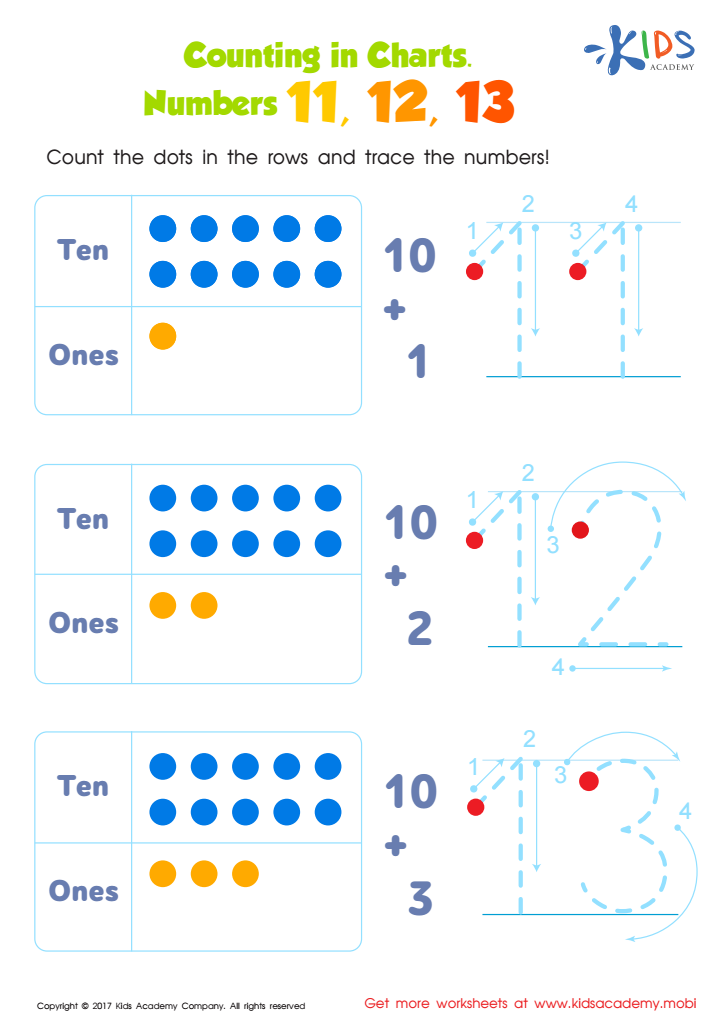
Little learners can find big numbers tricky! Help them practice counting and build early math skills, like place value and addition, with this kindergarten number tracing PDF worksheet. Count the dots to solve the problem and trace each answer!
Kindergarten Number Tracing: Counting in Charts Worksheet
Worksheet
Halloween Counting Worksheet from 11 to 20

Ordering 11–20: Halloween Counting Worksheet
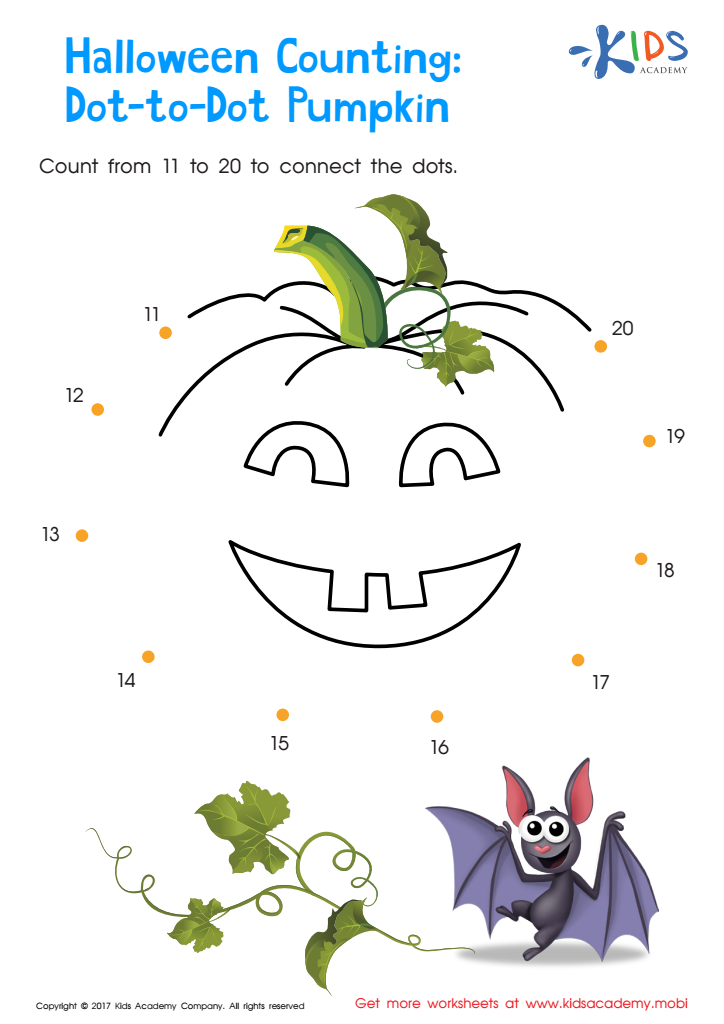
No matter the time of year, help your child get ready for Halloween with this worksheet. They'll practice counting from 11 to 20, recognizing numbers, and using a pencil to draw. By connecting the dots, they'll create a pumpkin picture, while unknowingly strengthening their early math skills. Print it today for an educational and fun experience!
Ordering 11–20: Halloween Counting Worksheet
Worksheet
Counting with Base Ten Blocks Worksheet

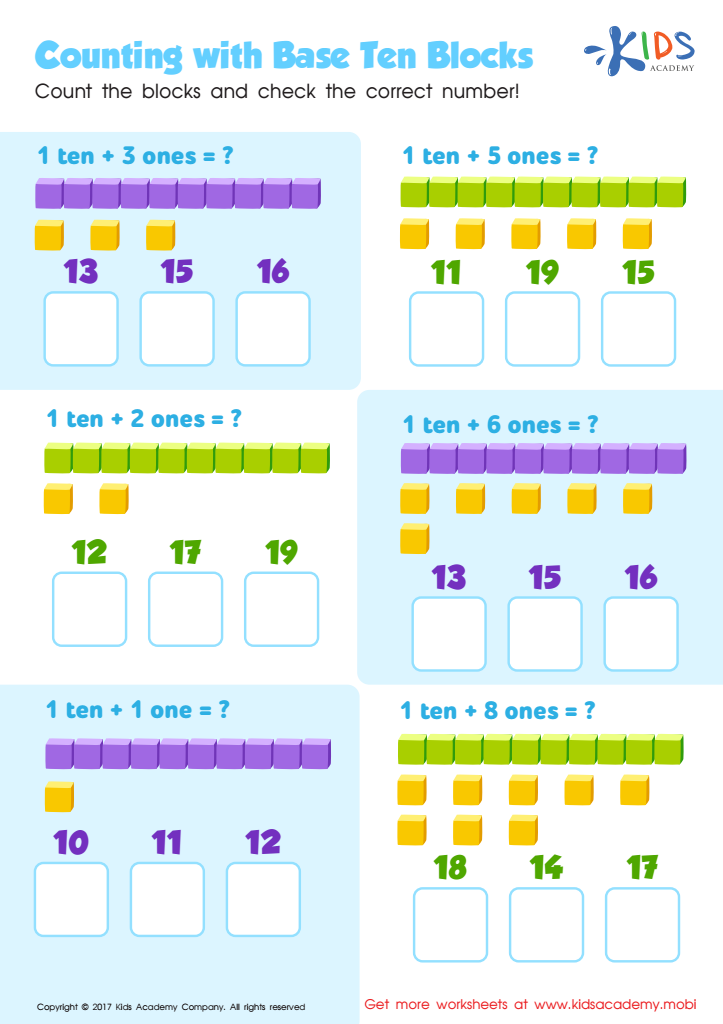
Counting with Base Ten Blocks Worksheet

Math has different levels and gets harder as your child progresses. Don't be surprised when they bring home an algebra worksheet! In this one, they will add 1 tens to varying numbers and fill in the total. This builds their understanding of base tens.
Counting with Base Ten Blocks Worksheet
Worksheet
Number tracing worksheet for kindergarten

Number Tracing Worksheet For Kindergarten
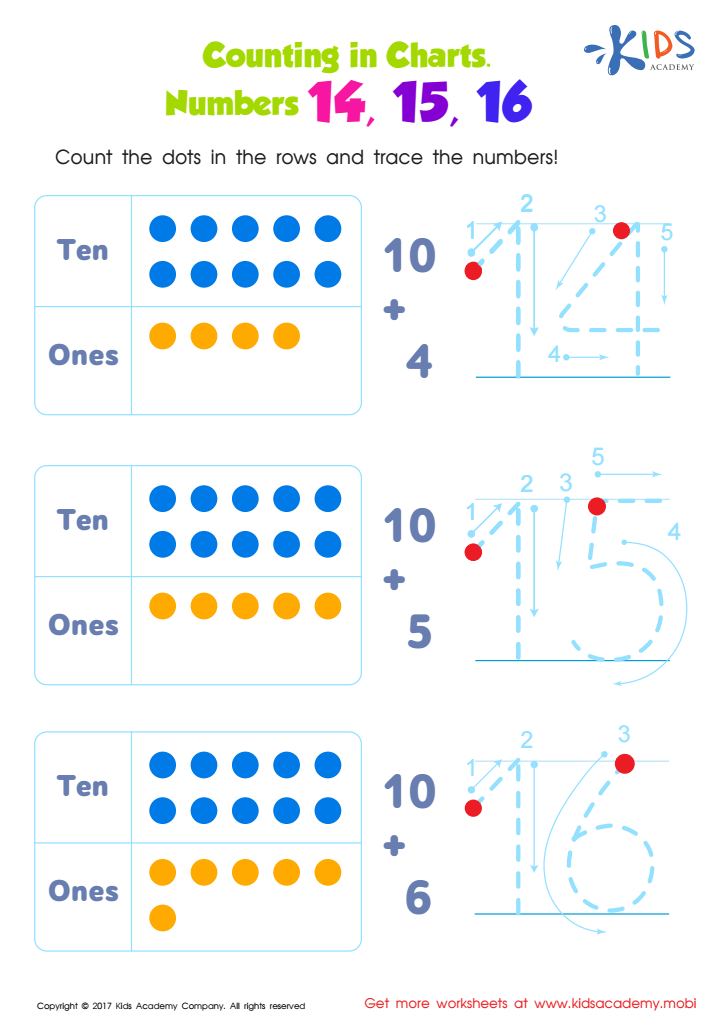
Help your child develop addition skills and improve number recognition with this easy-to-use worksheet. Have them count the dots and add to solve each problem. Then, trace over the number to complete each row! It's a fun and simple way for kindergarteners to practice their math skills.
Number Tracing Worksheet For Kindergarten
Worksheet
Number tracing PDF worksheet

Number Tracing Worksheet

Kids learn math with counters and place value! This handy worksheet helps form a foundation for math skills and number sense! Have your child count the dots and trace the answers to the addition problems. It's a great way to support their math skills!
Number Tracing Worksheet
Worksheet


Number recognition, particularly for numbers 11-20, is a crucial skill in early childhood education, especially for children ages 3-9. Parents and teachers should care about this because it sets the foundation for more advanced mathematical concepts. Recognizing numbers in this range helps children understand the numerical sequence and promotes counting skills, which are fundamental in building a strong math framework.

Developing number recognition enhances cognitive development and encourages critical thinking. When children can identify numbers, they become more comfortable with mathematical problem-solving and can easily interact with their environment—like recognizing prices or quantities. Furthermore, familiarity with numbers 11-20 can improve their confidence and engagement in learning.

In addition to cognitive benefits, number recognition promotes fine motor skills through activities like writing and tracing. It also encourages social interaction when children work together in group activities involving numbers. Moreover, a strong foundation in number recognition assists in preparing children for future math learning in school, reducing later anxiety associated with math.

Overall, fostering number recognition in early childhood creates enthusiastic learners and strong problem solvers, equipping them with essential skills for their educational journey. Parents and teachers play a vital role in nurturing this critical aspect of early learning.