Filters

7 filtered results

Clear all filters
Favorites
With answer key
Interactive

7 filtered results

Difficulty Level

Grade


Welcome to our Reading Comprehension Easy Community Worksheets for Ages 3-9! Designed to engage young learners, these worksheets focus on enhancing reading skills through fun, community-oriented themes. Your child will explore various topics, from local neighborhoods to important community helpers, fostering critical thinking and comprehension abilities. Each worksheet is crafted to encourage creativity and discovery while aligning with early education standards. Perfect for use at home or in the classroom, these resources promote literacy in a delightful and relatable way. Unlock your child's love for reading and help them connect with their community through our engaging and educational resources today!

Check out this FREE Trial Lesson on Community for age 3-9!

Identify Basic Similarities and Differences Between Two Texts on the Same Topic

Favorites
With answer key
Interactive
  • 3-9
  • Reading comprehension
  • Community
  • Easy
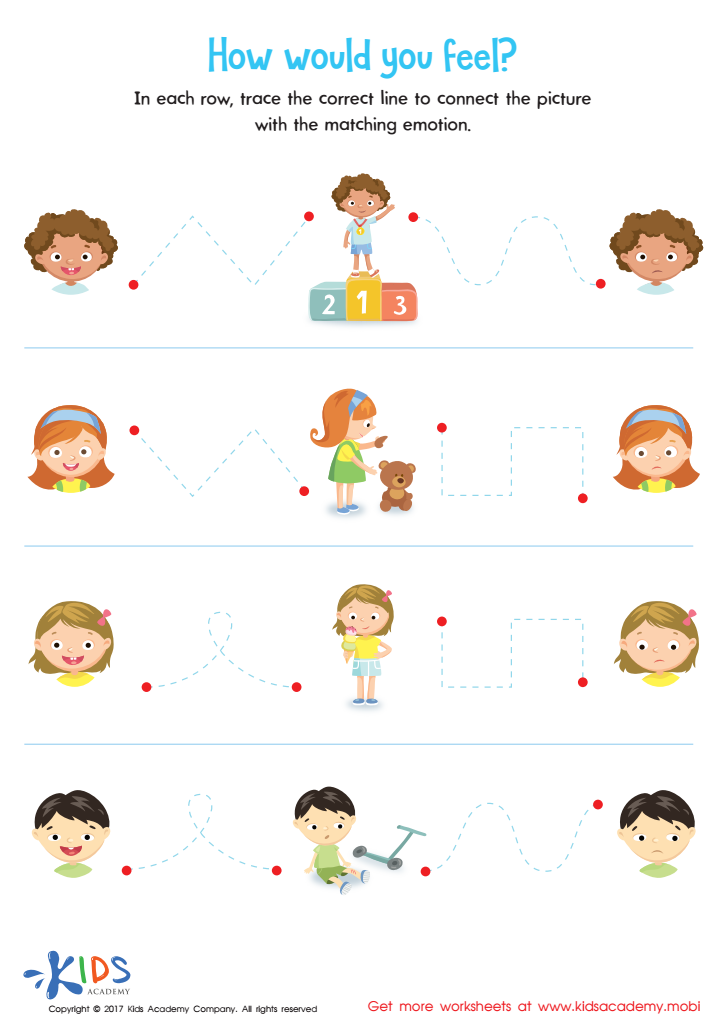
Feelings and emotions worksheet

Feelings and Emotions Worksheet

Kids must learn how to deal with situations and handle their own emotions. This worksheet helps them practice empathy and resilience, making them more self-aware and confident. It also helps them to relate their life experiences to common disappointments and develop coping mechanisms.
Feelings and Emotions Worksheet
Worksheet
Cities and Towns Worksheet

Cities and Towns Worksheet

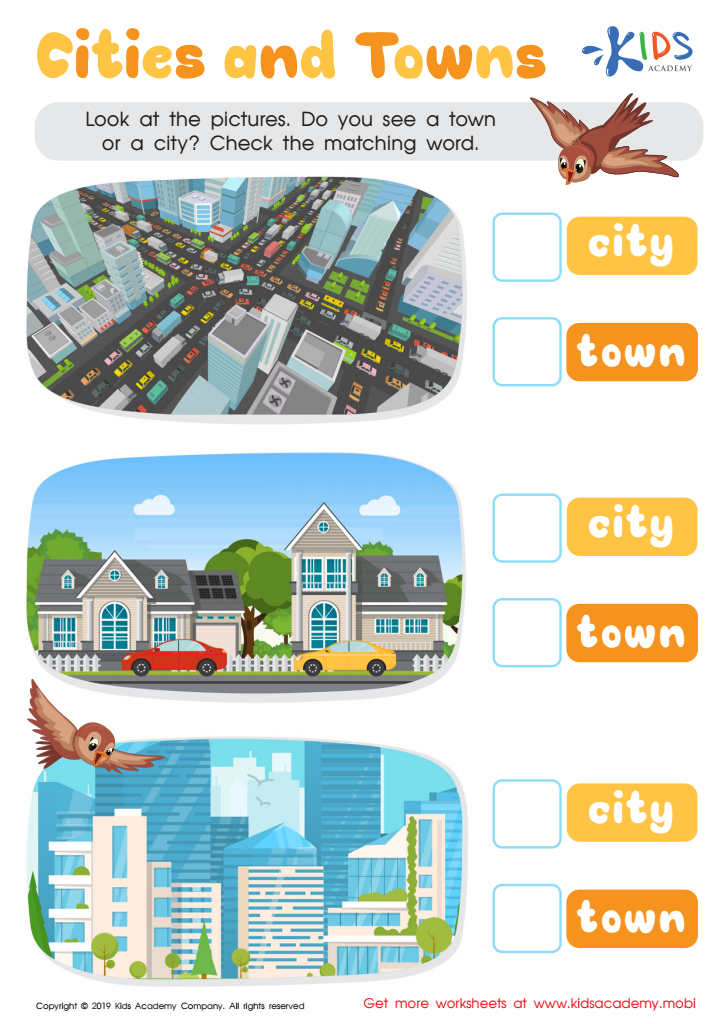
Cities are buzzy and busy while towns tend to be peaceful. Ask your child if they can tell which one is which from a picture. This could be a great way to test their understanding of the differences between towns and cities. There are many businesses in cities, tall buildings and lots to do. Meanwhile towns are usually quieter.
Cities and Towns Worksheet
Worksheet
Cities Worksheet
Cities Worksheet

Cities Worksheet

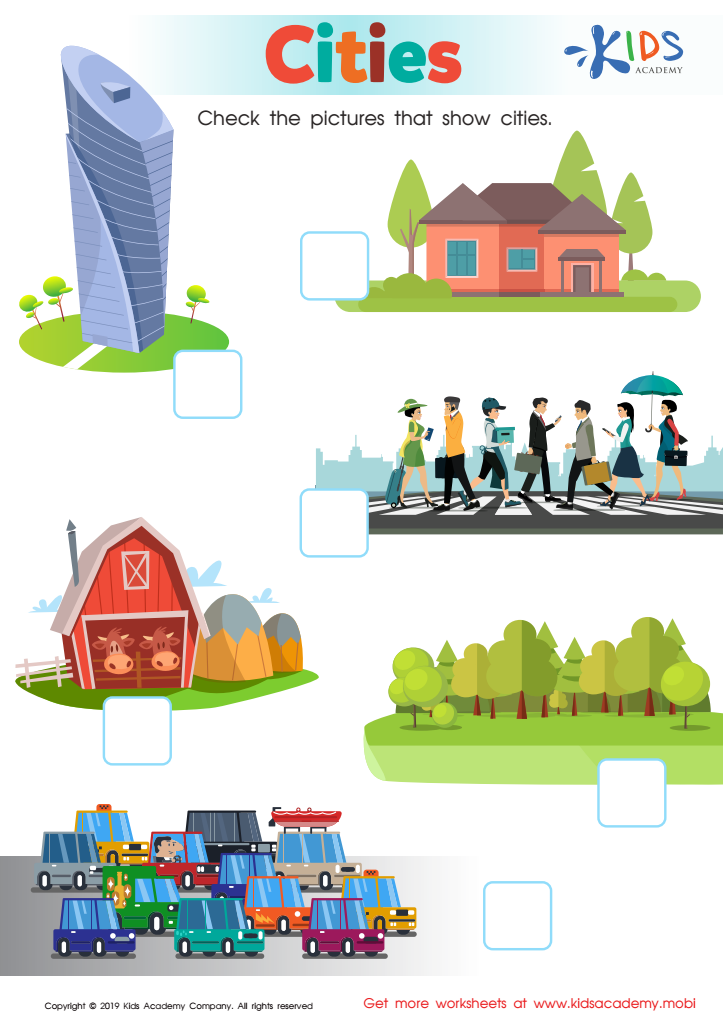
This social studies PDF introduces kids to the differences between cities and towns. Colorful imagery helps them to distinguish between the two; for example, cities have traffic, business people and skyscrapers, while suburbs and rural areas do not. This allows children to have a reference point for what makes cities unique.
Cities Worksheet
Worksheet
Traditions We Have Worksheet

Traditions We Have Worksheet

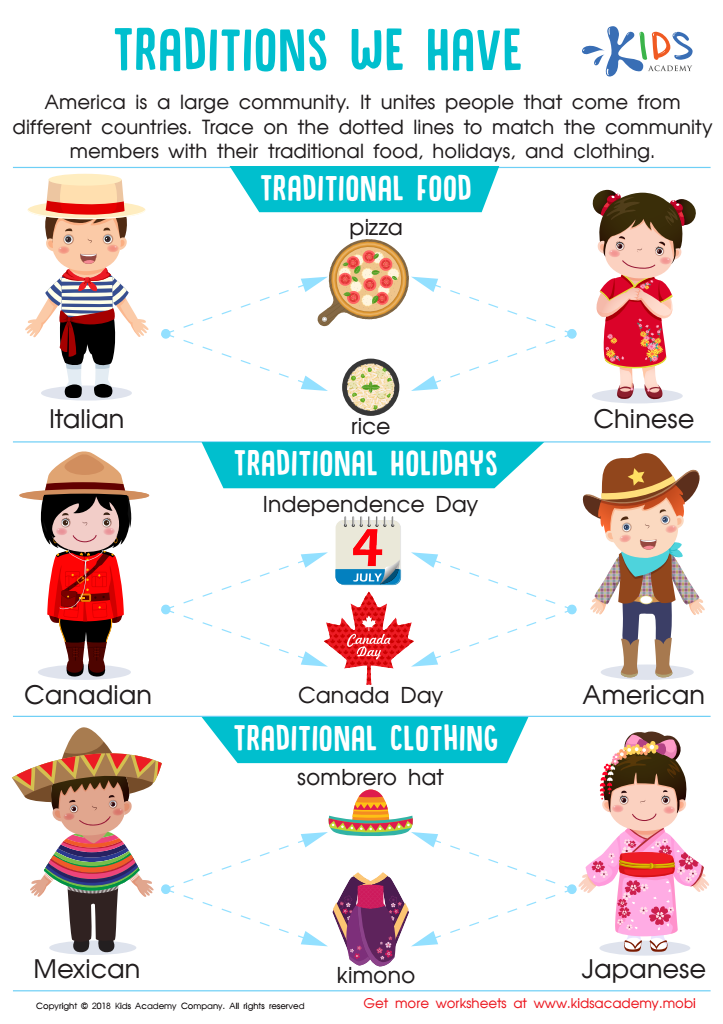
Help your child learn about the world's diverse cultures with this tracing sheet. Trace the dotted lines to match different community members with their traditional holidays, foods and clothing. America is just one of many countries with multiple communities living together - teach your child that everybody has different backgrounds and customs, opening their minds to an even bigger world.
Traditions We Have Worksheet
Worksheet
Let's Go to School! Worksheet

Let's Go to School! Worksheet

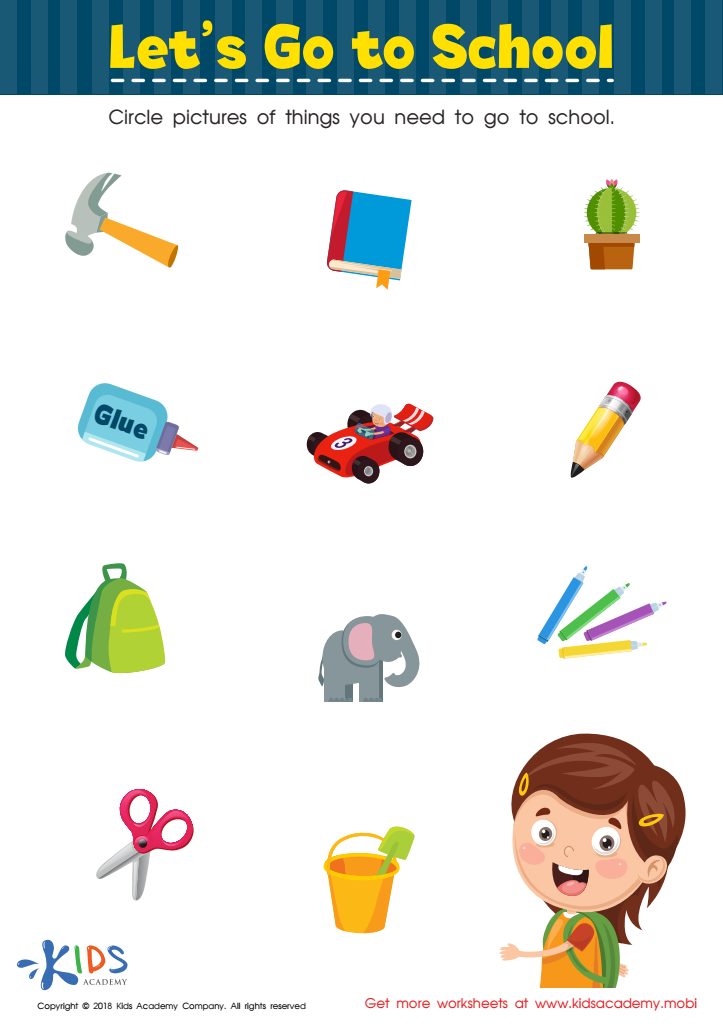
Ask your kids to circle the objects they need for school on this worksheet. It contains pictures of different objects - some needed and some not related to school. This should be easy for them as they're already enrolled or homeschooled.
Let's Go to School! Worksheet
Worksheet
Traditional Dances in India Worksheet

Traditional Dances in India Worksheet

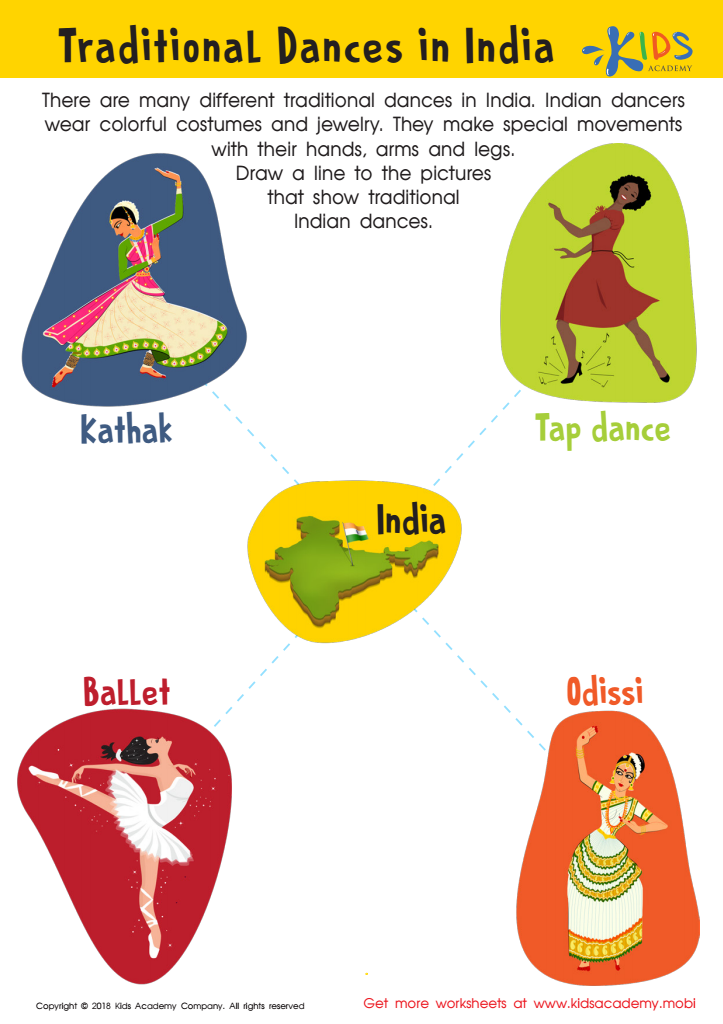
Teach students to celebrate diversity! This free worksheet lets them explore Indian traditional dances, costumes and jewelry. They'll discover Kathak and Odissi, while practicing motor skills tracing the matching lines. Give them a glimpse into the global community!
Traditional Dances in India Worksheet
Worksheet
Fairness: Sequencing Worksheet


Fairness: Sequencing Worksheet

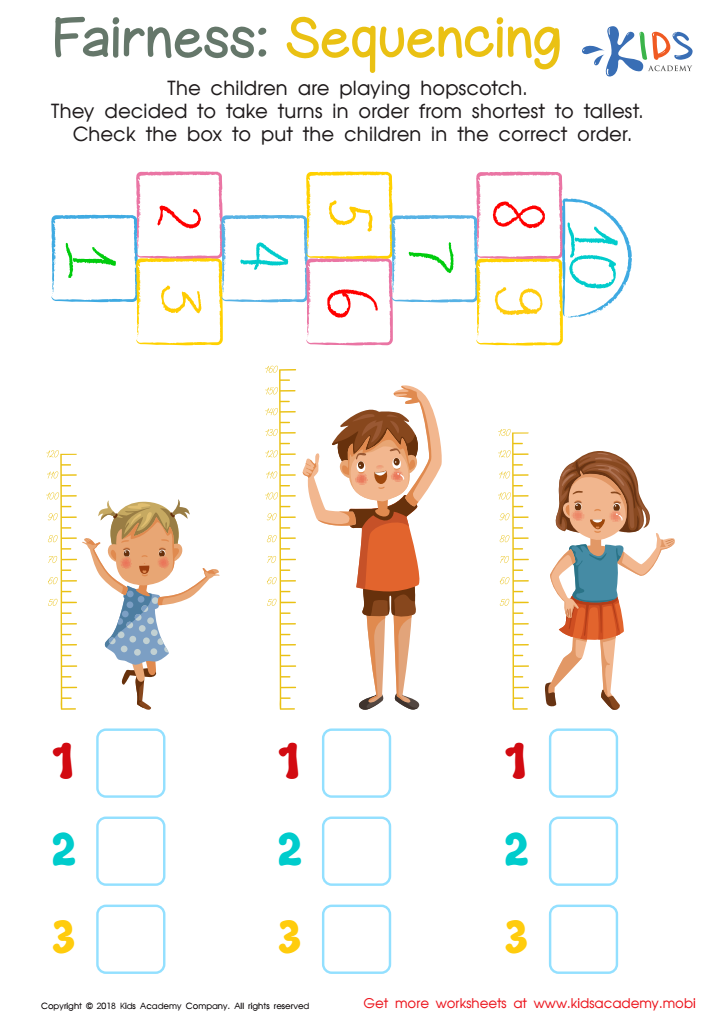
Kids likely already know how to play hopscotch. Ask them to show you the shortest, tallest and middle child in the worksheet. Then, help them order them from shortest to tallest by checking the boxes.
Fairness: Sequencing Worksheet

Worksheet


Parents and teachers should prioritize reading comprehension for children ages 3-9 because it forms the foundation for lifelong learning and academic success. At this critical stage of development, children are not only learning to read but also learning to understand what they read. Strong reading comprehension skills enable children to grasp concepts, follow narratives, and engage with the material, which fosters a love for reading and learning.

Moreover, effective reading comprehension promotes cognitive development, enhances vocabulary, and improves critical thinking skills. When children learn to interpret text, make inferences, and draw connections to their own experiences, they develop a deeper understanding of the world around them. This is especially important in early education, where the skills acquired directly influence future academic performance across subjects.

Additionally, addressing reading comprehension early can help bridge educational gaps that could hinder a child's social and emotional development. When children feel proficient in their reading skills, they approach learning with confidence and curiosity. Ultimately, investing time and resources in enhancing reading comprehension in young learners lays the groundwork for their future academic endeavors and personal growth, making it a crucial focus for both parents and educators.