Understanding sequencing Easy Math Worksheets for 3-Year-Olds
3 filtered results
-
From - To
Introduce your child to the essential concept of sequencing with our Easy Math Worksheets designed for 3-year-olds! At Kids Academy, these printable worksheets use engaging and colorful activities to help young learners grasp the order of events, enhancing their cognitive and mathematical skills. Perfect for nurturing early academic development, our resources make learning fun and approachable for toddlers. With guidance, your child will confidently arrange pictures and numbers in a logical sequence, laying a strong foundation for future learning. Start your free download today and watch your child's understanding bloom!
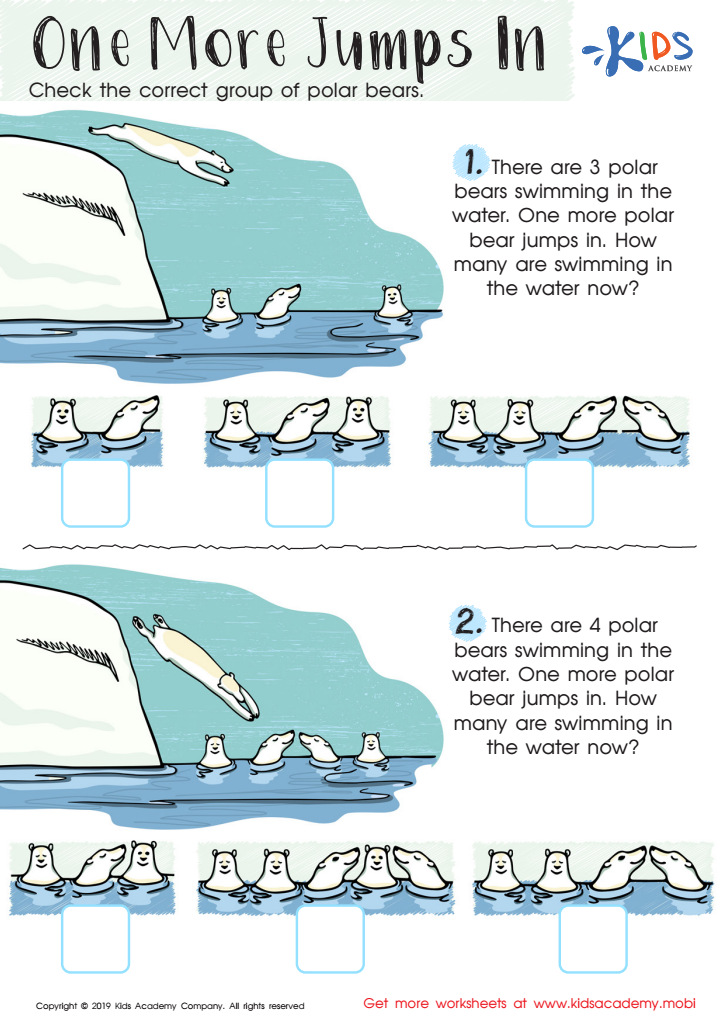
One More Jumps In Worksheet
 Assign to My Students
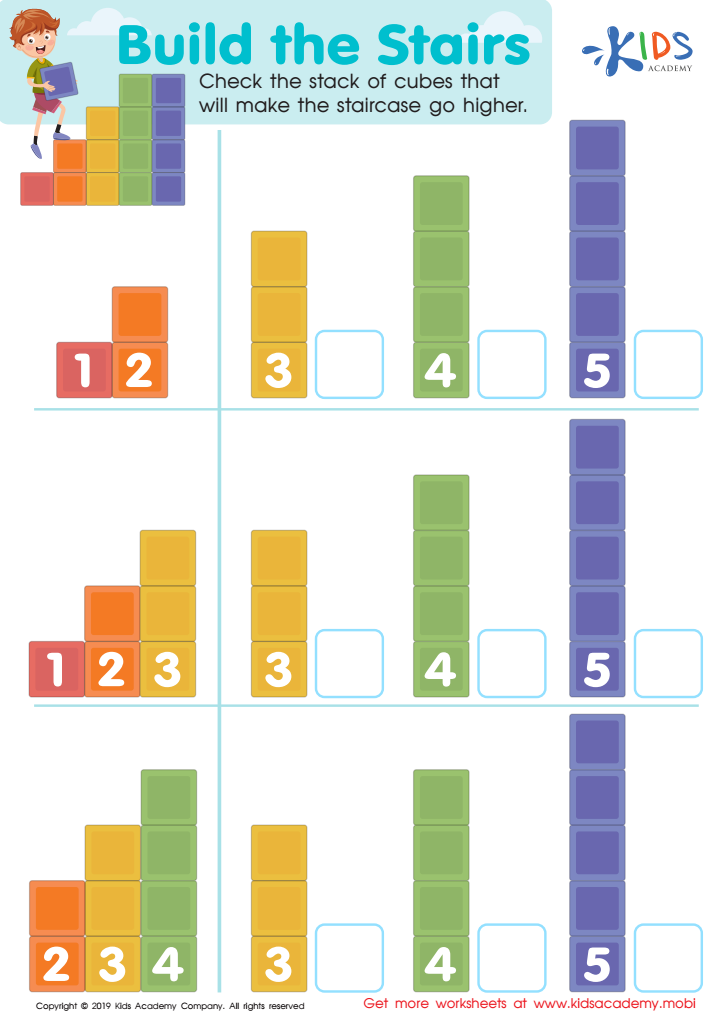
Build the Stairs Worksheet
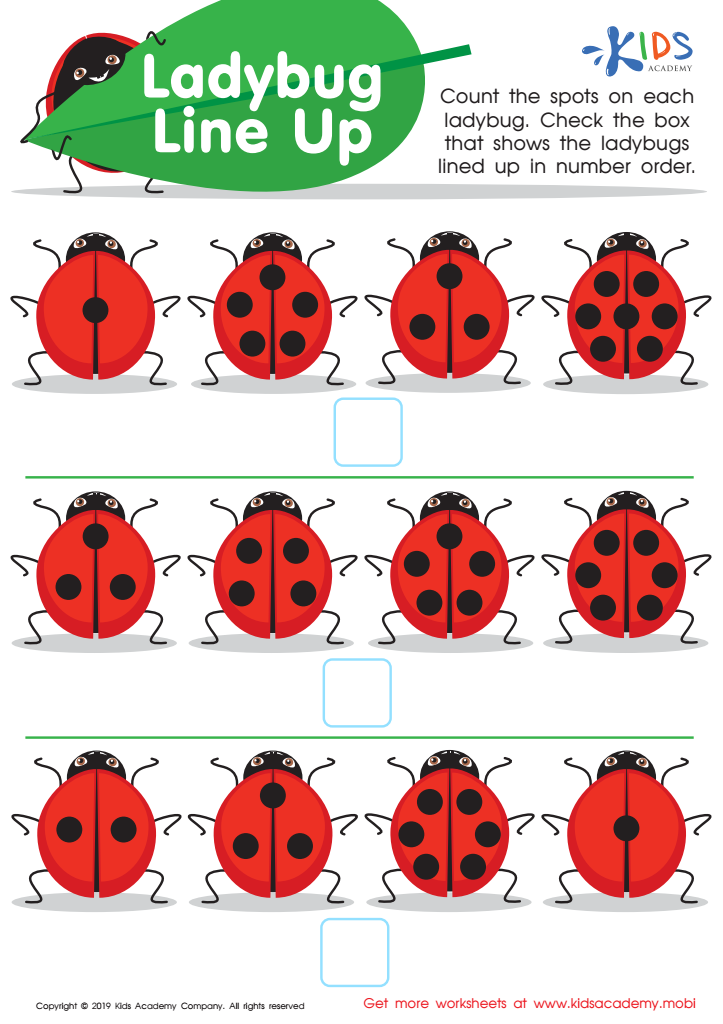
Ladybug Line Up Worksheet







Understanding sequencing is crucial for young children as it lays a foundational skill that extends beyond mathematics, vital for various cognitive and developmental processes. At three years old, children's brains are at a formative stage, absorbing information rapidly. By introducing sequencing through easy math activities, parents and teachers help kids develop their ability to recognize patterns, comprehend order, and understand the concept of before and after.
Grasping sequencing aids in improving logical thinking and reasoning skills. When children learn simple sequences—such as lining up colored blocks, counting steps, or following a daily routine—they begin to understand how events unfold in a particular order, fostering critical thinking and problem-solving skills.
Additionally, sequencing is closely linked to language development. When children articulate the steps involved in an activity or recount a simple story, they use sequential thinking, enhancing their narrative skills and vocabulary. This linguistic skill is fundamental for reading comprehension and overall communication.
Emotionally and socially, sequencing helps children predict outcomes, enhancing their ability to follow instructions and complete tasks independently. This boosts their confidence and sense of achievement. Moreover, mastering these skills early on instills a love for learning and a solid foundation for more complex mathematical concepts, setting the stage for academic success in the years to come.








