Visual Learning Easy Math Worksheets for 3-Year-Olds
4 filtered results
-
From - To
Discover the joy of learning with our Visual Learning Easy Math Worksheets for 3-Year-Olds! Designed to engage young minds, these worksheets enhance foundational math skills through colorful visuals and interactive activities. Fostering early numeracy, children will learn to recognize numbers, count, and understand simple shapes and patterns in a fun, playful manner. Perfect for at-home learning, preschool, or supplemental educational support, our worksheets make math an enjoyable experience for little ones. With easy-to-follow instructions and vibrant illustrations, your child will build confidence and proficiency in essential math concepts. Start their learning journey today with our visually rich resources!
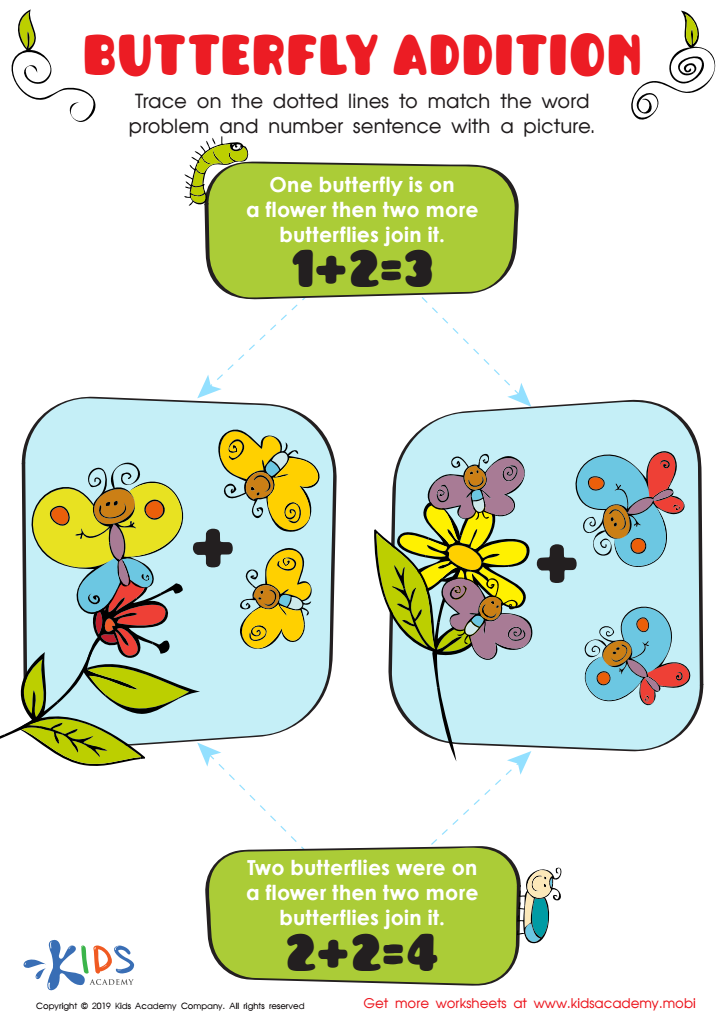
Butterfly Addition Worksheet
 Assign to My Students
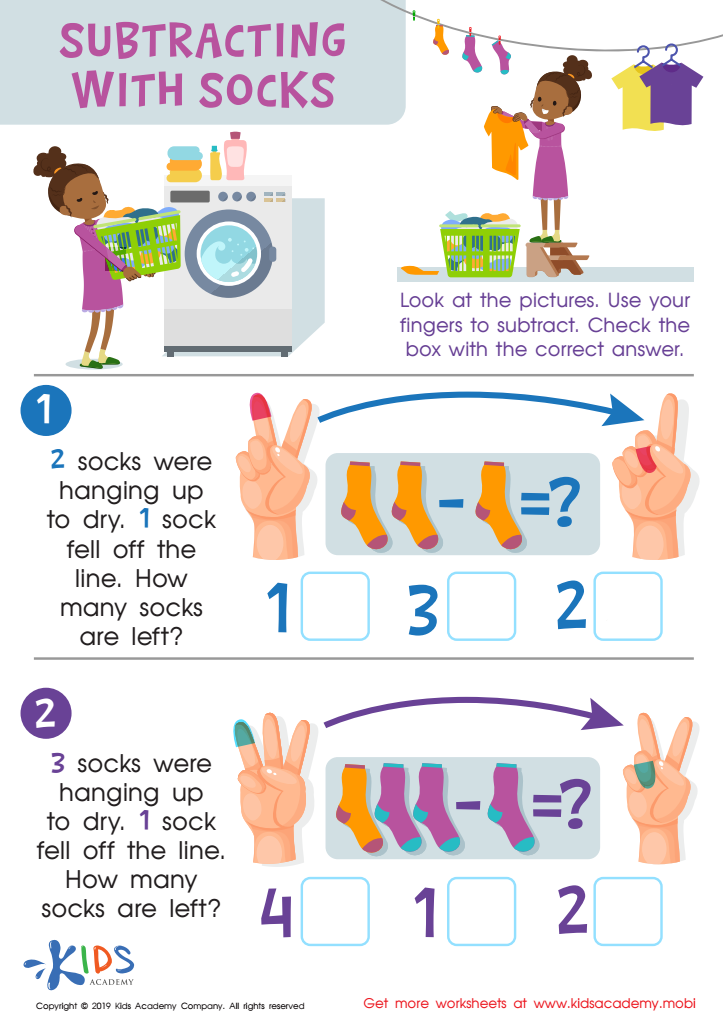
Subtracting Socks Worksheet
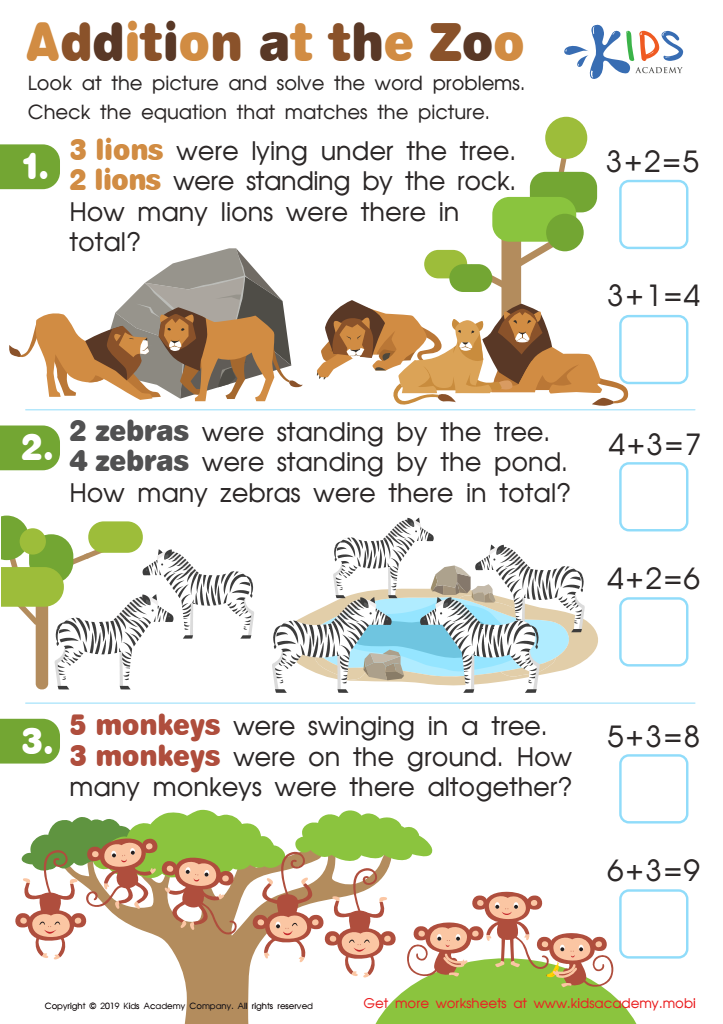
Addition at the Zoo Worksheet
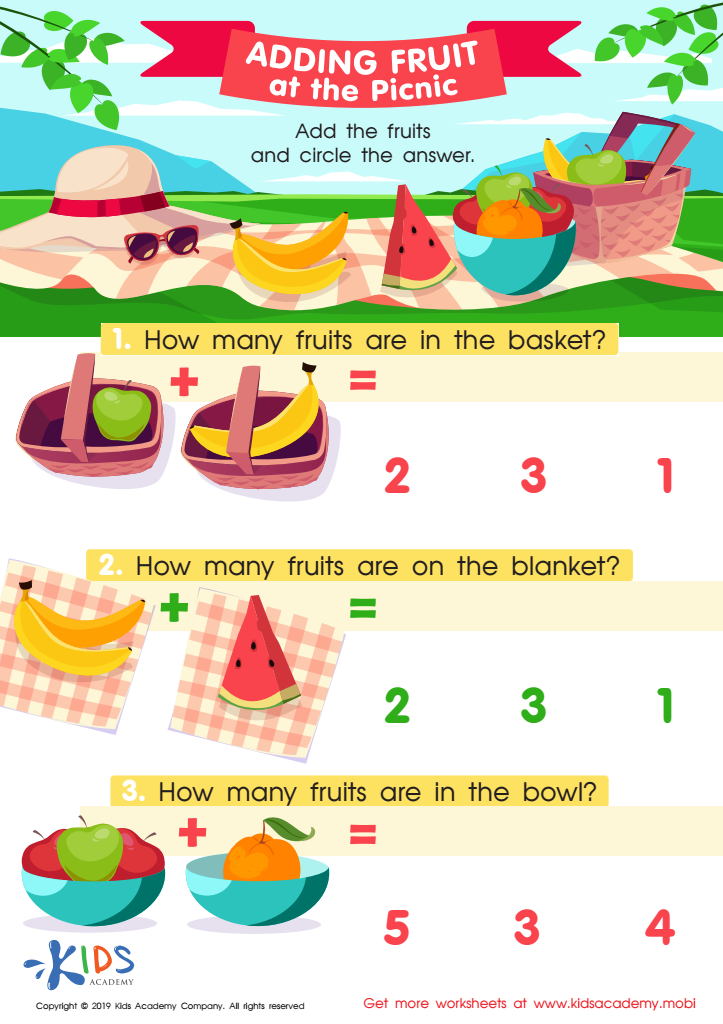
Adding Fruit at the Picnic Worksheet







Visual Learning Easy Math for 3-Year-Olds is essential for laying a strong foundational understanding of mathematics. At this age, children are naturally curious and engage actively with the world around them. Utilizing visual aids makes abstract concepts more tangible, enabling young learners to grasp early mathematical ideas through observation and manipulation.
Parents and teachers should care about this approach because it leverages children's innate learning styles. Visual learning tactics—like using colorful blocks, interactive games, or pictograms—encourage problem-solving, critical thinking, and cognitive flexibility. Moreover, these methods promote engagement, making math enjoyable instead of intimidating.
When math is introduced through visual means, it helps build self-confidence in learners, reducing the fear of making mistakes. Establishing a positive relationship with math early on sets the stage for future academic success and encourages a love for learning. Additionally, engaged and interested learners are more likely to participate in discussions and explorations of new ideas.
In summary, emphasizing Visual Learning Easy Math equips children with foundational skills not only in mathematics but also in social and emotional development, while fostering essential cognitive abilities. Investing in these early experiences can pave the way for lifelong math proficiency and academic achievement.








