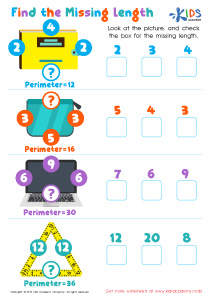
Problem-Solving Skills Easy Subtraction Worksheets for 3-Year-Olds
5 filtered results
-
From - To
Explore our engaging "Problem-Solving Skills Easy Subtraction Worksheets" designed specifically for 3-year-olds! These worksheets introduce young learners to basic subtraction concepts in a fun and interactive way. Our resources feature colorful visuals and simple problems that encourage critical thinking and reinforce early math skills. As children work through each activity, they’ll develop essential problem-solving strategies while gaining confidence in their abilities. Perfect for homeschooling or classroom settings, these worksheets help make learning enjoyable and effective. Help your child build a strong foundation in math with our thoughtfully designed resources, fostering a love for learning from an early age!
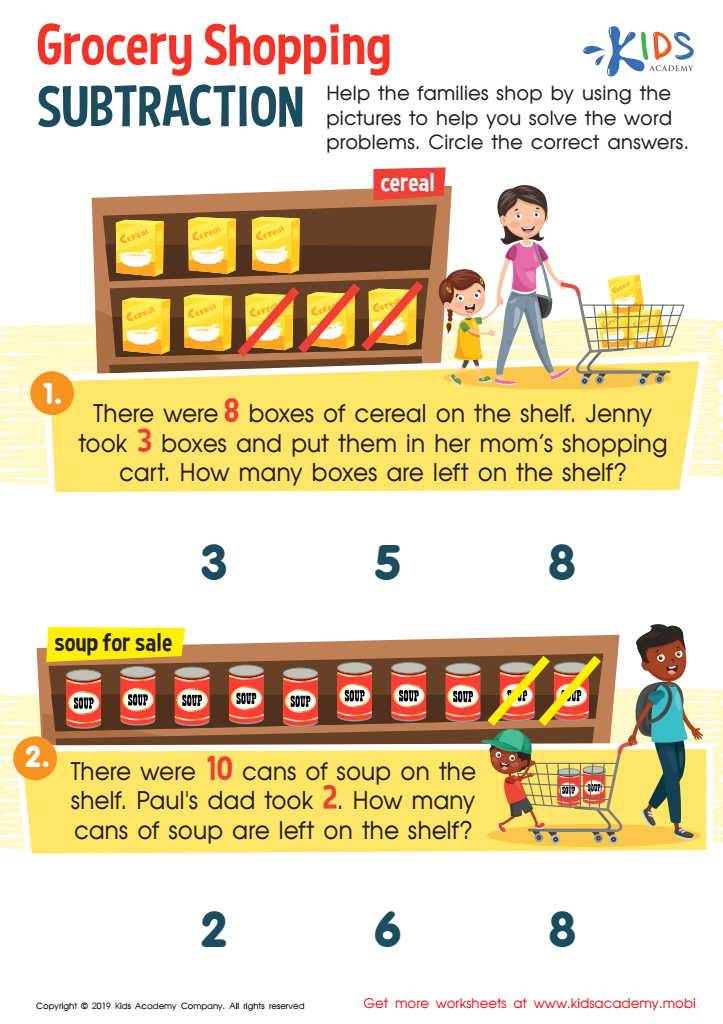
Grocery Shopping Subtraction Worksheet
 Assign to My Students
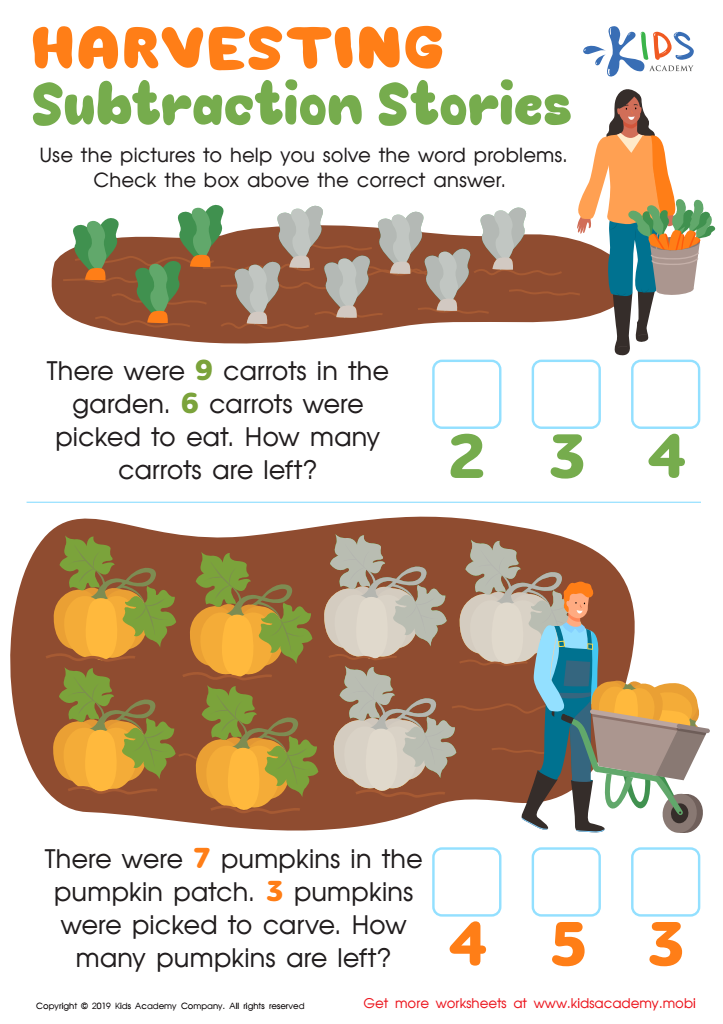
Harvesting Subtraction Stories Worksheet
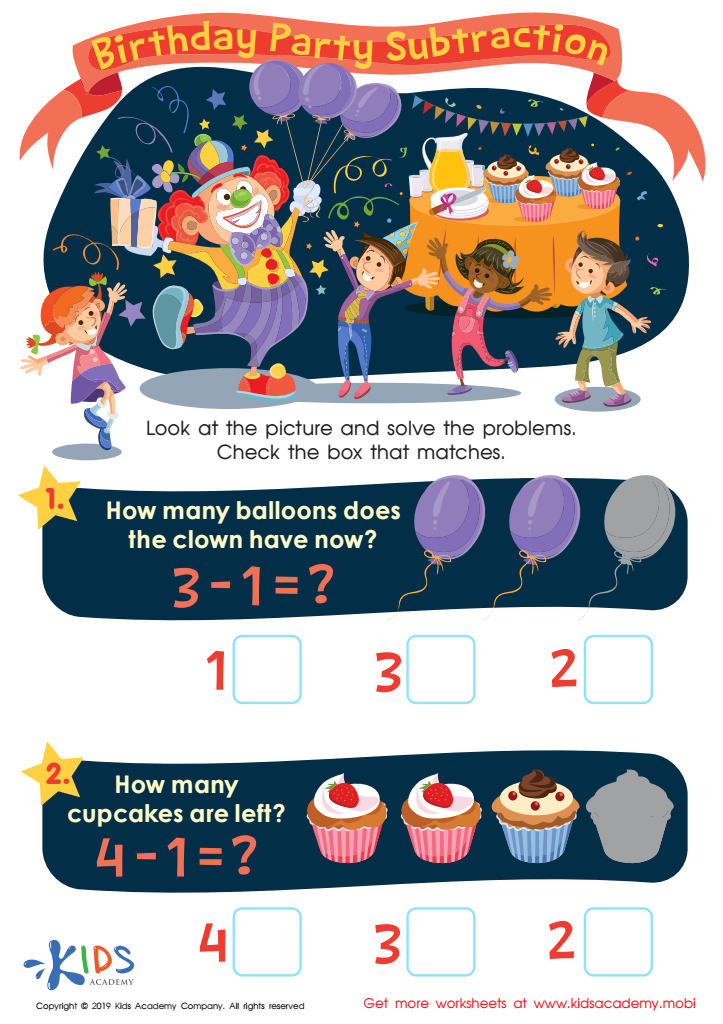
Birthday Party Subtraction Worksheet
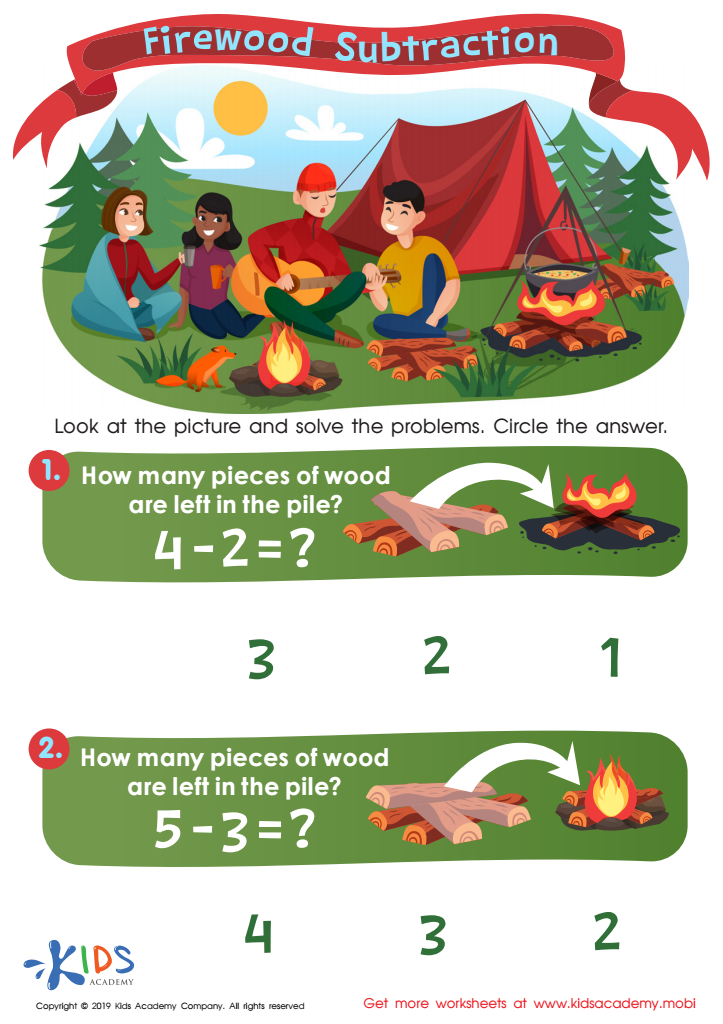
Firewood Subtraction Worksheet
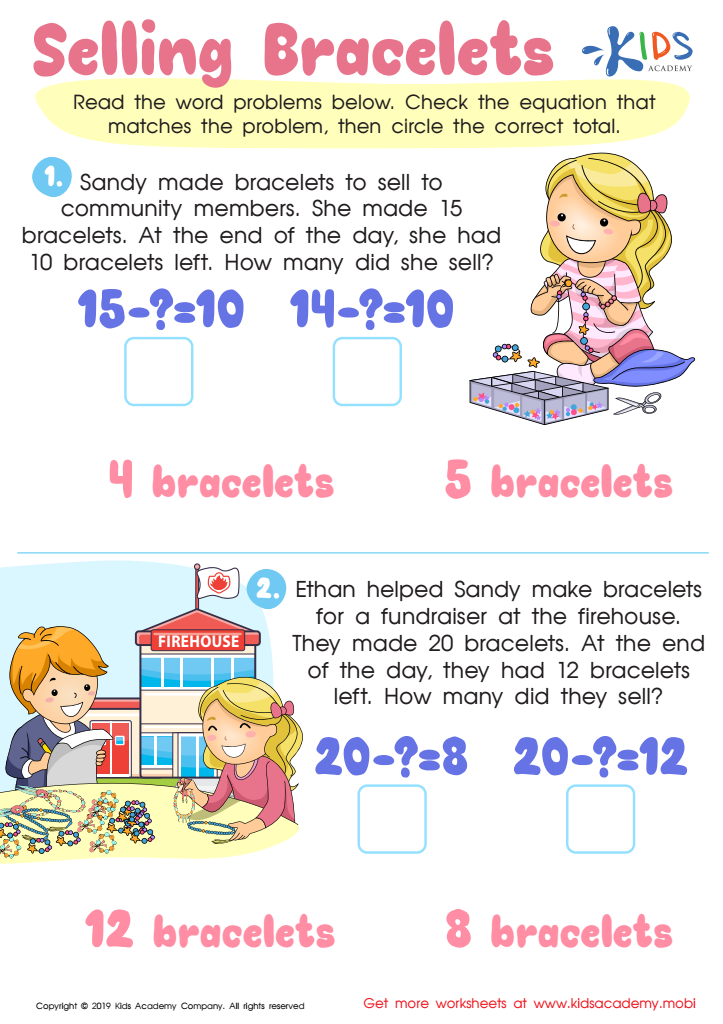
Selling the Bracelets Worksheet








Problem-solving skills, especially in early math concepts like easy subtraction, are fundamental for 3-year-olds' cognitive development. Engaging in simple subtraction activities fosters critical thinking and lays the groundwork for future math proficiency. At this stage, children are naturally inquisitive and eager to explore concepts, making it an ideal time to introduce basic subtraction in a fun and interactive way.
Parents and teachers should care because these early interactions with math build a child's confidence and curiosity about numbers. Through play-based scenarios, such as using toys or snacks to visually demonstrate subtraction, young learners can grasp the idea of "taking away" in a tangible way. This not only enhances their quantitative understanding but also develops their reasoning skills as they learn to formulate solutions and find results.
Moreover, cultivating problem-solving skills in this formative age promotes persistence and resilience. Experiencing trial and error while learning subtraction helps children understand that mistakes are a natural part of the learning process. Hence, emphasizing easy subtraction aligns with broader educational goals, equipping children with essential life skills that extend beyond math, such as critical thinking, collaboration, and emotional intelligence. Early investment in these skills ensures a strong foundation for academic success and holistic development.