Vocabulary enhancement Easy Building Vocabulary Worksheets for 3-Year-Olds
5 filtered results
Difficulty Level
Grade
Age
-
From - To
Subject
Activity
Standards
Boost your child's language skills with our Vocabulary Enhancement Easy Building Vocabulary Worksheets for 3-Year-Olds. Specially designed for young learners, these fun and engaging worksheets help expand your child's vocabulary through pictures, matching games, and simple words. Our age-appropriate activities foster word recognition, comprehension, and verbal skills in a playful and educational way. Ideal for both preschool settings and home practice, these worksheets make early language development exciting and effective, setting a strong foundation for future literacy skills. Start your child on the path to successful communication today with our expertly crafted vocabulary builders!
Favorites
With answer key
Interactive
Colors: Assessment 1 Worksheet
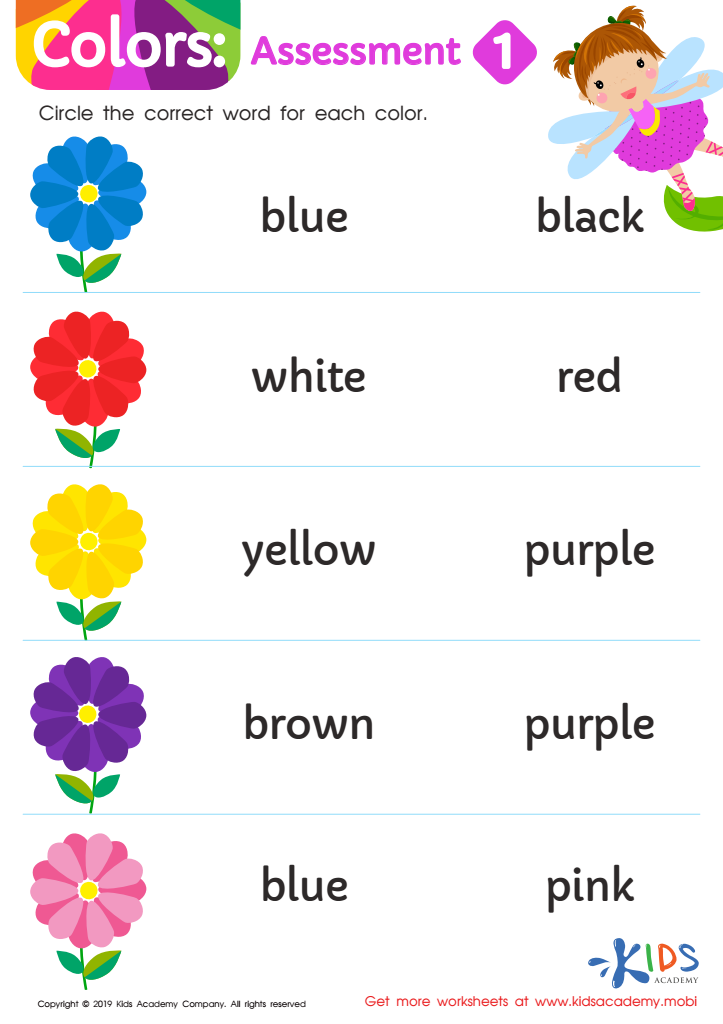
Children can decode unfamiliar words by sounding them out or by recognizing sight words. Color words are an important part of sight word knowledge, so add them to your child's list! This color word worksheet is an effective assessment tool for teachers to use with preschool and kindergarten students. It checks their knowledge of five color words - they simply look at the flower and circle the appropriate color word!
Colors: Assessment 1 Worksheet
Worksheet











Boy and Girl Words Coloring Worksheet
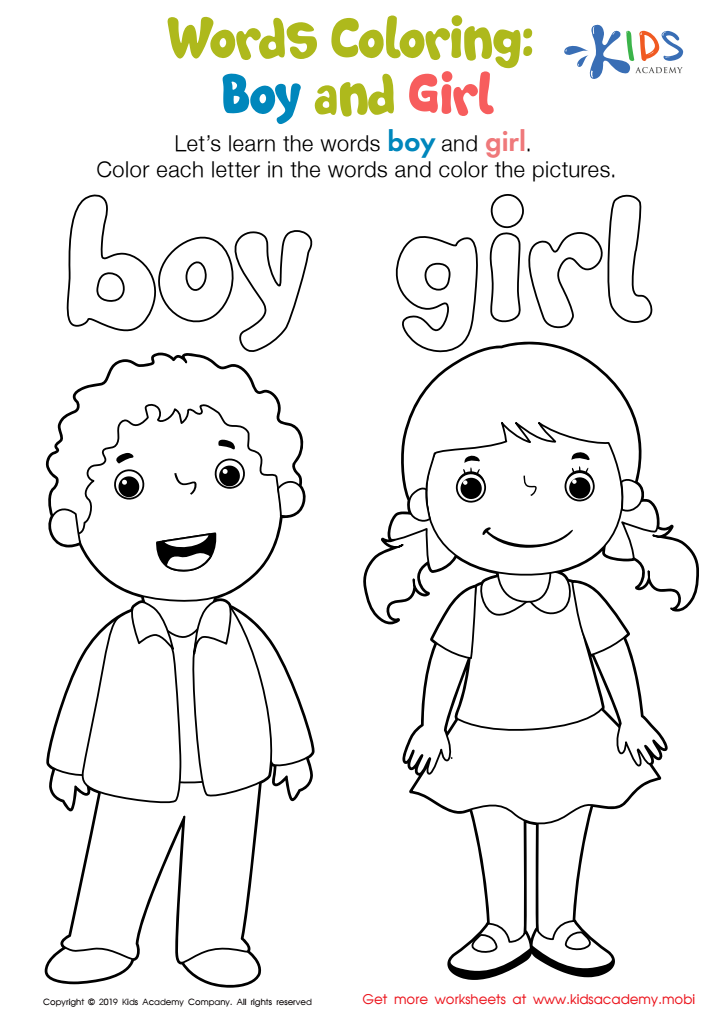
Help your students build their sight word vocabulary! Early readers may not be able to sound out all words, so this worksheet teaches them to read two important sight words: boy and girl. They will color the letters and a picture of each, making it a fun and educational way to learn. Download the PDF now.
Download (PDF)
 Assign to My Students
Assign to My Students
Boy and Girl Words Coloring Worksheet
Worksheet
Words: Assessment 1 Worksheet
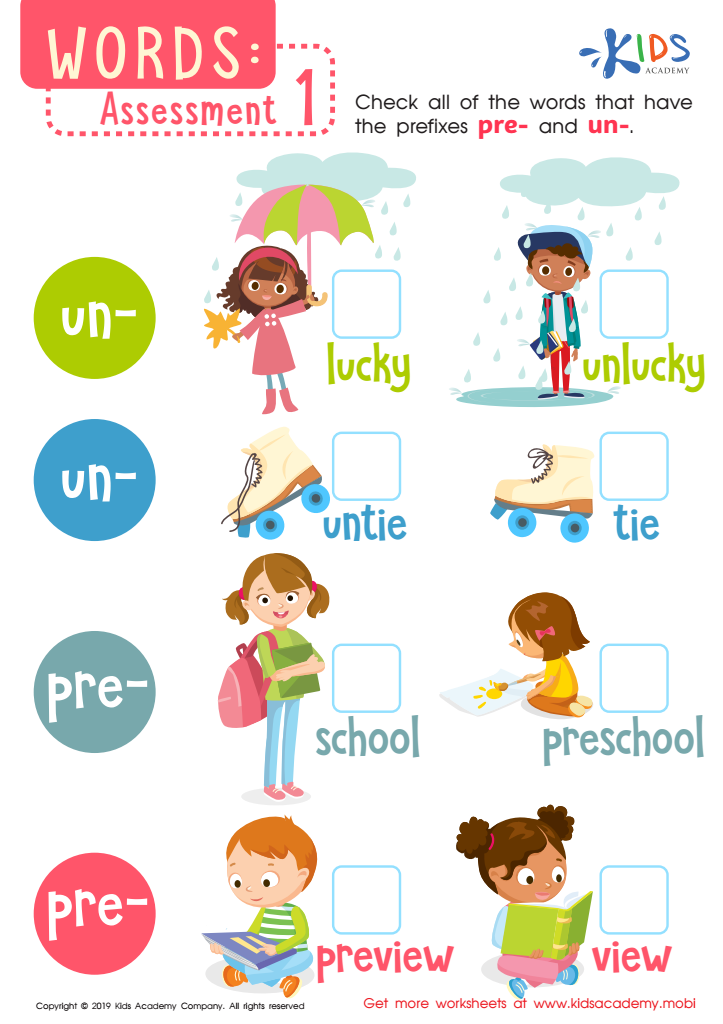
Help your child develop their knowledge of prefixes and suffixes with Kids Academy! This worksheet can test their understanding of pre- and un-. Have them view the illustrations and read the words to find the targeted prefix in each row. This is a great way to enhance their words and clarify meanings!
Words: Assessment 1 Worksheet
Worksheet
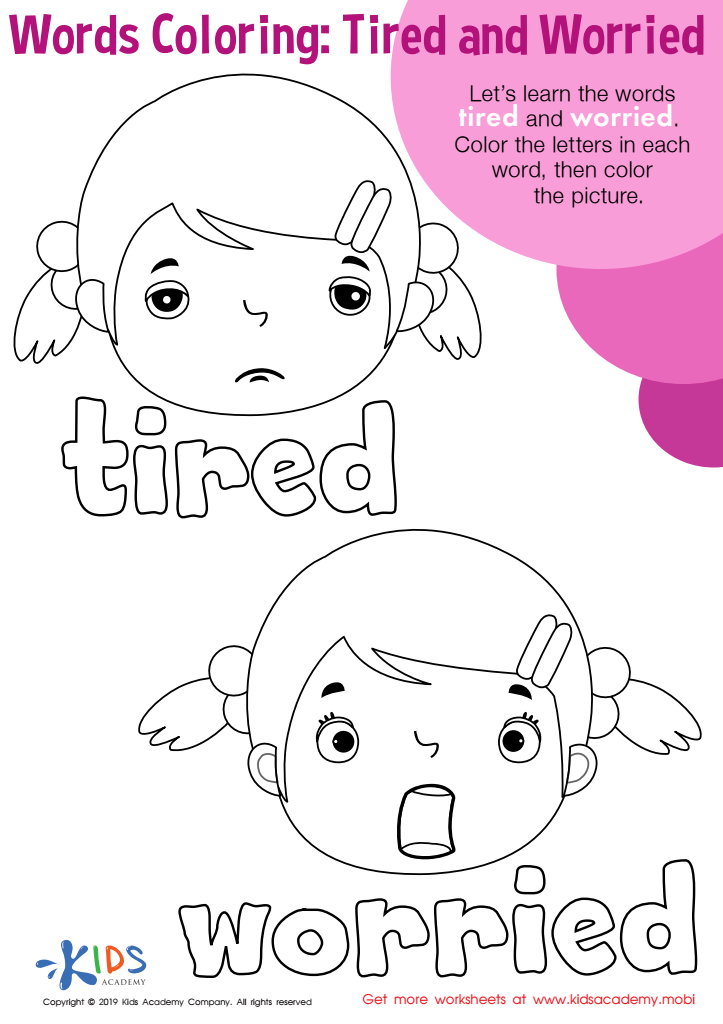
Tired and Worried Words Coloring Worksheet
Teach your students about "tired" and "worried" with this worksheet. Have them read and color the emotion words, then color the pictures of a tired girl and a worried girl. Discuss what makes them tired and worried. Expand their vocabulary with this fun coloring activity!
Download (PDF)
Assign to My Students
Assign to My Students
Tired and Worried Words Coloring Worksheet
Worksheet
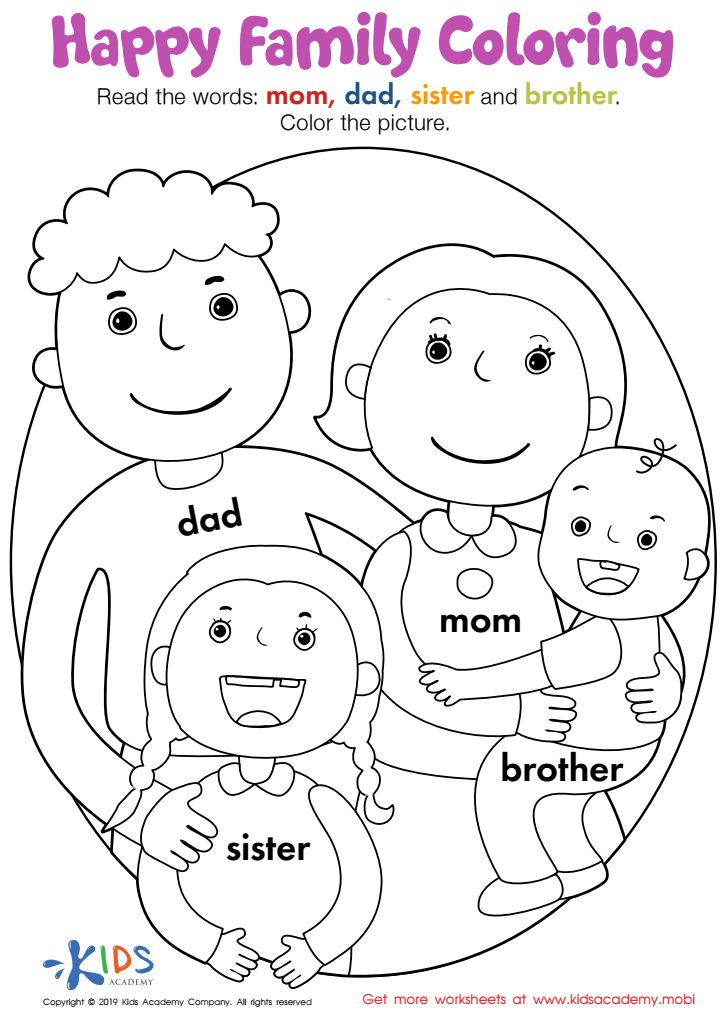
Happy Family Coloring Worksheet
Help your students gain confidence in family vocabulary with this worksheet. Labelled images of a family (dad, mom, sister, brother) are featured, along with an accompanying activity to colour in the picture. Your students will feel a sense of accomplishment after reading and completing the printable.
Download (PDF)
Assign to My Students
Assign to My Students
Happy Family Coloring Worksheet
Worksheet
Join Kids Academy for Free
Who is primarily going to use this learning content?








Vocabulary enhancement during early childhood is crucial for a child's overall development and future academic success. At the age of three, children's brains are like sponges, rapidly absorbing words and meanings. By enhancing their vocabulary, parents and teachers can significantly boost children's cognitive abilities, social skills, and emotional intelligence.
A rich vocabulary helps children express their thoughts and feelings more clearly, fostering better communication with peers and adults. This improved communication can reduce frustrations that arise from the inability to express needs or emotions, leading to healthier emotional development. Additionally, a broad vocabulary is foundational for reading comprehension. When children recognize and understand more words, they find it easier to learn to read, enriching their educational journeys.
Engaging a 3-year-old in vocabulary-building activities like reading books, engaging in conversations, playing word games, and exploring new environments can make a big difference. These activities not only introduce new words but also contextualize them, aiding memory retention. A strong vocabulary established early on sets the stage for academic success, a love of learning, and effective communication skills.
Therefore, parents and teachers should prioritize vocabulary enhancement for 3-year-olds to support their lifelong learning journey and enable them to navigate their world more confidently and competently.