Counting skills Easy Numbers 11–20 Worksheets for Ages 4-5
3 filtered results
-
From - To
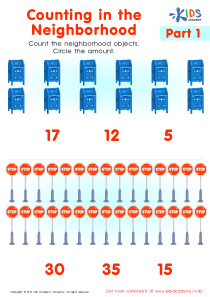
Enhance your child's counting skills with our "Counting Skills Easy Numbers 11–20 Worksheets" designed for ages 4-5. This engaging resource helps young learners seamlessly transition from counting single digits to understanding larger numbers. Our colorful and interactive worksheets feature fun activities that make learning a joy, such as counting objects, matching numbers, and simple exercises to reinforce number recognition. By incorporating these worksheets into your child's routine, you'll foster confidence and proficiency in math. Perfect for home or classroom use, these worksheets are an excellent way to cultivate essential counting skills in a playful, supportive environment. Get started today!
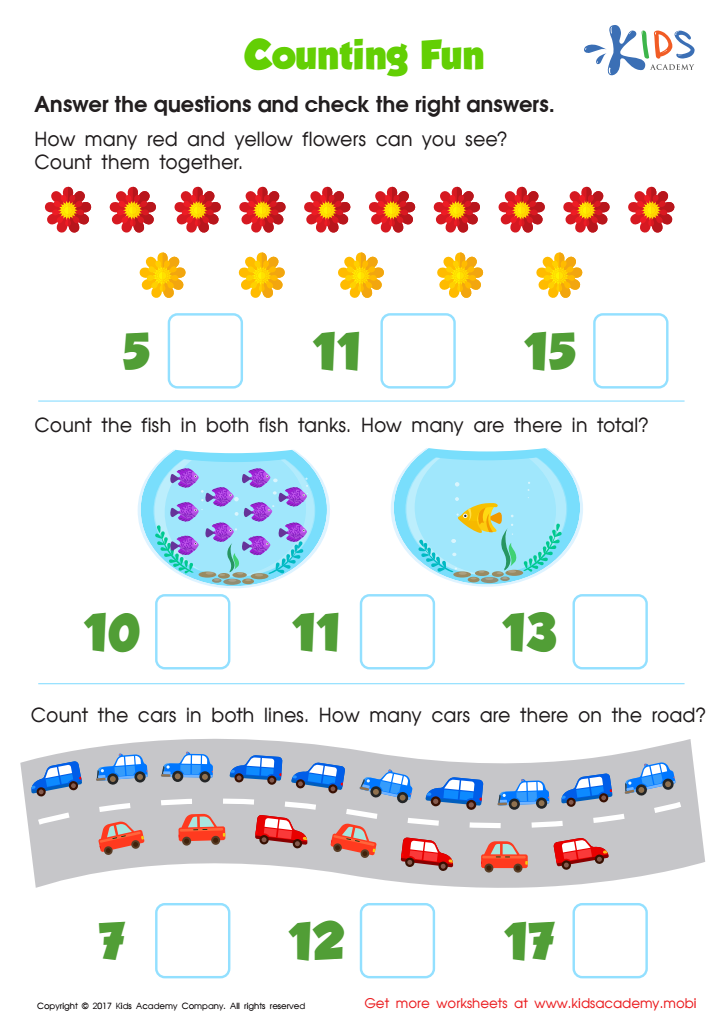
Counting Fun Worksheet
 Assign to My Students
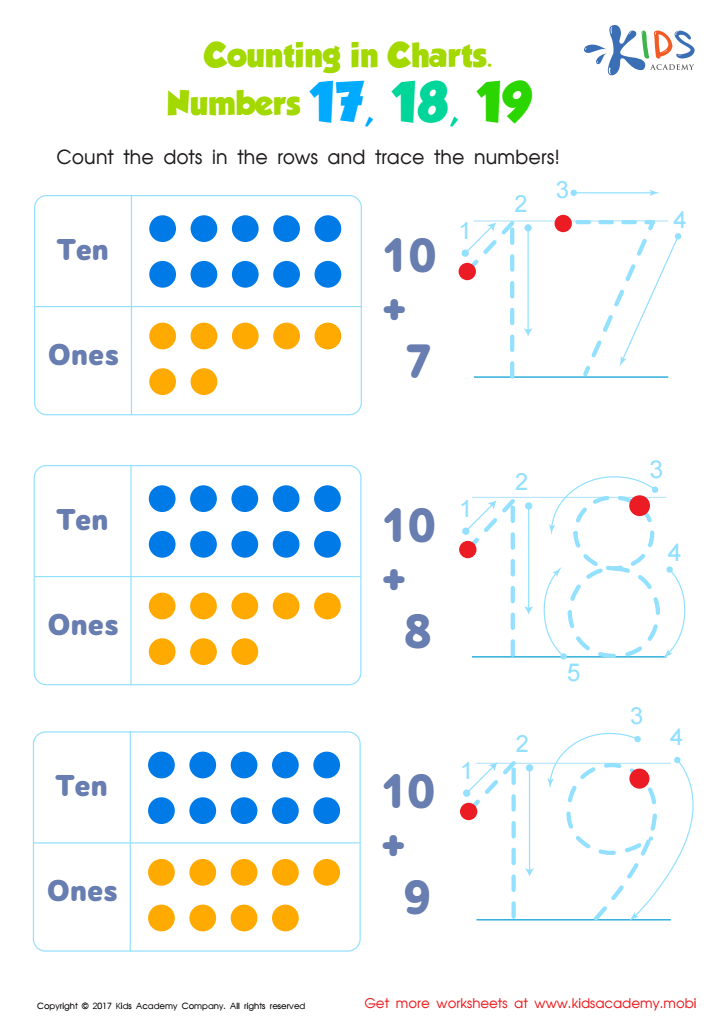
Kindergarten Number Tracing: Counting in Charts Worksheet
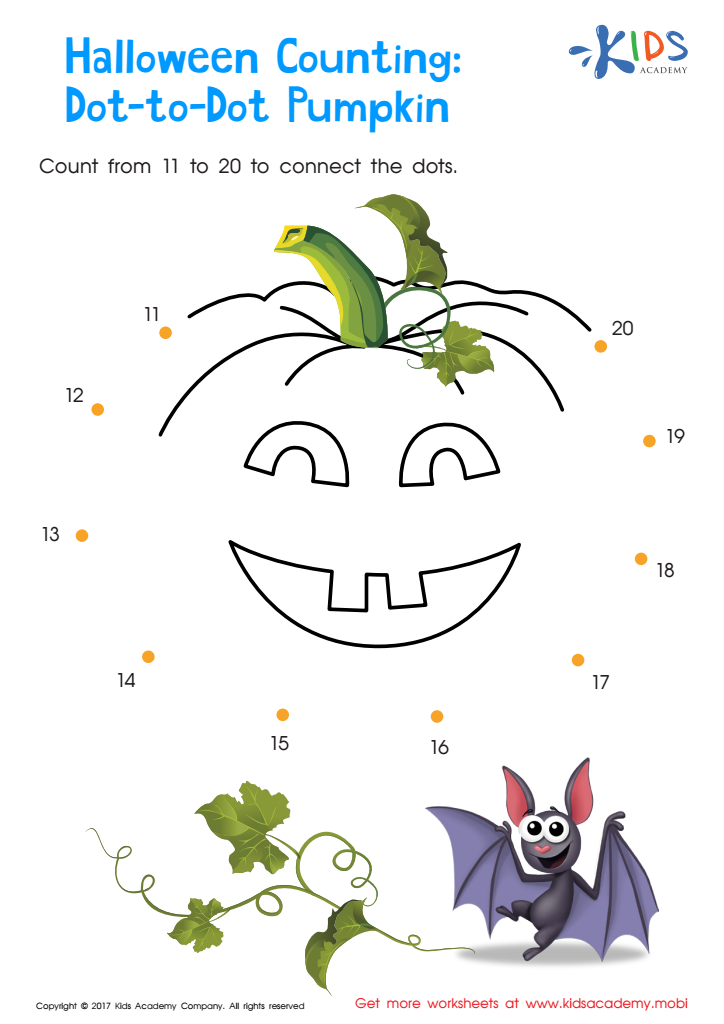
Ordering 11–20: Halloween Counting Worksheet



Counting skills for easy numbers 11-20 are crucial for children aged 4-5 because they establish a foundational understanding of math that will serve throughout their education. During this developmental stage, children move from basic counting—typically one-digit numbers—to more complex numeracy concepts. Mastering numbers 11-20 helps them understand the concept of "ten," leading to a better grasp of addition and subtraction as they progress.
Additionally, counting encourages critical cognitive skills such as pattern recognition and sequencing. Engaging with these numbers develops language skills, as children learn to articulate numbers and their corresponding quantities, enhancing vocabulary. Teacher-led activities and parental support provide rich contexts for learning, transforming counting into interactive games, songs, and practical experiences, like counting objects around the home or in nature.
Solid counting abilities help build children's confidence, making math-related tasks less intimidating in future grades. Finally, early mastery fosters positive attitudes toward learning, setting the stage for lifelong educational curiosity and success. Parents and teachers play a pivotal role by incorporating these counting skills into daily routines, creating a stimulating environment that nurtures early math development, critical for future academic achievements.