Writing practice Easy Letter Recognition Worksheets for Ages 4-6
3 filtered results
-
From - To
Welcome to our Writing Practice Easy Letter Recognition Worksheets designed specifically for children aged 4-6! These engaging worksheets help young learners develop essential letter recognition skills while practicing their handwriting. Each worksheet features fun activities that encourage children to identify, trace, and write both uppercase and lowercase letters. With vibrant illustrations and interactive exercises, your child will enjoy the learning process as they build confidence in their writing abilities. Perfect for at-home activities or classroom use, these worksheets are an excellent resource for promoting literacy and fine motor skills in preschool and kindergarten students. Start your child’s writing journey today!
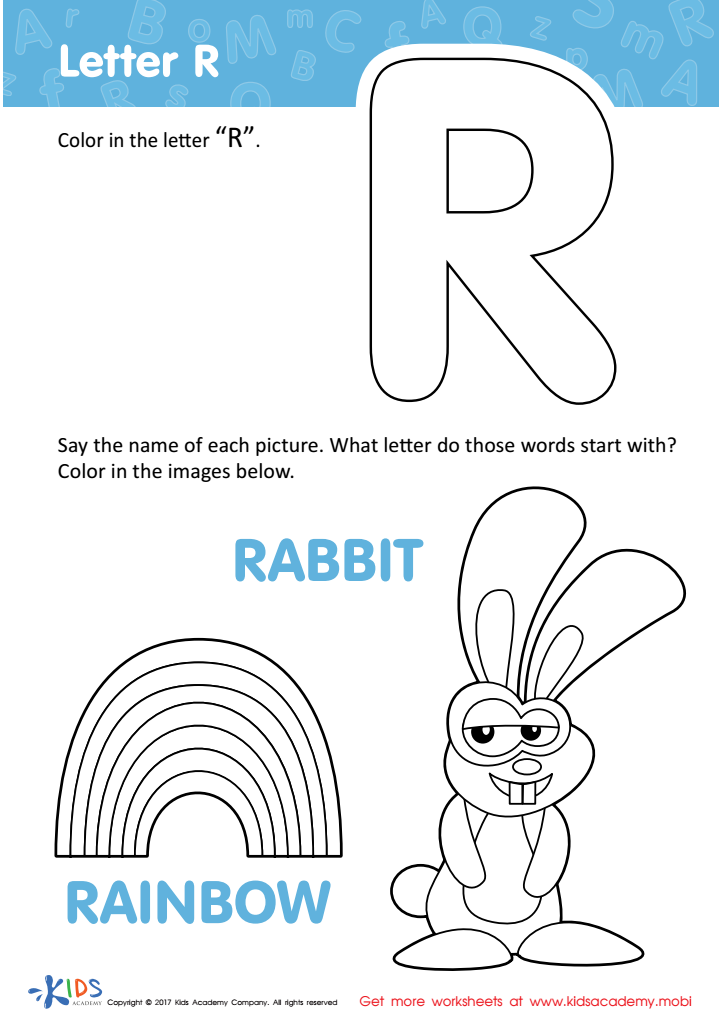
Letter R Coloring Sheet
 Assign to My Students
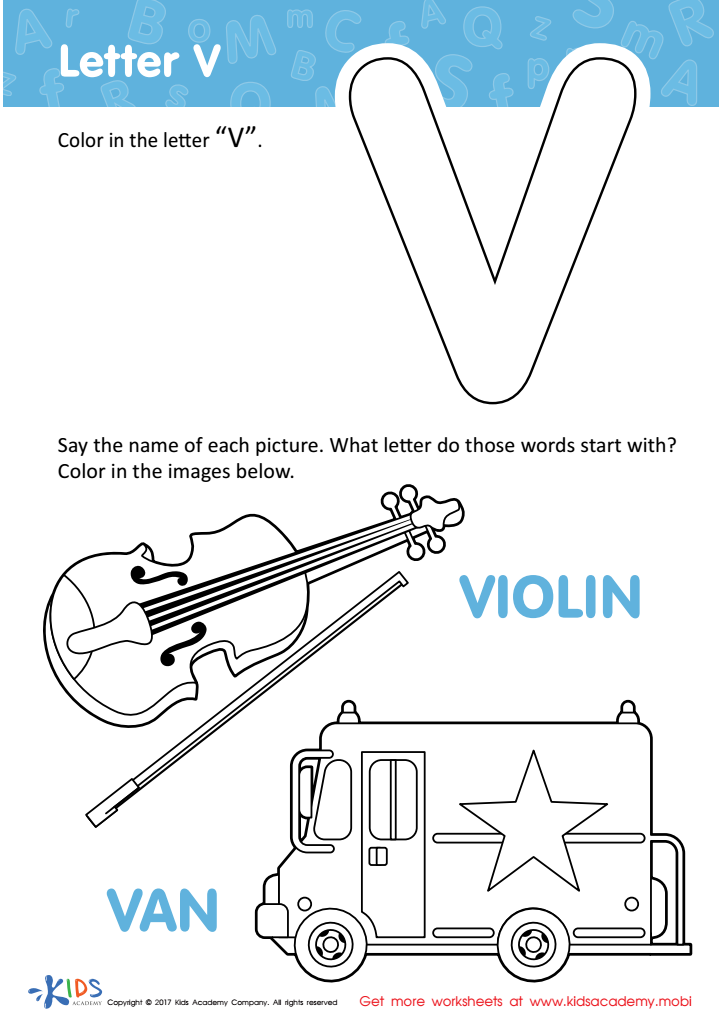
Letter V Coloring Sheet
Assign to My Students
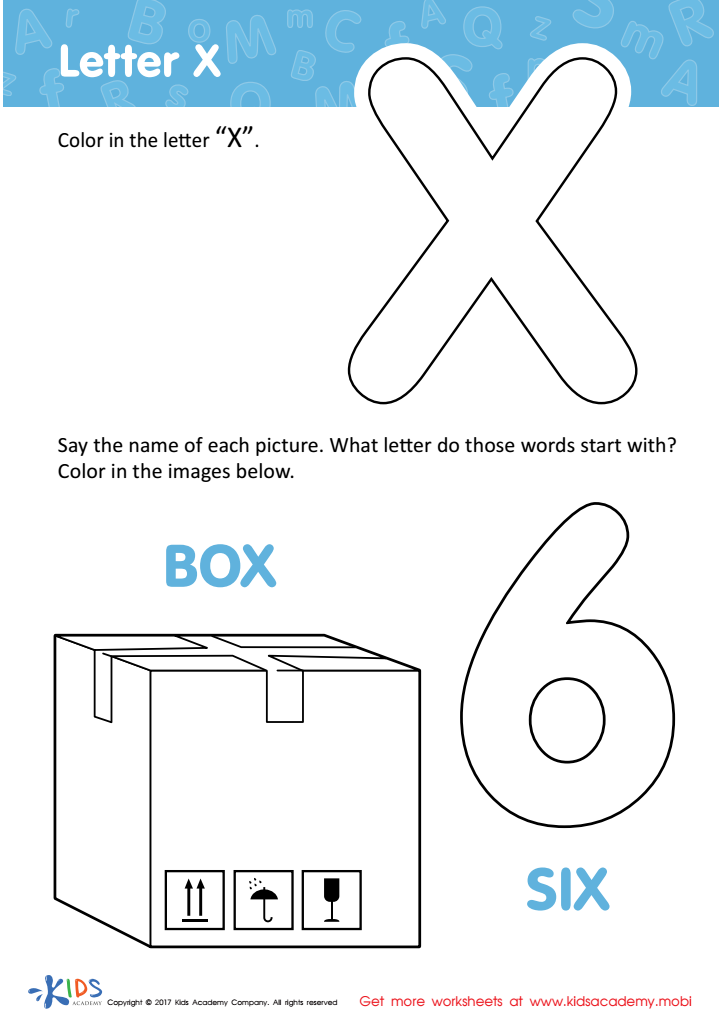
Letter X Coloring Sheet
Assign to My Students








Parents and teachers should prioritize writing practice and easy letter recognition for children aged 4-6 as it lays the foundational skills necessary for literacy development. At this early stage, children are naturally curious and eager to learn, and effective writing practice enhances their engagement with letters and words. Recognizing letters is crucial, as it directly impacts their ability to read and spell, forming the bedrock of their academic success. Through writing, children develop fine motor skills, hand-eye coordination, and cognitive abilities, fostering overall growth.
Additionally, early exposure to writing helps build confidence in children, allowing them to express their thoughts, feelings, and creativity at a young age. When children write, they also learn phonemic awareness—the understanding of how sounds link to letters—which is essential for building strong reading skills. Furthermore, incorporating fun and interactive activities, such as tracing letters or playing letter recognition games, keeps children motivated and excited about learning.
By investing time and resources in writing practice and easy letter recognition, parents and teachers set a positive precedent for lifelong learning and literacy, ultimately contributing to children's success in school and beyond. A solid foundation in these skills can lead to greater academic achievements and improved self-esteem.