Phonics Skills Easy Phonics Worksheets for Ages 4-6
4 filtered results
Difficulty Level
Grade
Age
-
From - To
Subject
Activity
Standards
Welcome to our "Phonics Skills Easy Phonics Worksheets for Ages 4-6" page! Designed to nurture early literacy, these worksheets are perfect for young learners eager to master foundational phonics concepts. With engaging activities that include letter recognition, sound matching, and simple word formation exercises, children can easily build essential reading skills. Our user-friendly, printable resources make learning fun and accessible, allowing educators and parents to provide interactive and supportive learning environments. Watch your child gain confidence in their phonics abilities as they explore language through creative and age-appropriate exercises. Start their phonics journey today for a bright future in reading!
Favorites
With answer key
Interactive
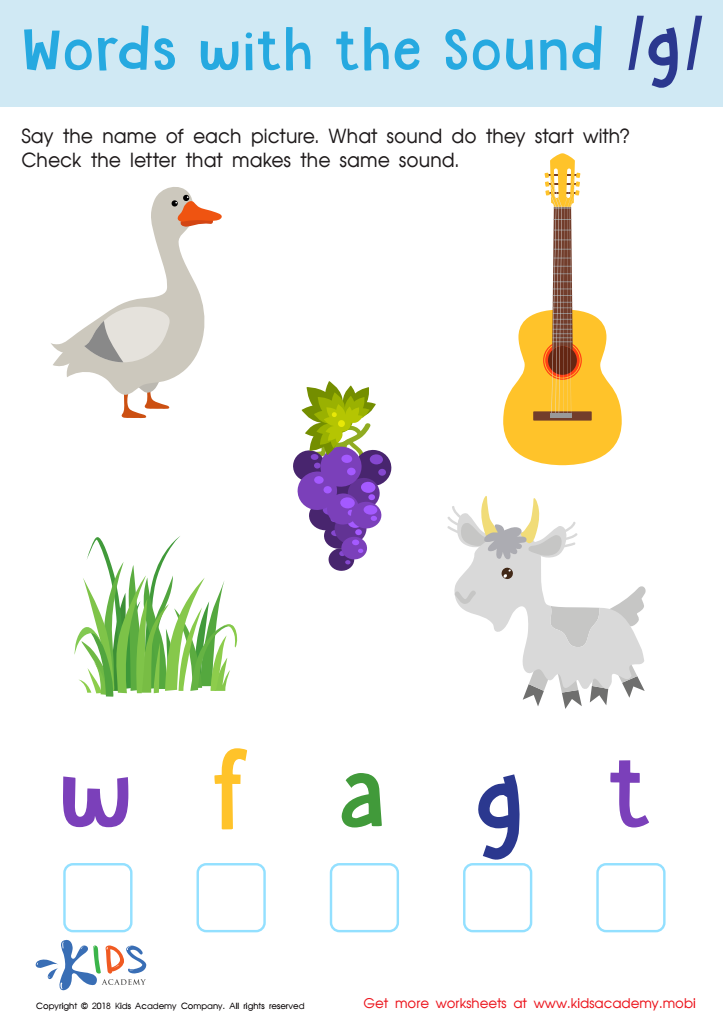
Words with sound g Reading Worksheet
Help your child learn the soft "g" sound with this phonics worksheet. Ask them to name each picture, then identify the letter sound it begins with. If it's "g", they can check the box. Have them repeat each word, listening for the soft "g" sound before moving on to the next page.
 Assign to My Students
Words with sound g Reading Worksheet
Worksheet
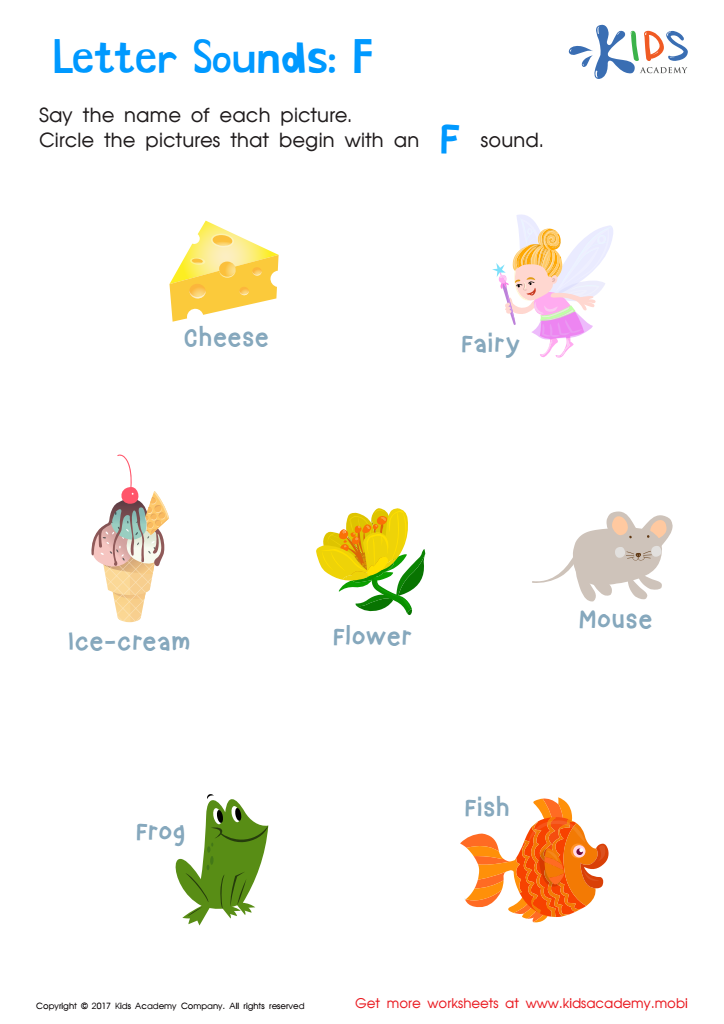
Letter F Sounds Worksheet
Kids will practice identifying 'f' words, tracing, and coloring the letter F for a great way to learn phonics.
Help your child discover the wonders of the letter 'F' with this fun worksheet! Kids will practice identifying 'F' words, tracing and coloring the letter, and building early reading skills. Stimulate their learning and let them connect letter sounds to words they know. An enjoyable way to practice phonics!
Letter F Sounds Worksheet
Worksheet
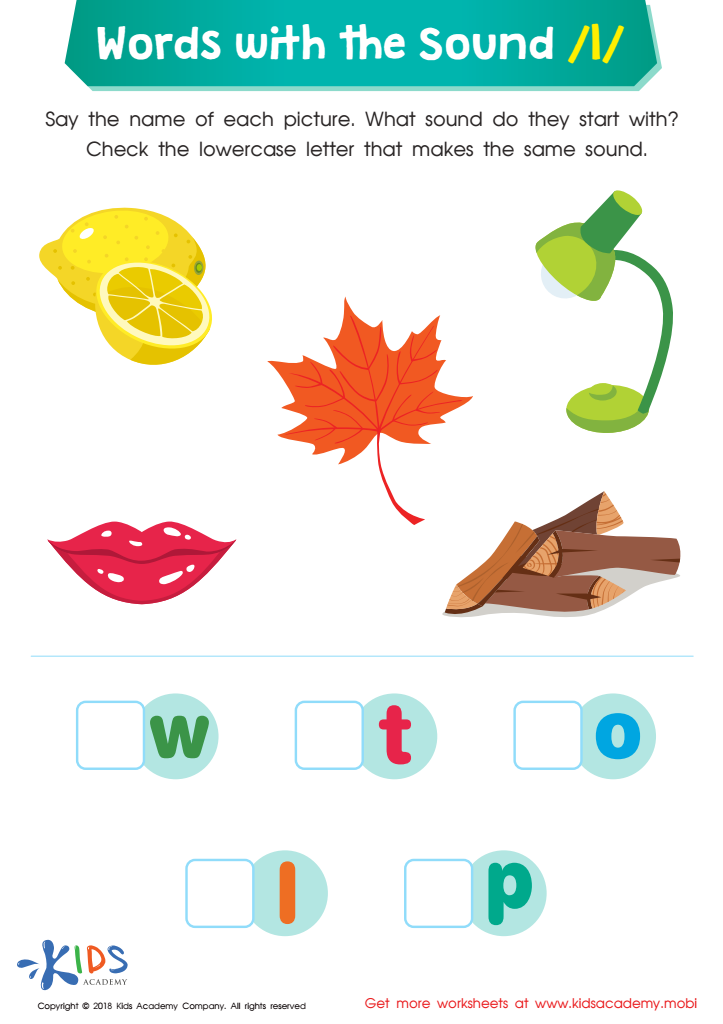
Words with Sound L Reading Worksheet
This PDF worksheet is great for helping emerging readers isolate initial sounds. Kids name familiar pictures, then identify the correct letter for the "l" sound. This worksheet strengthens fine motor skills, plus builds visual discernment. It's fun and colorful too!
Words with Sound L Reading Worksheet
Worksheet
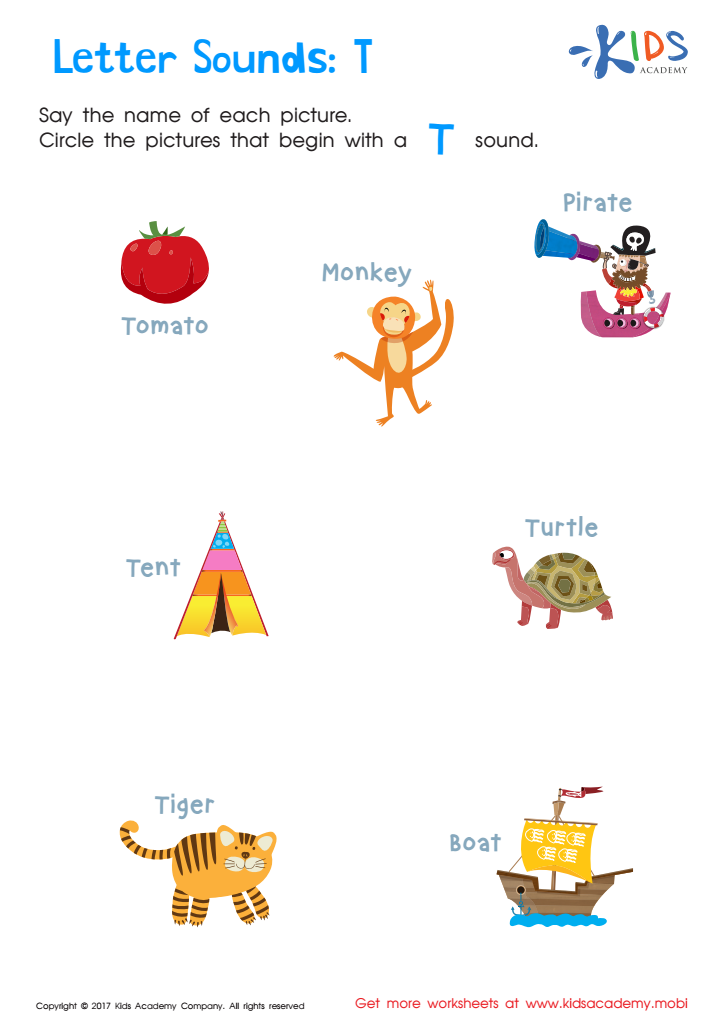
Letter T Sounds Worksheet
This worksheet is a fun way to help kids learn the t sound. It has familiar pictures and an easy-to-follow format, so kids can quickly recognize and learn the letter t.
Letter T Sounds Worksheet
Worksheet
Join Kids Academy for Free
Who is primarily going to use this learning content?








Phonics skills are foundational for early literacy development, making them a crucial focus for parents and teachers of children aged 4-6. Easy Phonics programs provide systematic instruction in letter sounds and their corresponding phonemes, which helps young learners decode words independently. This understanding of how sounds correlate with letters enables children to begin reading and writing at a crucial stage in their development.
Engaging with phonics helps foster confidence and a love for reading. As children learn to sound out words, their ability to tackle unfamiliar text grows, lowering frustration and promoting a willingness to explore various reading materials. Additionally, phonics skills contribute to overall academic success; children proficient in phonics typically exhibit better performance in reading comprehension and other subjects.
Moreover, focusing on early phonics can minimize future reading difficulties, empowering learners to build a solid literacy foundation. Teachers and parents play a vital role in this process, tailoring activities in a fun and engaging manner, and reinforcing skills at home and in the classroom. Ultimately, nurturing phonics skills not only supports immediate reading progress but also fosters a lifelong relationship with learning, setting children on a path toward academic achievement and personal growth.